A Times Square 3D billboard uses LED screens and perspective-based animation to make objects appear to extend beyond the display. The effect needs no glasses and works best from a planned viewing position. There is no single Times Square 3D billboard price: media placement, custom animation, campaign dates, and playback frequency must be quoted together.
For advertisers, the appeal is a memorable street-level experience that can also be filmed for social channels. A sneaker appearing to leave its frame can attract attention, but neither a large screen nor a dramatic animation guarantees sales or viral reach. Define the audience and the result you want before choosing a location.
The same visual technique can be used outside New York. EagerLED supplies LED display hardware for installations in other commercial locations. Buying a screen, however, is a different decision from renting Times Square advertising space: the local audience, site costs, content production, and ongoing operation all affect the value of ownership.
This guide explains the locations, technology, operators, costs, and potential effectiveness of Times Square 3D advertising. It separates ordinary digital ad packages from custom anamorphic campaigns and personal photo offers. Published price examples were checked on September 28, 2026; confirm availability and final terms directly with the seller before booking.
1. What Is a Times Square 3D Billboard?
A 3D billboard usually means a digital display showing anamorphic content: an image distorted for a particular viewpoint so that it appears to have depth. The LED surface still displays a two-dimensional image. Creative studio Froth & Fur’s Times Square project describes this use of forced perspective and a preferred viewing zone.
Corner-wrapped screens can provide two visible surfaces for a convincing illusion, but a corner is not a universal requirement. Content must fit the actual screen shape, resolution, and viewing position. Brightness alone does not create depth. For the underlying hardware distinction, see our LCD vs LED display guide.

2. Where Is the 3D Billboard in Times Square?
There is no single permanent “3D billboard” attraction with a guaranteed daily program. Landmark screens include Nasdaq MarketSite at 4 Times Square and the Marriott Marquis signage at 1535 Broadway. Whether a screen is showing anamorphic content depends on the campaign. Ask the operator for the exact screen, date, playback schedule, and best public viewing position. Our Times Square billboard guide covers the broader advertising options.

3. How 3D Billboards Work
A Times Square 3D billboard combines an optical illusion with carefully mapped LED playback. The creative team starts with the screen geometry and the intended audience position, then tests the animation against both. These four elements determine whether the effect remains convincing on the real installation:
- Anamorphic design: Artists build a virtual scene around a chosen camera position. Shadows, scale, and a simulated frame can make a product appear to project forward. The illusion may look distorted from other angles.
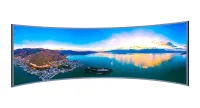
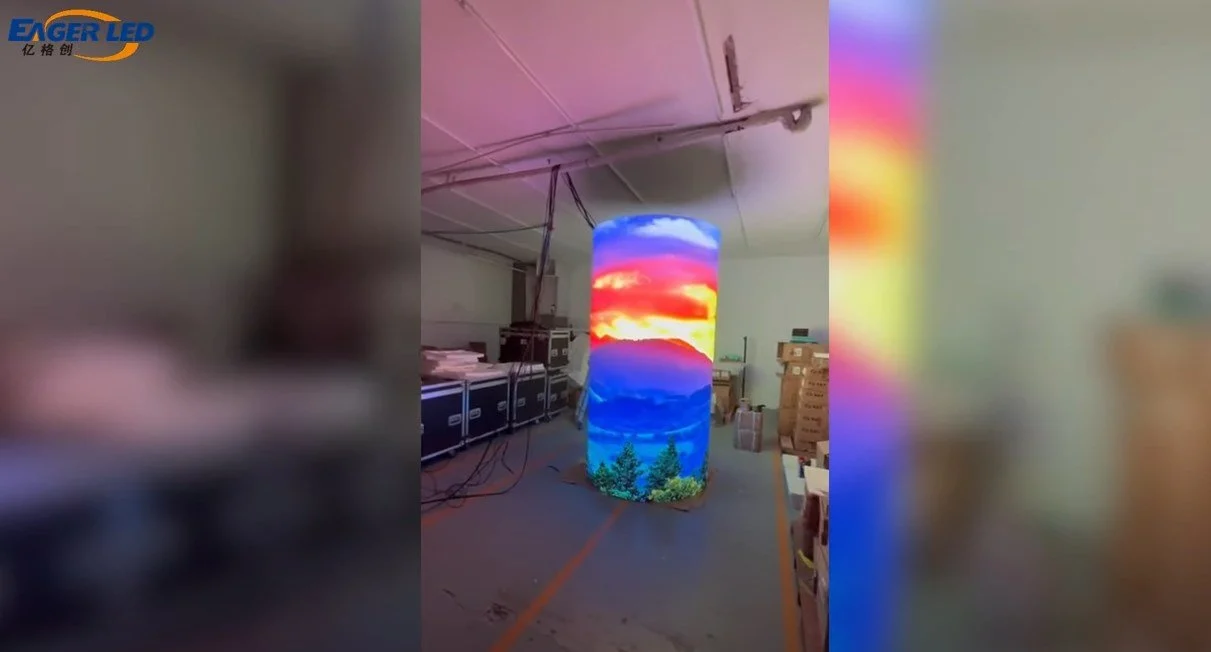
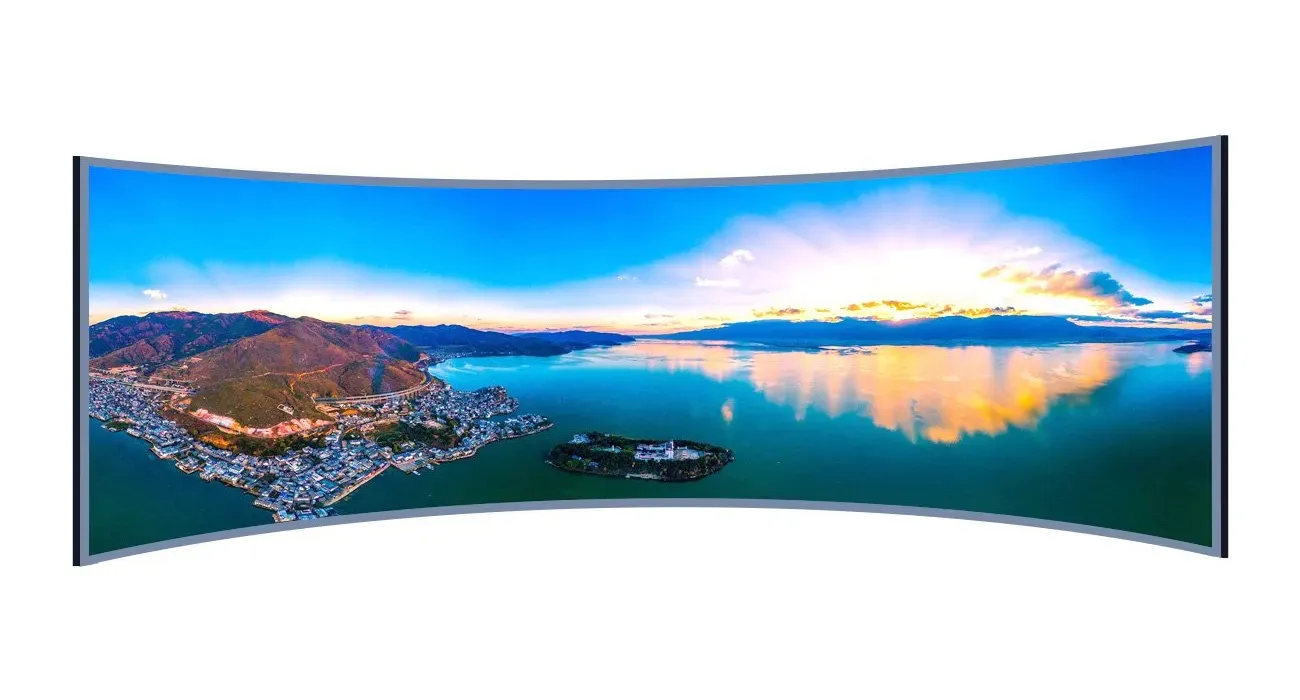
- Curved or corner screens: Multiple faces can strengthen depth cues. Their dimensions, curve, seams, and visible edges must be included in the animation model.
- Brightness and contrast: Choose settings for ambient light and readable detail, then test daytime and nighttime playback. Excess brightness can obscure detail and is not a substitute for good content.
- Content synchronization: Map the render to the operator’s pixel canvas and synchronize playback across screen faces. Confirm frame rate, codec, duration, safe areas, and a test slot before final delivery.
The result depends on LED hardware, content design, and viewing geometry working together. A technically sharp screen can still show a weak illusion if the animation uses the wrong camera position. Review a site-specific simulation and an on-screen test before approving the final campaign.
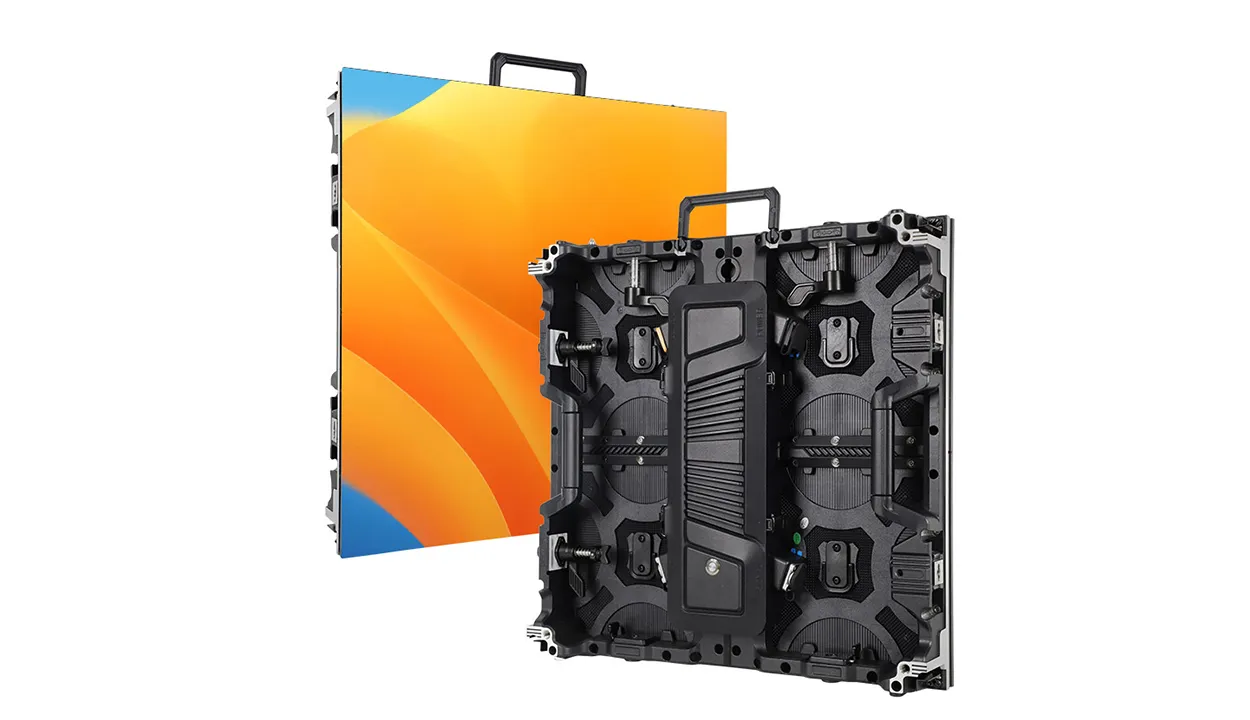
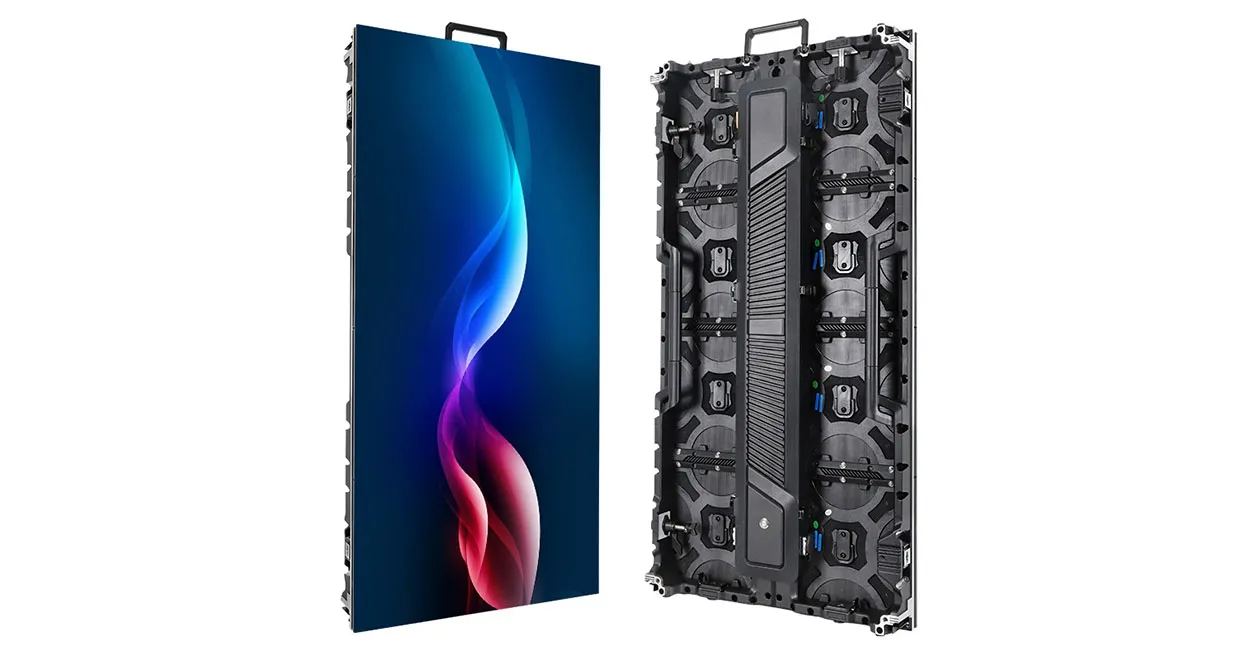
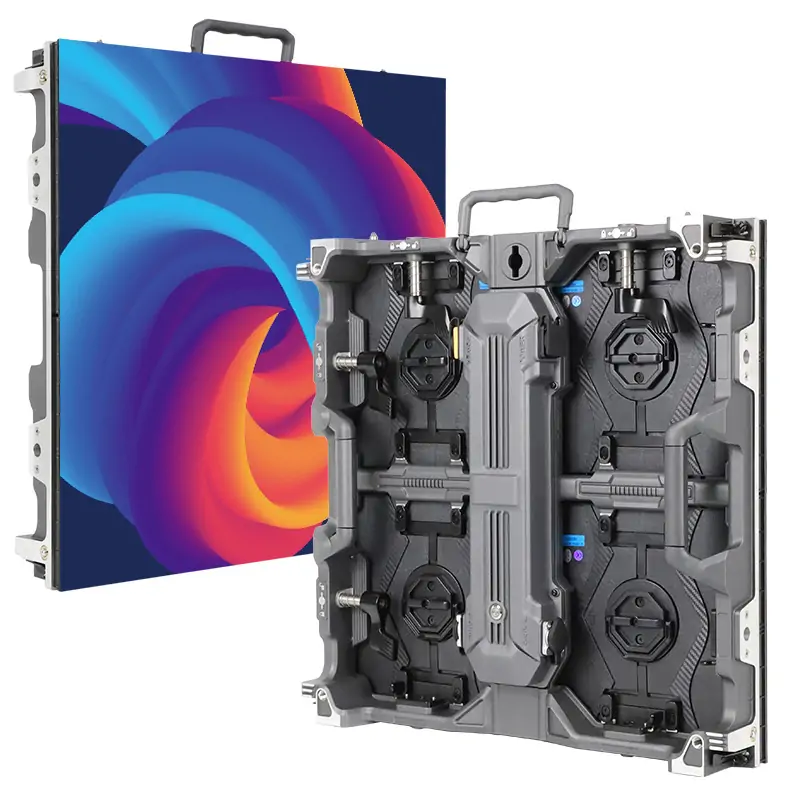
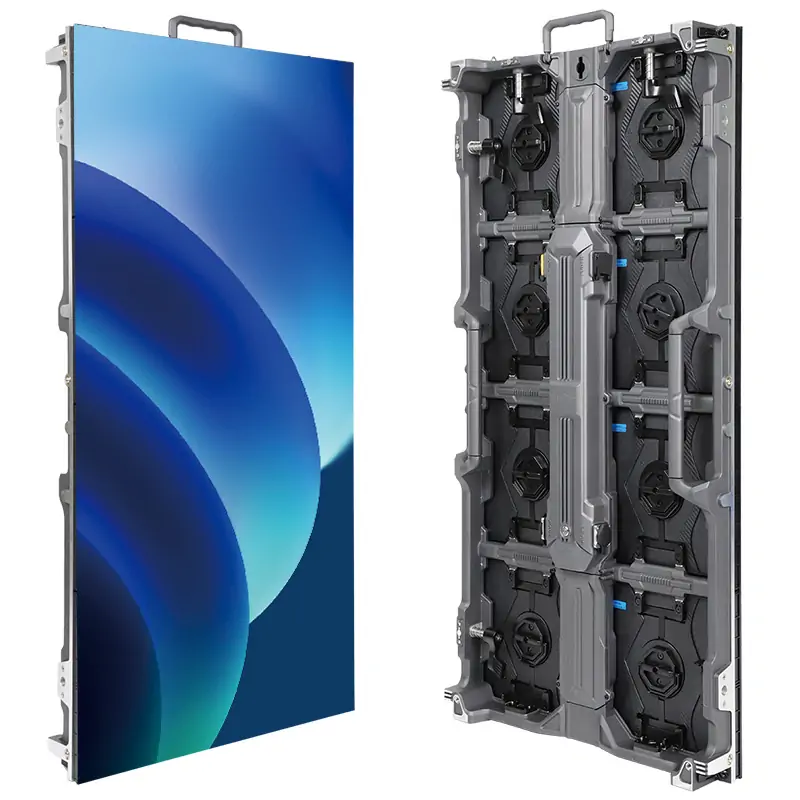
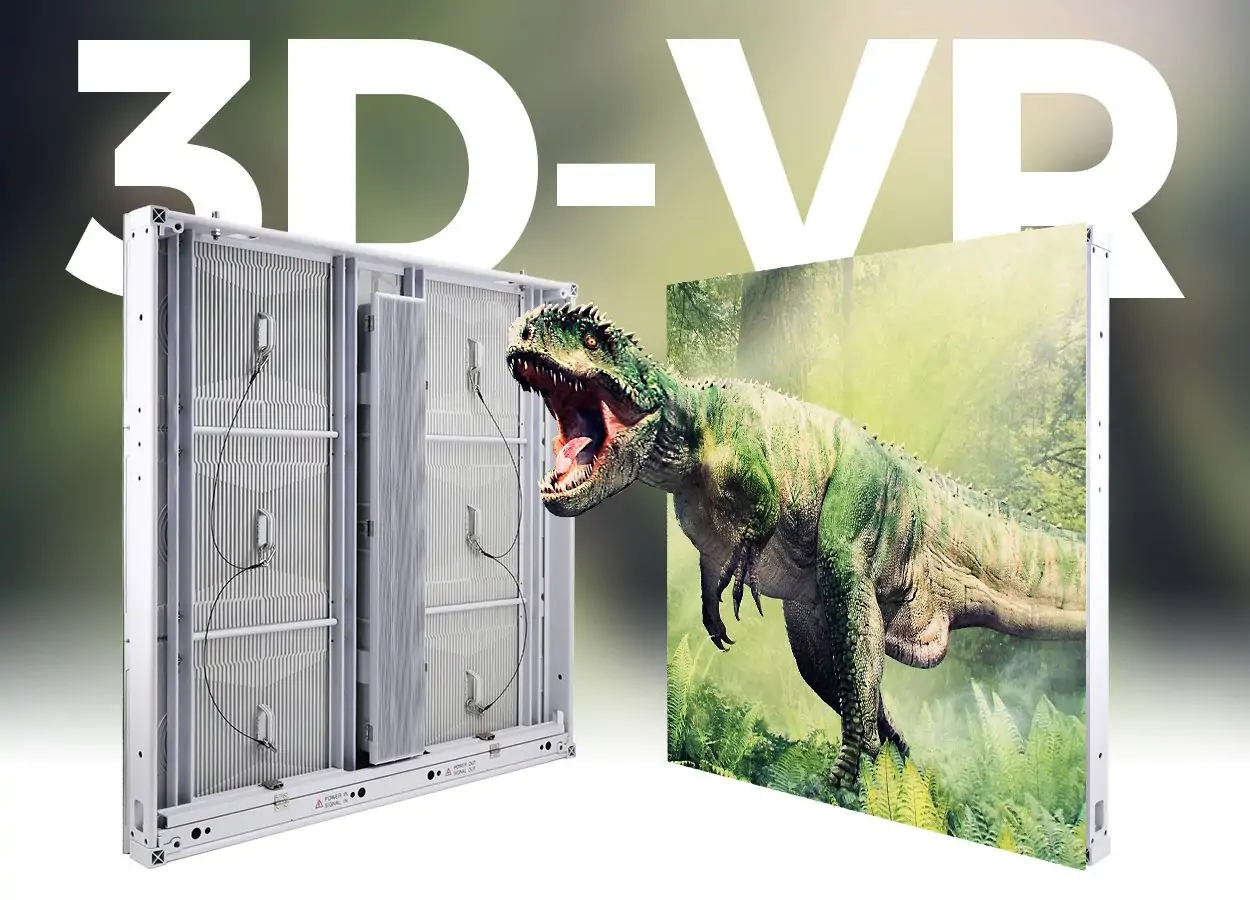
EagerLED’s EA3D-VR outdoor 3D billboard supports 90-degree corner assembly and front or rear maintenance. Match the selected configuration to viewing distance, available space, and access for servicing. Request the current model specifications and a compatible content canvas rather than assuming one pixel pitch or cabinet design suits every project.
4. How Many Digital Billboards Are in Times Square?
There is no verified total here for all Times Square digital screens, and a digital billboard is not automatically a dedicated 3D billboard. Clear Channel Outdoor’s Times Square page lists 17 digital billboards in its own inventory, explicitly based on a June 30, 2022 count. That historical operator figure is neither today’s district-wide total nor a count of screens currently showing anamorphic campaigns. For a booking, confirm current inventory and creative capabilities with each seller.
The technique is also used beyond Times Square. What transfers to another city is the approach to screen design and animation, not New York’s audience or media value. For a local installation, assess where people can stop, how long they can see the display, and whether that position supports the intended perspective.
5. What Is the Most Famous Billboard in Times Square?
“Most famous” is subjective, but the Coca-Cola 3D robotic sign is a notable historical example. Its physical movement makes it different from an anamorphic video on a stationary LED screen. Keeping that distinction clear helps buyers avoid confusing a mechanical installation with a conventional screen showing simulated depth.
Guinness World Records records Coca-Cola’s first 3D robotic billboard on August 8, 2017, describing 1,715 moving LED cubes and 245 static cubes. Those figures refer to that documented installation, not a standard specification for Times Square 3D advertising.
The record concerns robotic movement. Most campaigns discussed in this guide use perspective-based animation instead. Buyers should ask which mechanism creates the effect and what production work is included, rather than treating every “3D” screen as the same technology.
Other standouts and campaign examples:
- Nasdaq MarketSite: Nasdaq describes its Tower as seven stories with 10,000 square feet of branding space. Its advertising page also explains the Marquee and TS2 packages; confirm the specific surface included in an offer.
- Hi-Tec’s anamorphic creative: Froth & Fur documents a ten-second Times Square footwear ad using 3D animation and projection mapping. This is a concrete example of the technique, not proof that every similar campaign will go viral.
6. What Makes a Billboard Famous Today?
A billboard can become recognizable through a combination of creative and placement choices. These four factors are useful planning criteria, although none guarantees fame or a measurable return:
- Motion & depth: Make the main action readable quickly. Distinguish actual moving hardware from animated depth.
- Storytelling & creativity: Build one clear visual idea around the product, with enough time for viewers to recognize the brand.
- Location & visibility: Check sightlines, obstructions, viewing distance, and the space where people can safely pause.
- Social media potential: Plan a realistic filming position and a separate distribution strategy. Online views must be measured rather than assumed from pedestrian traffic.
6.1 Why It Matters for Brands and EagerLED’s Role?
For brands, a coherent brief helps prevent hardware and creative decisions from drifting apart. EagerLED can discuss display configurations for an owned installation; agree separately who supplies animation, site engineering, installation, and testing. A screen purchase should specify those responsibilities clearly instead of implying that compelling content or campaign performance comes automatically with the hardware.
7. Who Owns the Billboards in Times Square?
The property owner, screen operator, and seller of advertising time may be different organizations. The Times Square Alliance’s advertising directory lists companies including Clear Channel Outdoor, Branded Cities, and OUTFRONT. Use the directory to identify contacts, then confirm which company controls the inventory and can authorize your campaign.
Most advertisers buy a defined media schedule rather than the screen or building rights. Ask for a written proposal naming the display, dates, number of plays, operating hours, content approval process, and proof of playback. Buying hardware elsewhere does not include a Times Square location or rights to sell advertising there.
8. Are 3D Billboards Effective?
3D billboards can support awareness and launch campaigns, but effectiveness depends on the audience, creative, placement, and measurement. Times Square Alliance pedestrian reports provide district context; foot traffic is not the number of people who saw a particular ad. Avoid treating total visitors as verified impressions or evidence of sales.
Set a baseline and choose a measurable outcome: branded searches, visits to a dedicated landing page, qualified inquiries, or a brand-lift study. Request delivery logs from the operator and distinguish modeled impressions from counted responses. For an owned EagerLED display, compare local outcomes against content, staffing, power, and maintenance costs over the same period.
9. Times Square 3D Billboard Price
Custom Times Square 3D billboard campaigns are quote-based. Ask for separate lines for media space, anamorphic animation, revisions, technical testing, and any filming. A short personal message, a recurring commercial slot, and an exclusive takeover buy different services and should not be compared by clip length alone.
The examples below are published seller offers, not a market average or a custom 3D production estimate. Prices are in US dollars and were checked on September 28, 2026. Screen choice, dates, demand, exclusivity, and creative requirements can change the final quote; confirm taxes, fees, and included services.
9.1 Times Square Billboard Cost for 30 Seconds
As a specific commercial example, Welcome to Times Square’s package for Billboards 1 and 2 lists $500 per day for 44 plays of a 30-second video or photo. This is shared digital airtime, not a published custom anamorphic rate. Confirm which screen and schedule the quote covers.
9.2 Times Square Billboard Cost for 1 Minute
The same seller lists a $500 daily option for 22 plays of a 60-second video or photo. Thus a one-minute clip need not cost twice as much as a 30-second clip: frequency may change instead. Compare the number of plays and the total delivered seconds, not only the duration of each appearance.
9.3 Times Square Billboard Cost for a Day
A “day” normally means scheduled appearances within a rotation unless the contract promises exclusivity. The published $500 example above is not an all-day takeover. For a custom 3D campaign, obtain an itemized daily quote and ask about operating hours, competing ads in the loop, holiday pricing, cancellations, and compensation for missed plays.
9.4 Times Square Billboard Birthday Message Cost
For a personal birthday message, Times Square Billboard lists photo packages starting at $150, with a 15-second appearance each hour on the selected day. This personal-use offer is not custom 3D animation or a commercial brand campaign. Upgrades and holiday demand can affect the price.
9.5 Times Square Billboard Photo Display / Welcome to Times Square Billboard
Check the exact location, content rules, and framing before submitting a personal photo. The seller’s FAQ says logos are not accepted through its personal service and describes a minimum of 22 daily plays under its refund policy. Confirm the final schedule and arrange any photography separately if it is not included.
10. EagerLED’s Role in 3D Billboard Technology
EagerLED’s role is to supply LED display hardware for projects that can show suitably designed 3D content. This is relevant to businesses planning their own site, while an advertiser seeking Times Square airtime should work with the operator or authorized media seller for the chosen screen.
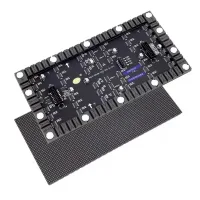
Start a hardware discussion with the installation dimensions, closest viewing distance, desired corner geometry, ambient light, and maintenance access. These details support a useful specification and quote. EagerLED’s product range covers several display formats; select the format for the site and the creative brief rather than treating every LED panel as interchangeable:
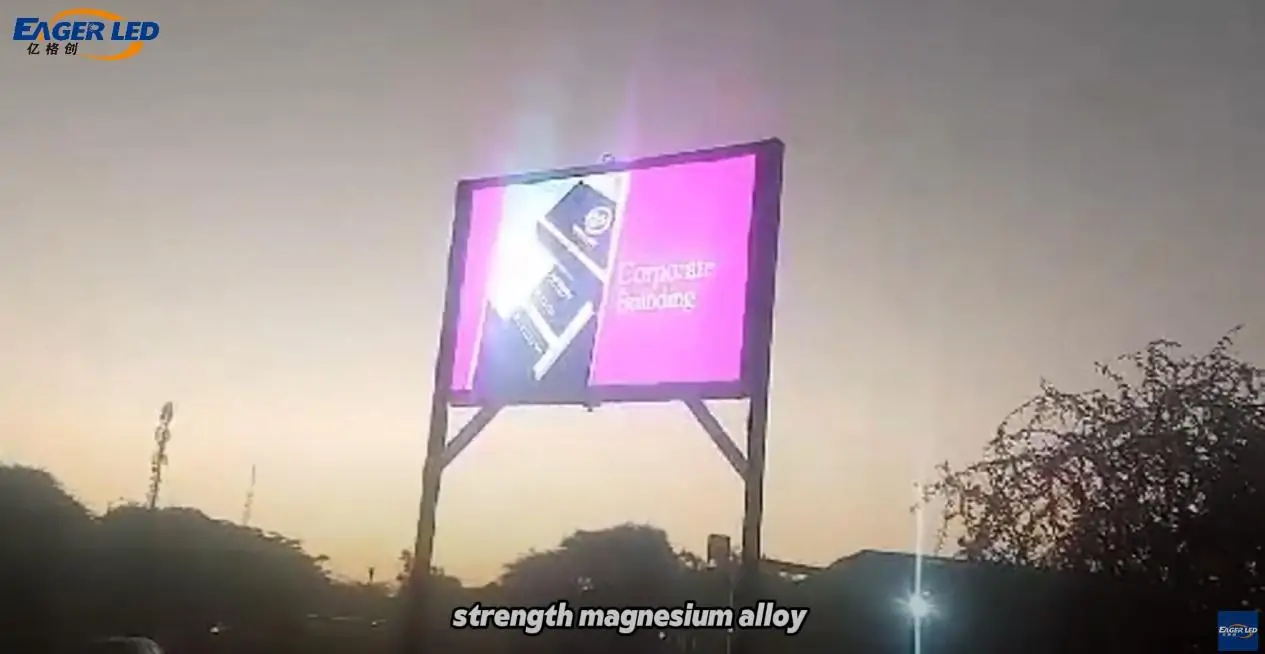
- Outdoor LED screens: For exterior installations, with specifications matched to the operating environment.
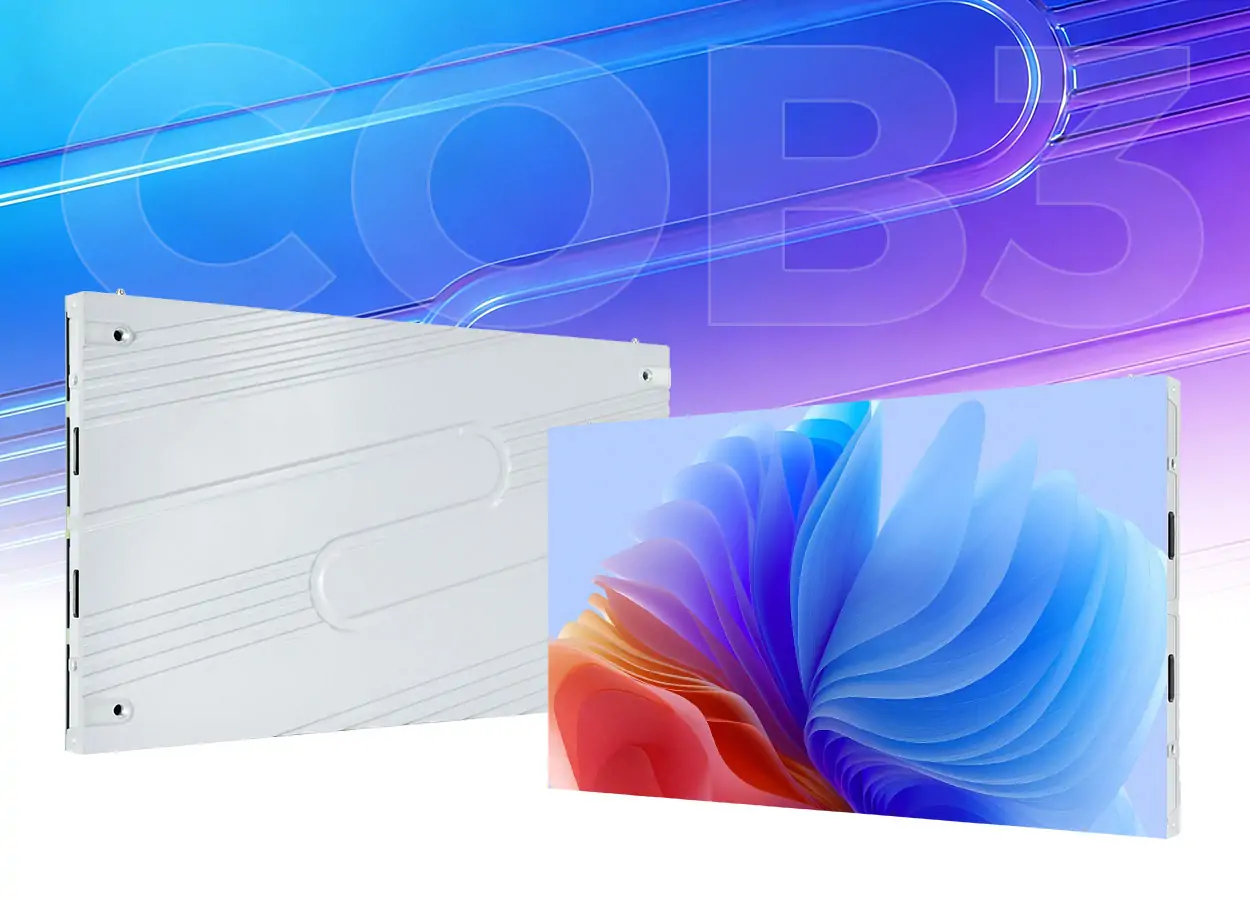
- 3D-compatible LED panels: For a mapped pixel canvas and synchronized anamorphic playback.
- Curved & corner LED displays: For designs where multiple faces support the viewing concept.
- Transparent LED screens: For projects balancing visible content with a view through the installation.
- Rental LED screens: For temporary events, where assembly, transport, and repeat setup matter.
Review the exact model’s brightness, pixel pitch, refresh rate, weather protection, power demand, and service access. Ask for documentation covering the offered configuration. Company management-system certifications and product conformity documents address different things, so neither should be presented as a blanket guarantee that every display meets every project requirement.
An owned screen gives you control over the content schedule within the site’s operating constraints. It also brings costs for the supporting structure, electrical work, controls, installation, content updates, and maintenance. Our 3D billboard cost guide provides additional context for separating hardware expenditure from advertising airtime.
For a useful project proposal, supply site photos and drawings, intended screen dimensions, audience positions, and a sample content concept. Request a documented scope for delivery, commissioning, training, spares, and support. Confirm whether animation production is included or requires a separate creative partner before comparing competing equipment quotations.
11. Beyond Times Square: Why Owning Your Own 3D Billboard Can Make Sense
Owning a 3D-capable billboard can make sense when you control a suitable location and need repeated communication with its audience. Renting Times Square media can make sense for a short launch or a New York-focused campaign. Neither option is automatically cheaper or more effective; they serve different audiences and operating needs.
Compare total costs over a defined period. For ownership, include site rights, hardware, structure, installation, electricity, content, servicing, and downtime. For rented media, include production, placement, and reporting. Treat any income from selling slots to other businesses as a forecast that depends on demand and the site’s advertising permissions.
Ask EagerLED for a configuration and cost breakdown based on your actual site, then compare it with a media proposal on equal terms. Consider expected useful operating hours and the audience you can reach. A smaller, well-positioned display with relevant content may be a better fit than copying a landmark screen’s scale.
12. FAQS
13. Times Square 3D Billboard: Can Your Brand Create the Same Experience?
A Times Square-style visual experience starts with a clear creative concept, a suitable screen, and a planned viewing zone. Custom LED hardware can support that approach in another market, but results depend on the site and execution. Approve the screen specification, content test, operating plan, and measurement method before committing to a full installation.
Contact EagerLED with your site dimensions, viewing distance, installation photos, and preferred content format to discuss a suitable display. If your immediate goal is to buy New York advertising space, use our Times Square billboard advertising guide to prepare the media brief and approach the relevant screen operator.
 NovaStar VX600 Pro: Specifications, Setup & Buying Guide
 NovaStar MCTRL600: Specs, Manual, Software, Setup & FAQs
Related Posts
Fill In Your Needs In Detail
Fill in the screen usage scene and size you need in “Content”.You will get a quote.