A Times Square billboard is an outdoor advertising display in Midtown Manhattan that sells scheduled exposure to pedestrians and other audiences. To advertise, choose a screen, agree the number and length of plays, submit approved artwork, and book through its media seller. Cost depends on the package: a short shared slot, a repeated campaign, and an exclusive takeover buy very different amounts of screen time.
This guide covers the history, screen technology, ten advertising examples, costs, booking steps, and FAQs. Prices below are published operator examples checked on September 28, 2026, rather than a market average or an EagerLED media quote. EagerLED supplies LED display hardware; buying a screen and renting advertising space in Times Square are separate decisions.
1. The History of Times Square Billboard
Times Square was previously called Longacre Square. The district took its present name in 1904 in connection with The New York Times and its new headquarters. The Times Square Alliance’s history connects that year’s New Year’s Eve celebration with the opening of the Times Tower. The neighborhood’s illuminated signs developed alongside its theaters, transit connections, and street activity.
The Rise of Times Square Billboard:
Early electric signs: Electric theater advertising and street lighting were already transforming the area before the twentieth century. A claim that the first electric billboard appeared in 1917 is therefore misleading.
1928: The Times Tower’s electric news sign debuted, according to the Alliance’s historical account. This was a news display, not evidence of a first Coca-Cola dynamic billboard.
Mid-century: Illuminated advertising and theatrical signs helped shape the district’s visual identity.
1999–2000: Nasdaq held a tower-lighting debut in December 1999; MarketSite began operating at the turn of 2000. See Nasdaq’s anniversary account.
Today: Large LED displays support video and custom creative canvases. Resolution, brightness, and supported formats vary by installation; advertisers need each screen’s specification sheet.
2. What Makes Times Square Billboard Unique?
Times Square combines outdoor media, entertainment, retail, and public space in a compact district. For advertisers, its value comes from the relationship between the screen, the viewing location, and the message. These characteristics explain the opportunity and the practical limits.
2.1 Technology Innovation and Frontier Showcase
(1) LED & Digital Technology:
- LED displays can schedule multiple advertisers and change creative without replacing printed material.
- Legibility depends on pixel dimensions, viewing distance, contrast, and artwork. Request the exact canvas and safe areas before production; a generic 4K export may not fit a tall, curved, or divided screen.
(2) Interactive & Immersive Experiences:
- Some installations support live feeds or mobile participation. A large elevated billboard is not itself a pedestrian touchscreen; interactive campaigns need an agreed technical setup.
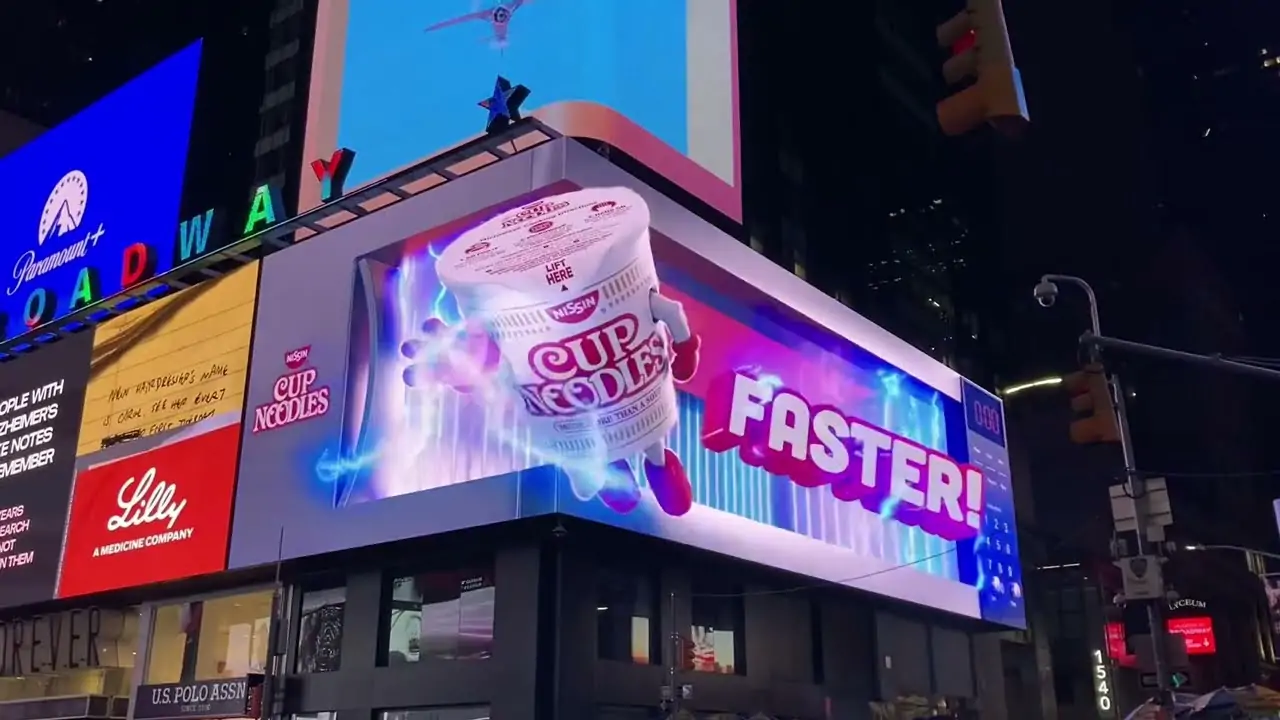
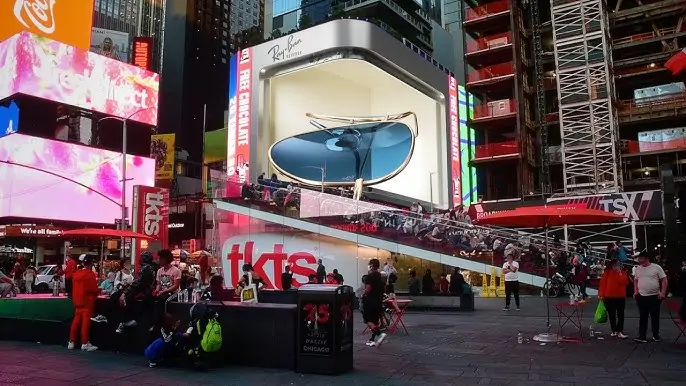
- Anamorphic “naked-eye 3D” uses perspective to create depth from a selected viewpoint. Plan the viewing position and camera angle with the operator. Our Times Square 3D billboard guide explains this format.
2.2 The Accumulation of History and Culture
Illuminated advertising has been part of Times Square for more than a century. That history belongs to the district, rather than to every current screen. Displays have been replaced and upgraded as lighting, video, and control systems have changed. Historical campaign footage should not be treated as a current inventory list.
2.3 The Arena for Global Brands
Established brands use Times Square for launches and brand storytelling, while smaller advertisers can buy selected shared slots. A recognizable setting can support campaign photography and publicity. However, appearing there does not itself establish endorsement, market leadership, or a measurable increase in sales.
2.4 Location and Audience
The district brings together Broadway audiences, commuters, residents, and visitors. A screen facing a pedestrian plaza offers a different viewing opportunity from one seen mainly by moving traffic. Compare the actual sightline, obstructions, and dwell time instead of assuming every Times Square location delivers the same audience.
2.5 Unique Visual Impact
Large LED surfaces, illuminated signs, and perspective-based animations compete for attention across the streetscape. Simple layouts help a message remain readable among neighboring advertisements. Preview the artwork at a realistic viewing size: fine print, detailed product lists, and slow introductions can be difficult to absorb while walking.
2.6 Global Media Attention
New Year’s Eve and major launches can generate media coverage, but a media booking does not guarantee television exposure or social sharing. If publicity is a goal, arrange photography, permissions, and distribution separately. Confirm whether the booked screen and time can actually be captured from your planned position.
3. The Power of Times Square Screen
Times Square screens can provide repeated public exposure, but results depend on the audience and campaign design. Distinguish media airtime from physical rental LED display equipment used at events. For either investment, define the outcome you want before comparing suppliers.
3.1 Exposure and Foot Traffic
The Times Square Alliance’s market data reports roughly 220,000 pedestrians per day in 2024, with counts reaching about 330,000 on the busiest days. These are district pedestrian counts, not verified views of an individual advertisement. Ask a media seller for the measurement period, screen-specific audience method, and assumptions behind its impression estimate.
3.2 Measuring Advertising Effectiveness
A billboard can support awareness, product launches, or event promotion. Assess awareness with a defined survey or study, using comparable audiences and a stated measurement period. Avoid treating an industry benchmark as a promised lift for your own campaign.
For a launch, record branded searches, direct visits, and relevant sales before, during, and after the campaign. Other advertising and seasonal demand can influence those measures, so a simple increase does not prove that the billboard caused it.
3.3 ROI and Conversion Measurement
Return on investment is campaign-specific. Include media, creative production, agency services, and measurement in the budget. A prestigious location may be useful for publicity even when immediate online conversion is not the primary objective.
- For direct response, use a memorable URL or offer code and compare incremental gross profit with the full campaign cost.
- For awareness, agree the research method in advance. Separate delivered plays, estimated impressions, audience recall, and sales; none is an interchangeable measure of success.
4. 10 Most Striking Times Square Billboard Advertising
4.1 Coca Cola Billboard in Times Square
Coca-Cola’s 2017 robotic sign used 1,760 independently moving LED screens, according to Coca-Cola UNITED’s launch report. Its physical movement differed from a perspective illusion on a flat display. The example illustrates how content and mechanical design can work together; it does not establish current rental availability or a campaign price.
4.2 Nasdaq Tower Times Square Advertising
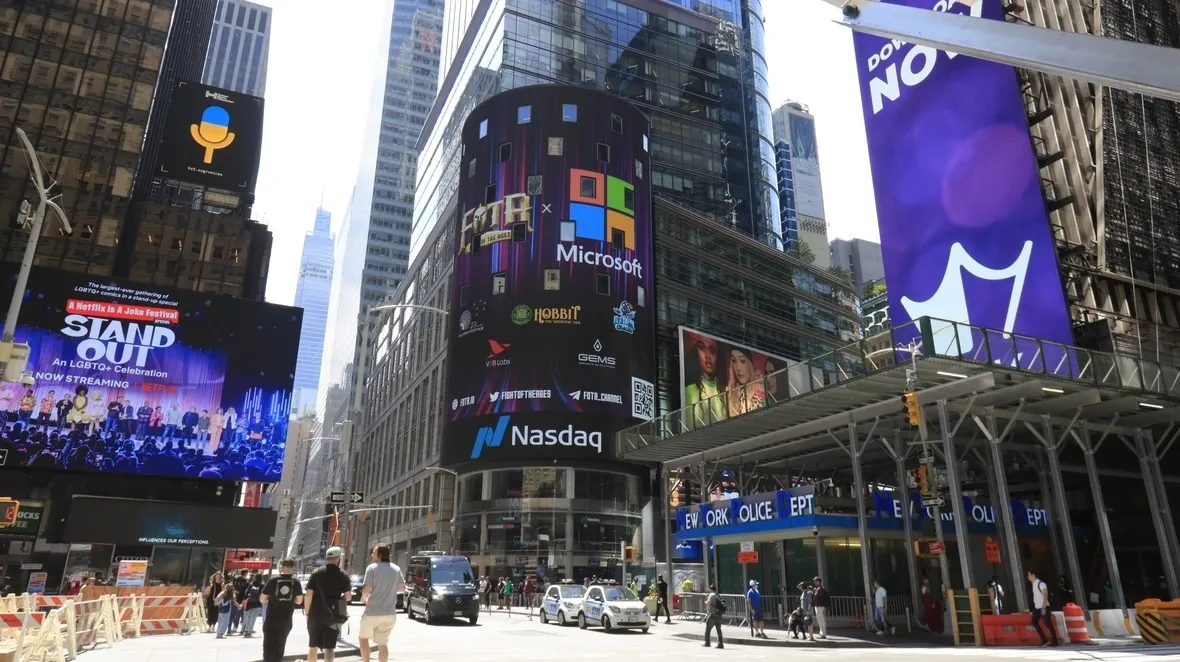
The Nasdaq Tower is associated with market ceremonies and company milestones. Nasdaq’s advertising page describes a seven-story tower with 10,000 square feet of branding space, plus other media options. Advertisers should distinguish a paid media placement from participation in an official bell-ringing ceremony.
4.3 Samsung Galaxy S8 Advertising in Times Square
Samsung marked the Galaxy S8 and S8+ debut with Times Square displays on March 29, 2017. Samsung’s launch account shows coordinated whale imagery across displays. This historical example demonstrates the creative possibilities of synchronized screens; coordination and inventory must be arranged for each new campaign.
4.4 Nike Times Square Ad
The Nike video provides a sports-advertising reference for motion, recognizable branding, and a concise visual story. When using campaign footage as inspiration, verify the original campaign title, location, and usage rights. A video example alone does not document the media schedule, audience size, or commercial results.
4.5 New Year’s Eve Ball
The New Year’s Eve Ball is an event landmark rather than a conventional billboard booking. Its first descent took place in 1907, as documented by the Times Square Alliance. Advertising near the event requires separate inventory arrangements; proximity does not guarantee inclusion in broadcast coverage.
4.6 McDonald’s Video Billboard in Times Square
McDonald’s offers a familiar example of immediately recognizable brand assets: the golden arches and product imagery communicate quickly. For your own creative, test whether a passerby can identify the brand and main message within a few seconds. Visual simplicity matters more than filling every available pixel.
4.7 Dior’s 3D Billboard Ad in Times Square
The Dior video is a reference for luxury-product presentation using a 3D billboard format. Perspective, lighting, and restrained composition can emphasize a product. Treat the example as creative inspiration; a claim that it was the brand’s first such campaign requires separate confirmation.
4.8 PlayStation Spider-Man 2 Advertising in Times Square
This example concerns Marvel’s Spider-Man 2 for PlayStation 5. PlayStation’s announcement confirms the game’s October 20, 2023 launch. The game should not be attributed to Netflix. For a similar depth effect, commission artwork for the screen geometry and intended viewing angle.
4.9 Hershey’s Advertising in Times Square
Hershey’s illustrates how familiar packaging and product colors can make a billboard easy to recognize. Seasonal creative can support a retail message, but confirm the specific campaign before repeating claims about a particular Valentine’s Day installation. Keep the product and call to action legible from the street.
4.10 BMW XM 3D Billboard in Times Square
The BMW XM example uses apparent depth and motion to make a vehicle seem to extend beyond the screen. A 3D LED display needs content designed around its physical geometry. Review a viewpoint simulation before production, since the illusion can weaken when seen from a different angle.
5. How Much Does a Times Square Billboard Rental Cost?
There is no single Times Square billboard rental price. Compare the exact screen, dates, spot length, plays, and share of voice. Published entry packages are useful reference points, but they cannot price an exclusive takeover or a different location. The examples below are in US dollars and were checked on September 28, 2026.
5.1 Renting Times Square Billboards: Factors that Influence the Cost
- Location: Identify the address, screen face, viewing direction, and obstructions.
- Size and format: Digital billboards vary in shape and resolution; size alone does not determine value.
- Duration and frequency: Specify seconds per play, plays per hour, operating hours, and campaign dates.
- Share of voice: Ask how much of the advertising loop you receive and whether exclusivity is included.
- Demand and production: Holidays, availability, custom animation, and synchronized screens can change the quote.
5.2 Cost Breakdown for Times Square Billboards
1. Digital Billboards
Welcome to Times Square’s business page lists a $500-per-day package for its Billboards 1 and 2, with alternatives of 60 seconds × 22 plays, 30 seconds × 44 plays, or 15 seconds × 88 plays. Confirm the selected screen, date, and inclusions; holiday surcharges may apply. This is one seller’s shared-slot offer, not an average daily rate.
For comparison, its personal-photo service starts at $150 for 15 seconds each hour. The personal-service FAQ excludes advertisements and logos, so businesses need the commercial service.
2. Static Billboards
Printed inventory needs a location-specific quote, including production, installation, display period, and removal. Static and digital formats sell different exposure patterns. Do not assume a printed sign is always cheaper or less effective; compare total cost and suitability for the intended audience.
3. Long-Term Rentals (4 Weeks)
Request a 28-day quote with the same delivery specification as the shorter option. Do not confuse four weeks with a calendar month. As a different-duration example, Welcome to Times Square publishes a 30-day package at $11,250. Confirm its playback schedule and screen before using it in a budget.
5.3 Additional Costs to Consider
- Creative: Budget for artwork, animation, resizing, revisions, and any screen-specific 3D production.
- Services: Ask whether agency fees, proof-of-play reports, filming, taxes, and uploads are included.
- Activations: A street event can require separate arrangements; consult the Alliance’s event-planning guidance.
- Contingencies: Confirm downtime remedies, replacement plays, and cancellation terms. Hardware maintenance is different from purchasing media time.
5.4 Cost Comparison with Other Major Cities
| Location | Cost comparison requirements |
|---|---|
| Times Square, NYC | Request a USD quote for the named screen, play schedule, and share of voice. See the published package examples above. |
| Piccadilly Circus, London | Request a GBP quote with the same campaign duration and exposure specification. |
| Shibuya Crossing, Tokyo | Request a JPY quote; identify the building, viewing direction, and operating hours. |
| Las Vegas Strip | Request a USD quote; distinguish one display from a network package and specify dates. |
A fair city comparison requires equivalent dates, screen size, operating hours, and share of voice. Obtain local-currency quotes, then state the exchange rate and date used to compare them. The table identifies what to request; it avoids unsupported daily averages for unlike media products.
6. How to Advertise on the Times Square Screen?
To advertise in Times Square, work from a written media brief and get the screen specification before commissioning creative. The following steps help turn a general interest in the location into a booking that can be checked against the delivery report.
6.1 Determine Ad Intent and Budget
Choose one primary goal: awareness, a launch, an event, or a measurable response. Set a total budget with separate amounts for media and production. Decide what success would look like before booking, and compare the expected outcome with other ways to reach the same audience.
6.2 Choose Billboard Types
- Digital: Supports scheduled stills or motion, subject to the screen’s rules. Shared loops and exclusive takeovers have different prices.
- Static: Provides a fixed message for the contracted period. Allow for print and installation lead times. Choose the format based on the message and delivery terms, rather than assuming digital always performs better.
6.3 Select Billboard Locations
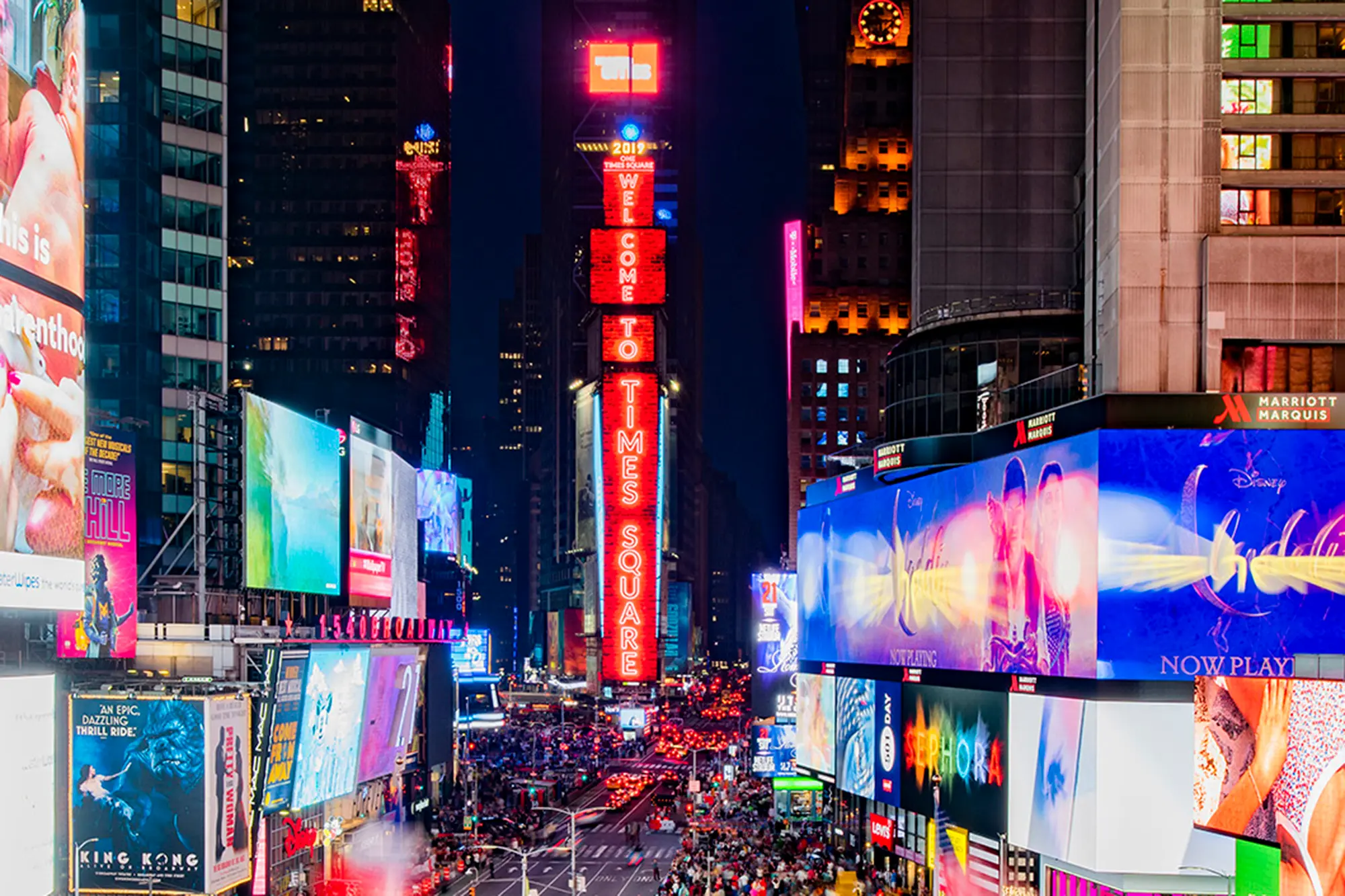
One Times Square and Nasdaq Tower are recognizable options, but select the screen by its sightline and audience fit. Ask for a current location photo, dimensions, orientation, and viewing map. Confirm the exact face in the contract, especially when a building carries several displays.
6.4 Contact Billboard Operators
Use the Times Square Alliance’s billboard directory to identify sellers by location. It lists media from companies including OUTFRONT, Clear Channel Outdoor, and New Tradition, with Dream Outdoor listed for TSX. Branded Cities also describes its New York inventory. Send the same brief to shortlisted sellers and verify who controls the requested screen.
6.5 Design of Advertisement Content
Request pixel dimensions, file format, codec, frame rate, duration, safe areas, and submission deadline. Use one readable message, strong contrast, and a clear brand identity. See Branded Cities’ screen-specific resources for examples of technical sheets. Test QR codes at realistic distance and playback duration before relying on them.
6.6 Determine Ad Length and Time Frame
Choose dates and dayparts around your audience and launch schedule. Specify the time zone and whether plays are guaranteed within particular hours. A one-day booking usually means scheduled appearances during that day, not uninterrupted display. Avoid assuming evenings always offer the best audience or value.
6.7 Sign the Contract and Pay the Fee
Check the address, screen, dates, spot length, minimum plays, share of voice, total charges, and payment schedule. Include artwork approval deadlines, cancellation conditions, and remedies for missed delivery. For a takeover, define exactly which screens and minutes are exclusive. Retain the accepted creative and final booking confirmation.
6.8 Monitor the Effectiveness of the Advertisement
- Collect a proof-of-play report and compare delivered plays with the contract.
- Use a trackable landing page, memorable URL, or campaign code for response measurement.
- Separate paid delivery, estimated reach, social sharing, and incremental sales. Document other campaigns running at the same time when interpreting results.
6.9 Additional Precautions
- Confirm the seller’s content policy and your rights to images, music, trademarks, and people shown.
- Check any insurance or permit requirements for an accompanying event, filming, or on-street activity.
- Agree what happens if weather, technical faults, or event restrictions affect delivery or your planned photography.
7. The Future Trend of Times Square Display
Future display development may expand creative and scheduling options, but capabilities differ by operator. Treat AR, automated scheduling, and energy improvements as features to verify in a proposal. The following are planning possibilities, not predictions that every Times Square screen will adopt them.
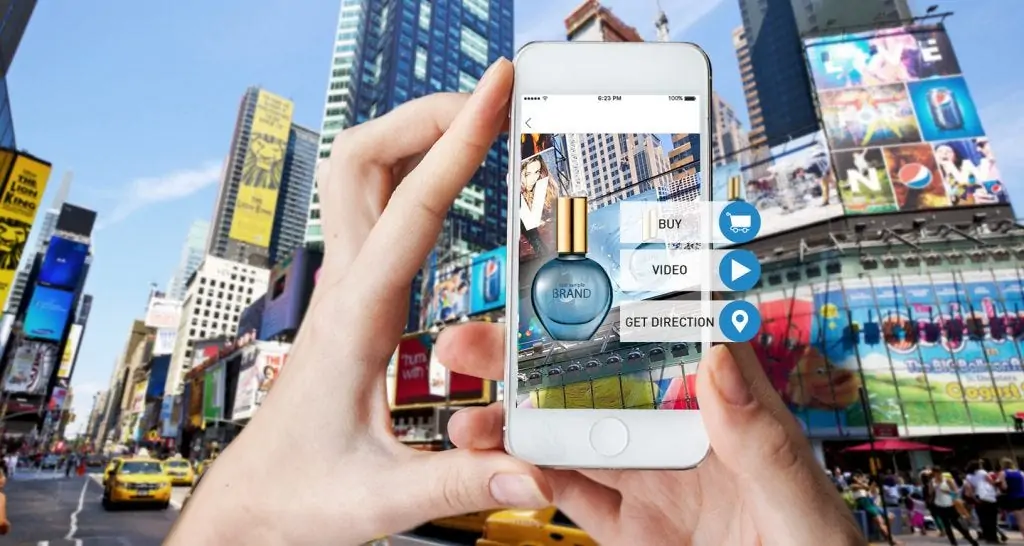
7.1 Technology Innovation: AR, VR and the Rise of Interactive Advertising
Augmented reality and virtual reality can extend a campaign through phones or a separate experience. They are distinct from an anamorphic 3D billboard, which uses perspective without a headset. Ask what the viewer must do, which devices are supported, and whether an additional app is required.
For example, a mobile try-on could accompany a fashion advertisement. Test the connection, instructions, and fallback experience in advance. A clear static message should still work for people who do not participate. Interaction is useful only when it serves the campaign rather than distracting from it.
The illustration below shows a phone-based concept with options to buy, watch a video, or get directions; it is not a live service on this page.
7.2 Data-Driven Advertising: Precision Targeting and Personalized Content
Scheduling can use approved triggers such as time of day or weather when the operator supports them. Do not assume a billboard recognizes an individual viewer or their mood. Ask which data is used, how it is aggregated, and what reporting is available before buying a targeting claim.
A weather-based rainwear message is one possible use. Prepare approved versions and a default creative if the data feed fails. Compare performance using a defined method; automation alone does not prove improved conversion or reduced waste. Keep personal-data collection separate from basic media delivery.
7.3 Sustainable Development: Green Technology and Eco-friendly Advertising
Energy performance depends on screen area, brightness settings, operating hours, content, and equipment. Ask for measured electricity use and maintenance information rather than assuming an LED screen is automatically low impact. If renewable electricity is claimed, request the scope and evidence behind that claim.
For a new installation, consider service access, replaceable modules, expected lifetime, and end-of-life handling alongside power use. For an advertiser renting airtime, ask what environmental information the operator can substantiate. Avoid publishing carbon-neutral or solar-powered claims without documentation that applies to the booked display.
8. FAQs
9. Conclusion
A successful Times Square billboard campaign starts with a clear objective, a specified screen, and a verifiable delivery schedule. Use published prices as package examples, obtain a current written quote, and design to the operator’s specification. If you are planning your own display installation, our 3D billboard cost guide separates hardware, content, and installation costs from media rental.
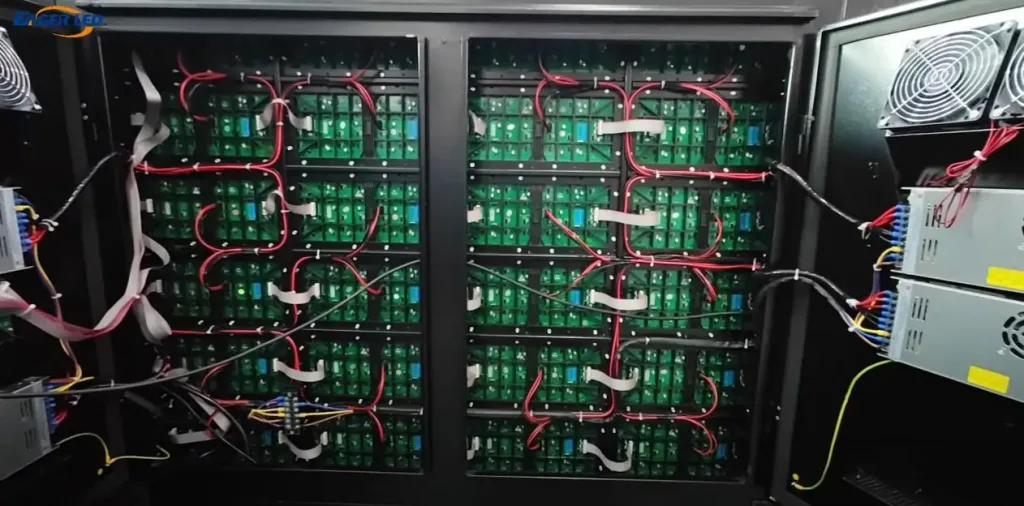 42 EA-OFixed Outdoor Advertising Screen Shipped to Nicaragua
 Mr. Zeng and His Team Visited Our EagerLED LED Panel Factory
Related Posts
Fill In Your Needs In Detail
Fill in the screen usage scene and size you need in “Content”.You will get a quote.