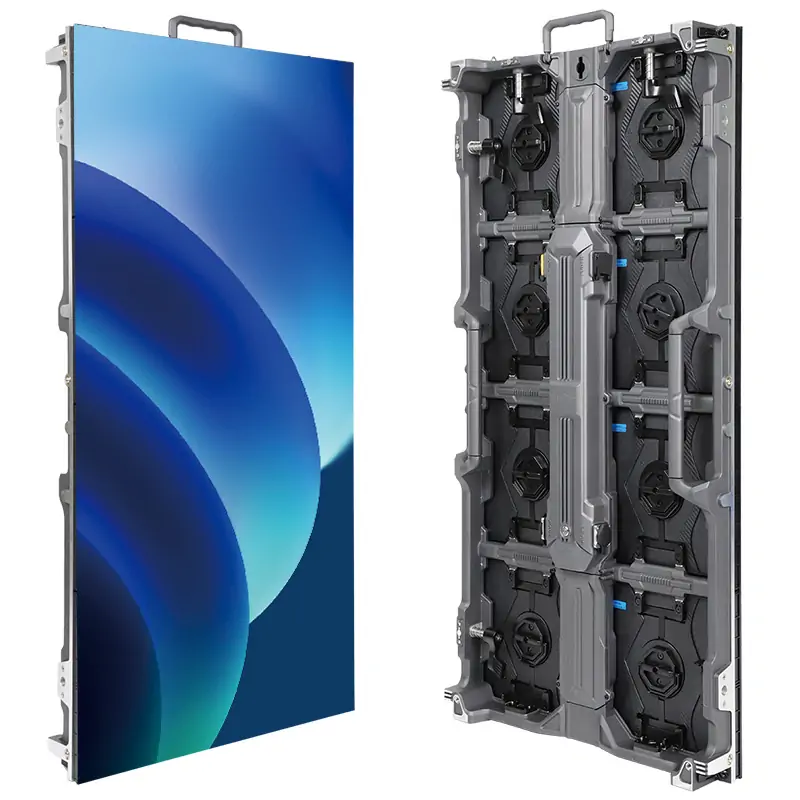
COB vs GOB LED is not a simple winner-takes-all decision. COB (Chip on Board) bonds LED chips directly to the circuit board and protects them with a dense coating. GOB (Glue on Board) starts with an SMD module, then adds a transparent protective layer over the assembled LEDs. Choose COB when fine-pitch image quality, a smooth surface, and heavy front-contact protection lead the brief. Choose GOB when you need stronger protection than standard SMD, familiar module replacement, and a more accessible budget.
This COB vs GOB LED guide covers the process, the protection, the repair model, the cost, and the fine-pitch trade-offs. Therefore, an integrator can request a comparable quotation from every supplier.
1. COB vs GOB LED: The Verdict First
For a wall that viewers approach closely, shortlist COB first. Its compact chip layout supports fine pixel pitches and a smooth front surface. However, the final image also depends on the optical coating, the driver design, the calibration, and the room lighting.
GOB can be the practical choice for public indoor spaces, retail, education, and some rental systems. It adds front-surface protection to an SMD module. As a result, buyers keep a familiar module layout while reducing the risk of damage from normal handling.
There is no universal pitch boundary between the two options. P1.8, for example, is a pixel spacing rather than a rule that decides the packaging method. Therefore, compare available products at the same pitch and viewing distance before you choose.
Neither label is a complete specification. Ask instead for the LED package, the pixel pitch, the module construction, the coating material, the IP rating, the front-service method, brightness, refresh rate, the spare policy, and the acceptance test.
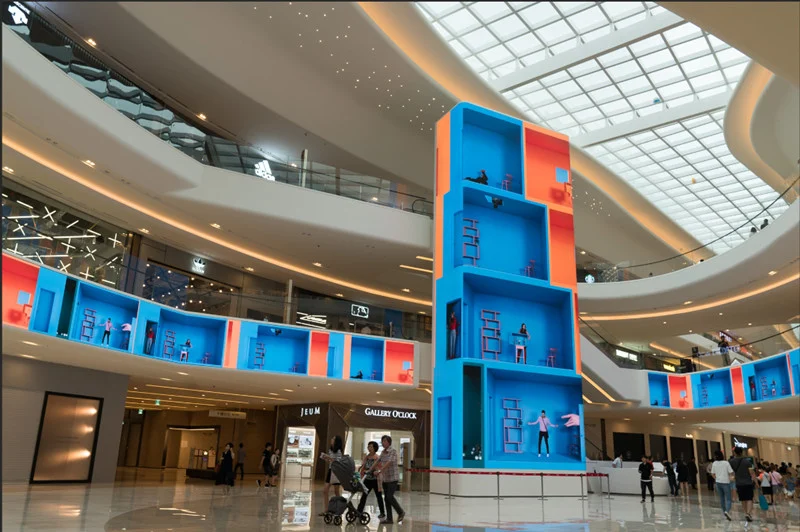
For most indoor projects, however, the COB vs GOB LED choice comes down to three variables. For example, viewing distance sets the pitch, while contact risk sets the protection level. Service access then sets the repair plan.
2. How COB and GOB Packaging Work
In practice, the COB vs GOB LED question starts with how each method builds the light-emitting face, protects it, and allows it to be serviced.
2.1. COB: chips bonded directly to the board
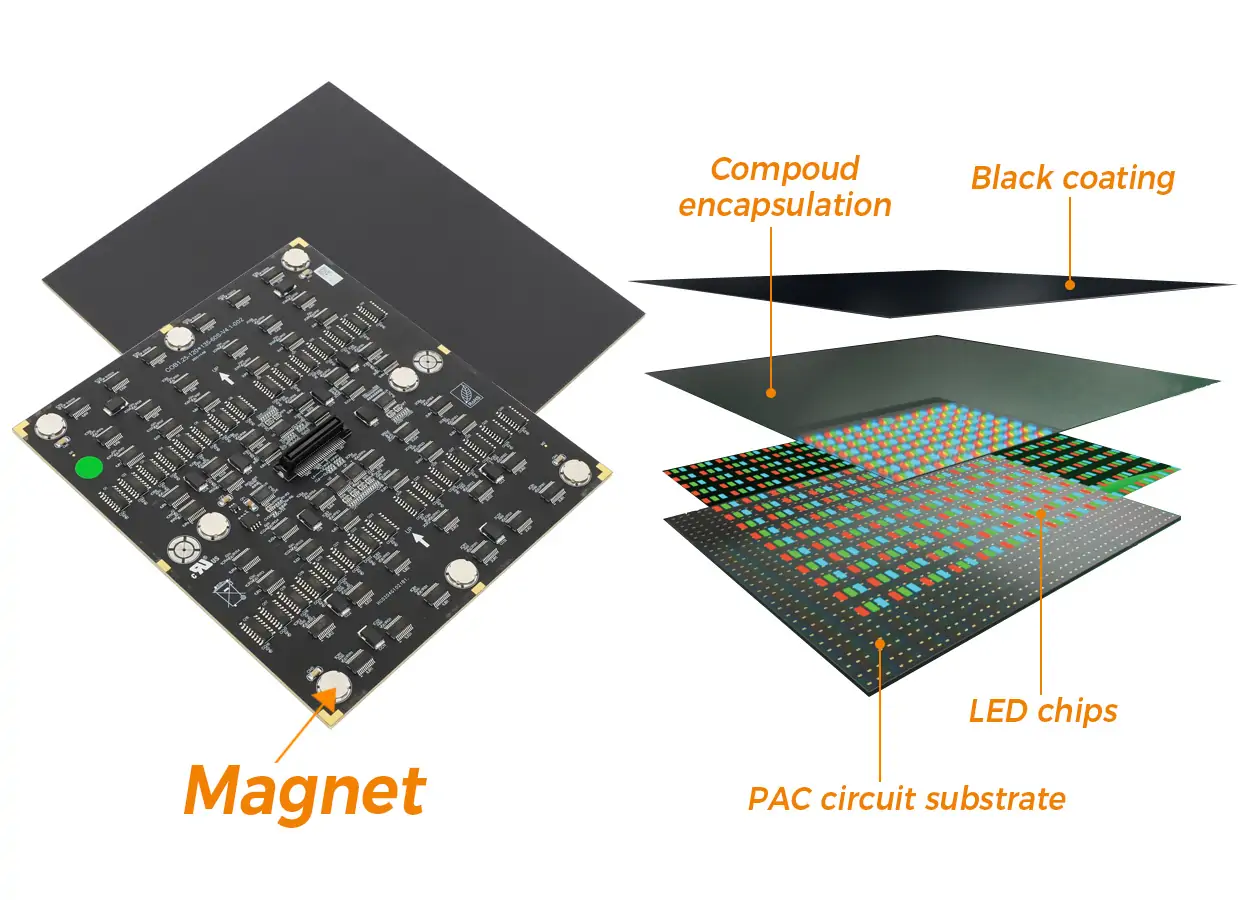
In COB, bare red, green, and blue chips are placed on a PCB, electrically connected, and covered with a protective compound. The result is a compact optical package with fewer discrete SMD parts. At close viewing distances, the continuous surface looks more even. In addition, it can reduce the visual “black grid” associated with exposed package edges.
2.2. GOB: an SMD module with a protective layer
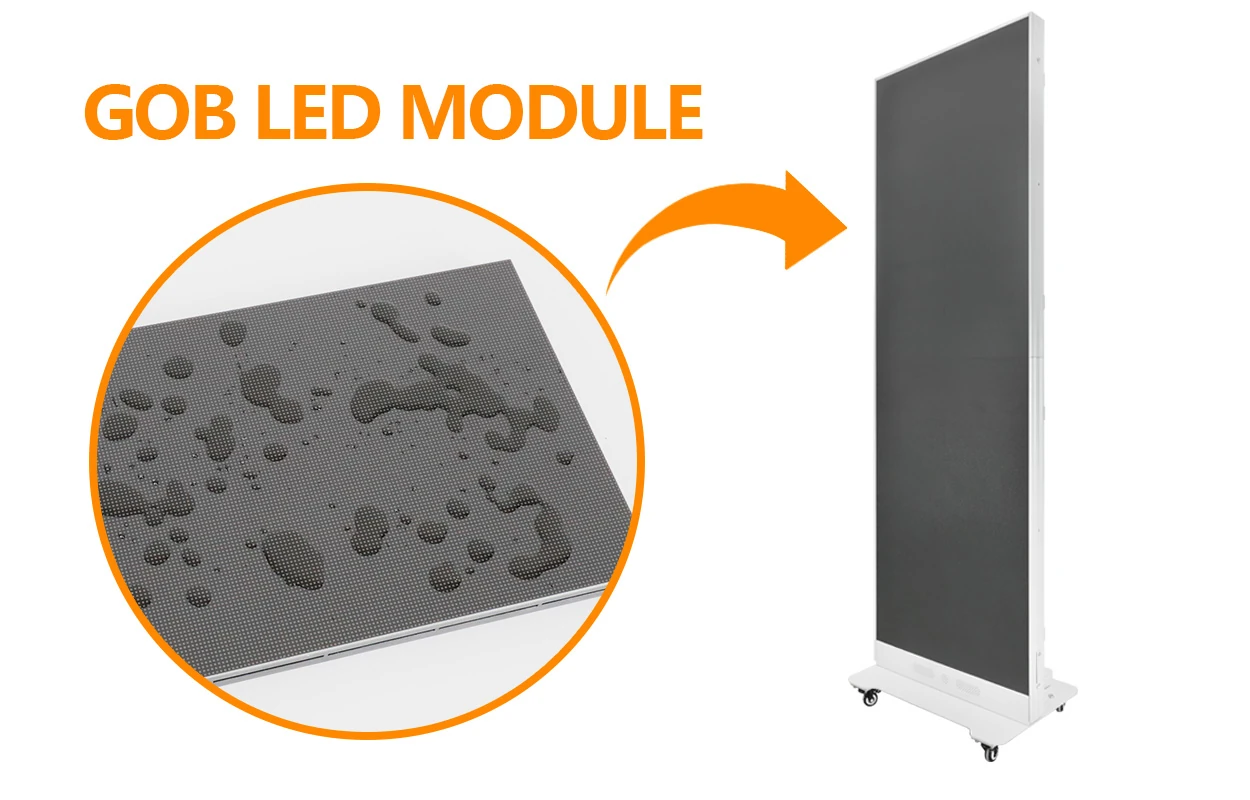
GOB uses a conventional SMD LED module, then applies a transparent glue or resin layer across the light-emitting face. The coating helps protect lamps and solder joints from dust, moisture, scratches, and incidental contact. Meanwhile, a GOB LED module keeps the architecture that most service teams already know.
3. COB vs GOB LED Comparison Table
Therefore, use this COB vs GOB LED comparison table to weigh the factors that change an indoor project most.
| Decision factor | COB | GOB |
|---|---|---|
| Packaging | Bare chips bonded to PCB | SMD LEDs plus surface coating |
| Fine-pitch suitability | Excellent for very fine pitch and close viewing | Good across common indoor pitches |
| Surface protection | Integrated, highly uniform surface | Strong protection over SMD components |
| Repair model | Specialized chip or board repair | Module-level service is often familiar |
| Typical cost position | Higher manufacturing and service specialization | Often lower entry cost at similar pitch |
| Best fit | Control rooms, premium retail, XR, close-view walls | General indoor walls, rental, public-facing installations |
4. Protection, Reliability, and the Real Meaning of IP Ratings
Protection is where the COB vs GOB LED decision turns into an operating decision. Both technologies can be engineered for demanding environments. However, the coating alone does not define reliability. Verify the module and cabinet IP rating, the coating adhesion, the thermal path, the conformal protection on the PCB, and the test method. A display marked “water resistant” is not automatically suitable for rain, wash-down, or outdoor installation.
COB’s continuous encapsulation can reduce damage from accidental knocks and cleaning contact. Meanwhile, GOB raises protection well above uncoated SMD, especially in public areas where hands, dust, or light impact are predictable. For either option, ask the supplier to demonstrate cleaning, edge handling, and a controlled impact test on a spare module.
5. Repairability, Spares, and Five-Year Cost
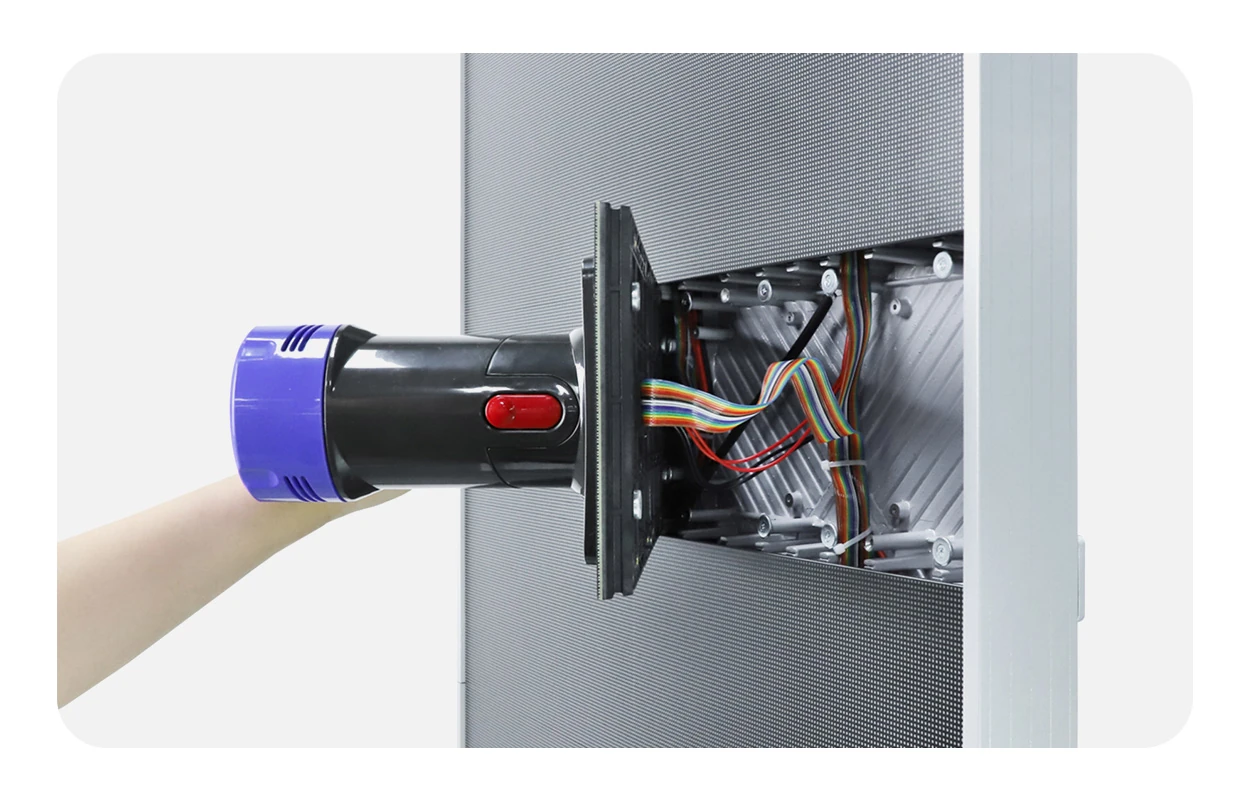
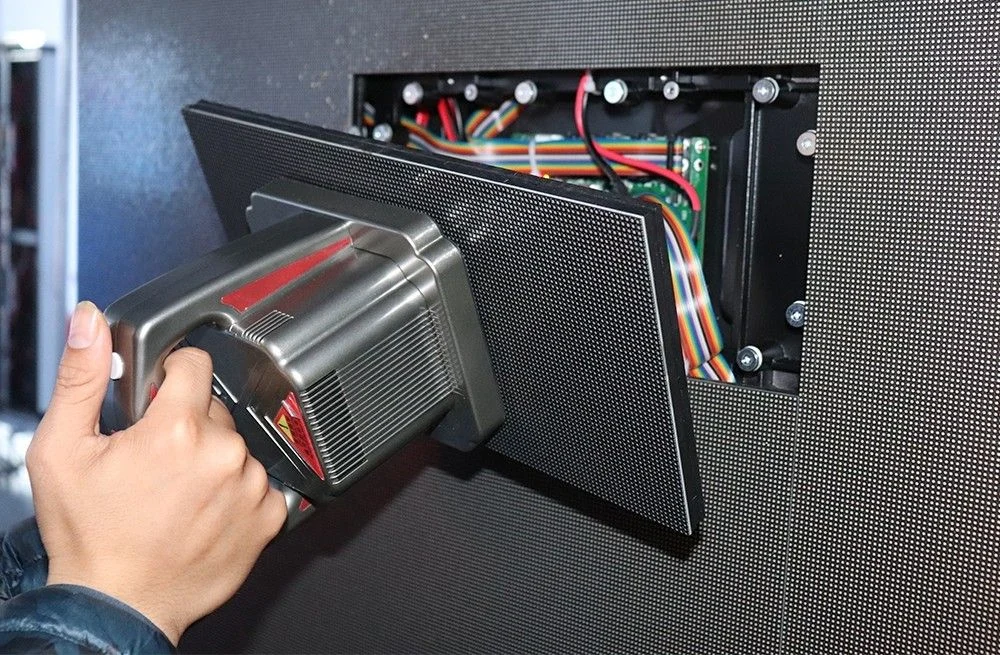
Repair is where the packaging decision becomes an operating decision. GOB modules commonly fit an SMD replacement workflow, although the cured coating can slow individual LED replacement. COB can deliver excellent uniformity, yet repairs may require trained technicians, precision tools, and tighter calibration records.
Compare the five-year total cost rather than the price per square meter. Include purchase, installation, power, planned service, spare modules, power supplies, receiving cards, calibration, freight, and technician travel. In addition, require a written failure process: response time, advance replacement, the pixel-policy threshold, and who pays for shipping. A lower purchase price is not lower cost if a failed module stops a premium venue for several days.
6. Fine-Pitch Suitability and Image Quality
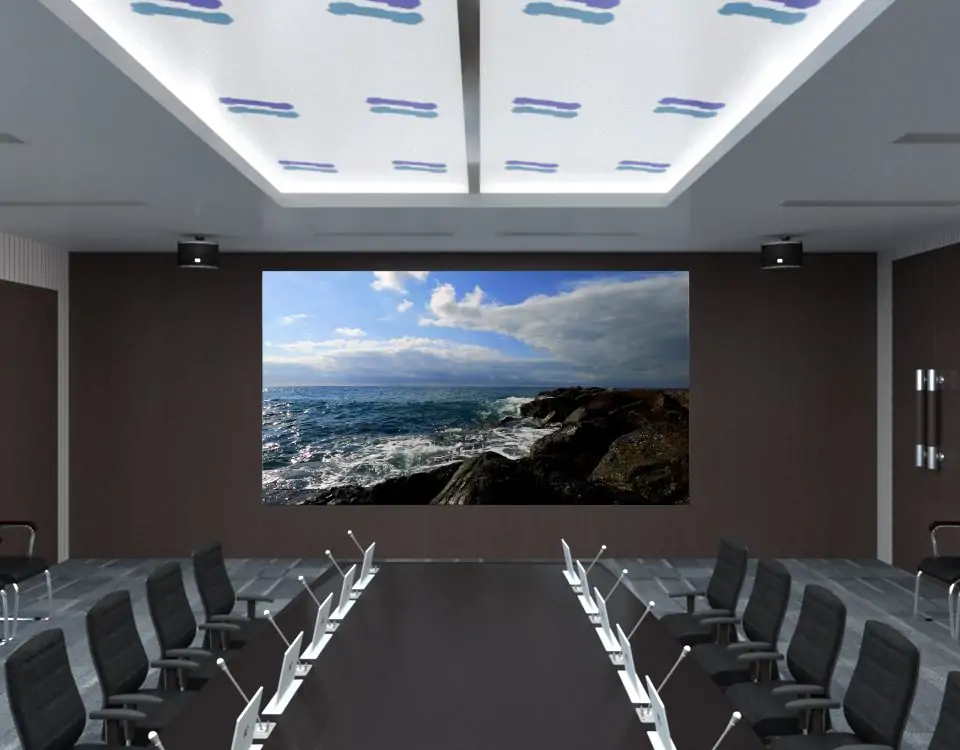
For fine-pitch LED, the COB vs GOB LED question usually becomes a viewing-distance question. Viewers may stand 1.5-3 m from the wall. COB’s compact chip layout can produce a darker, flatter surface with smooth low-gray transitions and less exposed package geometry. That helps in control rooms, boardrooms, broadcast sets, and luxury retail where texture is visible.
GOB can still look excellent when the LED package, the mask, the calibration, the driver IC, and the processing are well matched. Compare both samples at the same pitch, brightness, content, and camera settings. Inspect skin tones, dark gradients, white text, viewing angle, moiré, and cabinet-to-cabinet consistency.
7. Which Packaging Method Fits Your Project?
7.1. Choose COB when close viewing and surface quality dominate
- Nearest viewers are inside roughly 2 m.
- Your target pitch and close-view sample favor a COB design.
- The wall appears in close-up camera shots.
- Premium uniformity justifies specialized service.
7.2. Choose GOB when protection and value must balance
- The wall is an indoor public or rental installation.
- Operators need familiar SMD module service.
- Budget must cover spares, structure, and training.
- The sample meets your needs at the intended viewing distance.
8. Limitations Buyers Should Put in the RFQ
“COB” and “GOB” are manufacturing labels, not universal performance grades. Coating thickness, resin chemistry, chip brand, PCB design, scan mode, calibration, and service quality vary by supplier. In addition, the same label can cover very different hardware. Ask these questions in the request for quotation:
- Which exact LED package and chip brand are used?
- What measured brightness, refresh rate, contrast, and operating power apply?
- Which IP rating and test standard cover the module and the cabinet?
- Can one damaged pixel, module, and power supply be replaced on site?
- Which spares and calibration files are included?
- Can we approve a same-content, same-brightness side-by-side demo?
9. How to Compare COB and GOB Samples Before Ordering
A COB vs GOB LED sample comparison is only useful when the test is controlled. Request two modules with the same pixel pitch, cabinet size, processor, brightness setting, content file, and viewing distance. Start with a black test pattern. Then inspect a white field, a neutral gray gradient, skin tones, small text, and a moving camera image. Record what you see from the nearest viewer position and from the intended camera angle.
Also inspect the edges and the service side. Check whether the protective layer has bubbles, haze, uneven thickness, exposed corners, or visible color differences after cleaning. Ask the supplier to remove and reinstall one module while you observe the connector, the magnet, the screw, the receiving card, and the calibration workflow. In practice, this demonstration reveals more about ownership than a headline specification.
For a procurement team, the final comparison sheet should include at least these measurable fields: pixel pitch in millimeters, active resolution, brightness at the proposed operating level, refresh rate, grayscale performance, viewing angle, module weight, front or rear service, cabinet IP rating, spare quantity, warranty response time, and expected power. Keeping the fields identical prevents a low-cost GOB quote or a premium COB quote from appearing better simply because the scopes differ.
10. Installation and Operations Checklist
Before delivery, confirm the wall dimensions, the structural loading, the ventilation, the electrical circuits, the data routes, the grounding, and the safe access. During commissioning, test every input, backup source, processor preset, camera, brightness level, and content format. Save the approved settings and photograph the module layout so a technician can identify the correct spare quickly.
Train operators on brightness changes, source selection, safe cleaning, visual inspection, and escalation. Keep spare modules in a labeled, dry location, and record their batch or calibration information. Whether the wall uses COB or a GOB LED module, consistent operating procedures protect image uniformity and reduce avoidable service calls. Document the COB vs GOB LED decision in the handover file. As a result, the next technician knows why the packaging was specified.
11. FAQs
12. Conclusion
COB vs GOB LED is a fit question. Start with viewing distance, pitch, contact risk, service access, camera use, and five-year ownership cost. Select COB for a premium fine-pitch surface when specialized service is acceptable. Select GOB when robust protection and a familiar SMD module workflow provide the stronger project balance.
For a project-specific recommendation, share the wall dimensions, nearest viewer, indoor or outdoor environment, content, camera workflow, and service plan with the EagerLED engineering team. Review related guidance on indoor LED screens and pixel pitch selection. Technical definitions can also be cross-checked against LED professional coverage of COB and the EagerLED COB vs GOB demonstration video.
 Event LED Screen Guide: Size, Rigging and Power Planning
 NovaStar ViPlex Express: Download, Setup & Troubleshooting
Related Posts
Fill In Your Needs In Detail
Fill in the screen usage scene and size you need in “Content”.You will get a quote.