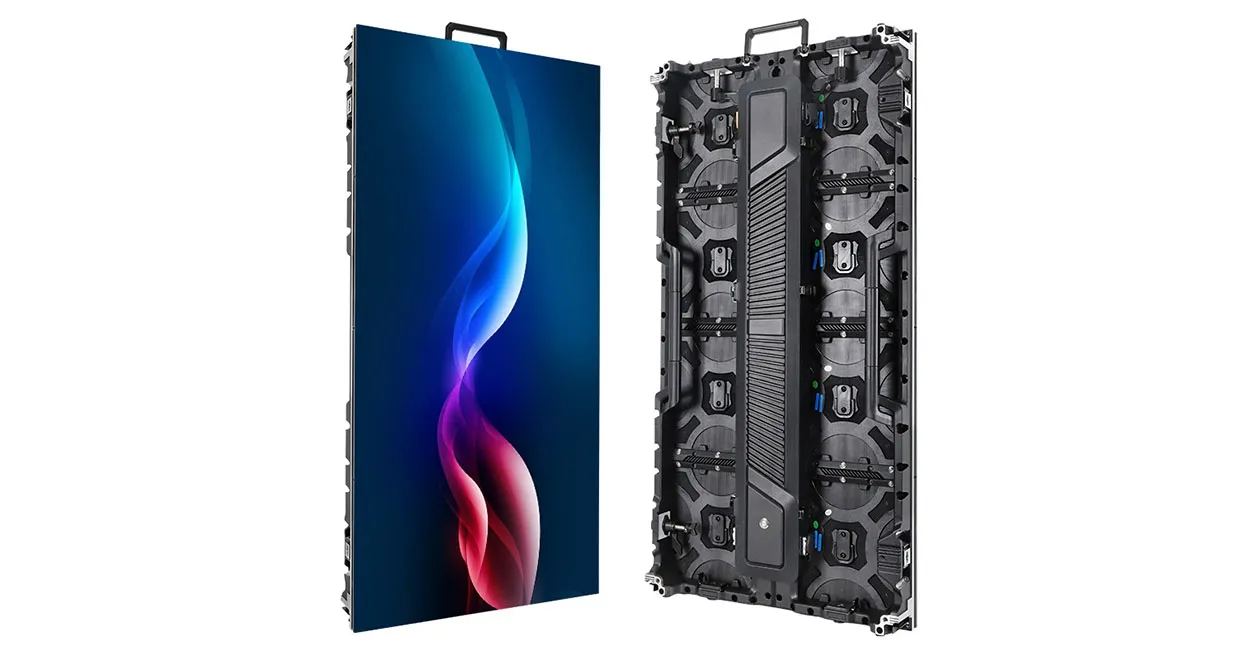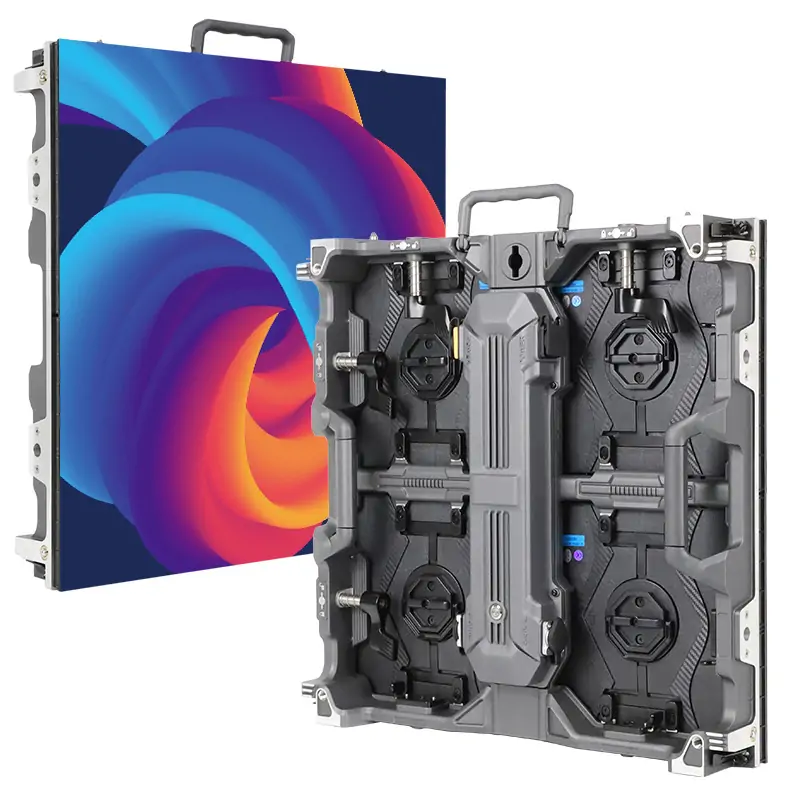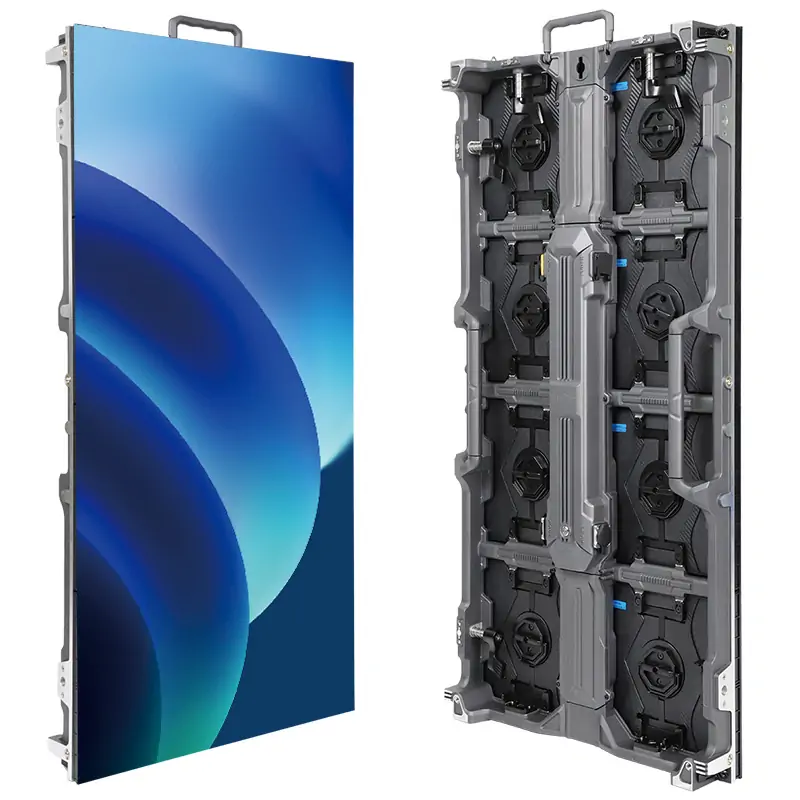
A giant product appears to slide beyond a building’s corner. A digital creature seems to step out above a public square. These effects make a 3D billboard look radically different from ordinary outdoor advertising, but the illusion depends on coordinated screen geometry, animation, and audience position.
For LED display buyers, distributors, AV integrators, and project contractors, understanding that relationship is essential. Purchasing an LED screen is only one part of the project. A successful installation also needs a suitable location, accurately mapped content, reliable playback, and a maintenance plan that fits the building.
This guide explains how naked-eye 3D LED billboards work and how to evaluate them as commercial display systems. It covers the engineering decisions behind the visual effect, the costs that belong in a complete quotation, and the information to prepare when discussing a project with EagerLED.
1. What Is a Naked-Eye 3D Billboard?
A naked-eye 3D billboard is an LED display showing specially designed imagery that appears to have depth without requiring viewers to wear glasses. In the outdoor advertising context, this usually means an anamorphic illusion: an image constructed to look spatially convincing from a planned viewing position.
The screen remains a physical display surface. The apparent object does not extend into the air, even when the animation makes it look as though it crosses the screen’s boundary.
Several technologies share similar marketing language, so buyers should establish what a supplier actually means by “3D.”
| Term | What it describes | What buyers should establish |
|---|---|---|
| Anamorphic 3D billboard | Perspective-based imagery on an LED surface | Intended viewpoint and content mapping |
| Corner LED display | A display spanning adjoining faces | Corner construction and image continuity |
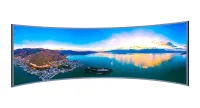
| Curved LED display | A display following a curved surface | Actual radius and compatible content geometry |
| Autostereoscopic display | A system directing different views toward different viewing positions | Optical method and supported viewing zones |
| Holographic display | A term requiring clarification about the actual imaging technology | Whether the system reconstructs light wavefronts or uses another visual effect |
A conventional anamorphic billboard does not need to send a separate image to each eye. Perspective, shading, overlap, and animation can communicate depth within a single displayed image.
For procurement, this distinction matters: “3D” describes the intended visual experience, while the quotation must still define the LED hardware, control system, mechanical structure, and content deliverables.
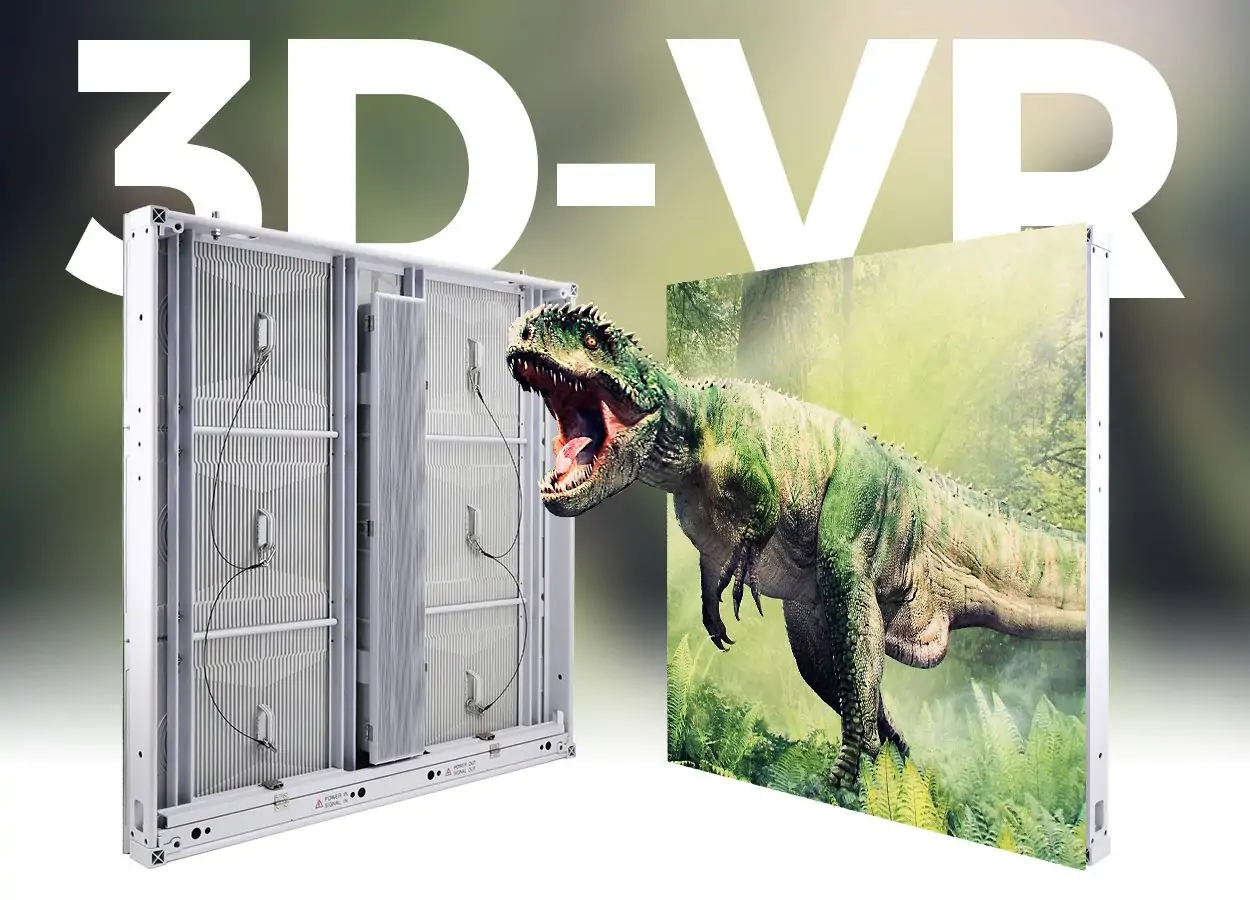
2. How 3D LED Billboards Work: The Anamorphic Illusion
01. Perspective creates the apparent depth
Imagine looking through a window into a room. Nearby objects appear larger, parallel edges seem to converge, and one object can obscure another. An animation can reproduce these relationships on an LED screen.
The content designer establishes a virtual camera corresponding to the intended audience position. The scene is then mapped to the display so that its perspective looks correct from that location. Viewed elsewhere, some objects may look stretched or misaligned.
This use of forced perspective and anamorphic content is also identified in INFiLED’s technical explanation of 3D LED billboards.
02. A virtual frame helps establish the illusion
Many 3D billboard animations include a simulated enclosure, shelf, or architectural opening. It gives the viewer a reference for deciding what appears inside or outside the scene.
For example, a rendered product may begin behind a virtual frame and then overlap it. That overlap suggests forward movement even though every illuminated pixel remains on the display.
Shadows and lighting support the effect when they remain consistent with the scene. An object with conflicting perspective or an implausible shadow can look less convincing, regardless of screen resolution.
03. The display system must preserve the artwork
The playback chain typically includes a media source, LED processor or controller, receiving cards, driver electronics, and LED modules. Its job is to deliver the intended image to the correct physical pixels.
Unexpected scaling, incorrect cropping, or unsynchronized outputs can disrupt the illusion. A scene spanning two faces must maintain continuity across their meeting point.
A 3D LED billboard therefore combines two separate achievements: content that creates believable depth and hardware that reproduces that content accurately. Improving one cannot automatically compensate for a fault in the other.
3. Screen Design, Viewing Angles, and the 3D Sweet Spot
01. Start with the audience position
The best viewing position should be established during the site survey, before finalizing the screen layout.
Record where people approach, stop, and look upward. Include screen elevation, pedestrian routes, nearby obstructions, and the practical space available for viewing. A visually ideal viewpoint has little commercial value if audiences cannot comfortably occupy it.
The 3D sweet spot is the location where the designed perspective is most accurate. There may be a useful surrounding viewing area, but its extent depends on the artwork, screen geometry, and how much distortion is acceptable.
An LED specification’s horizontal viewing angle describes an optical characteristic of the display. It does not define the area in which anamorphic content retains convincing perspective.
02. Choose geometry around the site
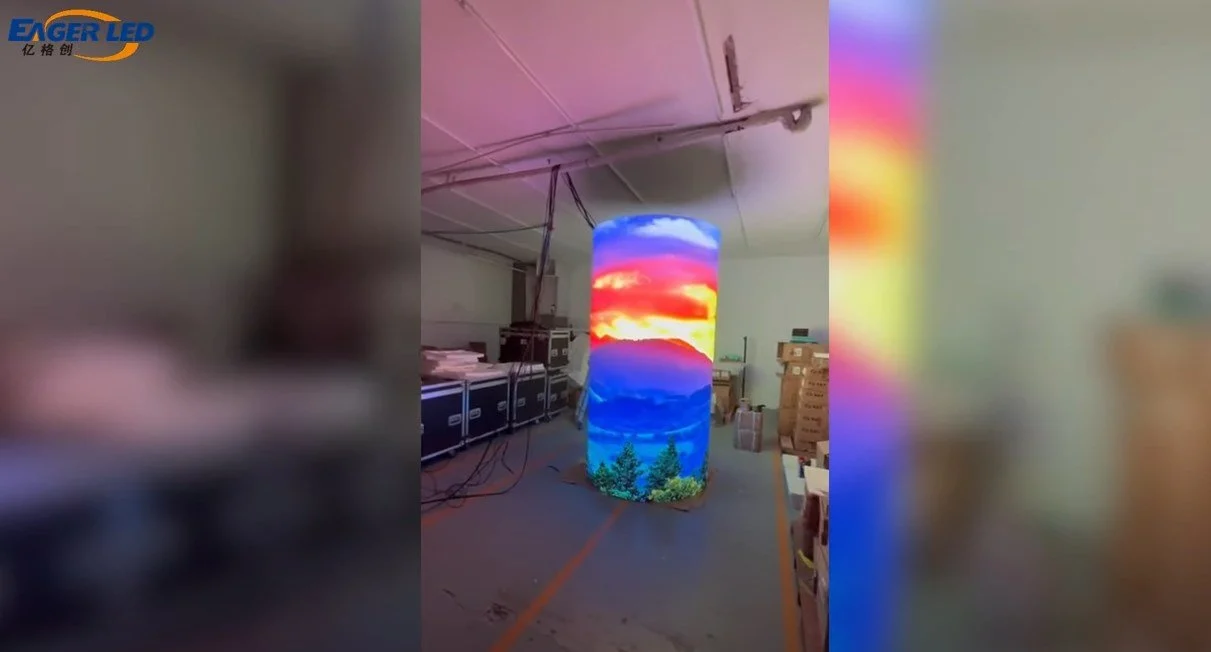
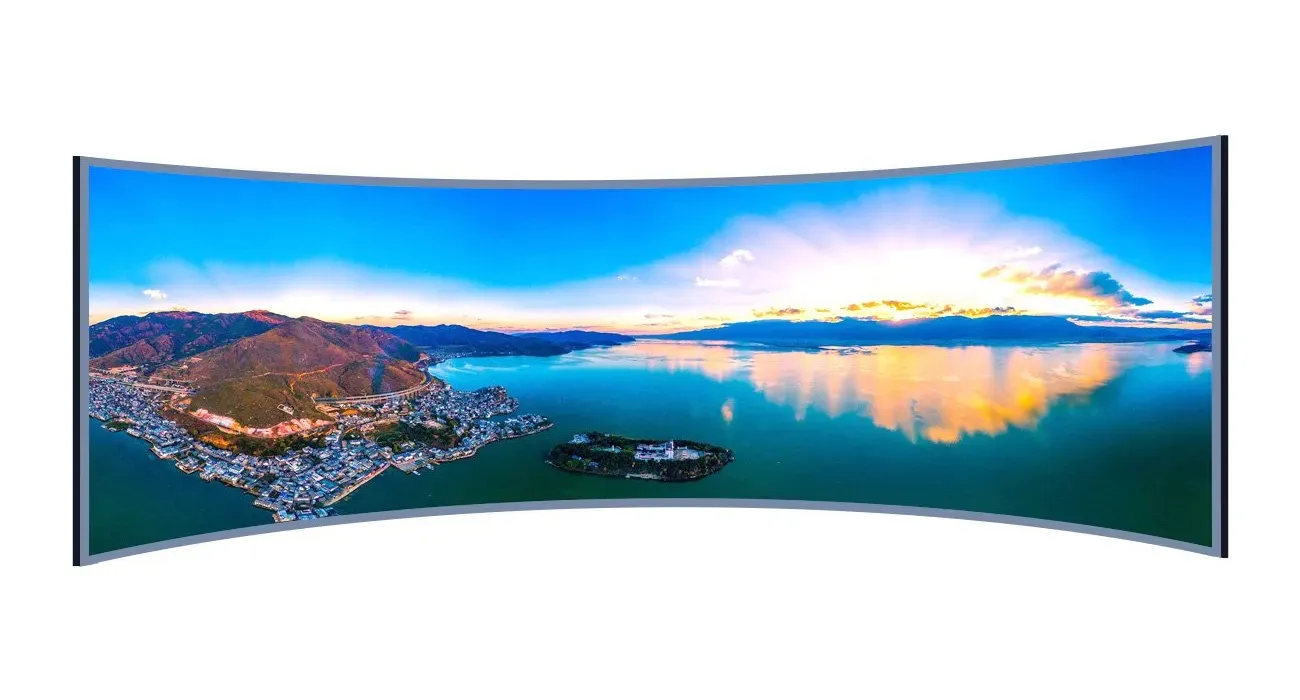
An L-shaped screen offers adjoining surfaces that can support a virtual room or enclosure. A curved screen creates a different continuous surface. Flat displays can also show anamorphic content, provided the animation is designed for their geometry and viewing position.
None of these shapes guarantees a successful 3D billboard. The physical surface and the digital model must match.
| Design factor | Practical assessment | Why it matters |
|---|---|---|
| Screen dimensions | Confirm the active display area | Determines the content canvas |
| Corner angle or curve | Obtain accurate drawings and measurements | Prevents geometry mismatch |
| Screen elevation | Check audience eye level and upward sightlines | Influences virtual camera placement |
| Pixel pitch | Evaluate detail at actual viewing distances | Balances image quality and project cost |
| Surface alignment | Inspect cabinet joints and transitions | Reduces visible breaks in the scene |
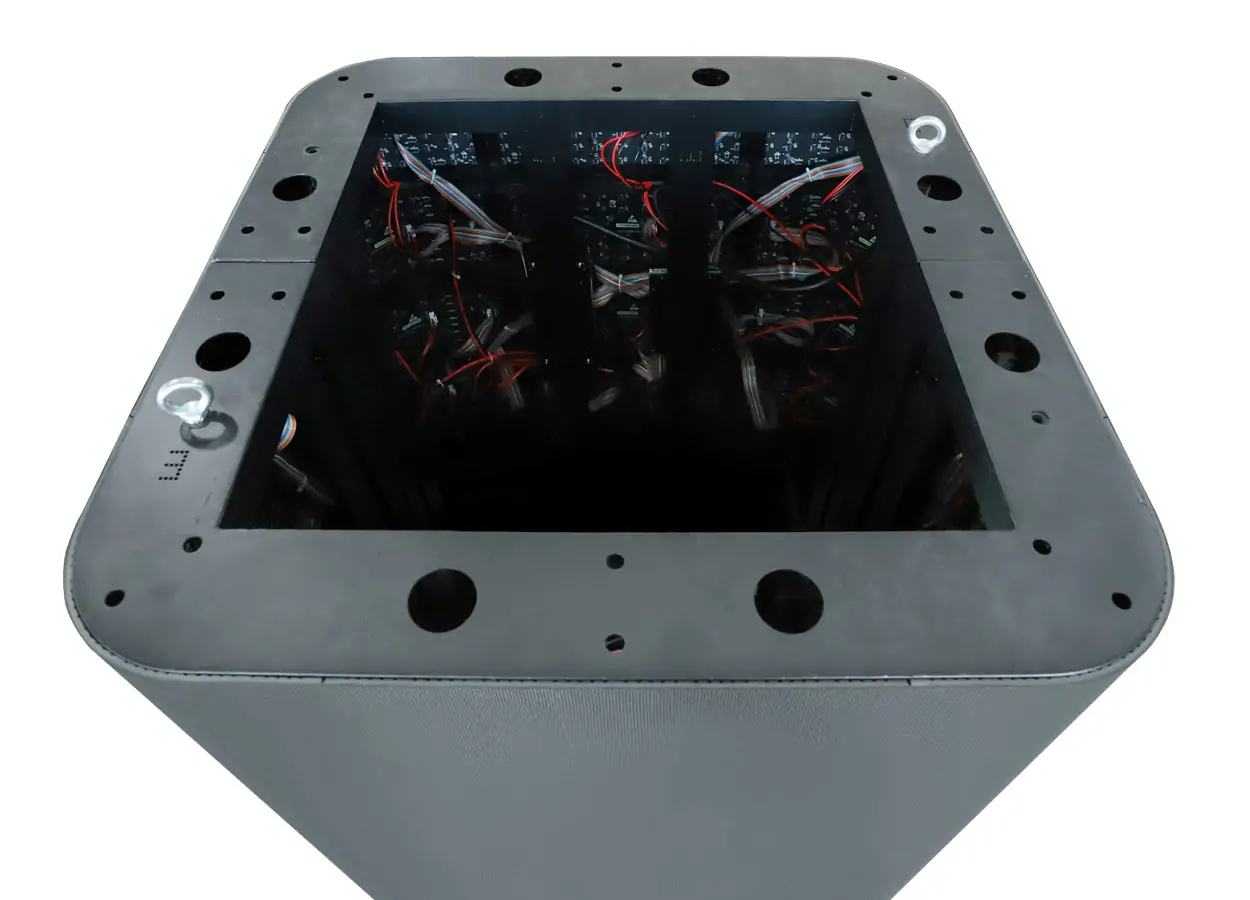
| Service access | Confirm how components will be removed | Determines maintenance practicality |
03. Specify resolution and brightness in context
Pixel pitch is the distance between adjacent pixel centers. For the same active area, a smaller pitch provides more pixels, but it also changes system cost and processing requirements.
As an illustrative calculation, a 10-meter-wide active surface with a 5-millimeter pitch has approximately 2,000 horizontal pixels. Actual cabinet and module arrangements determine the final dimensions and resolution.
Brightness must suit ambient conditions and the operating schedule. Evaluate daytime visibility alongside nighttime dimming, dark-scene detail, and color consistency. Running a screen at maximum output does not improve every scene.
Also distinguish video frame rate from LED refresh rate. Frame rate describes successive content images; refresh rate concerns how the display drives its LEDs. For projects intended to attract smartphone recording, test representative cameras. Brompton explains that camera exposure and LED scan timing can produce artifacts even when a display looks acceptable to the eye. Brompton’s camera performance guidance
4. How 3D Billboard Content Is Created
Professional 3D billboard content production begins with the installation data. A generic animation is unlikely to produce the intended illusion when placed on an unrelated screen.
01. Build an accurate digital model
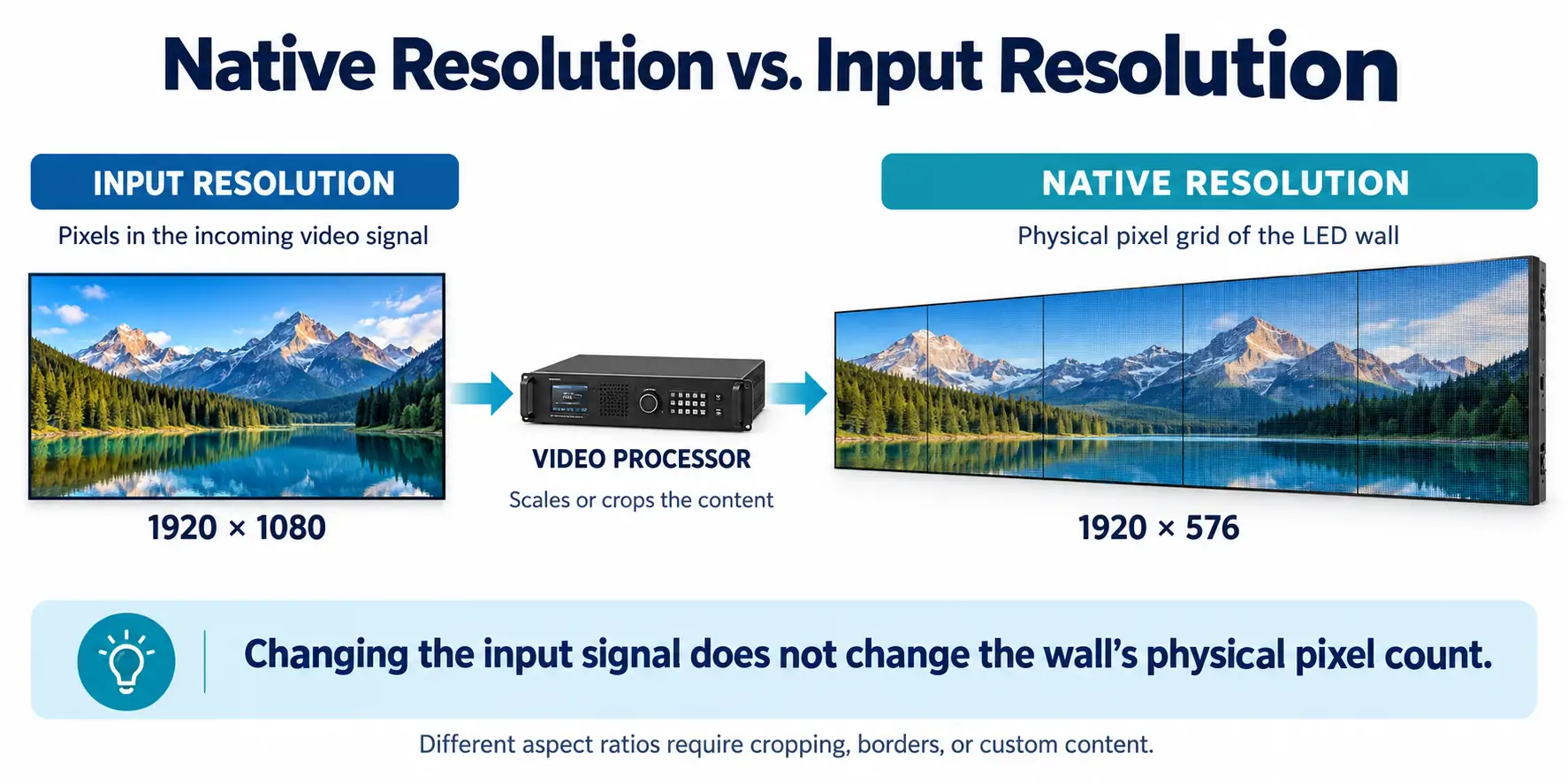
The production team needs the active dimensions, pixel map, surface geometry, screen position, and proposed audience viewpoint. Cabinet drawings help, but the model must represent the illuminated surface rather than just the external structure.
The content studio then constructs a virtual version of the installation and establishes the viewing camera. This allows perspective decisions to be reviewed before detailed animation begins.
02. Approve the message before rendering
The creative concept should communicate a recognizable product or idea within the audience’s available viewing time.
For a 3D billboard advertisement, the most elaborate scene is not always the most effective. Excessive movement can obscure the product, while small text may become unreadable from the intended viewpoint.
A storyboard should identify the main reveal, the brand exposure, and how the sequence begins again. It should also account for viewers who arrive midway through playback.
03. Render and map for the final display
Once the concept is approved, the studio develops the models, materials, lighting, and animation. The final imagery is mapped into the screen’s agreed pixel layout.
Content teams and integrators should confirm:
- Pixel dimensions and the arrangement of display faces.
- Playback frame rate and supported file formats.
- Color workflow and expected signal levels.
- Whether outputs use one canvas or synchronized sections.
- How text and logos appear from secondary viewpoints.
A normal video player preview cannot fully validate the installed result. The approval process should include simulations from the intended viewing position and an on-site test.
04. Include commissioning in the content scope
During commissioning, review whether rendered edges align with physical transitions and whether important details remain visible under operating conditions.
Check the opening frame, loop transition, dimmed operation, and any visible discrepancy between screen faces. Define who handles mapping corrections and final re-exports.
For distributors and contractors, this division of responsibility should be written into the project scope. Otherwise, a hardware installation can be complete while the 3D billboard effect still requires substantial adjustment.
5. 3D vs. Standard LED Billboards: Benefits and Limitations
A standard digital billboard and an anamorphic 3D billboard can share much of the same underlying LED technology. Their main differences concern content design, viewing geometry, and campaign production.
| Decision area | Standard LED advertising | Anamorphic 3D billboard |
|---|---|---|
| Content adaptation | Often straightforward across compatible layouts | Usually requires geometry-specific work |
| Audience position | Layout can prioritize broad readability | Strongest depth effect favors planned viewpoints |
| Creative approach | Messaging, video, graphics, and scheduling | Those elements plus perspective-based staging |
| Production coordination | Standard media delivery and playback checks | Additional modeling and mapping coordination |
| Brand presentation | Flexible conventional formats | Opportunity for spatial product demonstrations |
| Ongoing operation | Content scheduling and display maintenance | Similar operations plus specialized creative updates |
01. Where the format adds value
A 3D LED billboard can present a product as an apparent object occupying space. This can suit packaging, machinery, consumer electronics, or other subjects whose shape contributes to their identity.
The format also gives creative teams a way to incorporate the building’s corner or display boundary into the story. The installation becomes part of the composition.
However, attention does not automatically translate into commercial results. Buyers should avoid treating visual impact as proof of higher sales, increased footfall, or guaranteed social sharing.
02. Where limitations affect the business case
The strongest viewing area may cover only part of the audience. Content requires an appropriate production budget, and changes to screen geometry can create additional work.
Branding is another constraint. An impressive illusion can leave viewers remembering the animation but missing the advertiser’s name. The creative brief should specify how the product, brand, and campaign message remain identifiable.
Evaluate performance using measures connected to the project objective, such as verified playback, campaign inquiries, or agreed audience research. Separate online video engagement from the installation’s on-site performance.
6. 3D Billboard Examples and Advertising Applications
Different environments call for different content and hardware decisions. The following are application concepts, rather than claims about completed EagerLED installations.
| Application | Possible content direction | Main project consideration |
|---|---|---|
| Retail destination | A product reveal within a virtual display case | Pedestrian sightlines and brand visibility |
| Commercial building corner | Animation interacting with the apparent architecture | Corner geometry and facade integration |
| Exhibition booth | A spatial demonstration of product components | Short viewing distances and installation logistics |
| Entertainment venue | Characters or scenic effects | Show scheduling and content permissions |
| Indoor showroom | An animated product presentation | Low-brightness quality and close inspection |
| Digital advertising network | Premium creative placements | Repeatable delivery and approval procedures |
For retail and property projects, a permanent 3D billboard should fit the building’s maintenance arrangements and expected campaign schedule. Consider how easily ordinary advertising can share the display with specialist content.
For exhibitions, transport, assembly, and repeatability may matter more than outdoor weather protection. A design that works in one booth layout can require changes when the audience approaches from another direction.
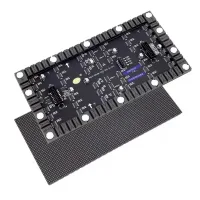
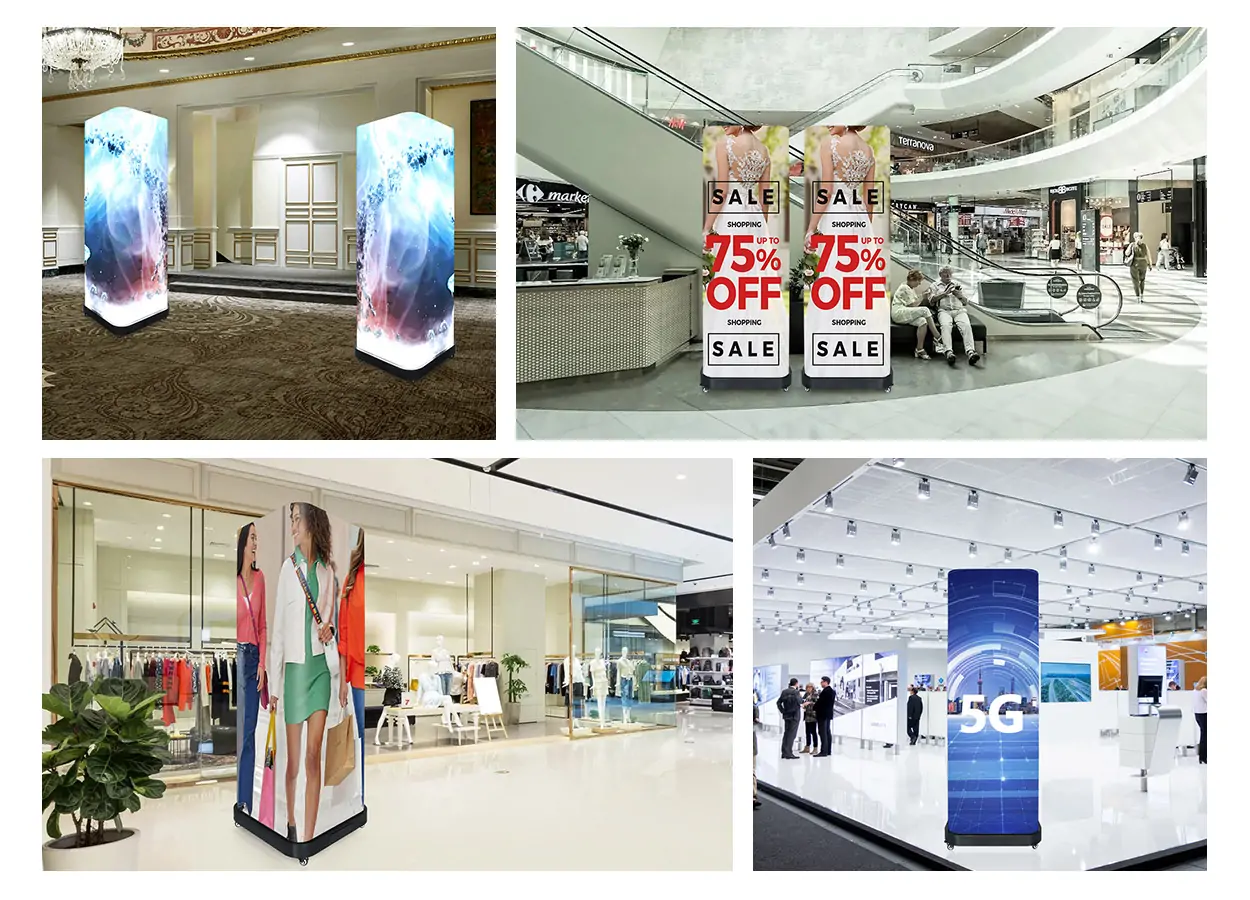
Smaller formats also deserve consideration. EagerLED lists an indoor 3D LED poster display with flexible modules and front maintenance, illustrating that this type of presentation is not limited to large outdoor facades. Product suitability still needs to be checked against the intended installation. EagerLED EA3DiP1 product information
The appropriate format follows the viewing environment and business purpose. Screen size alone is an incomplete basis for selection.
7. How Much Does a 3D Billboard Cost?
A meaningful 3D billboard cost estimate requires a defined project scope. A price per square meter may help compare display hardware, but it does not capture the complete installed system.
First distinguish buying a display installation from booking advertising time on an existing screen. The first involves equipment and construction; the second involves media inventory and campaign delivery. Content production may be separate in either arrangement.
01. Request an itemized project budget
| Cost category | What to include | Question for the quotation |
|---|---|---|
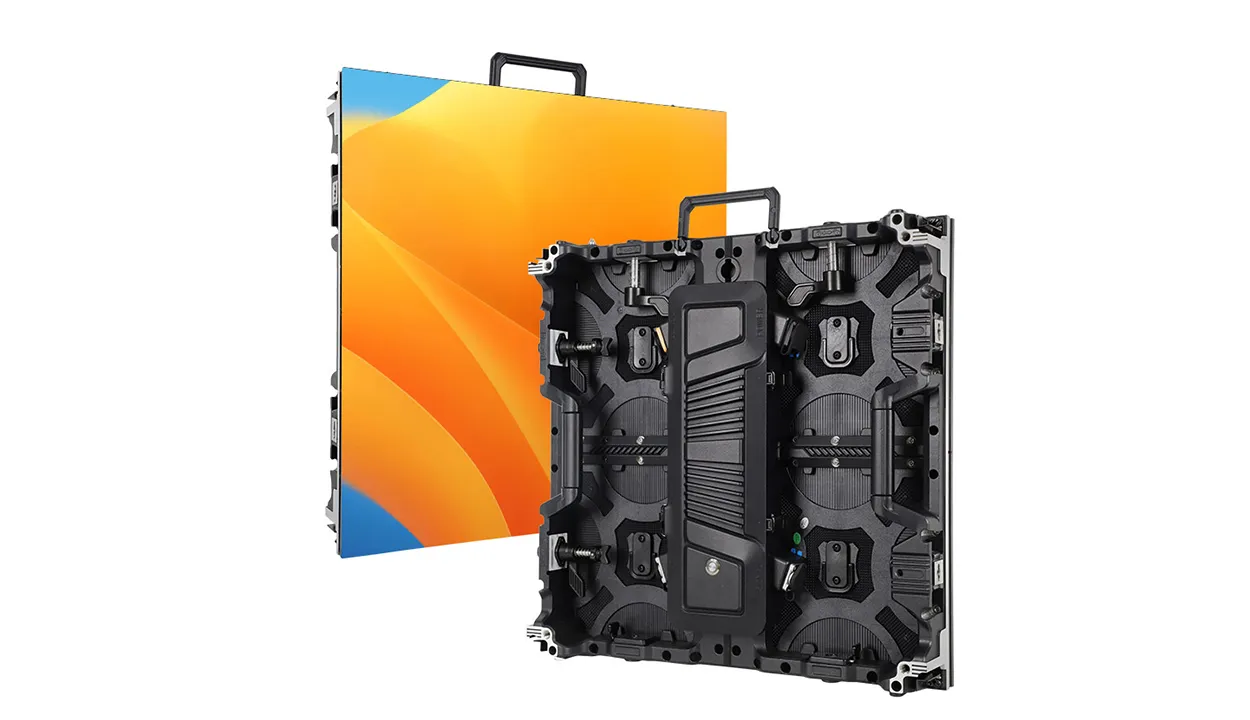
| LED display | Modules, cabinets, corner components, spares | What exactly is included in the display price? |
| Control and playback | Processing, media source, distribution, monitoring | Does the system support the final canvas? |
| Supporting structure | Frame, attachment design, access provisions | Who supplies and verifies the structure? |
| Electrical works | Distribution, cabling, protection, connections | Where does each contractor’s scope end? |
| Site installation | Transport, lifting, assembly, commissioning | Which site conditions are assumed? |
| Creative production | Modeling, animation, mapping, revisions | Are on-site adjustments included? |
| Operating costs | Electricity, servicing, connectivity, updates | Which recurring expenses are excluded? |
Compare quotations against the same bill of quantities. Two proposals with similar screen dimensions may differ substantially in service access, included control equipment, spare parts, and installation responsibilities.
02. Separate electrical capacity from energy use
Maximum power information supports electrical planning. It should not automatically be treated as typical operating consumption.
Energy use depends on the displayed content, brightness settings, operating hours, equipment, and environmental systems. A practical estimate uses a justified average electrical load:
Estimated daily energy use = average operating power × daily operating hours
If average power is expressed in kilowatts, the result is kilowatt-hours per day. Include auxiliary equipment where relevant, and ask suppliers to state the conditions behind their consumption estimates.
03. Account for future content
A 3D LED billboard requires more than an opening animation if the commercial plan depends on regular campaigns.
Budget for new creative work, localization, seasonal updates, and adaptations for additional screens. Clarify whether the content contract includes editable project files or only finished videos.
The useful comparison is the cost of an operational advertising asset over the planned ownership period. A lower initial hardware price can lose its advantage if maintenance access or content delivery creates persistent expense.
8. How to Choose a 3D LED Screen and Billboard Supplier
A productive supplier discussion begins with a site brief. EagerLED can be approached with the same structured information an integrator needs to develop a complete proposal.
01. Prepare a technically useful inquiry
Provide site photographs, approximate dimensions, indoor or outdoor conditions, viewing distances, proposed operating hours, and available maintenance access.
Also explain whether the project is a new installation, a retrofit, or a temporary deployment. Identify who is responsible for animation, structural works, electrical installation, and final commissioning.
If the exact screen geometry is undecided, request options with their implications. This is more useful than asking for a universal “best 3D billboard.”
02. Verify the proposed configuration
Evaluate the quoted model and configuration, rather than relying on general product-family descriptions.
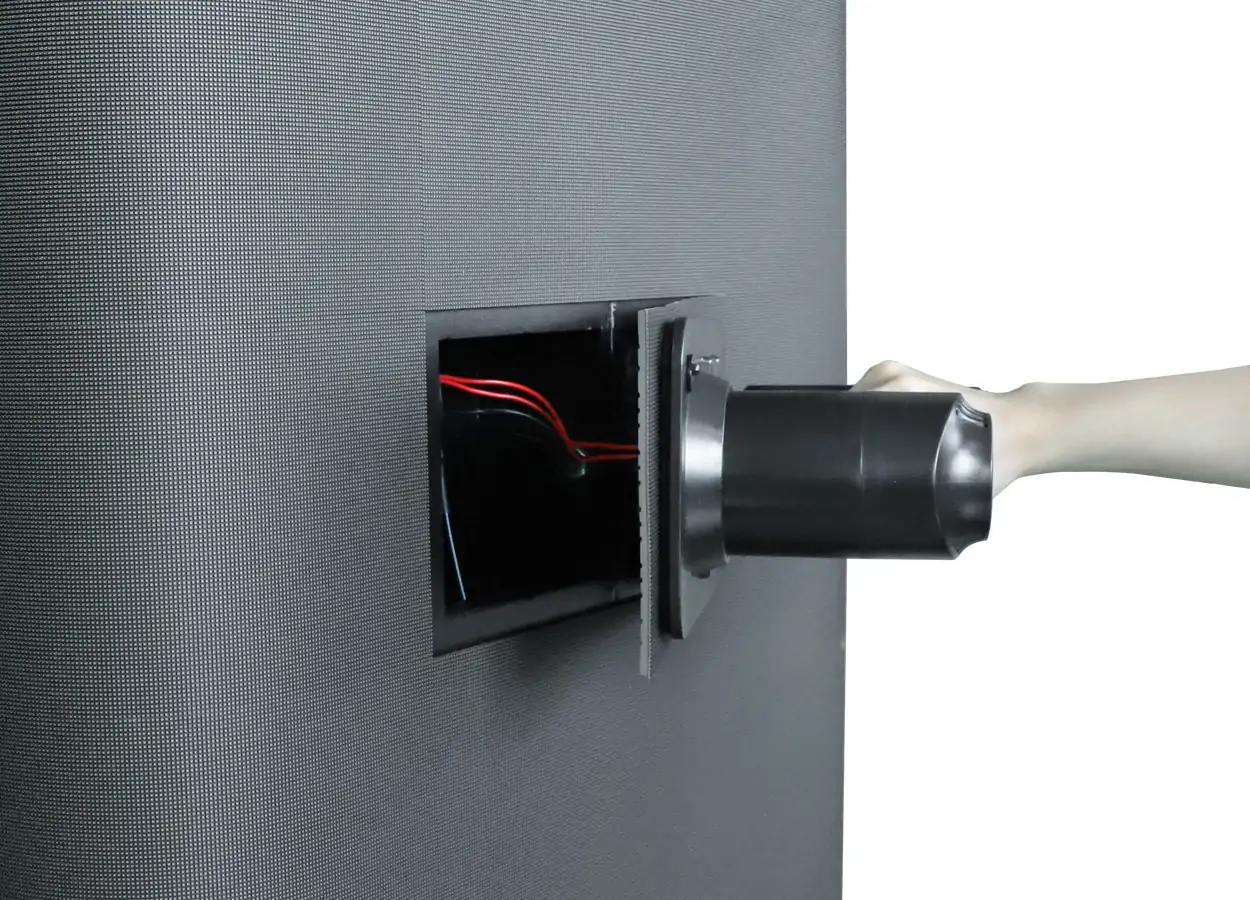
For an outdoor LED billboard, request documentation addressing the actual enclosure arrangement, operating environment, thermal provisions, and exposed connections. Establish whether front and rear protection differ and how the completed installation manages water and servicing.
Review serviceability component by component. Front-access modules do not necessarily mean that every power supply, cable, or connection can be serviced from the front.
Ask how replacement modules will be matched to the existing display. Brightness and color differences can become visible after replacement; calibration is one method used to improve uniformity. NovaStar documents both brightness and color correction in its full-screen calibration manual.
03. Make acceptance criteria observable
A 3D billboard should be assessed using the actual project requirements.
| Acceptance area | Suggested verification |
|---|---|
| Mechanical installation | Inspect alignment, joints, and the corner or curve |
| Image uniformity | Review solid colors, gray fields, and low-level gradients |
| Content mapping | Play an alignment grid and the approved animation |
| Playback continuity | Check motion across faces and repeated loops |
| Brightness operation | Review representative daytime and dimmed settings |
| Recovery behavior | Test agreed restart and signal-loss procedures |
| Maintenance handover | Confirm spares, backups, documentation, and training |
Record the viewing locations and content used for approval. Otherwise, different parties may judge the same installation under different conditions.
For distributors, also agree on warranty responsibilities, fault reporting, replacement procedures, and access to configuration files. For contractors, establish who resolves issues spanning hardware and content.
The final proposal should identify not only what will be delivered, but how the completed 3D LED billboard will be demonstrated and handed over.
9. FAQ
10. Conclusion
A successful 3D billboard brings together accurate perspective, suitable LED hardware, coordinated playback, and a location where audiences can appreciate the result. The apparent depth comes from the relationship between the content, screen, and viewer.
For B2B buyers, the strongest purchasing process starts with site geometry and an agreed content plan, then defines equipment, installation responsibilities, acceptance tests, and operating costs. This makes competing proposals easier to compare and reduces uncertainty at commissioning.
When preparing an EagerLED inquiry, share the intended screen dimensions, viewing positions, environment, maintenance access, and creative requirements. Those details provide the basis for evaluating a naked-eye 3D LED billboard as a complete commercial installation.
 Football Perimeter LED Screens: A Specification Guide
 Can Transparent LED Screens Show 3D Retail Content?
Related Posts
Fill In Your Needs In Detail
Fill in the screen usage scene and size you need in “Content”.You will get a quote.