Buying an LED screen in Europe involves more than comparing pixel pitch and a price per square metre. Professional buyers need to establish whether the proposed system fits the application, whether its compliance evidence matches the equipment supplied, and who will handle importation, installation, and service.
These questions matter differently across the supply chain. A distributor needs traceable products and repeatable configurations. An AV integrator needs reliable power, data, and mounting information. A project contractor needs delivery dates that allow time for inspection and commissioning before the client’s opening day.
The practical approach is to approve the LED screen specification, compliance documents, delivery responsibilities, and acceptance criteria before authorising shipment. A low equipment price can lose its advantage when essential controllers, destination charges, or replacement modules are missing from the quotation.
This guide focuses on commercial direct-view LED displays and EU purchasing requirements, with distinctions for other European markets. It provides a working checklist for evaluating an EagerLED proposal or comparing LED display suppliers.
1. Buying an LED Screen in Europe: What to Know First
01. Define the equipment you are buying
A commercial direct-view LED screen creates its image using LED pixels. It differs from an LCD television marketed as an “LED TV,” where LEDs usually provide the backlight.
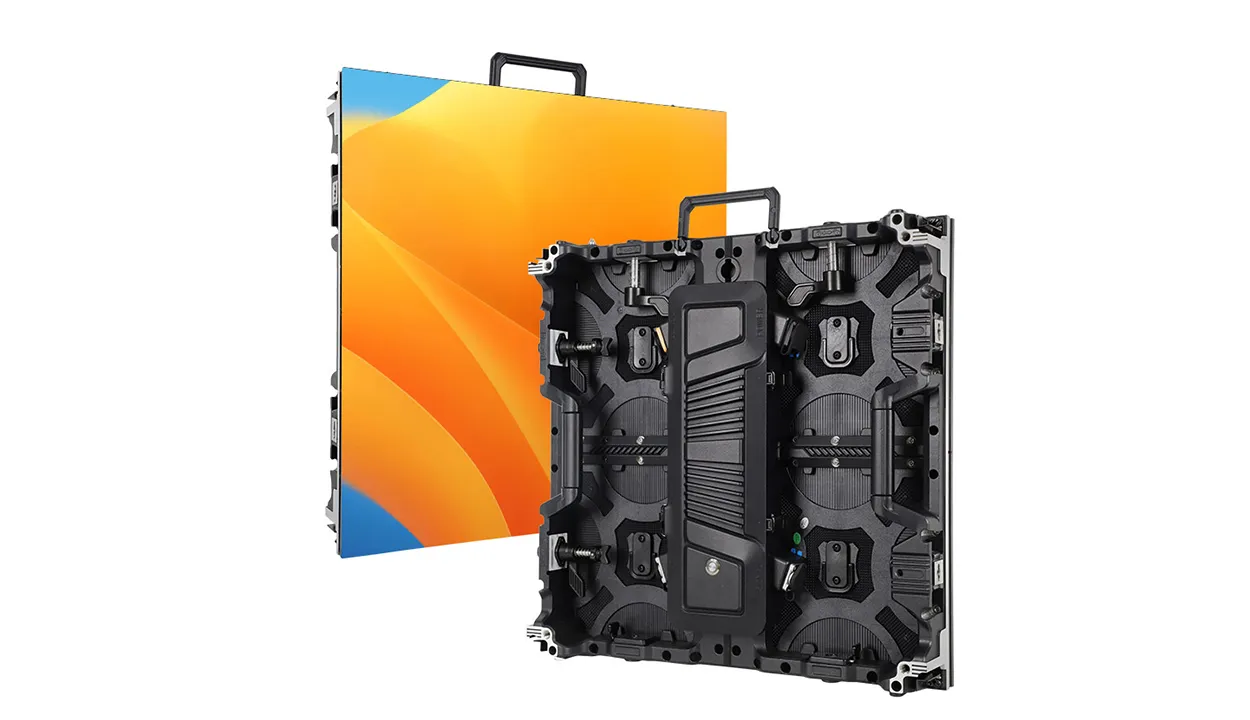
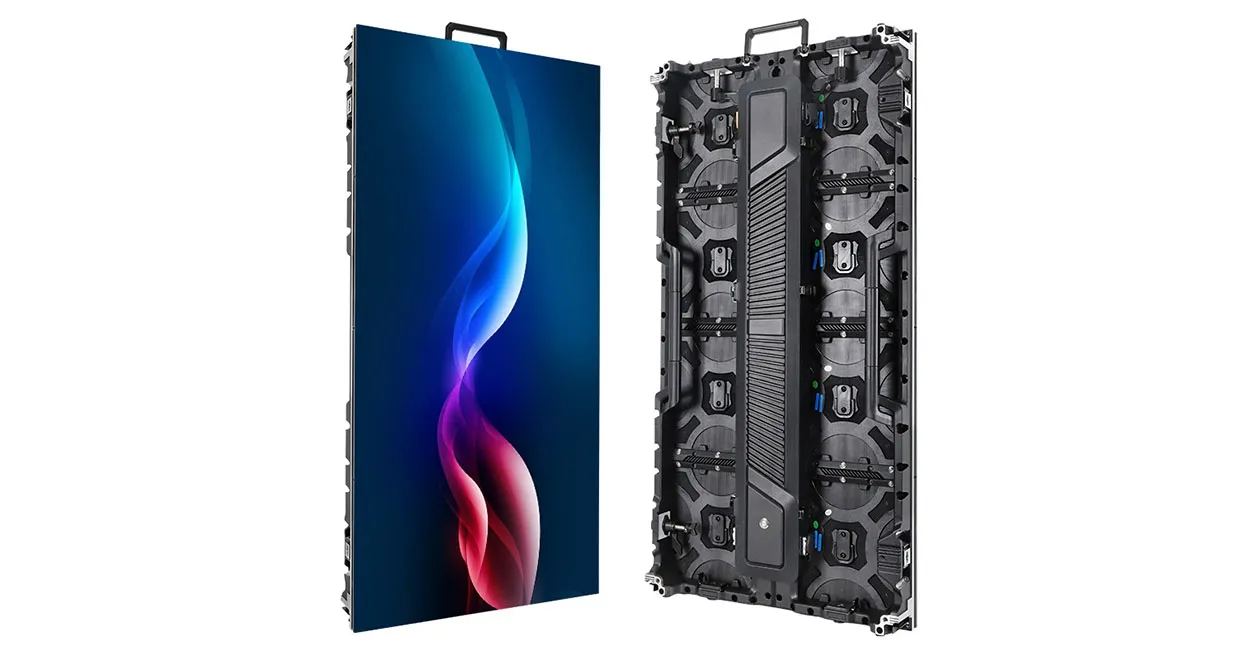
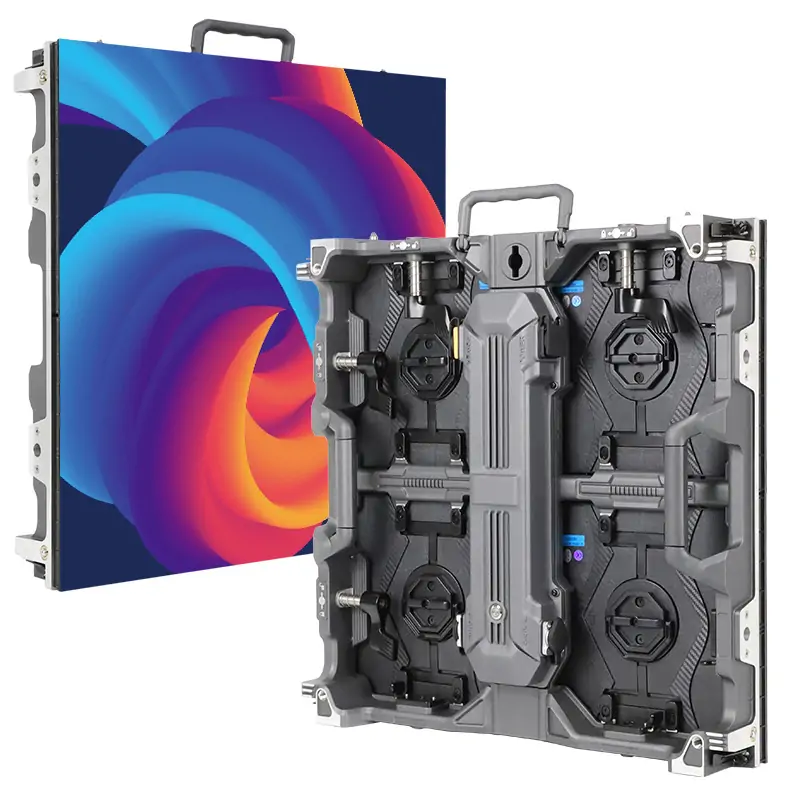
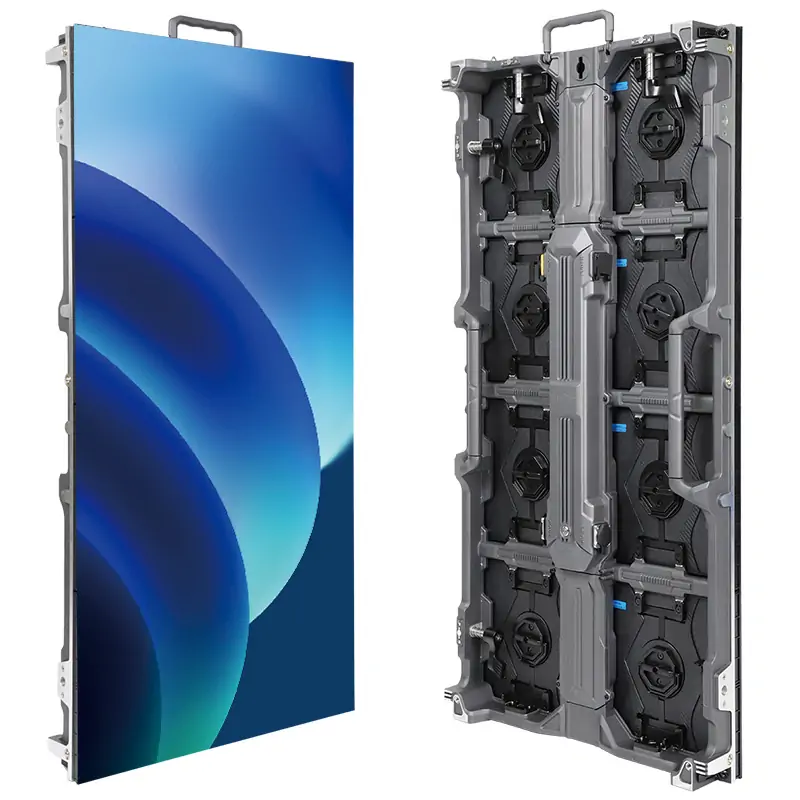
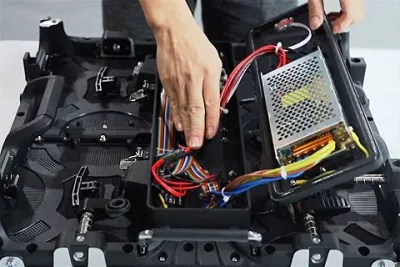
A modular LED display purchase can include cabinets, modules, power supplies, receiving cards, video processing, cabling, mounting accessories, and spare parts. Establish the complete supply boundary: a quotation for cabinets alone is not equivalent to a functioning video wall.
Record the manufacturer, model, hardware configuration, and intended use. These details connect the purchase order to the technical assessment and eventual delivery inspection.
02. Confirm the destination market
Europe is not one customs territory or one undifferentiated regulatory market. CE marking is relevant across the EEA under applicable product legislation, while customs and tax arrangements need separate checks.
For Great Britain, current guidance permits continued recognition of CE marking across a range of product regulations. Northern Ireland has separate arrangements. Do not assume either that UKCA is always mandatory or that an EU import plan automatically covers a UK delivery.
Put the final installation country and delivery address on the initial LED screen enquiry.
2. Which Compliance Requirements Apply to LED Screens?
01. Understand what CE marking establishes
CE marking indicates that the manufacturer declares conformity with the applicable EU harmonisation requirements. It is not an EU-issued quality award, a country-of-origin label, or a promise of image performance.
There is no universal government “CE certificate” that approves every LED screen from a factory. The required conformity assessment depends on the product and legislation; independent certification is not automatically required for every CE-marked product.
Use the following framework to begin a model-specific review.
| Compliance area | Relevance to an LED display | Buyer’s check |
|---|---|---|
| EMC Directive 2014/30/EU | Electromagnetic emissions and immunity | Evidence covering the intended equipment configuration |
| LVD 2014/35/EU | Electrical safety within its voltage scope | Rated supply, safety assessment, and instructions |
| RoHS Directive 2011/65/EU, as amended | Restricted substances in equipment within scope | Technical evidence and applicable exemptions |
| WEEE obligations | Registration, reporting, and end-of-life responsibilities | Responsible producer and destination-country arrangements |
| Other applicable rules | Depend on functions, design, and installation | Written explanation of additional requirements or exclusions |
The EMC Directive addresses interference emitted by equipment and its ability to operate in its electromagnetic environment. For an LED display, power supplies, data connections, enclosure design, and cable routing deserve attention.
The LVD covers equipment designed for rated voltages between 50–1,000 V AC or 75–1,500 V DC, subject to its scope and exclusions. A low-voltage LED module and a complete mains-powered cabinet therefore require different scope assessments.
RoHS addresses substances in electrical and electronic equipment; it is not a brightness, reliability, or waterproofing test. Ask which evidence supports the actual materials and components used.
02. Separate product compliance from site obligations
WEEE responsibilities can include national registration, reporting, and financing waste treatment. Identify the responsible business for each sales destination instead of assuming the overseas factory handles everything.
A permanently mounted LED screen is not automatically exempt from product rules. The EMC Directive distinguishes apparatus from fixed installations, and commercially available apparatus does not generally lose its obligations when installed.
Separately establish structural approval, electrical installation, fire requirements, and any local signage permission. Product documentation alone does not approve the building work.
3. How to Verify an LED Screen Supplier’s CE Documentation
01. Start with the declaration and product identity
Request the EU Declaration of Conformity for the proposed LED screen model. Review the manufacturer’s identity, product identification, applicable legislation, referenced standards, and authorised signature.
The declaration should follow the completed conformity assessment and supporting documentation. A laboratory report and a manufacturer’s declaration perform different functions; receiving one does not eliminate the need for the other where required.
Then compare the paperwork against the configuration being purchased.
| Document or record | What to compare | Issue to resolve before shipment |
|---|---|---|
| Declaration of Conformity | Manufacturer, model, legislation, signature | Document identifies a different product |
| Relevant test reports | Sample description, configuration, results | Report covers only an unrelated component |
| Critical component list | Power supply, receiver, module, wiring | Proposed substitutions lack assessment |
| Product labels | Model, ratings, traceability details | Labels disagree with order documents |
| Installation instructions | Power, grounding, environment, service access | Instructions do not cover the intended installation |
A model-family report may be valid evidence, but the supplier should explain why its tested configuration represents your variant. A shared cabinet shape is not enough to establish equivalence.
02. Confirm access and change control
Technical documentation supports conformity and must be available to the relevant authorities. A buyer may not receive every confidential design file; establish who maintains it and how required evidence will be provided.
For repeat orders, make component substitutions subject to written notification and appropriate review. An LED screen that retains its commercial model name can still change electrically or mechanically.
EU importers also have their own verification and traceability duties. Appointing a freight forwarder does not perform those checks on their behalf.

4. European Suppliers vs Direct Imports: Pros and Cons
Buying from a European LED display supplier can simplify coordination when the agreement includes local stock, installation, and service. Direct purchasing from a manufacturer can offer closer control over configuration and production discussions. Neither route guarantees a better outcome without a clear contract.
| Purchasing route | Potential advantage | Limitation to investigate |
|---|---|---|
| European distributor | Local purchasing and support contact | Actual stock, service coverage, and exclusions |
| Direct manufacturer purchase | Direct technical and production communication | Buyer’s import, integration, and service workload |
| Integrator-led supply | Screen and installation managed together | Hardware transparency and future maintenance access |
Compare equivalent scopes. One LED screen proposal may include a processor, calibrated spare modules, and commissioning; another may list only display cabinets.
Ask who owns the support obligation after handover. A local company might return parts overseas, while a direct supplier might support an integrator holding local spares. The operational arrangement matters more than the address on the quotation.
When requesting an EagerLED proposal, provide the destination, screen dimensions, installation drawings, intended content, and service expectations. Ask for model-specific documentation and written commercial terms rather than inferring them from a general product page.
For distributors, also clarify repeat-order compatibility. Consistent receiving-card configurations, cabinet mechanics, and spare-part identification can be more useful than a small saving on the first LED screen order.
5. Choosing an LED Screen for Your Application
01. Match resolution to content and viewing distance
Pixel pitch is the distance between adjacent pixel centres. A smaller pitch provides more pixels within the same physical area, but the specification should follow viewing conditions and content.
For a regular pixel grid:
Horizontal pixel count ≈ active screen width in millimetres ÷ pixel pitch in millimetres.
As an illustrative calculation, a 4,800 mm-wide LED screen at 2.5 mm pitch provides 1,920 horizontal pixels. Confirm the actual cabinet and module matrix; nominal dimensions and aspect ratio must also fit the design.
A screen displaying detailed spreadsheets needs different evaluation from a roadside advertising display. Review representative content at the nearest intended viewing position before approving the pitch.
02. Specify the installation environment
| Application | Priorities | Useful acceptance check |
|---|---|---|
| Meeting room or control room | Text clarity, low-brightness grayscale, noise | View actual dashboards at operating brightness |
| Outdoor advertising | Daylight readability, weather protection, access | Review exposure, drainage, and dimming operation |
| Rental and live events | Handling, alignment, connectors, rigging | Assemble and service representative cabinets |
| Broadcast or filmed events | Camera compatibility and timing | Test the intended cameras and shutter settings |
| Retail or architectural display | Sightlines, finish, maintenance access | Confirm viewing angles and module removal space |
For an outdoor LED screen, ask whether the declared IP rating covers the front, rear, and assembled connections. An enclosure’s ingress rating does not establish wind resistance, corrosion resistance, or suitability for every mounting position. These require separate design checks.
A front-service LED display still needs room to remove modules safely. Verify access to power supplies and receiving cards as well as the display surface.
For camera work, a headline refresh-rate number is insufficient. Camera shutter timing, panel scan behaviour, and synchronisation interact; test the complete system.
03. Plan power and heat before installation
Request maximum input power, typical consumption with stated test conditions, inrush information, and permitted power-link arrangements. Average consumption alone is not a basis for sizing distribution.
Have the project electrical designer assess circuits, protection, earthing, and load distribution. Coordinate ventilation with the enclosure and service layout. An LED screen specification is incomplete if the site cannot power, cool, or maintain it.

6. How Much Does an LED Screen Cost to Buy and Import?
There is no single meaningful European LED screen price without a defined configuration and delivery scope. Pixel pitch, cabinet construction, processing, service access, and installation requirements all affect the comparison.
Build a landed-cost worksheet before selecting the lowest quotation.
| Cost category | Include in the calculation | Question for the quotation |
|---|---|---|
| Display equipment | Cabinets, modules, receivers, power supplies | What exact configuration is supplied? |
| Control and accessories | Processor, converters, cables, distribution | What must the integrator source separately? |
| Logistics | Packing, freight, insurance, destination handling | Which charges are excluded? |
| Importation | Duty, brokerage, applicable import VAT | Who declares and pays? |
| Installation | Structure, labour, lifting, commissioning | Is site work included? |
| Service | Spares, repair freight, labour, access equipment | Who funds each intervention? |
Distinguish landed cost from the installed project budget. Mounting steelwork and commissioning may be essential even though they are not part of bringing the goods through customs.
Import VAT is not necessarily calculated on the equipment invoice alone. Its taxable amount can include customs value, duties, and specified incidental expenses. Use the destination’s applicable treatment and confirm recoverability separately; recoverable VAT can still affect cash flow.
Ask for packed dimensions and gross weight early. LED screen shipping costs depend on the cargo presented to the carrier, including crates or flight cases, rather than display area alone.
Finally, compare costs over the expected operating period. Access equipment, electricity, technician visits, and replacement-part availability affect whether an initially cheaper LED display remains economical.
7. LED Screen Shipping: Freight Options and Incoterms
01. Choose transport around the project schedule
Sea freight may suit larger planned shipments; air freight may suit urgent equipment or replacement parts. Road transport is relevant to regional movements and final delivery. Obtain current route-specific quotations instead of applying a universal transit-time estimate.
Separate production completion, cargo readiness, departure, arrival, customs release, and site delivery in the programme. “Shipping date” can refer to different milestones.
For a fixed event, work backward from commissioning and reserve time for inspection and corrections. An LED screen arriving on the opening day leaves no practical margin for a damaged module or missing cable.
02. Define DAP or DDP precisely
Under DAP, the buyer generally handles import clearance and related import charges. Under DDP, those responsibilities sit with the seller, but the seller must be able to fulfil them legally in the destination.
Both terms ordinarily deliver the goods ready for unloading at the named destination; unloading remains the buyer’s obligation. Specify the address, delivery point, and Incoterms® version.
Neither label by itself establishes your insurance coverage or removes product-compliance responsibilities. Request the customs arrangement, insurance terms, and excluded charges in writing.
03. Protect the cargo and plan unloading
Agree on cabinet separation, corner protection, restraints, moisture control, and package identification. Rental flight cases and export crates serve different handling patterns; choose packaging for the actual route.
Where solid-wood packaging is used, check applicable ISPM 15 treatment and marking requirements. Packaging made wholly from qualifying processed wood, such as plywood, is treated differently under the standard.
Confirm forklift or tail-lift needs, door clearances, delivery appointments, and safe storage. A truck reaching the site does not mean the LED screen can reach its installation position.
8. Customs Clearance Checklist for LED Screen Imports
01. Confirm identification and classification
Establish the importing entity and customs representative before dispatch. An EORI number identifies an economic operator for EU customs operations; it is distinct from a product approval.
Do not select a customs code simply because another importer used it for an “LED screen.” Give the broker the equipment’s functions, interfaces, technical description, and shipment composition.
Classification determines applicable tariff treatment. For repeated imports with material uncertainty, consider Binding Tariff Information rather than relying on an informal code suggestion.
02. Reconcile the shipment documents
Before the cargo departs, check that:
- The commercial invoice accurately describes the goods, values, currency, and parties.
- The packing list identifies package counts, contents, dimensions, and weights.
- Transport documentation matches the booking and consignee details.
- Product models agree with the order and compliance documents.
- Origin evidence and any additional documents are available where required.
- The broker has instructions for declarations, payments, and queries.
List spare parts transparently. Free-of-charge items still need appropriate identification and customs valuation treatment; a zero selling price is not a reason to omit them.
If customs holds an LED display shipment, obtain the specific request and respond through the appointed representative. Resolve the actual discrepancy rather than sending an unrelated collection of certificates.
9. Final Buying Checklist: Inspection, Delivery, and Support
01. Make acceptance measurable
Agree on a factory acceptance test before shipment. Identify the LED screen configuration, test content, brightness conditions, inspection method, and contractual pass criteria.
Useful checks include solid colours, grayscale ramps, fine text, moving content, cabinet alignment, and normal operating-temperature behaviour. Where redundancy is specified, test the agreed failure scenarios.
Do not rely solely on compressed phone footage to judge colour uniformity or pixel defects. Define the limits of remote inspection and identify which checks require measurements or an independent inspector.
Before authorising dispatch, reconcile the test record with the cabinet count, accessories, spare parts, labels, and final packing list.
02. Inspect delivery and retain service information
Photograph packaging before unpacking, record visible damage on delivery documentation, and retain evidence for claims. Follow the agreed notification deadlines.
Inspect an LED screen that has moved from cold storage into a warm environment before energising it. Follow the manufacturer’s acclimatisation and moisture-handling instructions rather than assuming immediate power-up is appropriate.
At handover, collect configuration backups, cabinet maps, calibration records where applicable, wiring drawings, and operator instructions. Store these under the project identifier so future technicians can locate them.
The warranty should define parts, labour, travel, freight, exclusions, and the claim procedure. Ask whether faults are resolved through component repair, module replacement, or cabinet return. For an installed LED display, the cost of physical access can exceed the cost of the failed part.
10. FAQ
11. Conclusion
Buying an LED screen in Europe works best when technical selection, CE evidence, logistics, and service planning are reviewed together. Confirm the exact equipment, identify the responsible businesses, calculate the complete project cost, and agree on measurable acceptance criteria.
For an EagerLED enquiry, prepare the installation country, application, screen dimensions, viewing distances, site conditions, and required delivery date. Request a proposal covering the LED display configuration, model-specific compliance documents, packing details, delivery terms, and after-sales responsibilities.
That information gives buyers, distributors, AV integrators, and contractors a solid basis for comparing offers and moving an LED screen project from quotation to reliable operation.
 Cinema LED Resolution: Pixels, Pitch and Viewing Distance
Related Posts
Fill In Your Needs In Detail
Fill in the screen usage scene and size you need in “Content”.You will get a quote.