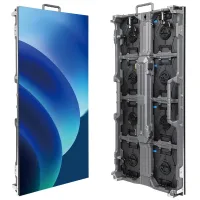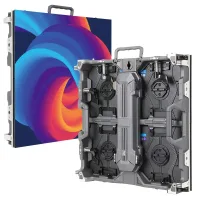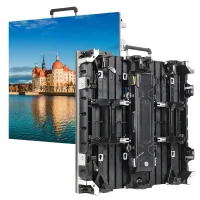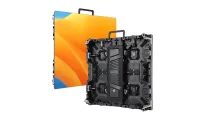
Choosing between a 500×500 vs 500×1000 rental LED cabinet can change the entire economics of an LED wall. The cabinet that looks cheaper on a product sheet may require more pieces, more connections, and more handling on site. The larger format may install faster, but the smaller format can solve awkward proportions and mixed-use rental jobs.
The short answer is simple: choose 500×500 rental LED cabinets for flexibility, especially on compact, irregular, or frequently reconfigured walls. Choose 500×1000 rental LED cabinets for speed and large-format coverage, where fewer cabinets and fewer vertical joints make the build more efficient. If your rental business serves both event types, a planned mix of the two sizes is often the most practical inventory.
1. 500×500 vs 500×1000 Rental LED Cabinet: Quick Comparison
| Project requirement | Better starting point | Why |
|---|---|---|
| Small event, booth, or retail display | 500×500 | More precise width and height combinations |
| Large stage or conference backdrop | 500×1000 | Fewer cabinets and connection points |
| Irregular or mixed-aspect wall | 500×500 | Easier to fill partial rows and columns |
| Repeated touring builds | 500×1000 | Faster loading, hanging, and alignment |
| One inventory for many job types | Mixed inventory | Small cabinets solve edges; large cabinets cover the field |
The word “rental” matters here. A rental LED display is handled repeatedly, so setup minutes, flight-case packing, spare parts, and crew fatigue are operating costs. Cabinet size should be evaluated as a workflow decision, not just a dimension.
2. Size, Weight, and Resolution Differences
2.1 Physical size is only the first specification
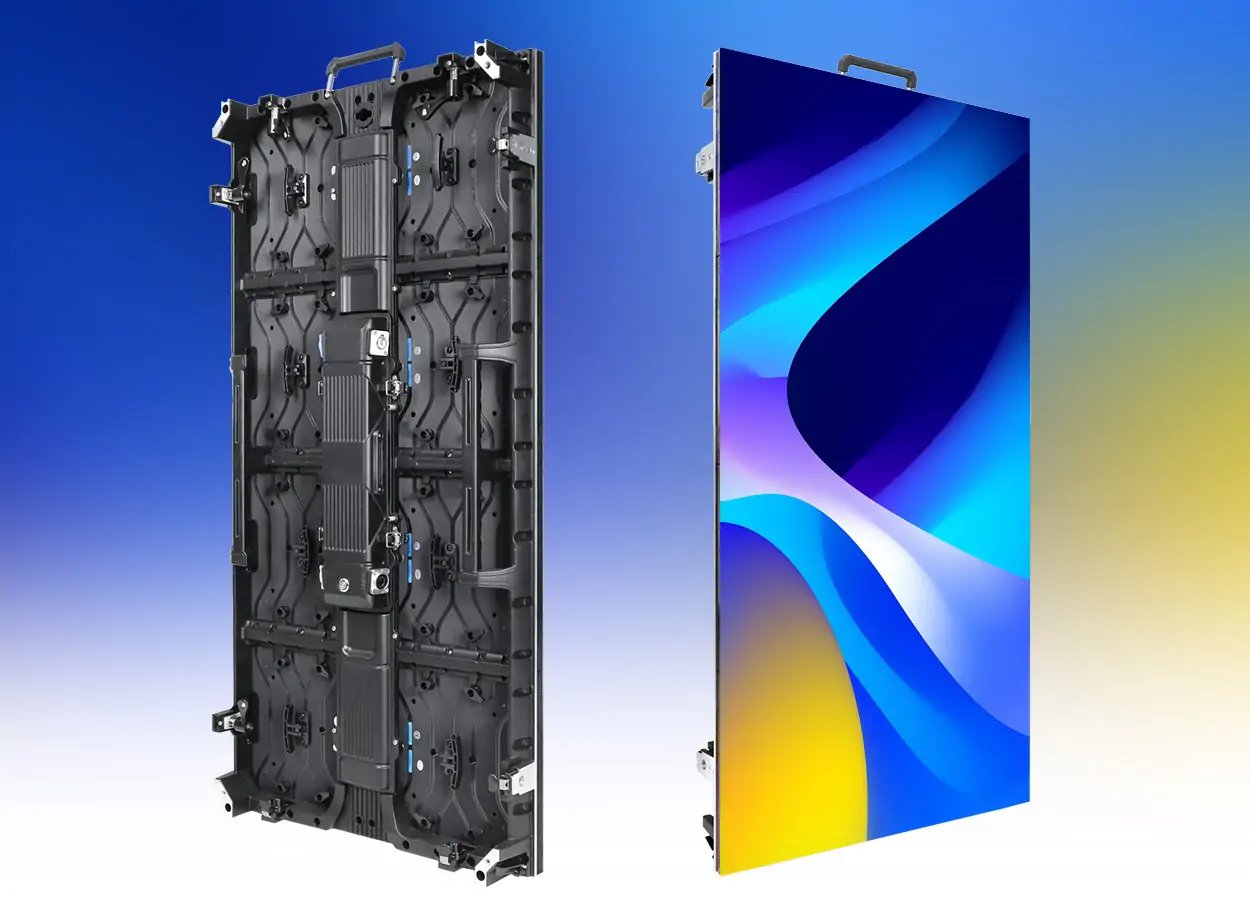
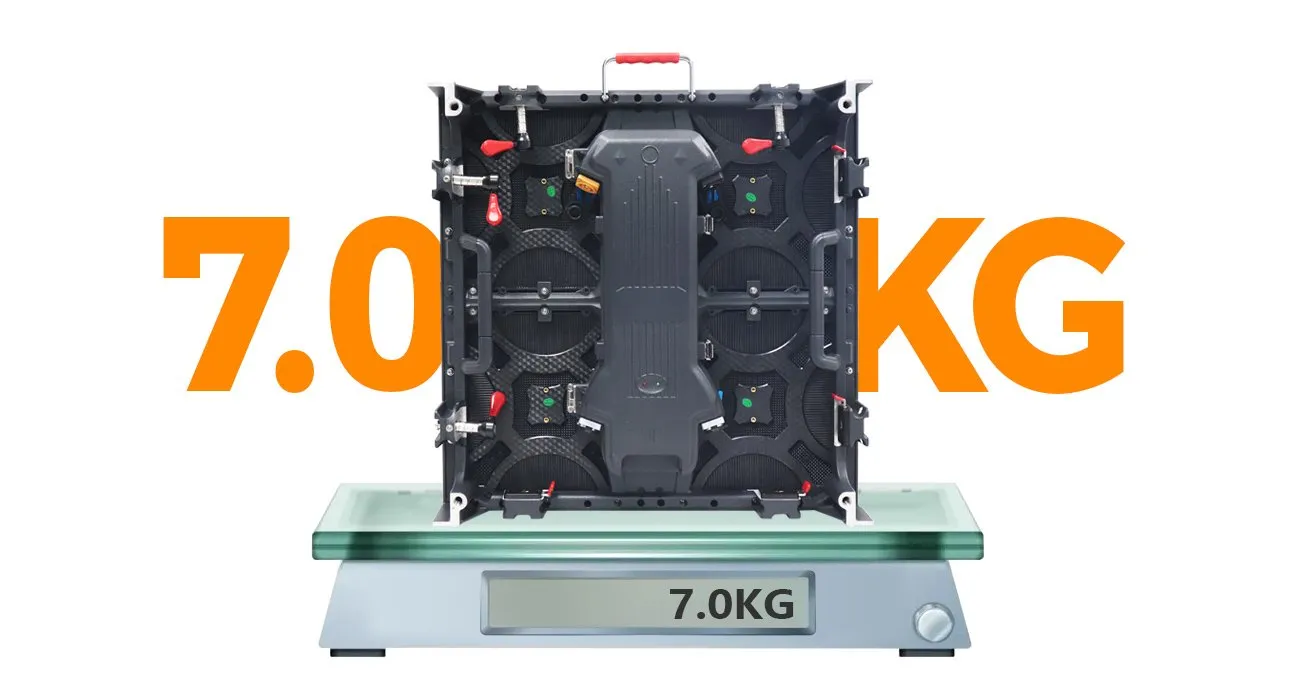
Both cabinets are 500 mm wide, but the 500×1000 cabinet is twice as tall. That changes the number of horizontal joins in a wall and the way the screen is lifted or stacked. It does not automatically make the 500×1000 cabinet heavier in a way that every crew can handle; weight depends on frame material, modules, power supplies, protection, and weather rating. Always compare the manufacturer’s net weight and the packed weight in its flight case.
2.2 Pixel pitch determines resolution
Cabinet dimensions do not tell you the pixel count. A 500×500 cabinet with a 2.6 mm pixel pitch has a different native resolution from a 500×500 cabinet with a 3.9 mm pitch. The same is true for a 500×1000 cabinet. Before approving a rental LED cabinet, check:
- pixel pitch and recommended viewing distance;
- cabinet resolution and receiving-card configuration;
- refresh rate for camera-based events;
- brightness and IP rating for indoor or outdoor use;
- service access, spare modules, and power distribution.
2.3 A simple cabinet-count example
For a 5 m wide by 3 m high wall, a 500×500 grid uses 10 columns by 6 rows: 60 cabinets. A 500×1000 grid can use 10 columns by 3 rows: 30 cabinets, assuming the product is designed for that orientation and the required wall dimensions match the cabinet grid.
That reduction can mean fewer locks, fewer signal transitions, and less time spent checking seams. It can also mean less freedom if the venue gives you a non-standard height or if the wall needs a narrow portrait section.
3. Which Rental LED Cabinet Installs Faster?
3.1 Where 500×500 cabinets have the advantage
The 500×500 rental LED cabinet is the more adaptable building block. It is useful when the wall must fit between architectural features, when the design includes a small return, or when the finished ratio is not a clean multiple of 1:2. Smaller modules also make it easier to create partial-height structures without leaving a large unused strip.
For exhibition booths, retail activations, and compact corporate stages, that flexibility can prevent a costly custom frame. It also helps rental companies reuse the same stock across more wall sizes.
3.2 Where 500×1000 cabinets save time
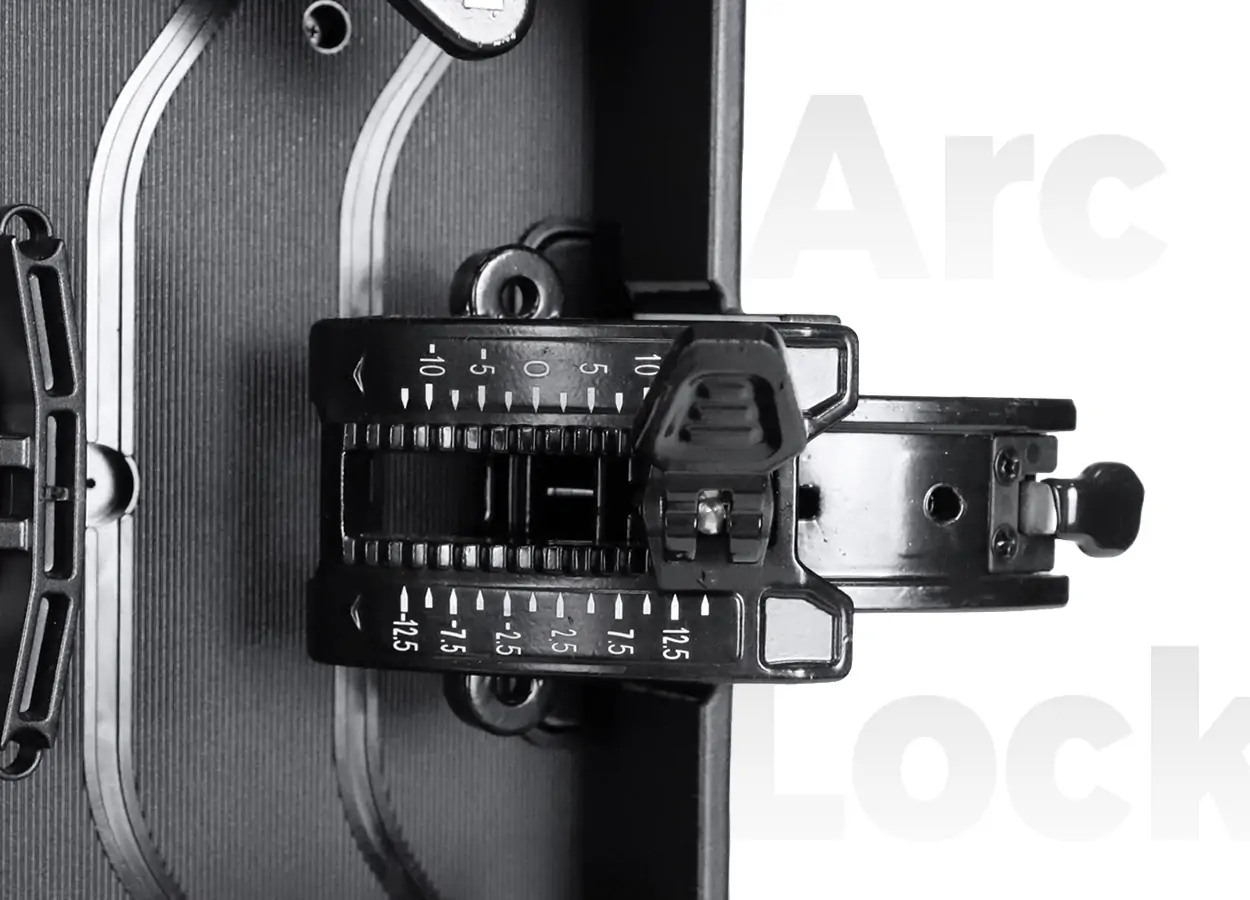
The 500×1000 rental LED cabinet is efficient when the main wall is broad, rectangular, and repeated across events. Fewer rows reduce vertical locking and alignment work. On a large backdrop, crews can cover more surface with each lift, then spend their time on processing, calibration, and content checks instead of handling extra boxes.
The gain is not just theoretical. If a 5 m by 3 m wall drops from 60 cabinets to 30, the crew has half as many cabinet faces to inspect and half as many cabinet-level power and data connections to manage. The exact saving depends on the locking system and crew, but the direction is clear.
3.3 Stacking versus hanging
Ground-stacked LED walls often favor 500×500 cabinets when the base includes steps, a curve, or a low-height section. Hanging walls often favor 500×1000 cabinets because fewer vertical joins simplify the main rectangle. In either case, confirm the approved orientation, hanging bars, ground-stack supports, and safety limits. A cabinet that can be physically rotated is not necessarily approved for every rigging direction.
4. 500×500 or 500×1000: Best Size for Different Events
4.1 Trade shows and retail displays
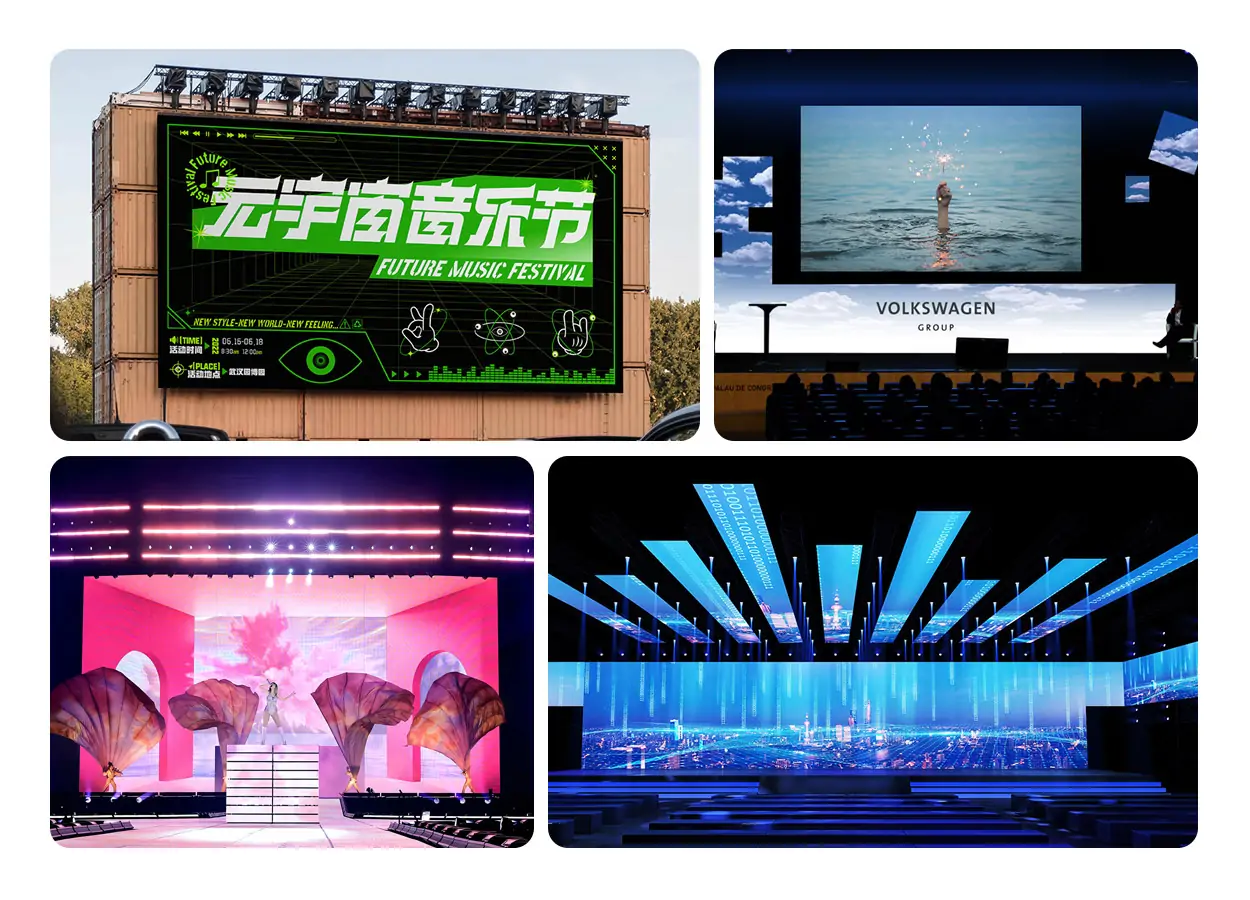
Start with 500×500 for booths, pop-ups, and retail environments. Floor plans are rarely perfect rectangles, and the ability to adjust the final row can matter more than the fastest theoretical build. A fine-pitch indoor rental LED display may also be viewed at a shorter distance, so pixel pitch should be chosen with the audience path in mind.
4.2 Corporate events and conferences
For a standard conference backdrop, 500×1000 is often the efficient field cabinet, especially when the design is a clean rectangle. Keep 500×500 cabinets available for side wings, logos, confidence monitors, and stage features. This hybrid approach avoids forcing every detail into one module size.
4.3 Concerts, festivals, and touring productions
Touring work rewards repeatability. Consider 500×1000 cabinets when the same wall travels from venue to venue and the crew is trained on one fast locking sequence. Evaluate the complete system: cabinet weight, flight cases, spare modules, hanging hardware, weather protection, and the time required to replace a damaged panel.
4.4 Outdoor events
For outdoor rental LED screens, cabinet size is secondary to IP rating, brightness, structural support, wind planning, and power distribution. A larger cabinet can reduce assembly time, but it does not make a screen weatherproof. Confirm the product’s tested rating and installation requirements for the actual environment.
5. Transport, Storage, and Rental Cost Comparison
The purchase price of one cabinet is a poor proxy for rental profitability. Model the full operating cost:
- number of cabinets per wall;
- cabinet weight and crew size;
- flight-case capacity and truck loading;
- setup and strike hours;
- spare modules, power supplies, and receiving cards;
- storage density and inventory utilization.
500×1000 cabinets may reduce the number of boxes on a large wall, but each packed unit may require different lifting and case-handling procedures. 500×500 cabinets can be easier to distribute across smaller cases and smaller vehicles. Ask the manufacturer for the actual case dimensions, gross weight, stacking limits, and loading diagram before you calculate transport savings.
6. How to Choose Between 500×500 and 500×1000 Cabinets
Use this five-step process when quoting a rental LED video wall:
- Define the finished wall. Record width, height, aspect ratio, viewing distance, and whether the wall is indoor or outdoor.
- Calculate the cabinet grid. Divide the wall dimensions by the cabinet dimensions and identify any unusable remainder.
- Choose the installation method. Confirm ground stacking, hanging, curved sections, support structures, and crew access.
- Price the whole workflow. Include cases, transport, labor, spares, power, processing, and calibration.
- Select one size or a hybrid. Use 500×1000 for the repeatable field and 500×500 for edges, returns, and special shapes when the system supports mixed use.
As a rule of thumb: flexibility first means 500×500; speed and large-area coverage mean 500×1000; varied rental work usually means both.
7. Common Mistakes When Comparing Rental LED Cabinet Sizes
7.1 Choosing by cabinet size without checking pixel pitch
Two cabinets with the same external dimensions can have different native resolutions and viewing-distance recommendations. Match pixel pitch to the audience and camera requirements before comparing cabinet formats.
7.2 Assuming different brands will mix
Matching width and height do not guarantee compatible locks, alignment pins, power connectors, receiving cards, or calibration files. Mixed inventories should be tested as a complete system before the event.
7.3 Ignoring rigging and handling limits
For a hanging wall, check the certified hanging hardware, total load, support spacing, wind exposure, and local safety requirements. For ground stacking, check the base, ballast, and maximum approved height.
7.4 Buying exactly the calculated quantity
Rental inventory needs serviceable spares. Plan extra LED modules, power supplies, data cables, receiving cards, and a small number of complete cabinets for high-value events. The right spare ratio depends on fleet age, transport distance, and service support.
8. FAQs About 500×500 and 500×1000 Rental LED Cabinets
9. Conclusion
Choose 500×500 rental LED cabinets when the project changes shape from job to job or when the venue demands precise modular control. Choose 500×1000 rental LED cabinets when the wall is large, rectangular, and built under time pressure. For a professional rental fleet, the strongest setup is often a primary 500×1000 inventory supported by 500×500 cabinets for edges and unusual layouts.
Need help choosing between 500×500 and 500×1000 rental LED cabinets? Send the wall dimensions, pixel pitch, installation method, and event type to your supplier and request a cabinet-count, flight-case, and spare-parts recommendation.
 P2.6 vs P2.97 vs P3.91 Rental LED Display: Which Pixel Pitch Fits Your Event?
 Transparent LED Screen vs LED Film: Which Is Better for Glass Windows?
Related Posts
Fill In Your Needs In Detail
Fill in the screen usage scene and size you need in “Content”.You will get a quote.