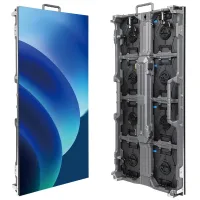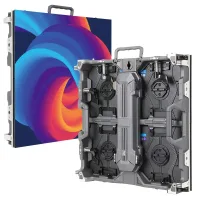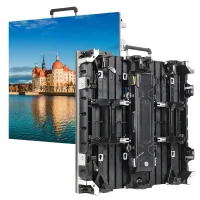
LED advertising boards are programmable electronic signs that display promotional text, images, or video. LED display boards are the broader category, including advertising screens, information boards, and scoreboards. The right choice depends on where people view the message, how much detail they need, and how the equipment will be operated and serviced.
This guide explains how to specify an LED display board for advertising, compare quotations, prepare installation, and calculate running costs. It also covers content scheduling and a practical LED advertising board business plan. Start with the viewing conditions and intended message before selecting a cabinet or a price per square meter.
1. What Is an LED Advertising Board?
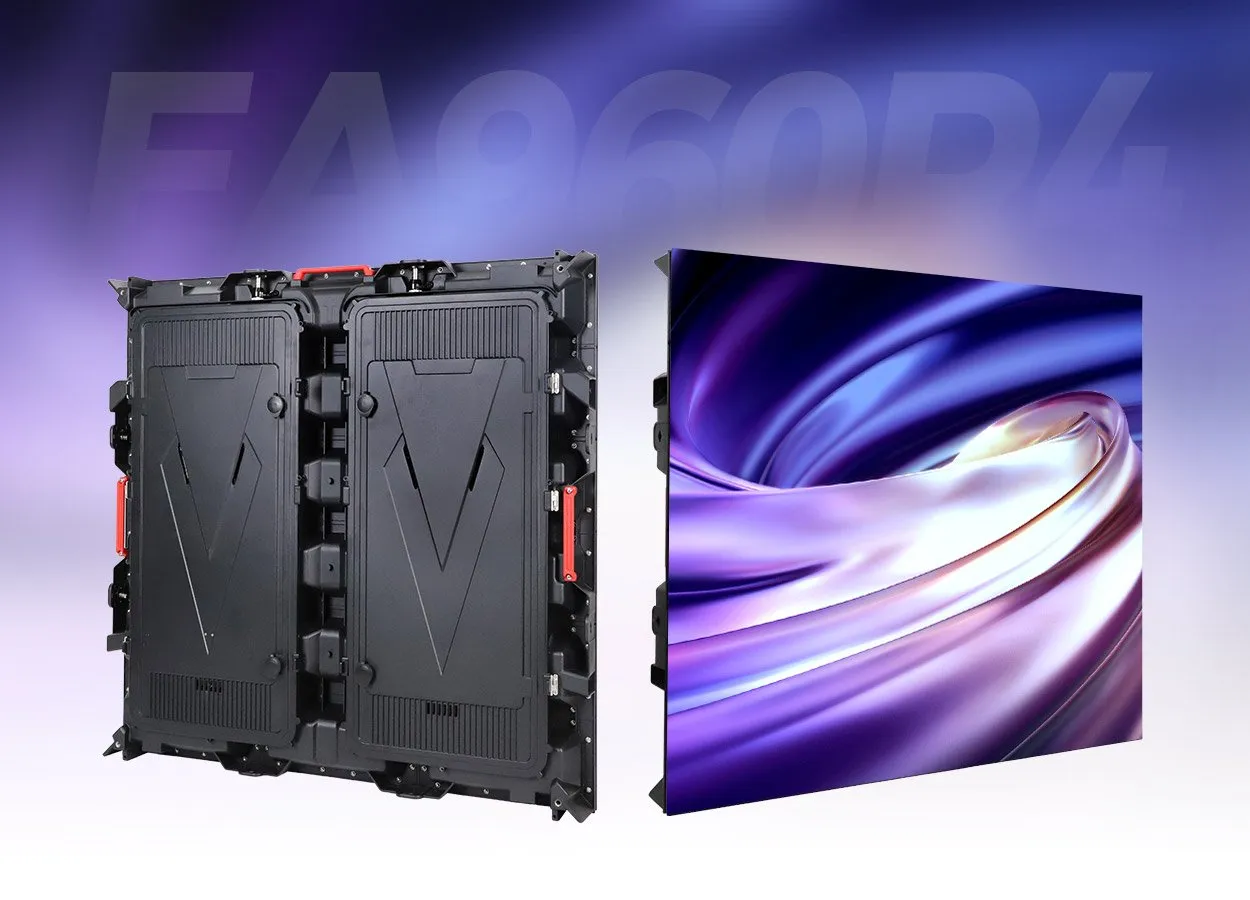
An LED advertising board uses light-emitting pixels to create a changeable message. A full-color direct-view screen combines red, green, and blue light at each pixel. Modules fit into cabinets, cabinets form the display surface, and a controller distributes the image across the assembled screen. Power supplies, receiving cards, wiring, and software complete the system.
The terms LED ad board and digital advertising board often describe the same application. However, a single-color scrolling sign and a full-color video wall have very different capabilities. An LED-backlit printed sign is different again: its lighting changes, but its printed message does not become programmable video.
| Format | Suitable content | Main purchasing question |
|---|---|---|
| Single-color programmable board | Opening hours, short notices, queue numbers | Can the required characters remain readable at the available resolution? |
| Full-color LED advertising boards | Product images, promotions, animation, video | Do pixel pitch, brightness, and control capacity match the site? |
| Information LED display boards | Schedules, prices, directions, operational data | How will data update, and what appears if the connection fails? |
| LED-backlit printed sign | A fixed printed advertisement | How often must the physical artwork be replaced? |
Define the required function in the quotation request. Asking only for an “LED board” can produce offers for incompatible products, even when the outside dimensions look similar.
2. Benefits of LED Advertising Boards
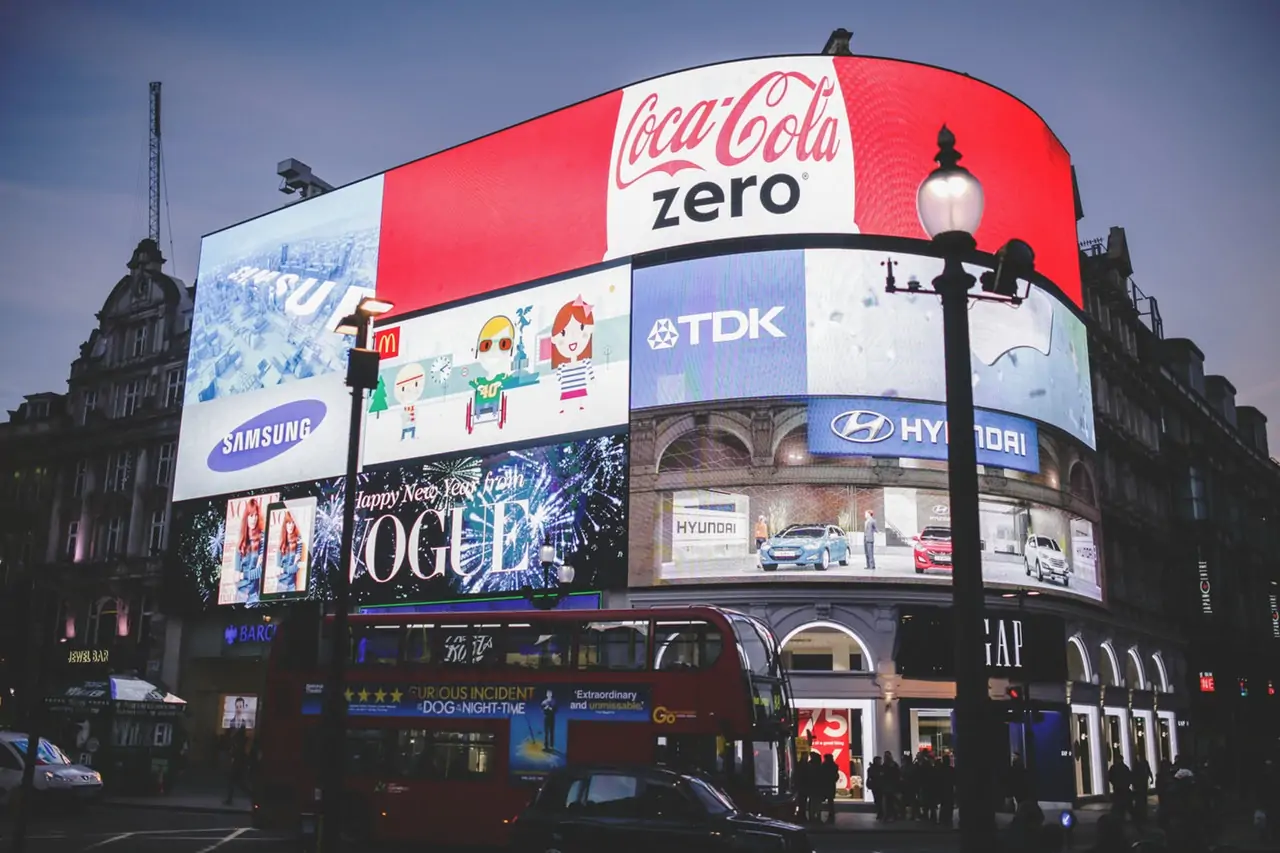
The principal benefit of LED advertising boards is control over the message. A retailer can schedule breakfast, lunch, and evening promotions without replacing a printed banner. A venue can switch between event information and sponsor content. A network operator can distribute approved campaigns to several locations from one workflow.
Modular LED display boards also allow a damaged component to be serviced without replacing the entire display surface. That advantage depends on access, compatible spare parts, and saved configuration files. A cheap cabinet that requires expensive lifting equipment for every repair may have a higher ownership cost than a more accessible alternative.
Brightness adjustment can improve viewing comfort and reduce unnecessary electrical consumption. It does not justify a universal energy-saving percentage: actual consumption depends on screen area, content, brightness, electronics, and operating hours. Compare measured operation under equivalent conditions.
LED advertising boards do not automatically increase sales. Establish a baseline, define the campaign objective, and measure an appropriate response, such as offer redemptions or qualified enquiries. Foot traffic, seasonality, and simultaneous promotions can otherwise make a screen appear more effective than the evidence supports.
3. Applications of LED Display Boards
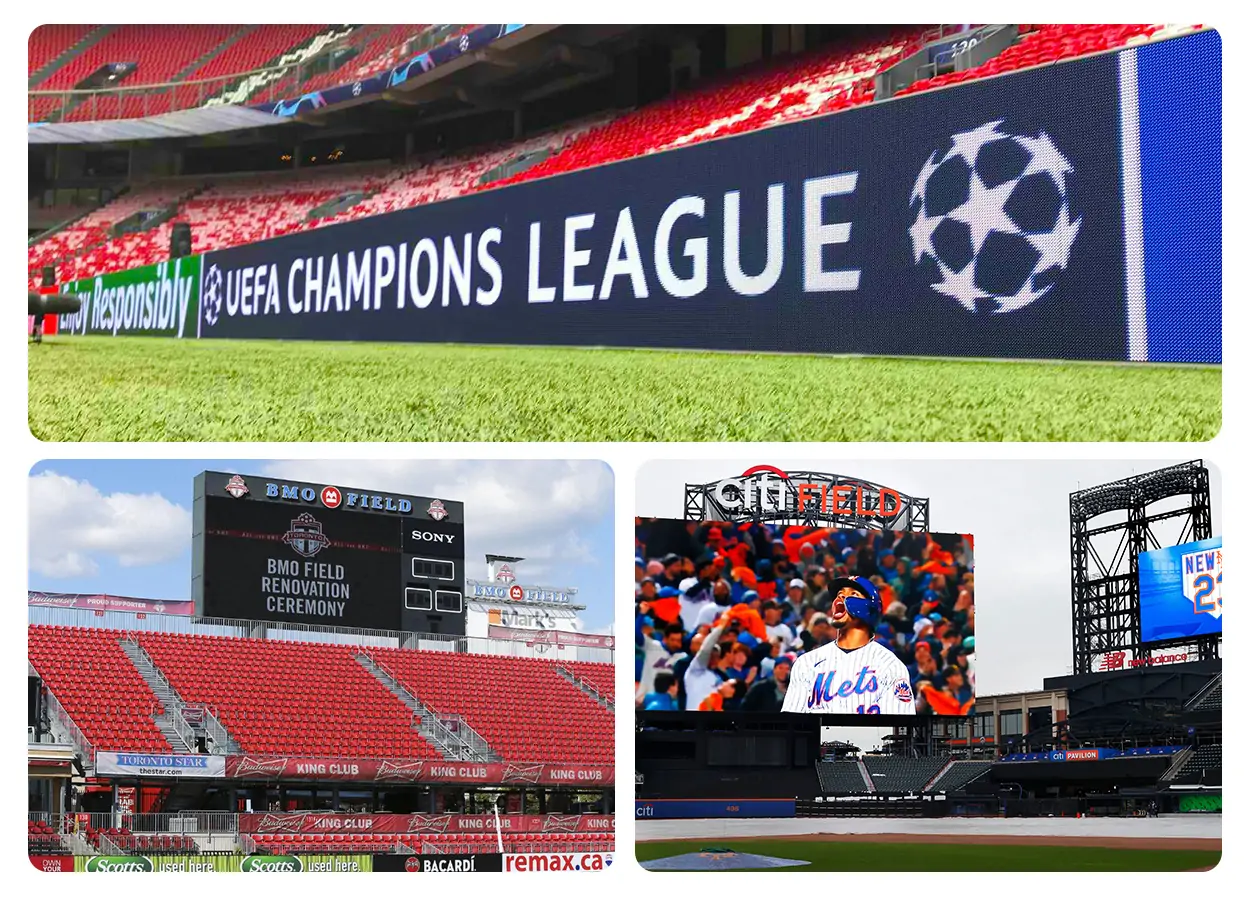
LED display boards work best when their specification follows the audience. A pedestrian reading a shop promotion has different needs from a stadium spectator or a passenger looking for a platform number.
| Location | Content priority | Technical and operational checks |
|---|---|---|
| Retail interior | Product detail and legible pricing | Close viewing, low-brightness image quality, noise, front service |
| Outdoor storefront | Short messages visible in changing daylight | Sun direction, dimming, exposed surfaces, access and local sign requirements |
| Shopping center atrium | Brand campaigns and wayfinding | Multiple viewing angles, height, content resolution and maintenance access |
| Transport or public information area | Accurate, timely information | Data source, fallback messages, readability and update responsibility |
| Sports venue | Sponsor graphics, scores and video | Impact protection where relevant, camera testing and event integration |
For close viewing, compare indoor LED screen configurations. For venue advertising, review sports LED display options. These categories help shortlist products; they do not replace a project-specific specification.
Window installations deserve particular care. An indoor screen behind glass may face strong sunlight and trapped heat without direct rain exposure. An outdoor label alone does not resolve reflections, ventilation, building access, or nighttime brightness. Survey the actual position at several times of day.
4. Choosing the Right LED Advertising Board for Your Business
01. Match pixel pitch to the message and viewing distance
Pixel pitch is the center-to-center distance between adjacent pixels, expressed in millimeters. Smaller pitch places more pixels in the same area. LED advertising boards showing fine product detail usually need more resolution than signs displaying a few large words.
Calculate the approximate native pixel dimensions using screen dimension in millimeters ÷ pixel pitch in millimeters. A hypothetical 4,000 × 2,000 mm screen at P4 contains approximately 1,000 × 500 pixels. At P8, the same area contains approximately 500 × 250 pixels. Actual dimensions must follow the selected module and cabinet layout.
Viewing-distance rules are only starting points. Ask to see your smallest price, logo, and required text on a sample at the nearest important viewing position. Test angled views too. Neither a “4K input” label nor a controller accepting 4K makes a lower-resolution LED advertising board a native 4K screen.
02. Specify brightness, environmental protection, and access
Brightness is measured in nits, equivalent to candelas per square meter. Request both maximum brightness and the usable dimming range. Outdoor LED advertising boards need a daylight assessment and a nighttime setting; permanently running maximum output can waste energy and create an uncomfortable viewing experience.
Check the declared ingress protection of both front and rear surfaces, including the installed connectors. An enclosure rating does not establish resistance to every condition, such as salt exposure, condensation, standing water, or an unsuitable cleaning method. Obtain the installation manual and environmental limits for the exact model.
| Item | Ask the supplier to state | How to verify |
|---|---|---|
| Geometry and resolution | Active area, cabinet layout, pitch and native pixel dimensions | Check layout drawing and content canvas together |
| Brightness and uniformity | Maximum output, dimming method and calibration conditions | View white, gray and dark content at intended brightness |
| Environmental limits | Front/rear protection, temperature and humidity limits | Compare model documentation with the site survey |
| Power and cooling | Maximum load, representative average load and test conditions | Confirm electrical design and ventilation requirements |
| Service access | Front/rear access for modules, cards and power supplies | Demonstrate removal of each serviceable component |
| Control system | Pixel capacity, inputs, scheduling, licenses and offline behavior | Run the intended playlist and a connection-loss test |
03. Choose a workable control and content system
LED display boards can use stored playlists for unattended operation or receive a live video signal. Choose according to the job: a shop promotion generally needs reliable scheduling, while a live event may require real-time switching. Confirm supported file formats, storage, network connection, and remote access permissions.
For several LED advertising boards, request a demonstration of grouped scheduling, local overrides, proof-of-play reporting, and user permissions if these features are required. Establish who can publish, approve, and remove content. Keep a local fallback message so a network interruption does not leave an obsolete offer on screen.
Camera-facing LED display boards require testing with the intended cameras and settings. Refresh-rate figures alone cannot guarantee freedom from visible bands or other artifacts. Capture test footage of dark gradients, movement, and the actual brightness setting before acceptance.
5. Why Consider EagerLED for Your LED Advertising Board Project?
EagerLED offers an advertising LED screen range that can be compared against your project brief. The useful next step is a documented configuration, rather than choosing from a headline specification alone. Ask which cabinet, module, control system, and service method the proposed price includes.
For LED advertising boards, a meaningful supplier review should include a comparable project reference, an image-quality demonstration, a cabinet layout, and a clear delivery scope. Request applicable product documentation for the destination market and verify that it corresponds to the quoted model.
Ask for written warranty coverage, exclusions, parts availability, shipping responsibility, and support arrangements. Do not assume that all LED display boards share the same warranty or that a component lifetime estimate guarantees complete-system operation. Agree on the acceptance process, spare modules, calibration data, and operator training before placing an order.
When requesting a proposal, send site photographs, screen width and height, nearest viewing distance, daily hours, ambient conditions, installation height, service access, and example content. A complete brief helps EagerLED recommend LED advertising boards that can be evaluated on practical performance.
6. How to Install and Maintain an LED Display Board Efficiently
01. Plan installation and commissioning
Installation starts with the building and services. A qualified project team should establish the mounting arrangement, structural loads, power distribution, isolation, cable routes, and maintenance access. Outdoor LED advertising boards also need site-specific consideration of wind, drainage, corrosion exposure, and weather protection.
Assemble cabinets to the approved drawing and check alignment before final image calibration. Keep power and signal connections identifiable. Commission LED display boards with solid colors, gray scales, text, and representative video; inspect seams, incorrect mapping, color differences, dead pixels, and image stability.
Record the brightness schedule, controller configuration, network details, spare-part inventory, and serial numbers. Demonstrate restart after a power interruption and playback after network loss. Handover should include a known-good backup configuration and a named contact responsible for routine content updates.
02. Maintain the complete system
Set inspection intervals using the supplier’s instructions and site conditions. Dust, heat, humidity, and difficult access can change maintenance needs. Check ventilation openings, cabinet seals, connectors, structural fixings, image uniformity, and any available temperature or fault alerts.
Use the specified cleaning method and isolate equipment before service as required by the manufacturer. LED advertising boards should not be pressure-washed merely because their enclosure has an ingress rating. Have qualified personnel handle electrical faults and elevated work.
Store compatible spare modules, power supplies, and receiving cards where the service team can obtain them. Replacement modules may need calibration to match aged LED display boards. Keep a repair log with symptoms, affected locations, parts replaced, and downtime; recurring faults can indicate a system issue rather than several unrelated component failures.
7. How to Maximize Visibility with an LED Display Board
Good LED advertising boards make one message easy to understand. Begin with a clear offer, a recognizable brand, and one relevant action. Long paragraphs and competing animations reduce the time available to understand the advertisement.
Design at the native pixel dimensions of the screen. Use strong contrast, generous spacing, and type that remains legible from the real viewing position. Thin strokes can disappear on coarse-pitch LED display boards, even when they look attractive on a desktop monitor.
Adjust message duration to the audience’s dwell time. A waiting customer can read more than someone walking past. Keep essential information visible together rather than spreading a price, product, and condition across separate slides that viewers may never see in sequence.
Match brightness to ambient light and review the display after dark. For roadside locations, use content and operating arrangements approved for the site; do not assume that moving video or interactive calls to action are suitable everywhere.
Evaluate LED advertising boards with a repeatable campaign process: record the creative, schedule, location, and outcome; change one major variable at a time; compare equivalent periods. Proof of playback confirms that content ran, not that every passerby saw or acted on it.
8. What Are the Cost Factors of an LED Advertising Board?
01. Compare total installed and operating cost
The price of LED advertising boards depends on active area, pixel pitch, components, brightness, protection, control equipment, and installation scope. A price per square meter is useful only when both offers include equivalent specifications and clearly identify exclusions.
| Cost category | Include in the estimate | Question to resolve |
|---|---|---|
| Display and controls | Cabinets, modules, processor/player, spares and cables | Is this a complete working system? |
| Site preparation | Structure, electrical work, ventilation and installation labor | Who supplies and approves each part? |
| Delivery | Packaging, freight, duties and local handling where applicable | What delivery terms and exclusions apply? |
| Operation | Electricity, connectivity, software and content production | Which charges recur monthly or annually? |
| Service | Inspection, repairs, access equipment and replacement stock | What downtime and response costs are realistic? |
Calculate screen electricity as area × average watts per square meter ÷ 1,000 × operating hours. For illustration only, a 12 m² display averaging 250 W/m² for 12 hours daily uses 36 kWh per day. At an assumed tariff of $0.15/kWh, that is $5.40 daily or $162 over 30 days, excluding cooling and other equipment.
This is a calculation example, not an EagerLED product specification or tariff quotation. Request measured average consumption for comparable brightness and content. Use maximum load for electrical design; do not size supply circuits from the average energy estimate.
02. Build an LED advertising board business plan
If you sell advertising space, separate screen ownership from media revenue. List available campaign slots, expected occupancy, billing periods, selling costs, site rent, power, connectivity, maintenance, and financing. LED advertising boards create inventory, but demand and occupancy determine whether that inventory generates income.
A simple planning formula is monthly gross revenue = saleable slots × average fee per slot × occupancy. An illustrative eight-slot schedule at $300 per slot and 60% occupancy produces $1,440 monthly gross revenue. That amount is before expenses, tax, commissions, and downtime, and it is not a forecast for any location.
Test conservative, expected, and optimistic scenarios. Include the ramp-up period before advertisers commit and reserve funds for service interruptions. For a retailer using LED display boards internally, evaluate incremental gross profit or communication value instead of assuming advertising-slot revenue.
Obtain current quotations for the defined project and use local operating assumptions. Avoid comparing an installed outdoor billboard with a bare indoor module price; they are different purchasing scopes.
9. FAQs About LED Advertising Boards and LED Display Boards
01. What is the difference between LED advertising boards and LED display boards?
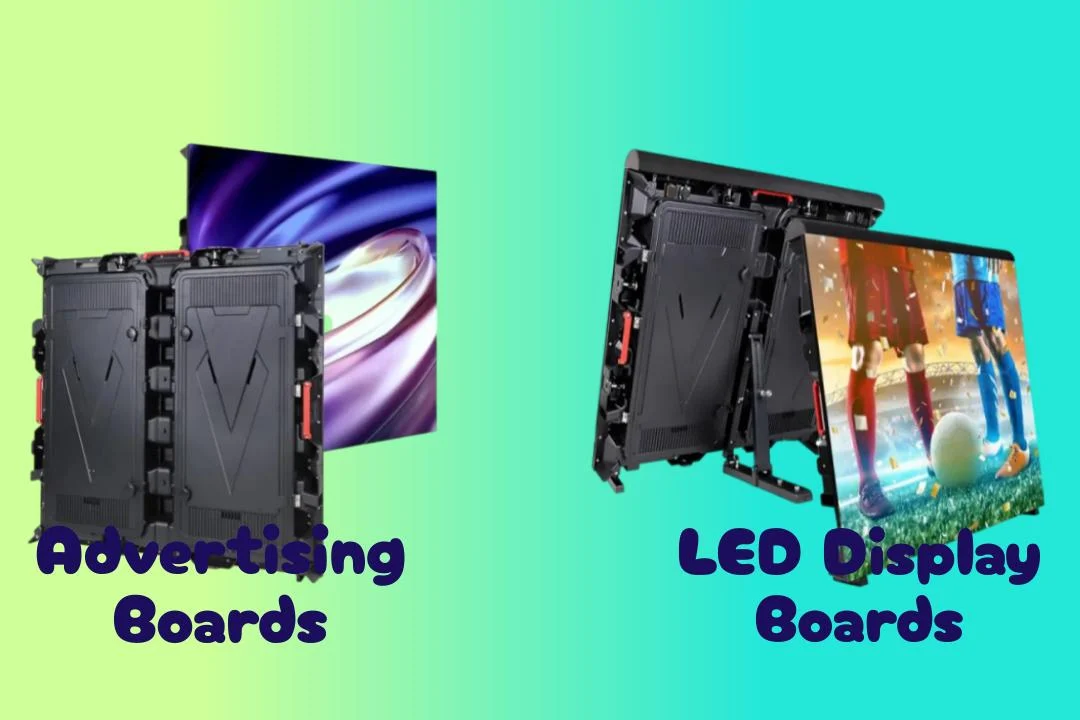
LED advertising boards are used for promotional messages. LED display boards include advertising, information, scoring, and other display functions. Specify whether you need simple text or full-color video, because the terminology alone does not establish capability.
02. How much does an LED advertising board cost?
There is no single reliable price without a specification. Size, pixel pitch, environment, controls, structure, installation, and service affect the total. Request an itemized installed quotation and compare operating costs over the same period.
03. Which pixel pitch should LED display boards use?
Choose according to the nearest important viewing position, native resolution, and smallest required text or image detail. Test actual content on a sample. A finer pitch adds pixels, but its value depends on what the audience can see.
04. Can indoor LED advertising boards be used outdoors?
Only if the exact equipment and installation are designed for the exposure. A roof or temporary cover does not automatically provide suitable protection against moisture, heat, dust, or wind-driven rain. Check the model’s environmental limits and complete installation design.
05. Can LED display boards update remotely without a permanent computer?
Yes, a compatible media player can store and play scheduled content without a continuously connected computer. Remote publishing still needs a supported connection. Confirm storage, software licensing, permissions, and offline playback in a demonstration.
06. How long do LED advertising boards last?
Service life depends on operating conditions, brightness, component quality, maintenance, and repairability. A quoted LED brightness-decay lifetime is not a whole-system warranty. Check warranty terms, replacement-part availability, and the condition of power and control components.
10. Conclusion: Specify LED Advertising Boards Around the Real Job
Choose LED advertising boards by matching the message, viewing conditions, hardware, controls, and service plan. Compare LED display boards using native resolution, documented environmental limits, actual content tests, and complete ownership cost. A clear specification is more valuable than an unsupported lifetime or performance claim.
To move forward, send EagerLED your project requirements with dimensions, location photographs, viewing distance, operating hours, and sample content. Request a cabinet layout, itemized quotation, and acceptance checklist so the proposed LED advertising board can be assessed before purchase.
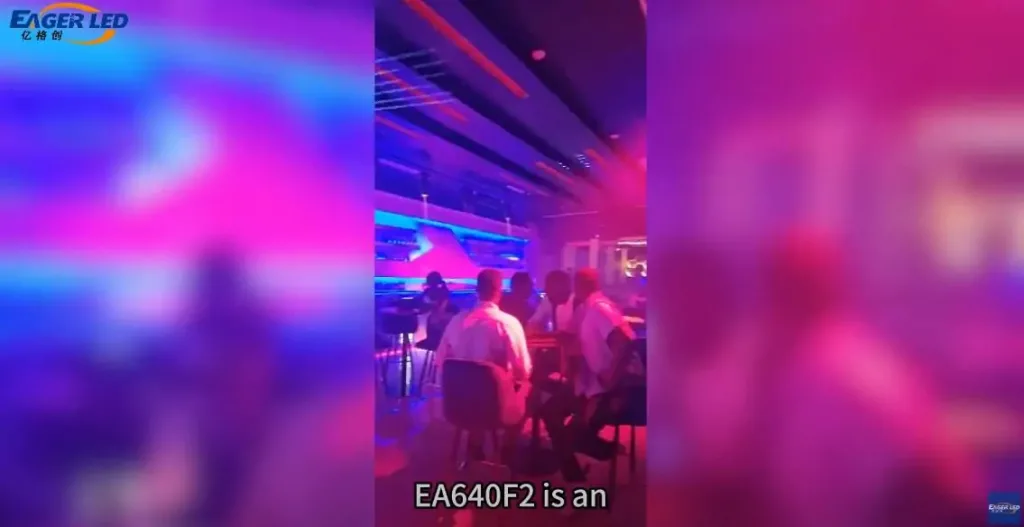 South Sudan Customer Purchased EA640F2 Indoor LED Signage
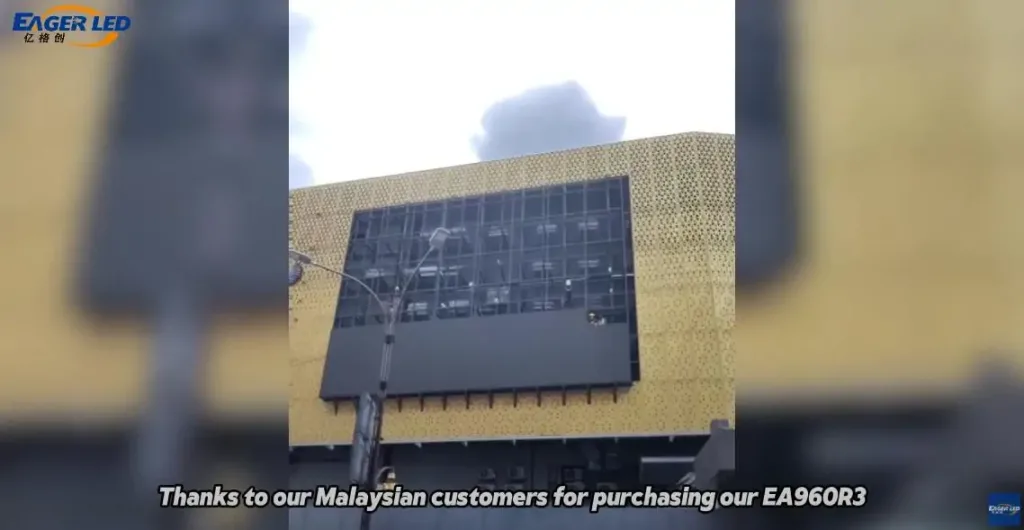 Malaysian Customer Purchased EA960R3 Outdoor Fixed LED Wall
Related Posts
Fill In Your Needs In Detail
Fill in the screen usage scene and size you need in “Content”.You will get a quote.