Mobile billboard advertising displays promotional messages on trucks, trailers, and other mobile platforms. Printed graphics or digital LED screens bring the message to agreed routes and authorized locations. Campaign success depends on audience relevance, readable creative, reliable operation, and measurable responses.
This guide explains mobile billboard types, campaign costs, benefits, services, and buying considerations. First decide whether you need advertising time, a managed truck campaign, equipment rental, or a complete vehicle purchase: each has a different scope and budget.
1. What Are Mobile Billboards?
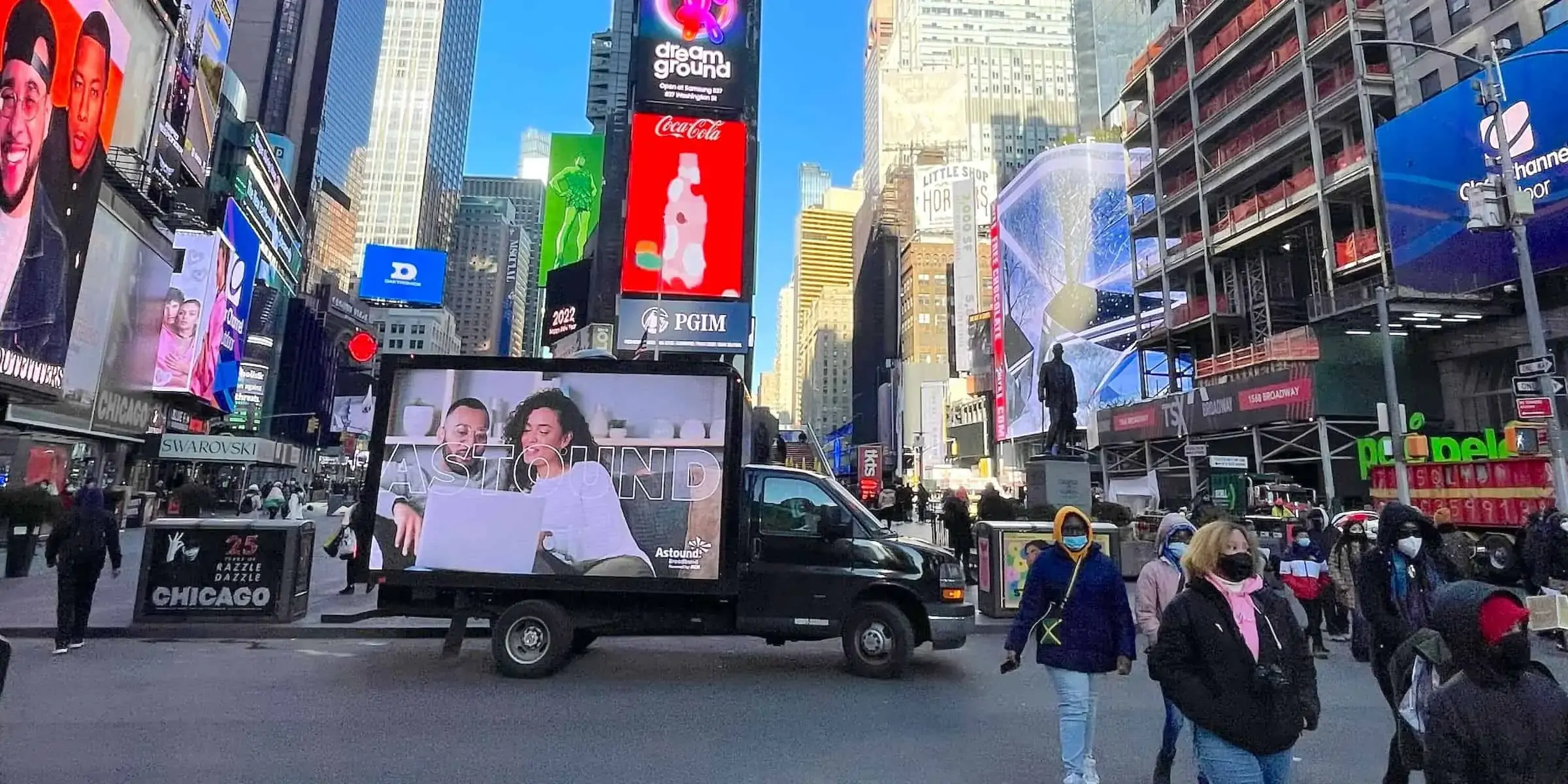
Mobile billboards, also called moving billboards, carry advertisements on vehicles or towable structures. Dedicated advertising trucks follow planned campaign routes; wrapped delivery fleets usually follow normal business journeys. Both provide mobile outdoor advertising, but route control differs.
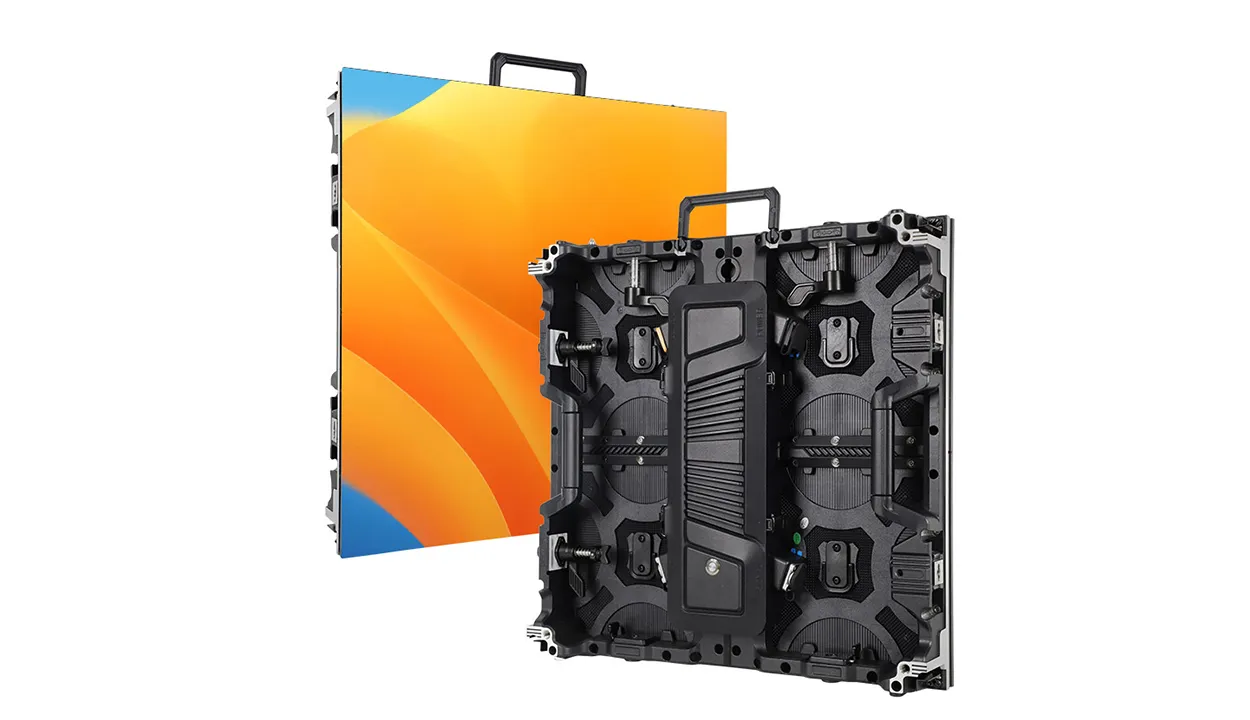
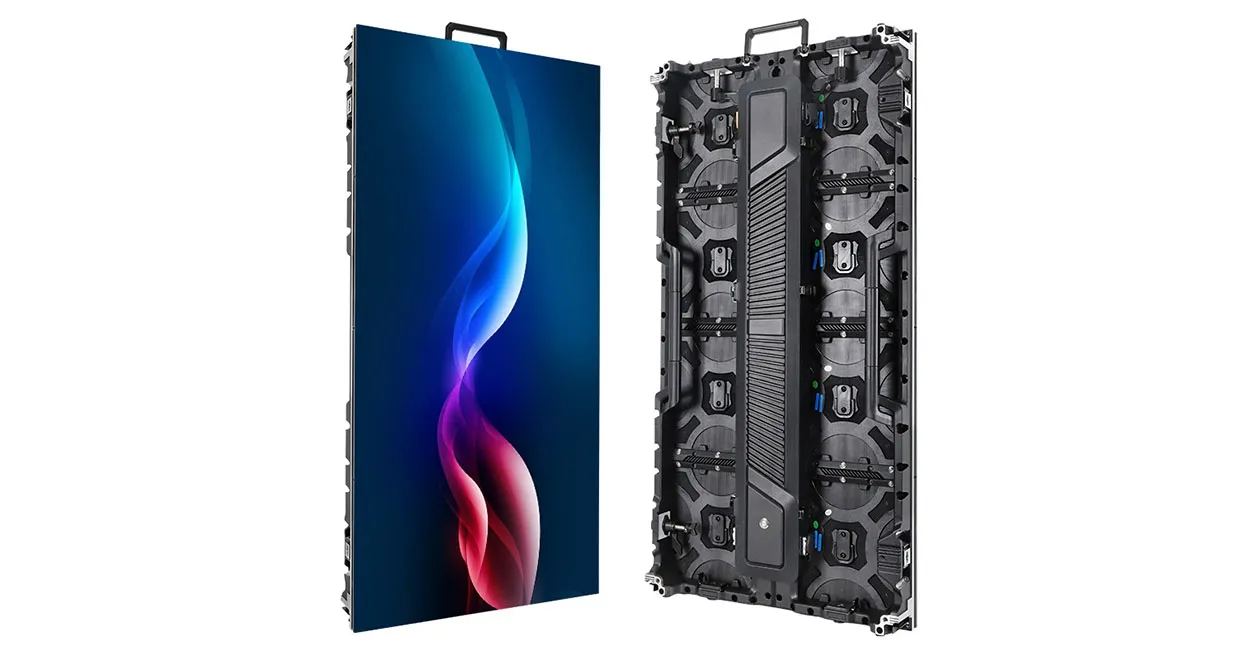
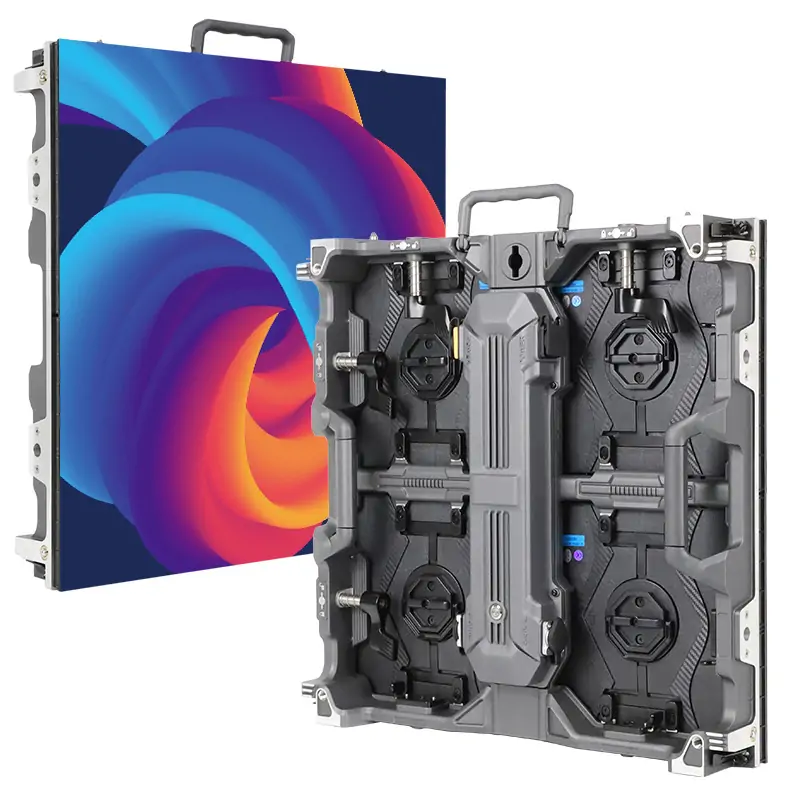
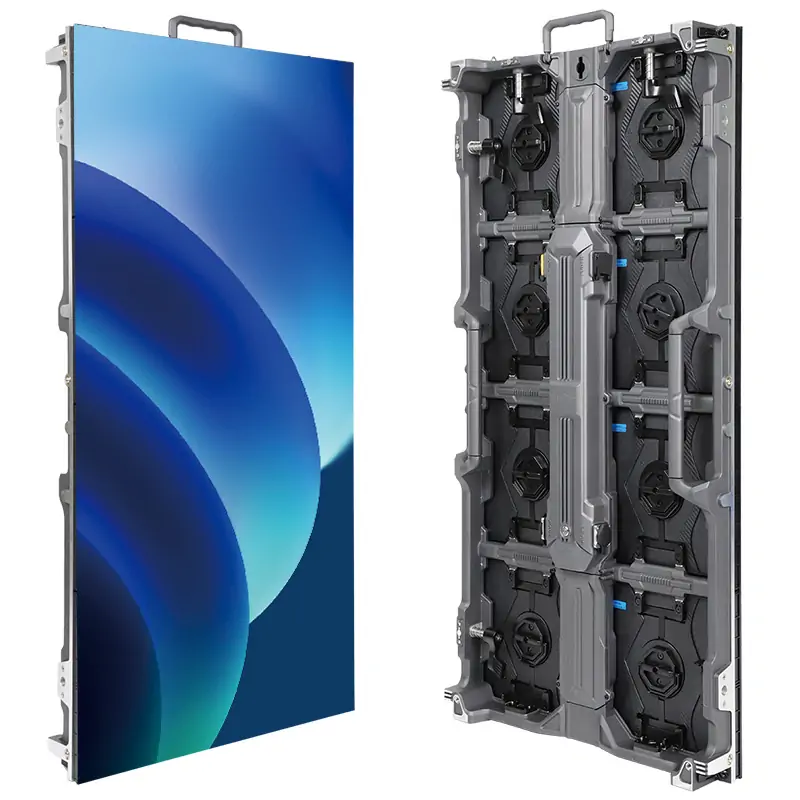
Digital mobile billboards use LED modules, a controller, and a media player to display electronic content. A screen supplier provides display equipment; a campaign operator provides advertising delivery. Do not assume that purchasing an LED cabinet includes a vehicle, driver, route, or media service.
2. Types of Mobile Billboards
There are various types of mobile billboards, each with unique features discussed below.
2.1 Static Billboards on Trucks
Printed advertisements are fitted to trucks or dedicated frames.
Best for:
- A stable message used throughout a campaign.
- Bold product images and recognizable branding.
- Campaigns that do not need frequent creative changes.
Characteristics:
- Print durability depends on materials, exposure, and installation.
- Artwork changes require production and fitting.
- Nighttime visibility requires suitable illumination.
2.2 Digital LED Mobile Billboards
Mobile digital billboards use LED screens to show approved still graphics, animation, or video where permitted.
Best for:
- Time-sensitive promotions and scheduled message variations.
- Campaigns requiring several approved creatives.
- Event content with suitable technical support.
Characteristics:
- Content can change electronically; update speed depends on the platform and approval process.
- Brightness should adapt to ambient light and local requirements.
- Confirm exclusive use versus shared playlist time.
Illustrative example: A product launch uses scheduled demonstrations on a truck display. Any live social feed needs moderation and fallback content.
2.3 Trailer Billboards
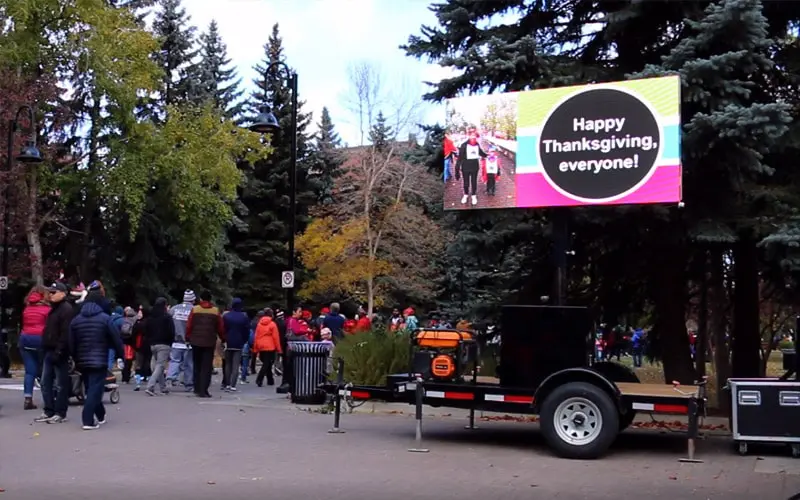
Trailer billboards are towed between locations and carry printed panels or digital displays.
Best for: Temporary campaigns, regional tours, and authorized event sites.
Characteristics:
- Check towing compatibility, transport height, and site access.
- Agree on setup, stabilization, and removal responsibilities.
- Parking permission and advertising permission must both be checked; an available space is not automatic authorization.
2.4 Bike/Backpack Billboards
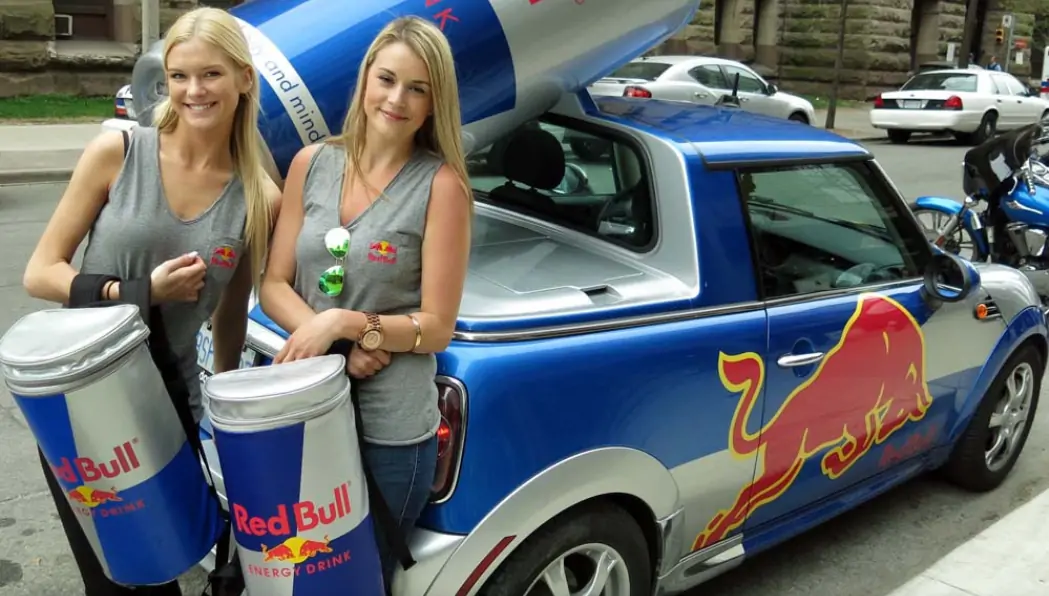
Bicycle, e-bike, and backpack displays offer compact formats for local promotions.
Best for: Pedestrian-oriented campaigns and permitted local events.
Characteristics:
- Smaller display areas require concise messages.
- Staffing, weather, and access affect delivery.
- Check permissions for pedestrian zones and parks.
- Compare complete costs instead of assuming small formats are always cheaper or more effective.
2.5 Wrapped Vehicles (Branded Fleets)
Branded cars, vans, and buses can carry advertising during normal business journeys.
- Existing routes may support repeated local recognition.
- Check graphic visibility around windows, doors, and body contours.
- Route consistency matters when selling advertising exposure.
- Tax treatment depends on jurisdiction and circumstances; obtain local professional guidance rather than assuming deductibility.
2.6 Mobile Billboard Types Comparison
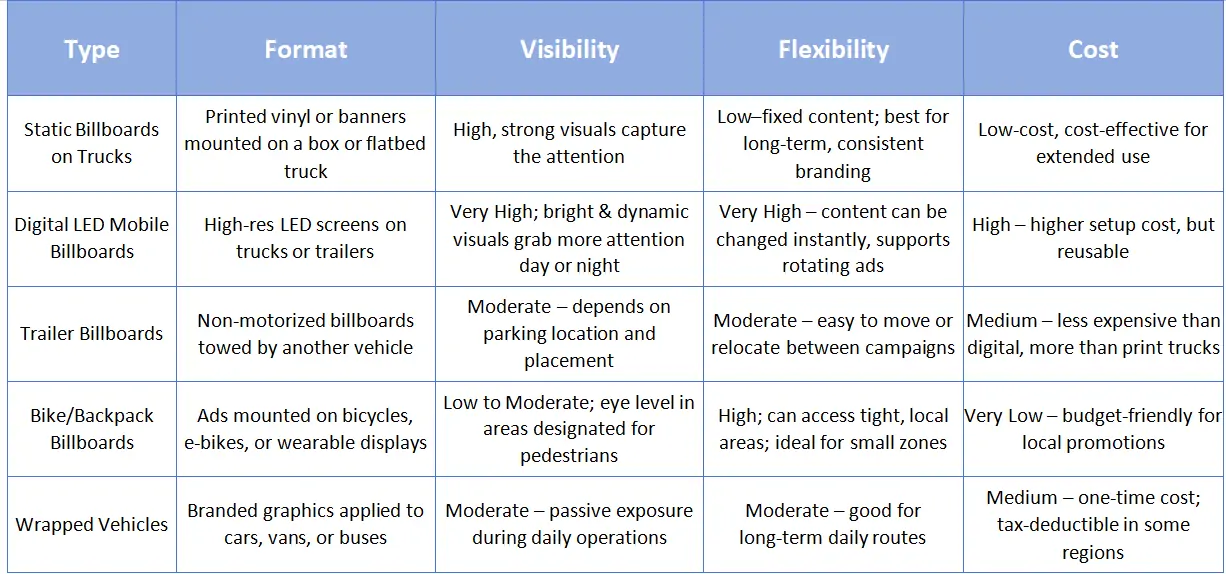
Choose a format by message, audience, and operating requirements. The original comparison illustration is retained below; this text table makes the key distinctions accessible.
| Format | Useful for | Check before booking |
|---|---|---|
| Printed truck | One stable campaign message | Print production, fitting, and illumination |
| LED truck | Scheduled creative variations | Native resolution, dimming, power, and playlist share |
| Trailer | Authorized event deployments | Towing, setup, stabilization, and site access |
| Bike or backpack | Nearby pedestrian audiences | Staffing, display size, and access rules |
| Wrapped fleet | Branding on existing journeys | Route consistency and actual graphic visibility |
3. How Do Mobile Billboards Work?
A mobile billboard campaign combines an audience brief, feasible route, approved artwork, operating schedule, and delivery report. Agree on these details before booking so the provider and advertiser measure the same service.
3.1 Campaign Planning
- Set Objective: Define clear goals and objectives, such as boosting sales, brand recognition, or message promotion.
- Audience: Considering the objectives, use demographics to determine who actually should see your ad.
- Select Route: Depending on who your target market is, determine the routes your mobile billboard should go. Routes are typically chosen for their high traffic, maximum visibility, and relevance to key locations; such as shopping areas, public venues, and event sites.
- Budget & Duration: Set the specific budget and duration to plan how much time your ad will run, while considering the specified budget.
- Select Billboard: Choose a billboard vehicle based on your target market, goals, and budget.
3.2 Ad Design
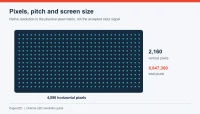
Request the exact artwork dimensions and file formats for every display face. Use a clear main message, recognizable branding, and one response action. Test legibility from realistic viewing positions. For LED trucks, design to the native pixel canvas rather than assuming that a large physical screen reproduces fine detail.
3.3 Campaign Scheduling
Schedule delivery around relevant audience activity rather than automatically choosing rush hour. Specify dates, hours, target areas, and permitted stops. Clarify whether depot travel and breaks count toward booked hours, and prepare alternatives for road closures or severe weather.
3.4 Compliance
Ask the operator to verify applicable vehicle, parking, signage, brightness, and animation requirements with the relevant local authorities. Venue permission alone may not cover public-road operation. Check the proposed route before booking; rules vary by location. Consult official sources such as the NYC Department of Transportation traffic-rules reference for that jurisdiction.
3.5 Operations Tracking
Track delivery separately from audience response:
- GPS records: Show where and when the vehicle traveled, not how many people viewed an advertisement.
- Proof-of-play: Records which digital creative played and when; supplement logs with operational checks.
- Driver reporting: Document delays, route changes, and downtime.
- Audience estimates: Require a stated methodology and assumptions about visibility and repeat exposure.
4. How Much Does Advertising on Mobile Billboards Cost?
Mobile billboard advertising cost depends on location, dates, format, operating hours, and service scope. Compare an itemized campaign quotation, not just a headline hourly or daily rate.
4.1 Factors Influencing the Billboard Cost
There are a lot of factors on which the actual cost of mobile billboards depends.
- Location: Higher-traffic locations or major cities may have higher costs.
- Billboard type: Digital billboards, as compared to static billboards on trucks, have higher costs.
- Campaign Duration: The campaigns having longer periods usually offer discounts.
- Campaign timing and Route: If you move in busy or large traffic areas or during peak times, it will increase the cost of driving.
- Size of Mobile Boards: Large displays or ads increase costs, such as graphic design, production, and other additional services.
- Rental Fee: The rental fee depends on the type of billboard vehicle, duration, and size of display.
4.2 Mobile Billboard Pricing Examples
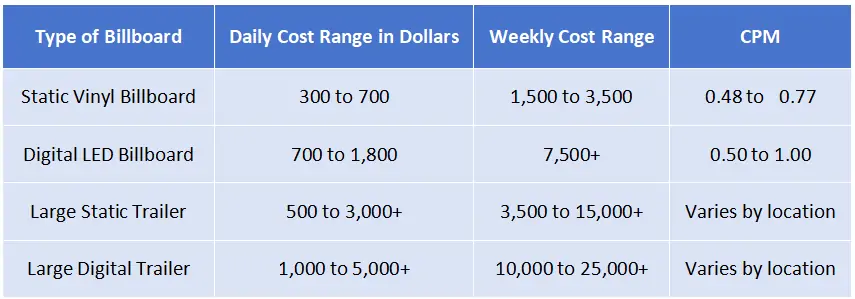
Pricing note: The original graphic above is retained unchanged, but its figures are not verified current offers. For a dated reference, Billboard Express lists these US digital-truck packages, checked September 22, 2026. They are one provider’s advertised rates, not market averages or EagerLED prices. Confirm availability, inclusions, and applicable charges in writing.
| Package | Advertised rate | Stated booking basis |
|---|---|---|
| Solo day | US$175/hour | Minimum 8 hours; exclusive advertiser; 3 truck sides |
| Weekly | US$7,500/week | 5 days, 8 hours/day; exclusive advertiser |
| Monthly | US$24,000/month | 5 days/week, 8 hours/day; confirm the exact dates |
4.3 Cost Breakdown: A Quick Guide
Compare three groups of campaign costs:
- Media and vehicle service: Truck quantity, dates, operating hours, screen faces, route, and exclusivity.
- Creative production: Design, animation, print fitting, revisions, and removal where applicable.
- Operations and reporting: Driver, fuel or charging, travel, setup, site fees, GPS records, and delivery reports.
Define overtime, cancellations, outages, and make-good arrangements. A shared digital slot is not equivalent to exclusive use of a truck.
4.4 How to Reduce Costs: Effective Strategies
- Vehicle type: Match the format to your message and audience.
- Campaign duration: Request alternative booking lengths; discounts vary and no fixed percentage is guaranteed.
- Timing: Concentrate on relevant audience periods and reduce unnecessary repositioning.
- Complete packages: Compare inclusions carefully; bundled services are not automatically cheaper.
- Creative reuse: Reuse approved assets when suitable, while checking dates and offers.
Illustrative scheduling test: A gym could compare commuting periods with lunchtime near its service area. Choose time slots using local customer behavior, then compare qualified enquiries or trial redemptions. This is a test idea, not evidence that one universal schedule performs best.
5. Advantages of Mobile Billboard Advertising
5.1 Visibility
Mobile billboards can bring a message to several relevant locations during agreed service hours. Actual visibility depends on traffic, obstructions, viewing angle, lighting, and dwell time. Mobility alone does not establish greater reach than a well-positioned fixed billboard.
5.2 Attracting Attention
A distinctive vehicle and clear creative can attract attention in physical spaces. However, passersby can overlook outdoor advertisements. Use a message that is understandable at a glance, and assess response rather than describing the campaign as impossible to ignore.
5.3 Geo-Targeting
- Local targeting: Prioritize relevant neighborhoods and authorized event areas.
- Time-based messages: Schedule content for suitable periods when the platform supports it.
- Operational limits: Traffic and access restrictions may change the planned route. Location targeting does not prove that every viewer matches a demographic profile.
5.4 Engagement and Recall
- Engagement: Measure identifiable actions such as enquiries, campaign-code use, or tagged visits.
- Recall: A properly designed audience study is needed to substantiate recall claims.
No universal engagement multiplier is established here. Results depend on campaign design, location, audience, and measurement method.
5.5 Enhances Digital Marketing
- Use a memorable landing page or campaign code to connect outdoor messaging with customer action.
- Use QR codes only where pedestrians can stop safely and scan comfortably; do not require drivers to scan.
- Keep website responses separate from route data and estimated impressions.
5.6 Cost and Flexibility
- Bookings may be offered for different durations, subject to operator minimums.
- Digital creative can change without reprinting.
- Cost-effectiveness depends on complete campaign costs and relevant outcomes; mobile billboards are not universally cheaper per impression than other media.
6. Who Is Mobile Billboard Advertising Best For?
Mobile billboard advertising can suit these use cases when the route reaches a relevant audience. This is a planning list, not a ranking of industries proven to perform best.
- Restaurants & Food Chains for advertising new locations, menu items, or temporary deals.
- Event marketing, such as concerts, festivals, and competitions, to promote visibility and participation along key routes and areas..
- Political promotion or non-profit organizations to spread messages, gather support, and increase awareness.
- Local retailers to boost foot traffic and advertise special events, sales, or store openings in a certain town.
- Real Estate to promote open homes, listings, or agency branding in specific communities.
- Medical Institutes, including dentists and other healthcare centers, promote health awareness, new services, and locations in local areas.
- Product Launches to introduce new goods or services and grab attention.
Other Industries
- Educational institutes
- Travel and Transportation
- Tourism
- Beauty
- Sports
- Automotive industry
7. Mobile Digital Billboard Brand References and Creative Ideas
The brand names and original images in this section are retained as creative references. The previously named campaigns and claimed results have not been independently verified here. The suggestions below are hypothetical planning ideas, not documented brand campaigns, endorsements, or EagerLED projects.
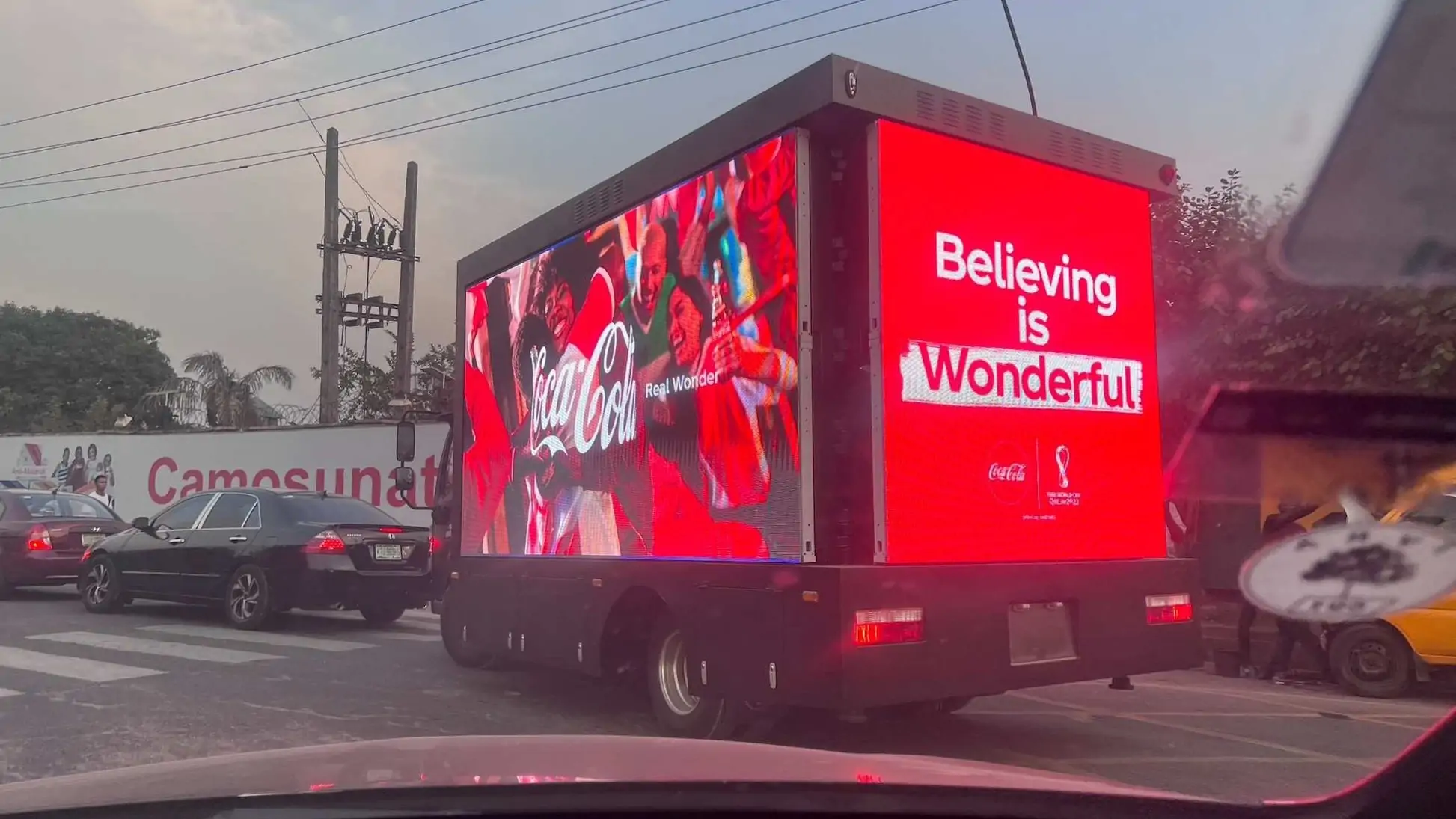
7.1 Coca-Cola
- Creative lesson: A recognizable beverage pack and a brief message can support quick identification.
- Illustrative application: An authorized local promotion directs pedestrians to a nearby stockist.
The retained Coca-Cola image does not establish a specific campaign title or measured result.
7.2 McDonald’s
- Creative lesson: A clear food image and one offer are easier to process than a full menu.
- Illustrative application: A restaurant promotion includes a location and offer expiry date.
No McDonald’s campaign outcome is claimed here.
7.3 Amazon
- Creative lesson: Entertainment advertising needs a recognizable title and a clear release or event date.
- Illustrative application: A permitted campaign promotes a screening near a relevant venue.
Do not attribute subscription growth to a mobile billboard without campaign evidence.
7.4 Tesla
- Creative lesson: A product image and a simple next step can introduce a vehicle.
- Illustrative application: An authorized pedestrian display directs visitors to a demonstration booking page.
This is not verification of a Tesla mobile showroom campaign.
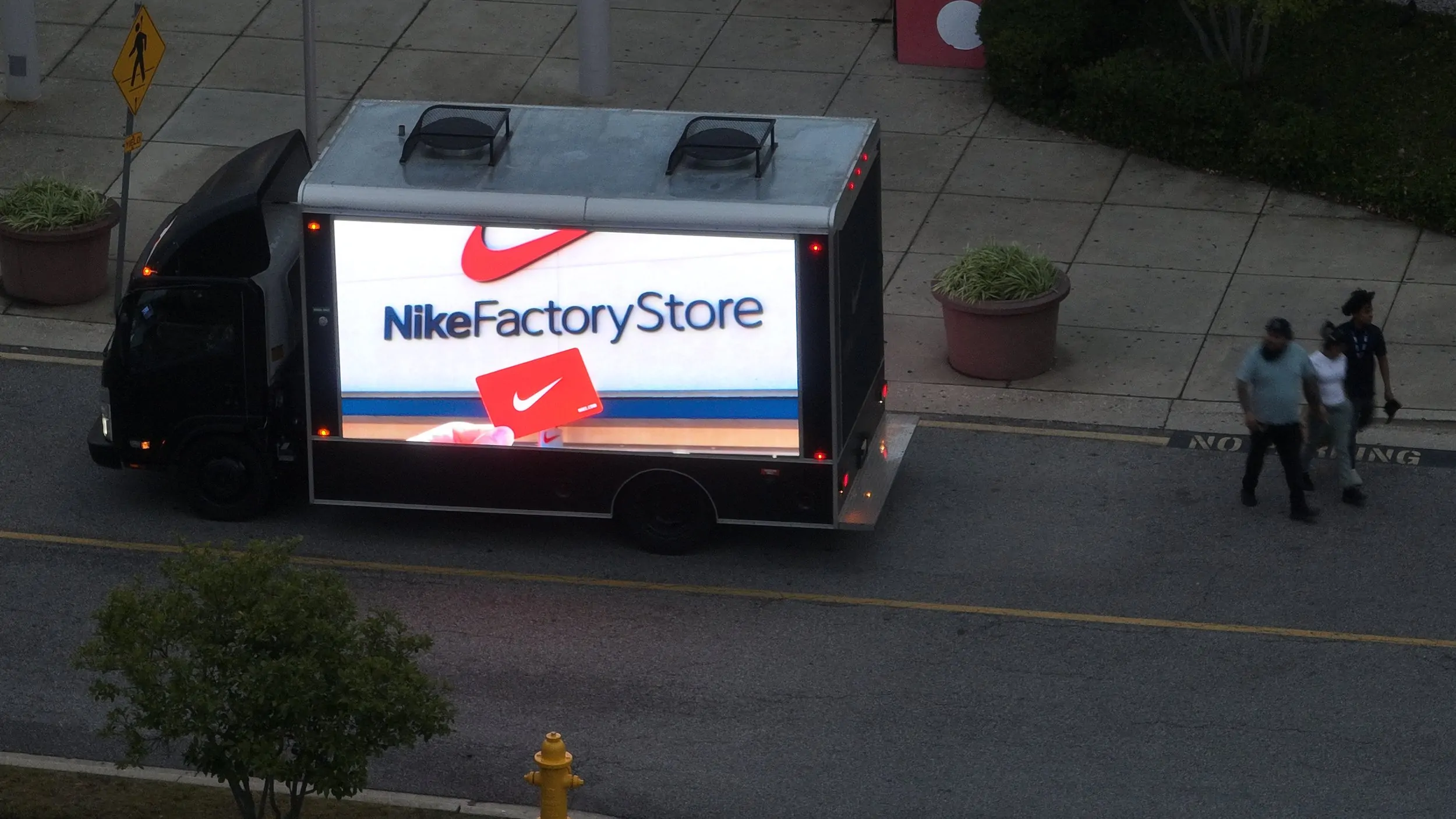
7.5 Nike
- Creative lesson: Sports imagery should communicate one recognizable idea.
- Illustrative application: A permitted event campaign combines a product image with event information.
The retained Nike image is a visual reference; no engagement increase is asserted.
8. Understanding the Services Associated With Mobile Boards
Clarify whether a supplier provides advertising delivery, vehicle rental, display equipment, or integration. These services overlap in some offers but should be specified separately in the contract.
8.1 Mobile Billboard Truck Rental Service
A managed mobile billboard truck service may include a vehicle, driver, route, content handling, and reporting. Equipment-only rental may leave transport, staffing, power, and permissions to the customer. Confirm exactly what is included before comparing prices.
8.1.1 Why Get Rental Service? (Rental Service vs. Owning Mobile Boards and Trucks)
Renting can suit occasional campaigns without committing to vehicle ownership.
- Budget: Pay for the agreed campaign scope; operating and maintenance costs may be included in the rate rather than eliminated.
- Location: Agree on feasible routes and authorized stops.
- Flexibility: Confirm creative deadlines and update procedures instead of assuming instant changes.
Other features:
- Management: Specify responsibility for drivers, logistics, artwork, and incident response.
- Reporting: Request route and playback evidence; neither alone proves audience exposure.
- Service terms: Define outages, substitutions, cancellations, and missed-delivery remedies.
8.1.2 LED Displays
For a digital mobile billboard, select the LED display as part of the complete vehicle system.
- Display: Confirm active size, native resolution, brightness control, and environmental limits.
- Control: Check file formats, scheduling, permissions, and offline playback.
- Integration: Obtain written suitability confirmation for mounting, vibration, ventilation, power, and service access.
EagerLED’s advertising LED screen range provides equipment options. A rental cabinet is not automatically a road-ready truck installation. Request a display consultation with your vehicle concept and operating requirements.
9. Mobile Billboard Strategies
Improve campaign performance by testing a clear message, feasible route, and measurable response. Keep a record of what changes between campaigns so results can inform the next booking.
9.1 Using the Right Vehicle
The vehicle selection directly impacts the audience’s reach, visibility, and engagement. Understand the vehicle types carefully and select the appropriate one.
9.2 Route Planning & Audience Targeting
Plan the route that brings the billboard to the targeted audience. Focus on:
- Geo-Targeting
- Time-based targeting
- Competitor’s location
9.3 Creative Campaign Strategies
Appealing design:
- Use strong contrast and readable lettering at the actual viewing distance.
- Keep one principal message per frame; avoid arbitrary word limits that sacrifice essential clarity.
Clear call to action:
- Choose a memorable destination or relevant offer.
- Reserve QR codes for suitable pedestrian viewing conditions.
- Verify prices, expiry dates, and required qualifications.
Interactive elements: Sensors, augmented reality, or live feeds require additional systems and testing. Prepare fallback content if connectivity or data fails.
9.4 Integrate With Other Marketing
Use consistent branding across the truck, store, and landing page. For QR destinations, Google Analytics explains campaign tracking with UTM parameters. Consistent source, medium, and campaign values identify referring visits; a content value can distinguish creative versions. These records measure website activity, not physical screen views.
9.5 Keep Continuous Tracking
- Record delivery, identifiable responses, and business outcomes separately.
- Test one important variable at a time where practical.
- Compare similar dates and account for weather, other promotions, and stock availability.
- Do not attribute every sales change to the billboard.
10. Mobile Billboards versus Traditional Billboards
10.1 Mobility
Mobile billboards follow feasible routes and authorized stops. Fixed billboards remain at one location and may provide repeated exposure there. Compare audience relevance and contracted operating periods, not mobility alone.
10.2 Cost Comparison
Neither format is universally cheaper. Compare the same campaign period and define vehicle hours, display faces, creative costs, and digital playlist share. A low hourly rate may have a substantial minimum booking.
10.3 Attention Span
Both moving and fixed displays can attract attention. Readability, sightlines, message quality, and viewing time determine the opportunity to communicate. Claims about superior recall require evidence from comparable campaigns.
10.4 Flexibility
Mobile campaigns can change routes within practical and contractual limits. Both mobile LED screens and fixed digital billboards can update content electronically; printed formats require physical replacement. Mobility and content flexibility are separate characteristics.
10.5 ROI Potential
CPM means cost per thousand impressions: campaign cost divided by estimated impressions, multiplied by 1,000. Disclose the audience-estimation method and repeat-exposure assumptions. Compare business outcomes as well as CPM; a cheaper estimated impression is not necessarily a more relevant customer opportunity.
11. The Potential of the Mobile Billboard Business
Starting a mobile billboard business requires customers, reliable delivery, and workable operating economics. Validate local demand before purchasing equipment. For the detailed startup process, see how to start a mobile billboard business.
11.1 Who Should Buy versus Rent Mobile Billboards?
| Decision | Rent a managed campaign | Own the equipment |
|---|---|---|
| Best fit | Occasional promotions or testing demand | Recurring demand with delivery capability |
| Responsibilities | Confirm operator scope and exclusions | Vehicle, screen, staffing, power, maintenance, and sales |
| Budget | Contracted campaign and creative costs | Purchase plus ongoing costs and downtime |
| Evidence | Route and playback reports | Operating records, utilization, and customer outcomes |

11.2 Buying Checklists
1. Screen Specifications
- Match pitch and native resolution to viewing distance and creative detail.
- Specify suitable daylight brightness and nighttime dimming.
- Test camera performance when filming matters; refresh rate alone does not guarantee artifact-free images.
2. Vehicle and Power
- Have an integrator assess payload, center of gravity, mounting, vibration, and transport dimensions.
- Size electrical equipment for the documented load and operating conditions.
- Check stabilization and wind limits for deployed or lifting screens.
3. Warranty and Support
- Confirm what environmental ratings cover, including front and rear exposure.
- Obtain written warranty terms and spare-parts arrangements.
- Plan access to modules, controllers, and power supplies.
11.3 Benefits of Owning Mobile Billboards
Ownership can provide scheduling control and advertising inventory, but revenue is not profit.
- Operating costs: Budget for staffing, energy, maintenance, storage, insurance, financing, and sales.
- Utilization: Allow for unsold days and downtime.
- Resale: Future value depends on condition, equipment, and market demand; no retained-value percentage is guaranteed.
Illustrative calculation: US$6,000 monthly fixed costs divided by US$600 contribution per sold day requires ten sold days to cover fixed costs. Contribution is revenue after variable delivery costs. This is a simplified example, not an earnings forecast.
12. FAQs
13. Conclusion
Mobile billboard advertising works best when the audience, route, message, and delivery plan fit together. Compare complete costs, verify operating requirements, and measure responses separately from estimated exposure. Advertisers should define campaign services clearly; prospective owners should validate demand and assess the full vehicle-and-display system before investing.
 LED Screen Resolution Guide: 2K, 4K, 1080P Explained(2026)
 COB vs GOB LED Displays: Complete Guide to Business Buyers
Related Posts
Fill In Your Needs In Detail
Fill in the screen usage scene and size you need in “Content”.You will get a quote.