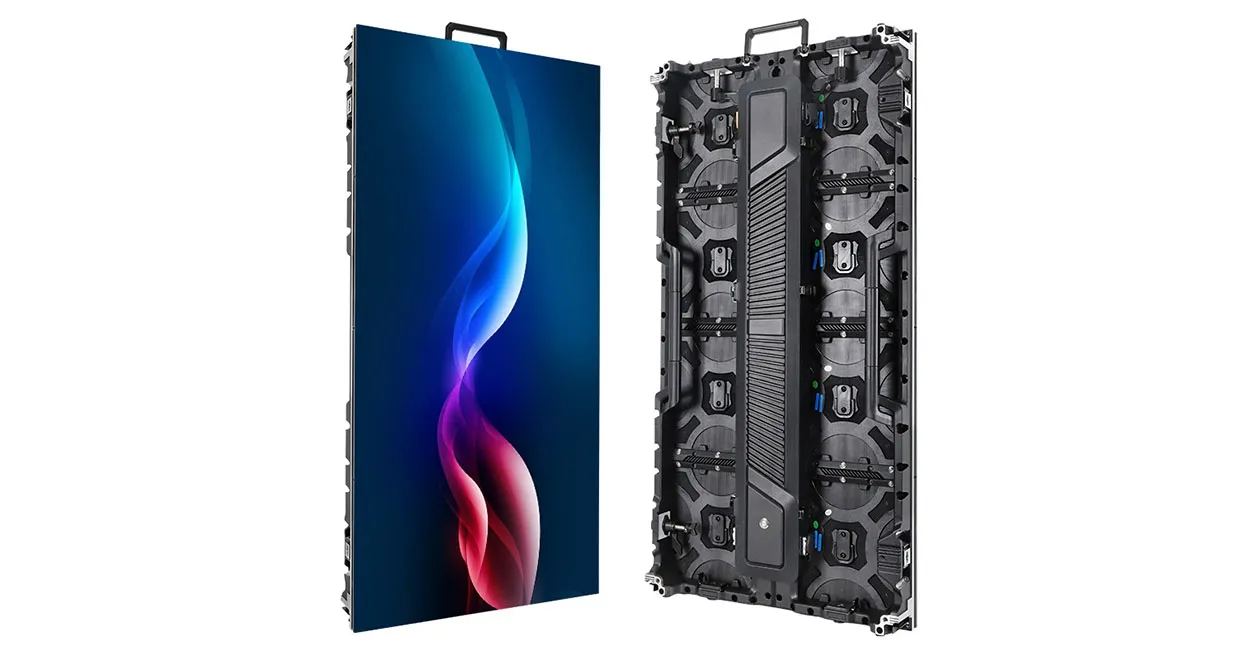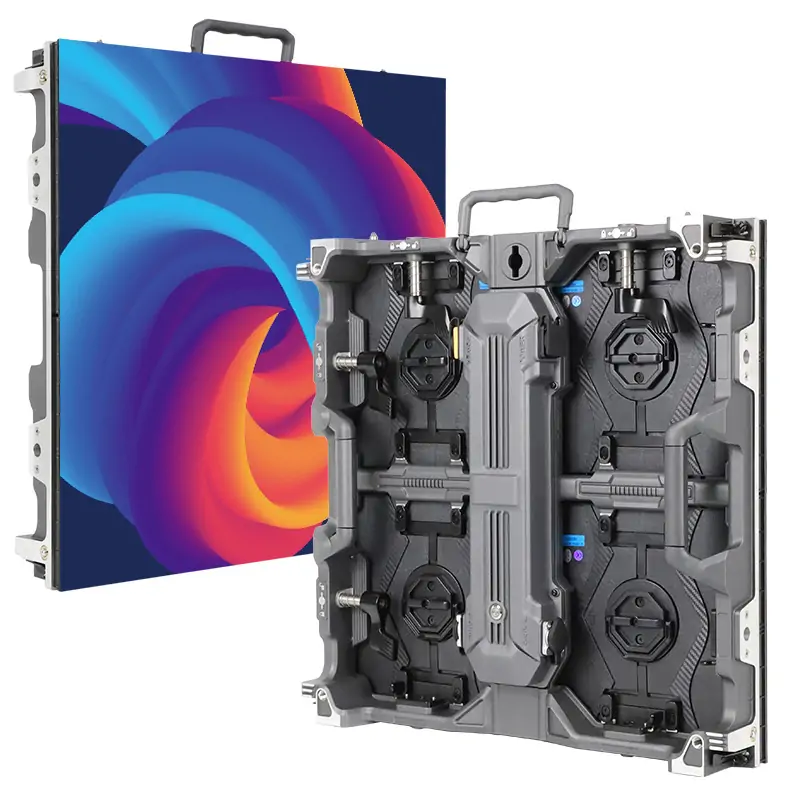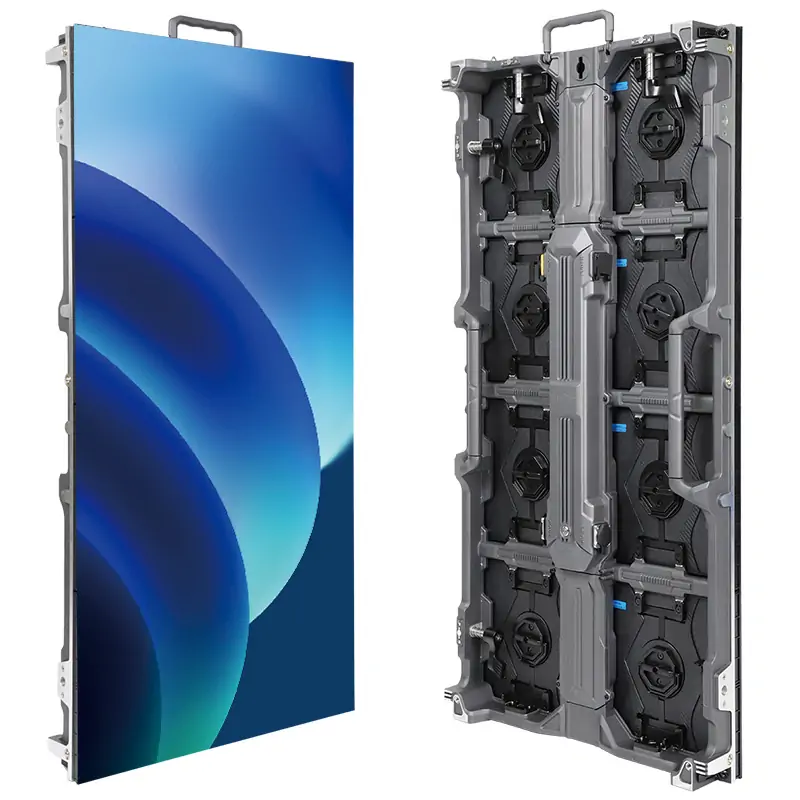
Choosing an LED screen factory means choosing the team responsible for your display’s components, assembly, testing, and future repairs. EagerLED offers indoor, outdoor, rental, transparent, and flexible display solutions. This guide explains how to evaluate EagerLED as your LED screen supplier and LED display supplier, compare proposals, and prepare a project brief that leads to a usable quotation.
Quick answer: Select an LED screen factory by checking the proposed model, manufacturing evidence, test records, complete project cost, and written support terms. A low price per square meter cannot tell you whether the display will be readable, serviceable, or ready for installation. Confirm these details before approving production.
1. Why Choose EagerLED’s LED Screen Factory?
A credible LED screen factory should show how an order moves from component selection to a tested display. EagerLED’s manufacturing process page describes SMT assembly, module checks, cabinet assembly, and aging tests. It states more than 12 hours of module aging and a 72-hour complete-screen aging process. Ask for the test plan and records applicable to your actual order; a general factory description is not a shipment acceptance report.
01. Verify the LED screen factory’s manufacturing scope
Ask which operations the LED screen factory performs directly and which involve approved partners. An assembler can produce a reliable system without manufacturing every diode or integrated circuit. What matters is control over the bill of materials, incoming inspection, assembly, and defect handling. Request a live factory walkthrough or an inspection visit when the order size justifies it.
Match the business name on your proposal, invoice, warranty, and payment documents. During a factory discussion, ask to see a module drawing, cabinet label, test station, and packing list from a relevant product family. These documents are more useful than a showroom photograph alone. For an introduction to the organization and departments, see About EagerLED.
02. Turn quality claims into acceptance criteria
Your LED screen supplier should agree what constitutes an acceptable screen before manufacture begins. Record the permitted pixel defects, cabinet alignment tolerance, brightness setting, color target, and inspection method in the order. Avoid vague requirements such as “perfect picture” because different people can interpret them differently.
Ask the LED screen factory to identify the LED package, driver IC, receiving card, power supply, and cabinet version. Specify that substitutions require approval. A matching pixel pitch does not guarantee matching electrical behavior, calibration, or spare-module compatibility. Keep an approved specification revision so purchasing and engineering teams review the same configuration.
2. EagerLED as Your LED Display Supplier
The LED screen factory builds the product; the LED display supplier also helps translate your application into a complete system. That includes controller selection, cabinet layout, service access, and documentation. Define who provides the support structure, electrical distribution, content player, installation labor, and commissioning. These responsibilities may sit with different companies.
01. Match the product family to the application
Use the table below to begin a discussion with your LED screen supplier. The categories describe common selection priorities, not a guarantee that every model supports every feature. Request a model-specific datasheet and drawings for the final choice.
| Application | Suitable starting point | Priority to confirm | Common purchasing mistake |
|---|---|---|---|
| Meeting room or control room | Indoor fine-pitch display | Text readability, low-brightness image quality, service access | Buying extra brightness instead of enough pixels |
| Outdoor advertising | Outdoor fixed-installation screen | Sunlight visibility, enclosure protection, heat and structural design | Assuming indoor cabinets are suitable outdoors |
| Concerts and exhibitions | Rental LED cabinets | Handling protection, locks, approved rigging and transport cases | Ignoring setup labor and spare inventory |
| Retail glazing | Transparent LED display | Daylight appearance, transparency, viewing side and content | Expecting the same solid background as an opaque screen |
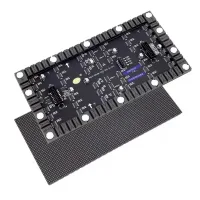
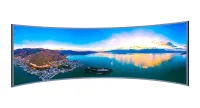
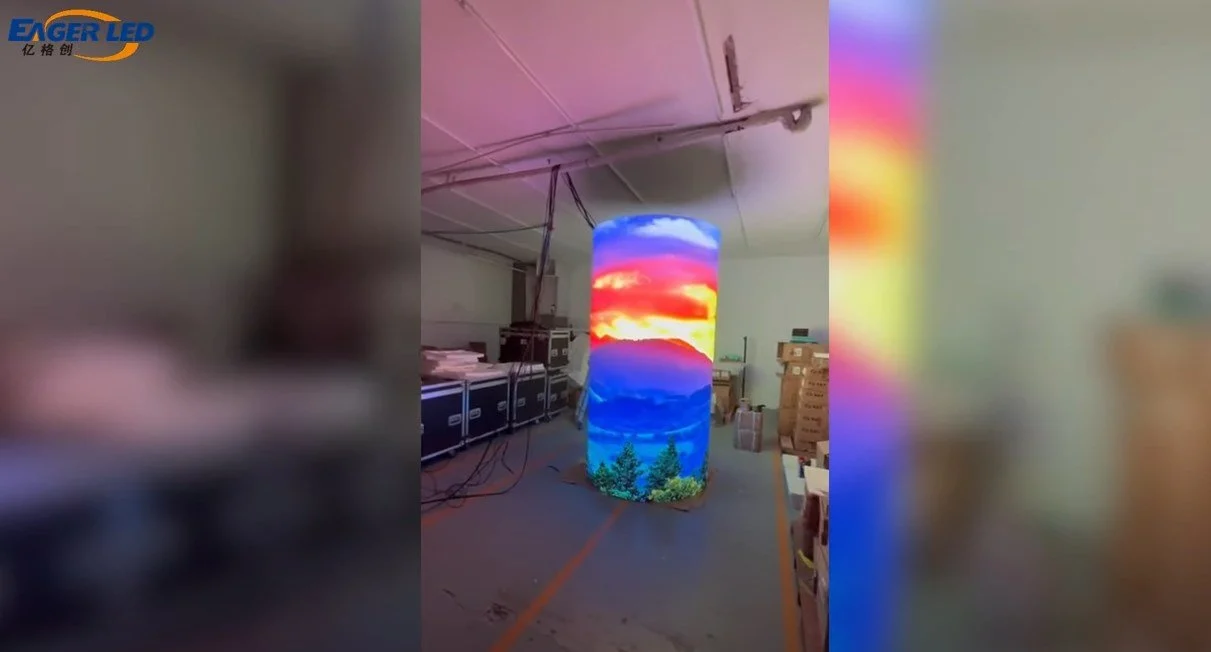
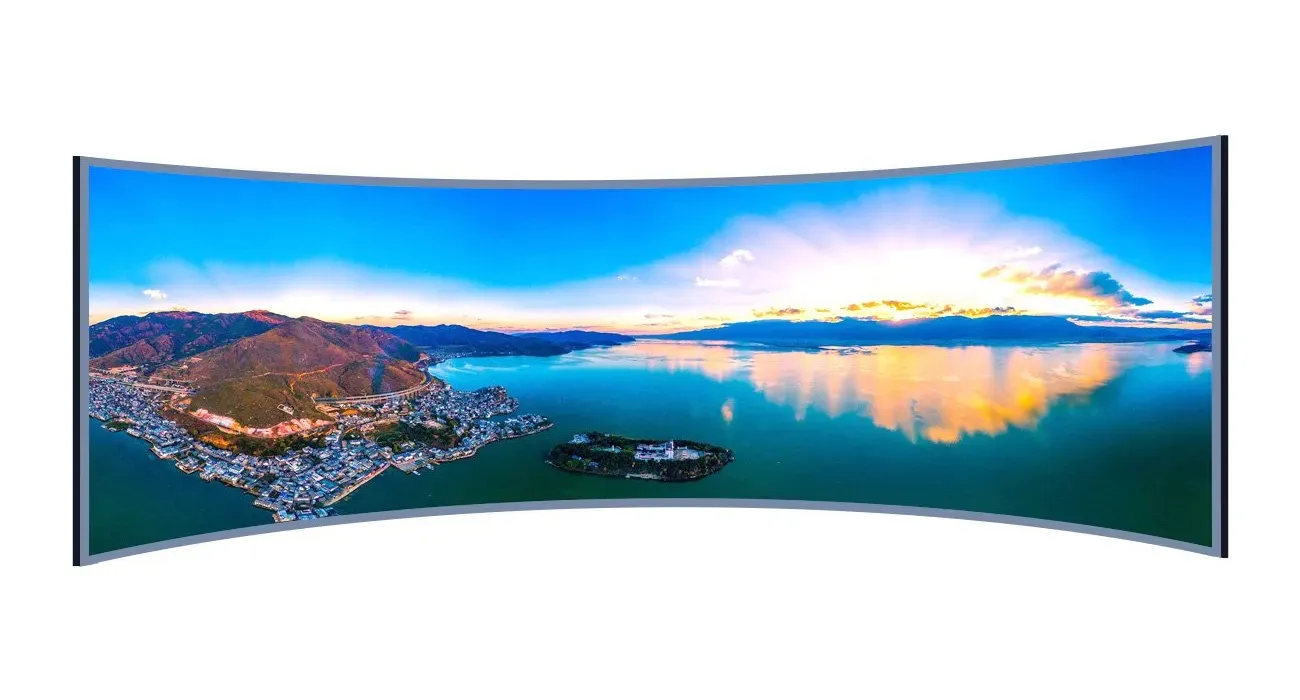
| Curved columns or creative surfaces | Flexible modules with a designed support frame | Permitted bend radius, seams and maintenance route | Bending modules beyond the approved limit |
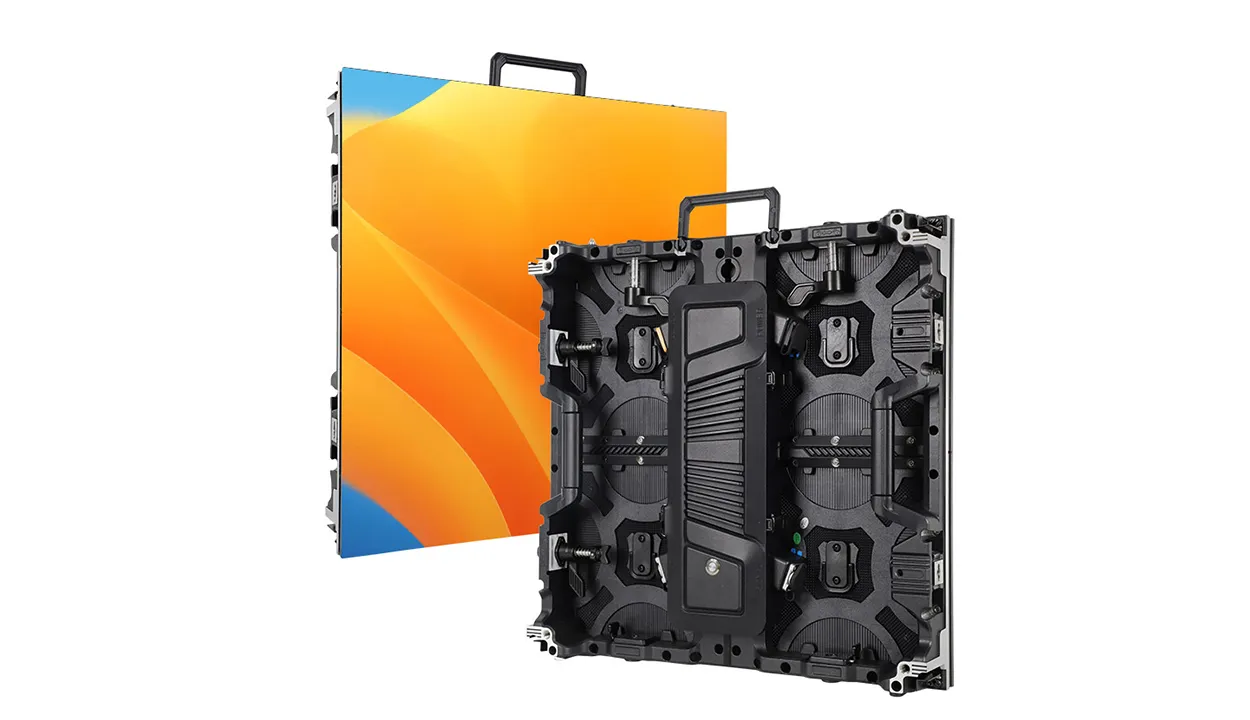
Explore EagerLED’s indoor LED screens, advertising LED screens, and rental LED display cabinets for the relevant product family. A rental cabinet is a product designed for repeated assembly; buying one from an LED display supplier is different from hiring a screen and crew for an event.
02. Agree customization and OEM responsibilities
For OEM orders, give the LED screen factory a written brief covering labels, cabinet finish, packaging, manuals, and branding. Confirm minimum quantities, sample approval, tooling ownership, and whether future batches can use the same parts. A custom cabinet dimension may affect transport cases, spare parts, and installation tolerances.
If you are a distributor, ask your LED display supplier for technician training materials and a repair escalation route. Confirm who communicates with the end customer and who holds replacement stock. Do not promise customers a local service center or on-site response time unless those services are explicitly arranged for their location.
3. How to Improve Your Space with the Right LED Display
Before asking an LED screen factory for a price, measure the proposed screen area and identify the nearest and typical viewers. Then describe the content: large advertising graphics, spreadsheet text, live camera feeds, or a combination. Each creates a different resolution and processing requirement.
01. Give the LED screen supplier a practical site brief
Provide width and height, mounting location, operating hours, ambient lighting, and photographs of the wall or structure. Include access restrictions and available electrical supply. For outdoor sites, describe exposure to rain, direct sun, dust, salt, and local temperature extremes. Your LED screen supplier can then identify information that a local installer or engineer must verify.
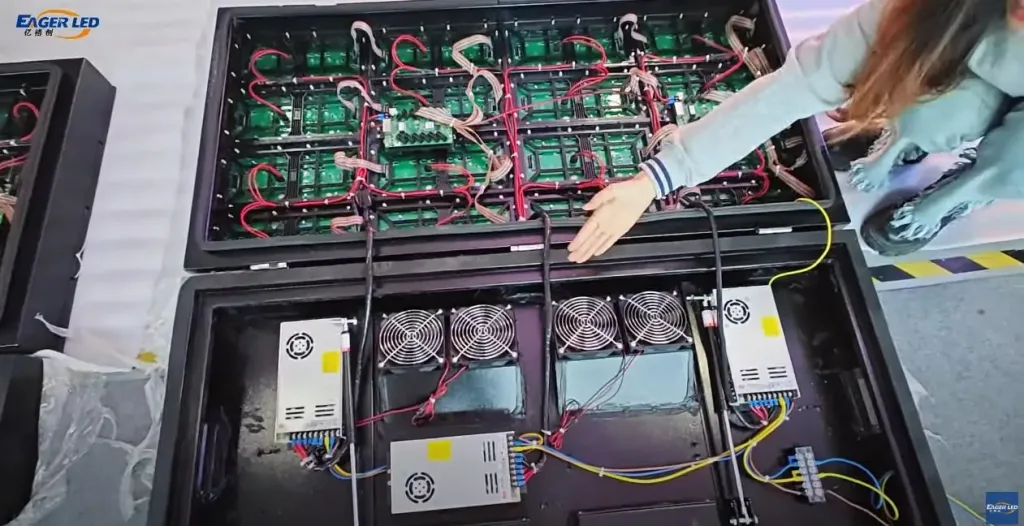
Plan the service route early. Front-service modules still require safe working access, removal clearance, and a way to reach other components. Rear-service cabinets need a usable maintenance space. Ask for a drawing showing the finished depth, ventilation path, cable entry, and how a failed power supply or receiving card is replaced.
02. Balance pixel pitch, viewing distance, and content
Pixel pitch is the distance between neighboring pixel centers, measured in millimeters. Smaller pitch puts more pixels into the same screen area. It can improve close-up detail, but raises pixel count and may increase cost. Planar’s pixel-pitch explanation connects pitch selection with viewing distance and the intended visual experience.
For a first calculation, divide screen width in millimeters by pitch to estimate horizontal pixels; do the same for height. A hypothetical 4,000 × 2,000 mm display at 2.5 mm pitch has 1,600 × 800 pixels. This is a planning example, not an EagerLED model specification. Your LED display supplier must confirm the actual cabinet grid and native resolution.
Ask the LED screen factory to demonstrate your smallest text and actual video at the planned viewing distance. A simple distance-to-pitch rule cannot account for eyesight, font size, content layout, and viewer expectations. A larger screen is not automatically a higher-resolution screen, and a 4K input does not make a lower-resolution panel physically 4K.
4. What to Know About Your LED Screen Factory’s Specifications
A useful datasheet states both a number and the conditions under which it applies. Ask your LED screen factory whether quoted brightness is measured before or after calibration, and whether the listed power figure is maximum or average. Compare equivalent conditions across proposals.
| Specification | What it affects | Evidence or question |
|---|---|---|
| Pixel pitch and native resolution | Visible detail and processing load | Cabinet pixel matrix and complete screen pixel map |
| Calibrated brightness | Readability under the actual ambient light | Measured luminance in cd/m² and intended operating setting |
| Refresh and grayscale performance | Motion, camera appearance and dark detail | Demonstration at the required brightness and camera settings |
| Ingress protection | Resistance to dust and water exposure | Rating and test scope for the front, rear and installed connections |
| Maximum and typical power | Electrical design and running cost | Test content, brightness, voltage and measurement conditions |
| Service method and weight | Maintenance access and structural loading | Cabinet drawing, component removal procedure and mass |
| Controller and receiving cards | Input support, mapping and redundancy | Exact models, loading limits and configuration backup |
01. Check image performance beyond headline numbers
Ask your LED display supplier to show dark gray gradients, solid red, green, blue, white, and normal content. Look for cabinet boundaries, uneven color, missing pixels, and unstable low-brightness detail. Viewing the screen only at full brightness can hide issues that matter in a meeting room or television studio.
For recorded events, the LED screen factory should support a camera test with the intended frame rate, shutter setting, and shooting distance. A high refresh-rate number alone does not guarantee freedom from banding or moiré. Camera synchronization, scanning behavior, pixel structure, and exposure settings all influence the result.
02. Request documents for the exact supplied configuration
Ask the LED screen supplier for applicable compliance documents identifying the product model and responsible organization. A logo on a sales brochure does not establish that your exact system meets the requirements of its destination market. Component documents should not be confused with documents covering the complete supplied product.
The European Commission’s CE guidance for manufacturers explains responsibilities for conformity assessment, technical documentation, and the EU declaration of conformity. Your LED display supplier should help provide relevant documentation; the importer and local installation team must also establish the requirements that apply to the project.
5. What Makes an LED Screen Supplier Good Value for Your Business?
Compare complete systems with the same specification and scope. An LED screen factory quote for cabinets alone is not equivalent to a delivered, installed, commissioned system. Ask each bidder to identify inclusions, exclusions, optional items, and the validity period of the offer.
01. Compare LED screen factory quotations line by line
| Cost category | Confirm in writing | Why it matters |
|---|---|---|
| Screen hardware | Model, cabinet quantity, dimensions, pitch and component configuration | Prevents comparing different products under one price |
| Control system | Processor, receiving cards, player, software and licenses | Avoids missing inputs or insufficient pixel capacity |
| Mounting and power | Frame, rigging, distribution, cables and engineering scope | Separates factory supply from local installation work |
| Spares and tools | Module quantities, power supplies, cards and service tools | Reduces avoidable downtime after a failure |
| Delivery | Packing, freight, insurance, delivery term and named destination | Clarifies responsibility for transport-related costs |
| Commissioning and support | Remote or on-site work, training, warranty scope and travel costs | Makes service promises commercially comparable |
Ask your LED display supplier to distinguish a budget estimate from a final quotation. Changes in screen size, pitch, installation method, or component choice can change the price. There is no reliable universal LED screen factory price without a defined configuration and delivery scope.
02. Calculate operating cost with realistic assumptions
Estimate display electricity use as average watts per square meter × screen area × operating hours ÷ 1,000. For example, a hypothetical 20 m² screen averaging 200 W/m² for 10 hours uses 40 kWh per day. Multiply by your electricity tariff, then add cooling and other equipment where applicable. This example is a calculation method, not a product consumption claim.
Request measured average power at comparable brightness and content from the LED screen supplier. Maximum power is useful for electrical planning but is usually unsuitable as a routine energy estimate. Conversely, a favorable average does not replace the maximum-load information needed by the electrical designer.
6. What We Offer: Quality, Delivery, and LED Display Support
A useful relationship with an LED screen factory continues through acceptance, shipment, commissioning, and repair. EagerLED’s published manufacturing information provides a starting point for these discussions. Your signed order should define the deliverables and service commitments that apply to your project.
01. Plan the LED screen factory acceptance inspection
Arrange inspection before packing whenever practical. Verify cabinet quantities and labels against the packing list, then check the assembled screen using agreed patterns and actual content. Record operating settings and unresolved defects. Ask the LED screen factory how repaired units are retested and how the accepted configuration is protected from later changes.
Aging helps reveal early faults under the test conditions, but it is not proof of a fixed service life. Include a record of the screen layout, receiving-card mapping, calibration files, and controller settings in the handover package. Your LED display supplier should explain how to restore these files after component replacement.
02. Arrange delivery, spares, and maintenance
Ask the LED screen supplier to separate production completion, dispatch, estimated transit, customs clearance, and installation milestones. A dispatch date is not an arrival guarantee. Allow time for inspection and correction before a fixed event date, and confirm who handles damaged packaging or missing items on receipt.
Agree spare quantities according to screen size, criticality, local repair capability, and replenishment time. Request compatible modules from the production batch where feasible, together with stored calibration data. Future modules may differ in color or electronics even when their nominal pitch matches. Your LED screen factory should explain the replacement and matching procedure.
Confirm warranty duration, start date, exclusions, repair location, freight responsibility, and expected response process. Ask your LED display supplier whether support is remote or on-site and what information a technician needs to diagnose a fault. Keep photographs, serial numbers, wiring diagrams, and maintenance records accessible to the operating team.
7. LED Screen Factory and Supplier FAQ
01. What is the difference between an LED screen factory and an LED screen supplier?
An LED screen factory carries out manufacturing or assembly activities. An LED screen supplier sells and coordinates delivery of the system and may also provide engineering and support. One business can perform both roles. Verify the actual responsibilities, product configuration, and service terms rather than judging the label alone.
02. What should I send an LED display supplier to get an accurate quote?
Send the installation country, indoor or outdoor location, required width and height, viewing distance, content examples, operating hours, mounting method, and target completion date. Include site photographs and known power constraints. The LED display supplier can then propose a model and identify missing engineering information.
03. Can an LED screen factory customize cabinet size or branding?
Customization depends on the product family, quantity, engineering work, and tooling. Ask the LED screen factory to confirm feasibility, sample approval, minimum order, lead time, and spare-part availability. Approve dimensions, labels, packaging, and manuals before bulk production starts.
04. How do I verify quality before the screen ships?
Agree an inspection checklist and acceptance limits before ordering. Review the assembled screen, test records, component labels, native resolution, controller operation, and packing list. Ask the LED display supplier for evidence tied to your order and resolve defects before shipment approval.
05. How do I choose an LED screen supplier for a project in Qatar or another export market?
Check destination-specific documentation, climate suitability, shipping scope, installation responsibility, and access to repairs. For demanding outdoor conditions, discuss heat, dust, sun exposure, and cooling. Ask the LED screen supplier to identify the actual local service arrangement; international shipping alone does not establish local technical support.
06. Is the lowest price per square meter the best choice?
Only compare that price after matching specifications and scope. Include control equipment, mounting, shipping, installation, spares, electricity, and maintenance. A clear quotation from an LED display supplier makes these costs visible and helps you assess the total project budget.
8. Choose Your LED Screen Factory with a Clear Project Brief
The right LED screen factory turns a clear requirement into a documented, tested, serviceable system. Start with your audience and location, compare equivalent configurations, and agree acceptance and support terms. These steps make EagerLED’s proposal easier to evaluate and reduce uncertainty before production.
To discuss your project with an LED screen supplier, contact EagerLED with screen dimensions, installation location, viewing distance, content type, and completion date. Ask for a model-specific quotation, cabinet drawing, testing plan, and service scope so your LED display supplier can help you move from initial idea to a reviewable specification.
 EagerLED Highly Sealed Outdoor LED Display Screens
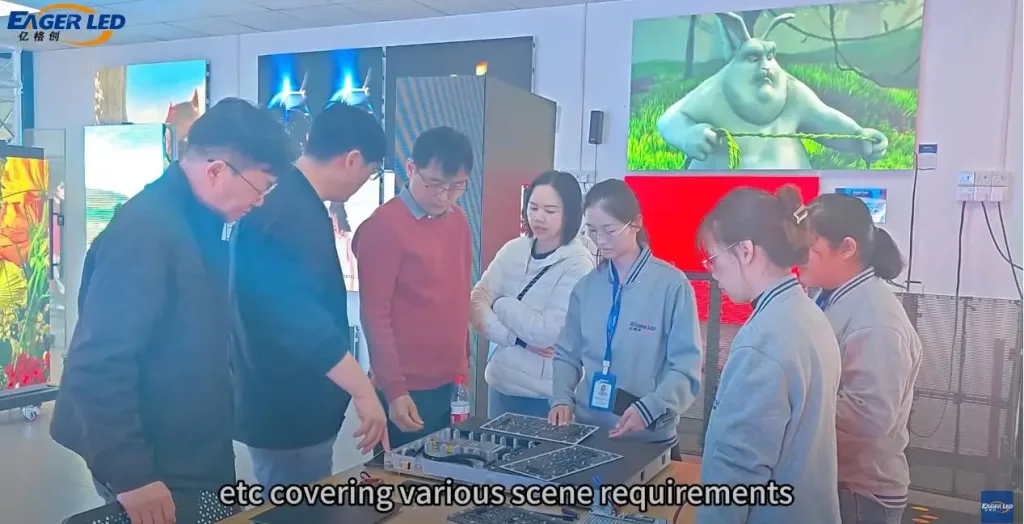 EagerLED Factory Warmly Welcomes Korean Customers
Related Posts
Fill In Your Needs In Detail
Fill in the screen usage scene and size you need in “Content”.You will get a quote.