Choose an advertising LED screen when a solid, readable image is the priority. Choose a transparent LED display when preserving daylight and the view through a window is part of the brief. Neither choice is automatically better: viewing distance, sunlight, content, mounting conditions, and maintenance access determine which system works.
This guide explains how to specify an advertising LED screen or transparent LED display for retail windows, indoor branding, outdoor signage, and events. It includes comparison tables, calculation examples, and questions to put in a quotation request. Product specifications must be confirmed for the exact model and configuration; example calculations below are planning illustrations, not performance promises or supplier quotations.
1. What Is an Advertising LED Screen?
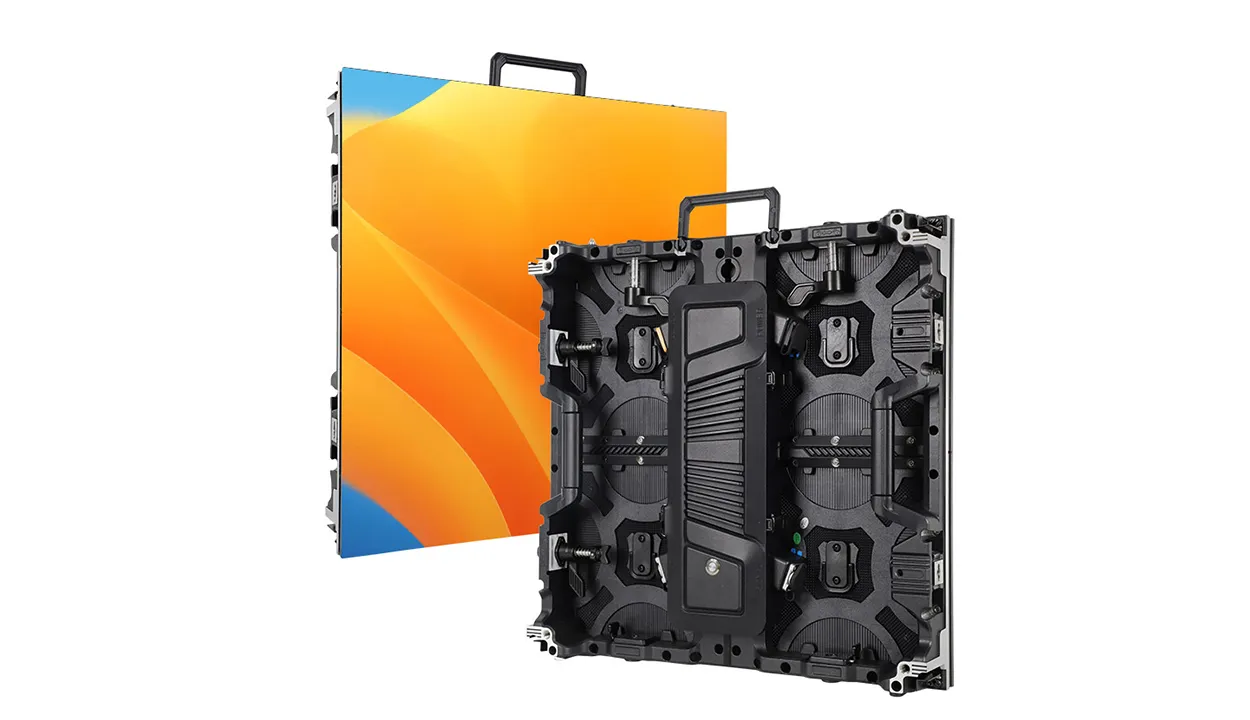
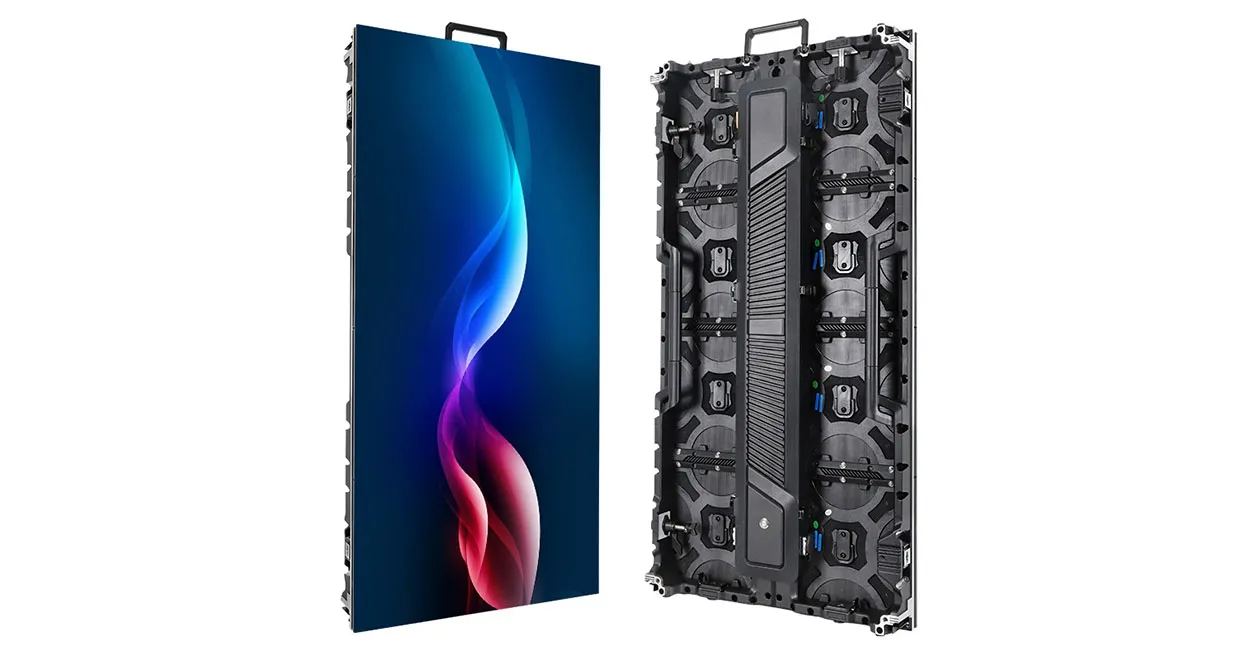
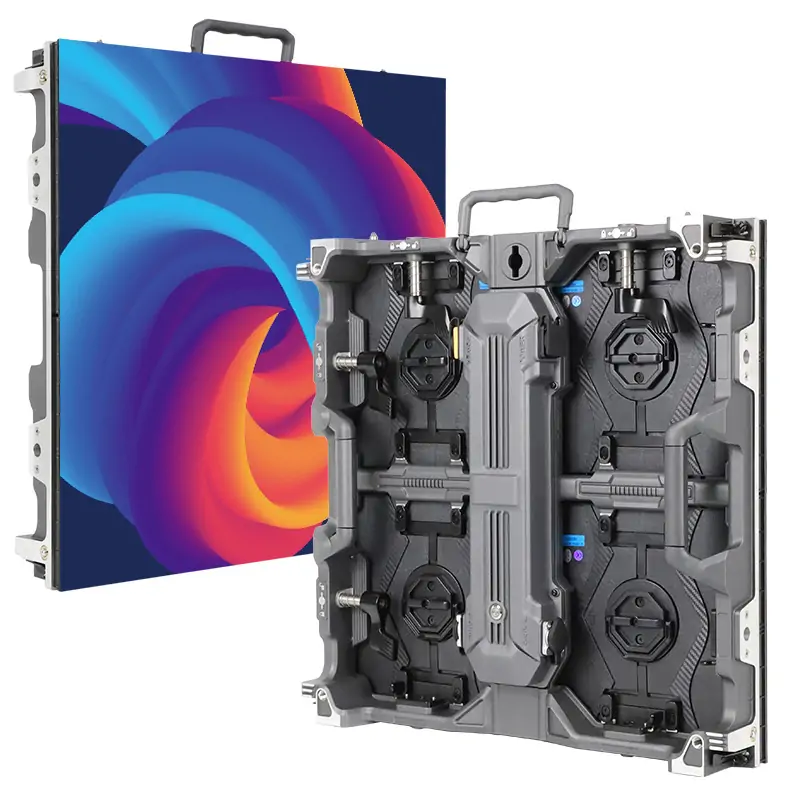
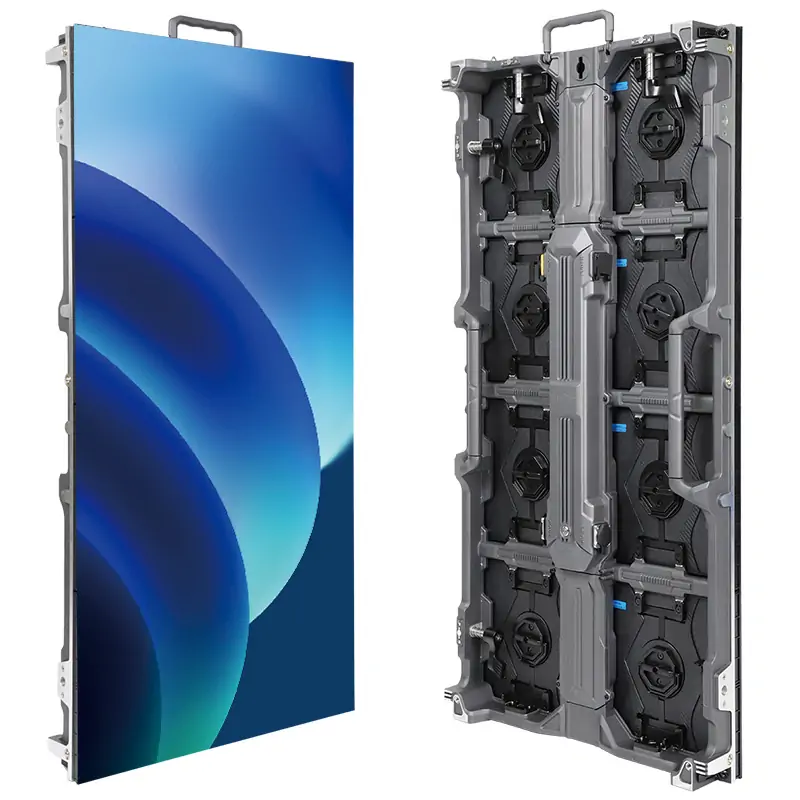
An advertising LED screen is a direct-view display that uses light-emitting pixels to show promotional messages, images, and video. Modules form cabinets, and cabinets form the finished display. A controller maps the content to those pixels. The screen’s physical dimensions and pixel pitch determine its native resolution.
01. Benefits and practical limitations
An advertising LED screen can rotate campaigns without replacing printed material and can support a custom display size. However, image quality depends on more than brightness. Cabinet alignment, calibration, low-brightness grayscale, reflections, and the creative itself affect what viewers actually see. An oversized screen with tiny text can communicate less effectively than a smaller screen with one clear message.
For an indoor advertising LED screen, prioritize comfortable brightness and legibility at the closest normal viewing position. For an outdoor advertising LED screen, evaluate daylight visibility, weather exposure, structural loading, and accessible service routes together. A high brightness specification alone does not make an indoor product suitable for outdoor installation.
02. Typical applications
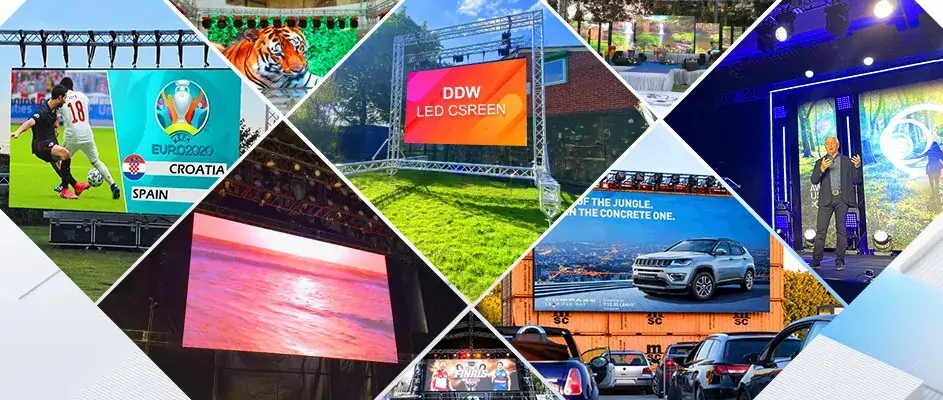
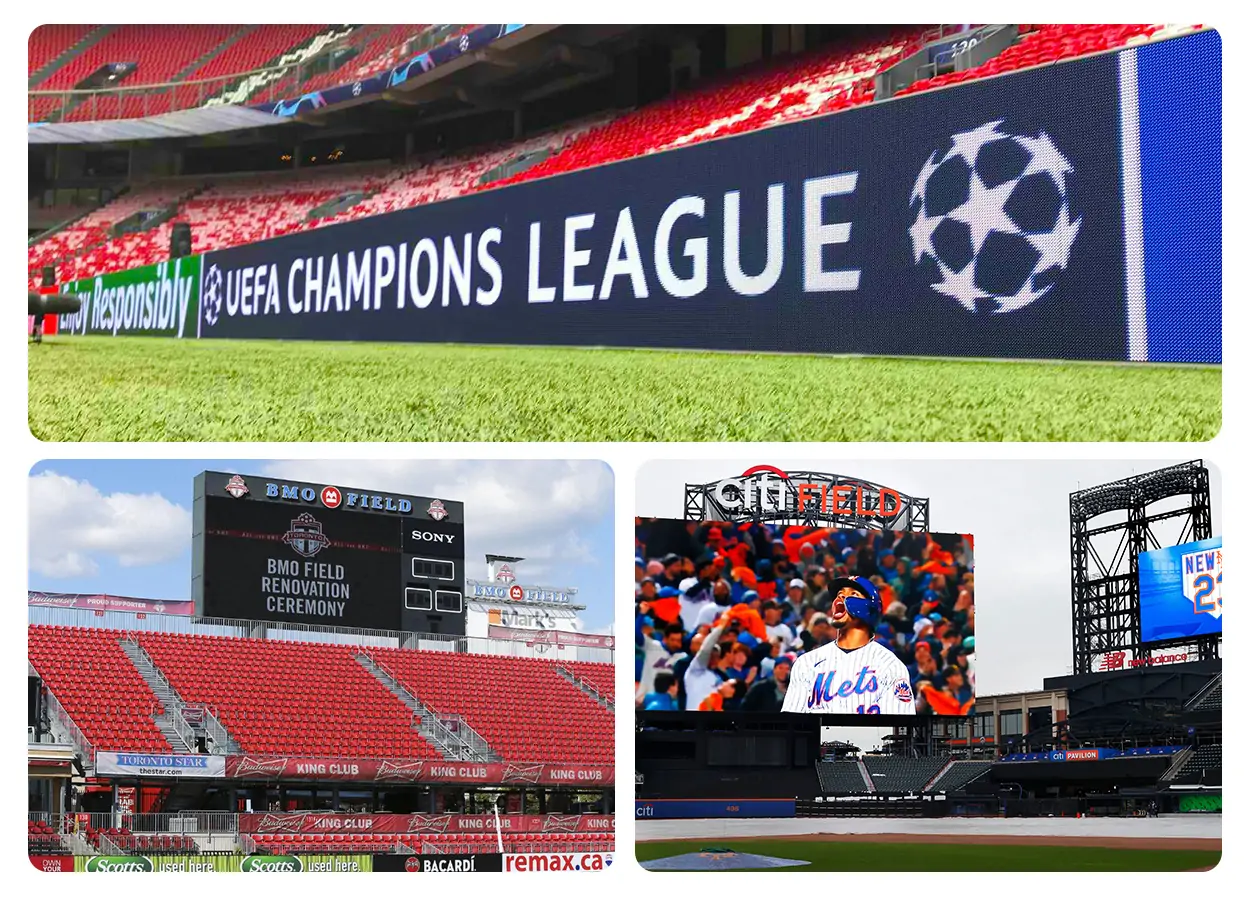
Common applications include retail promotions, shopping-center atriums, transport hubs, venue branding, and large outdoor signs. Permanent installations usually benefit from cabinets designed for their mounting and service conditions. Temporary campaigns may be better served by a rental LED display, particularly when repeated assembly, protective transport, and rapid replacement are important.
2. What Is a Transparent LED Display?
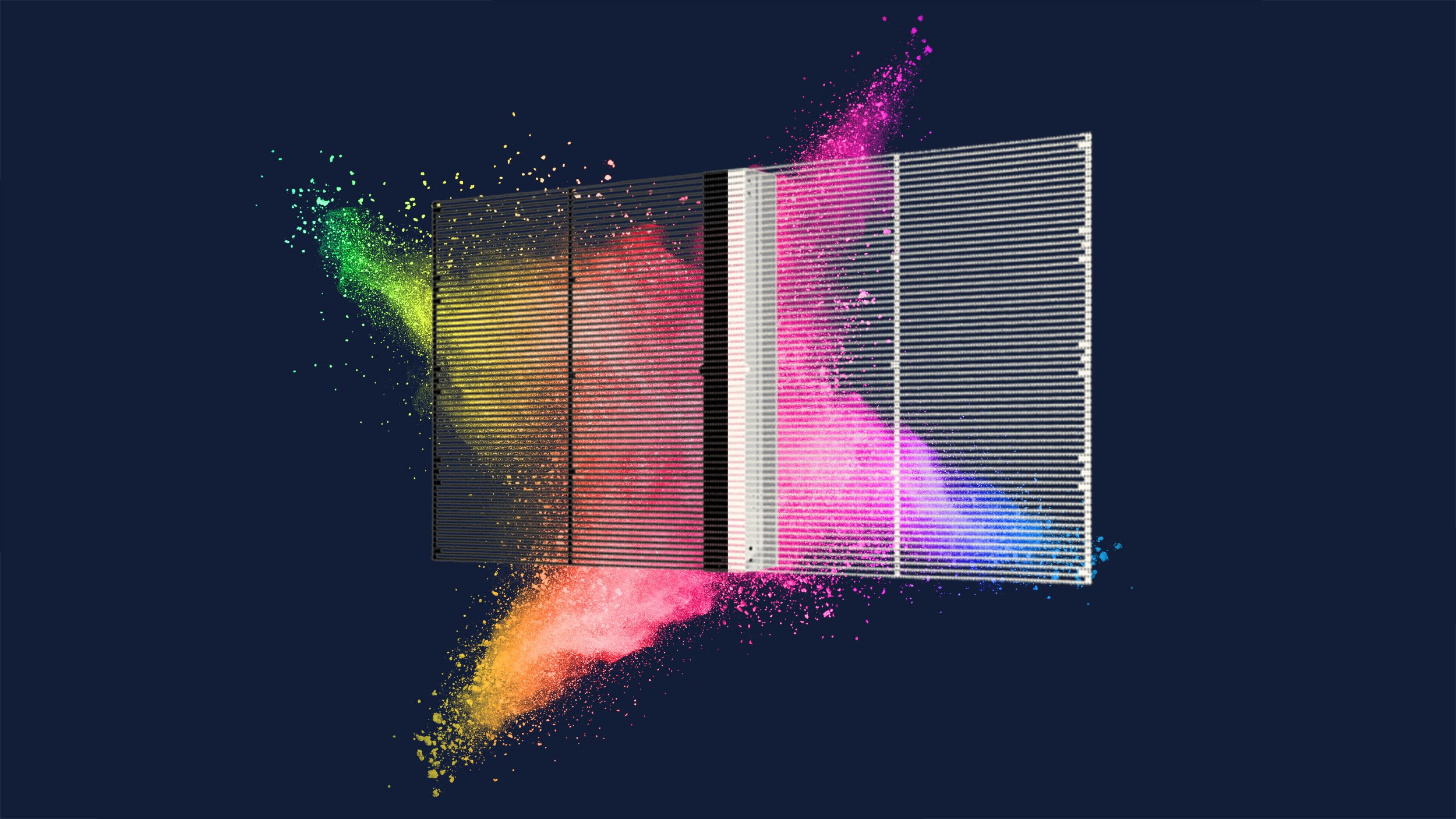
A transparent LED display places emitting pixels on an open or transparent structure so that part of the background remains visible. Products include rigid transparent cabinets, mesh-style systems, and film-based displays. Their mounting methods, optical properties, repair procedures, and environmental ratings differ.
01. How transparency changes the image
A transparent LED display does not create the same dark background as an opaque display. Where LEDs are off, the viewer can still see the surroundings through the open or transparent areas. Store lighting, merchandise, reflections, and exterior daylight therefore become part of the visual result. Dark video backgrounds can help create a floating-object effect, but they do not turn the glass black.
Ask what a quoted transparency percentage measures: open area, optical transmission, or another method. Also ask whether frames, cables, power boxes, and existing glass are included. Two percentages measured differently are not a reliable comparison. Increasing openness can trade against pixel density or usable image area, depending on the construction.
02. When a transparent advertising screen makes sense
A transparent advertising screen is a strong candidate for a shop window when customers should still see products inside. It is less suitable for dense text, dark cinematic scenes, or applications requiring a consistently opaque background. Test an actual transparent LED display behind the intended glazing before approving the design.
| Decision factor | Opaque LED display | Transparent LED display |
|---|---|---|
| Background | Solid display surface supports controlled imagery. | Visible surroundings influence perceived contrast. |
| Window visibility | Blocks the covered window area. | Preserves a partial view and some daylight. |
| Creative approach | Suitable for full-frame imagery and detailed layouts at adequate resolution. | Best evaluated with bold graphics, open space, and brief messages. |
| Site assessment | Check reflections, viewing positions, and ambient light. | Also check glass transmission, interior lighting, and framing. |
| Outdoor suitability | Depends on the specified enclosure and system. | Depends on the specific product; transparency is not weather protection. |
3. Identifying Your Advertising Needs
01. Define the audience and viewing conditions
Before requesting an advertising LED screen price, record the available width and height, nearest viewer, typical viewing distance, viewing angles, and daily operating hours. Photograph the site from the audience’s position during bright daylight and after dark. Note obstructions such as pillars, parked vehicles, window mullions, and seasonal merchandise.
Decide what success means: making a store easier to identify, supporting a product launch, explaining an offer, or selling advertising inventory. A pedestrian can pause to read; a moving audience has less time. This distinction affects text size and message length before it affects the hardware specification.
02. Choose the screen type and ownership model
For a glass storefront, compare a transparent LED display with a smaller opaque display positioned away from the main sightline. Preserving the whole window is not always necessary. For indoor close viewing, compare suitable indoor LED screen options using actual campaign layouts.
Buying an advertising LED screen may suit a stable, long-running location. Renting can suit a short event or an uncertain campaign. Compare the full period of use, including installation, dismantling, transport, storage, insurance, content support, and downtime. Do not compare a bare purchase price with an all-inclusive rental package.
4. Choosing the Right LED Screen Features
01. Pixel pitch, native resolution, and readable text
Pixel pitch is the center-to-center spacing between adjacent pixels, normally expressed in millimeters. For a given size, a smaller pitch produces more pixels. Viewing-distance rules are only screening tools: visual acuity, text size, contrast, and content complexity can change the result. Approve a sample at the intended viewing distance rather than treating “pitch in millimeters equals distance in meters” as a guarantee.
For a regular pixel grid, horizontal pixels equal active width in millimeters divided by horizontal pitch; vertical pixels equal active height divided by vertical pitch. Transparent LED display specifications may use different horizontal and vertical pitches. Confirm both values and the actual cabinet pixel count before preparing content.
| Pitch, horizontal × vertical | Calculated canvas | Total pixels | Planning implication |
|---|---|---|---|
| 2.5 × 2.5 mm | 1,600 × 800 | 1,280,000 | More room for detail; test the smallest essential text. |
| 4 × 4 mm | 1,000 × 500 | 500,000 | Create artwork for this canvas rather than assuming Full HD. |
| 5 × 10 mm | 800 × 200 | 160,000 | Unequal pitch needs correct mapping and an on-screen geometry test. |
These are mathematical examples, not available cabinet configurations. Real dimensions must fit module and cabinet increments. Confirm how the processor handles scaling, cropping, and pixel aspect ratio. A system accepting a 4K input does not necessarily have a 4K native display.
02. Brightness, contrast, and transparency
Brightness is usually stated in nits, equivalent to candelas per square meter. Specify the operating environment and require a demonstration at the intended brightness setting. Peak output is different from comfortable nighttime operation. A transparent LED display behind tinted or reflective glazing needs a site test because the glass and surrounding light alter the result.
Ask for automatic dimming where appropriate, the minimum useful brightness, and evidence that low-level gradients remain smooth. Assess an advertising LED screen with white, black, grayscale, skin tones, and real advertisements. For a transparent LED display, repeat the test with the shop lights on and off and with representative objects behind it.
03. Refresh behavior, protection, and service access
LED refresh rate and video frame rate are different specifications. A high advertised refresh rate does not, by itself, guarantee clean camera footage. If recording matters, test the actual camera, shutter settings, brightness, scan configuration, and controller combination. Inspect motion and low-brightness behavior as well as static patterns.
For exposed installations, request documented protection ratings for the relevant faces and components, together with temperature and humidity limits. Ask how connectors, cable entries, drainage, and condensation are handled. Front access, rear access, or replaceable film sections should match the site; a theoretically repairable display is not practical if technicians cannot reach it.
5. Installation Process
01. Survey the structure, glass, and service route
Installing an advertising LED screen begins with a measured layout and an agreed load path. Have the responsible qualified professionals assess the support structure, fixings, electrical supply, and applicable local requirements. Include the weight of frames, cables, power equipment, and maintenance arrangements, rather than using panel weight alone.
For a transparent LED display, establish whether the system is suspended, frame-mounted, or attached using a manufacturer-approved method. Existing glazing must not be assumed to support the assembly. Check mullion positions, door movement, cleaning access, ventilation, and how a failed component will leave the building.
02. Commission the complete system
Commission an advertising LED screen using the final signal path and operating schedule. Confirm cabinet mapping, uniformity, brightness limits, scheduled playback, restart behavior, and recovery after a network interruption. Record the accepted settings and keep configuration backups with the owner.
| Check | Test method | Evidence to retain |
|---|---|---|
| Image and mapping | Display grid lines, solid colors, gradients, and actual campaign files. | Approved photographs and the final pixel map. |
| Day and night visibility | Inspect from agreed positions at representative lighting levels. | Brightness settings and viewing-position notes. |
| Transparent screen appearance | Review the display and merchandise together through the installed glass. | Accepted content sample and window photographs. |
| Network and restart | Run an agreed interruption test and confirm local fallback playback. | Recovery procedure and responsible contact. |
| Maintenance access | Demonstrate an approved component replacement method. | Service instructions, parts list, and access requirements. |
6. Content Management and Software Integration
01. Match the controller to the workflow
An advertising LED screen needs a control system sized for its pixel load, outputs, cable distances, and input requirements. Some projects need live video; others need scheduled files stored on a media player. Confirm which functions work locally and which require internet connectivity or a paid cloud service.
For several locations, ask whether the content management system supports groups, scheduling, user permissions, playback reporting, and remote health checks. Define who approves content and who can change brightness or hardware configuration. Keep a local fallback campaign so a connection failure does not automatically produce an empty display.
02. Build content for the real pixel canvas
Give the creative team the native pixel dimensions, physical aspect ratio, safe margins, playback formats, and test files. Avoid assuming a standard television layout fits a wide storefront. A transparent LED display usually benefits from fewer visual elements because the background already contains information.
Test headlines and logos from the least favorable normal viewing position. Leave enough time for the audience to understand each message. If using a QR code, test scanning on several phones from realistic distances and angles. Transparency, reflections, limited resolution, and motion can all interfere with scanning.
7. Maintenance, Troubleshooting, and Operating Cost
01. Maintain the complete installation
Create a maintenance plan for the advertising LED screen based on its environment and manufacturer instructions. Include visual inspection, approved cleaning, ventilation checks, mounting inspection by the responsible personnel, and review of logged faults. Dust, moisture, salt exposure, and restricted airflow may require different service intervals.
For a transparent LED display, coordinate window cleaning with display maintenance. Use approved cleaning materials and methods; do not assume film, coatings, LEDs, and adhesive layers tolerate the same chemicals as bare glass. Record replacement part identifiers and calibration information so repairs do not introduce visible color differences.
When a fault appears, first document its pattern: one pixel, a module, an entire cabinet, or the whole display. Note whether the fault changes with content, temperature, or restart. Operators should use documented diagnostics; qualified service personnel should handle electrical checks and component replacement. Randomly changing receiving-card settings can make diagnosis harder.
02. Compare total cost and energy use
An advertising LED screen price per square meter is only one part of the budget. A transparent LED display quote also needs an explicit scope for glass preparation, mounting, wiring, controller placement, and service access. Ask suppliers to quote the same dimensions, performance requirements, and inclusions.
| Cost category | What to request | Why it matters |
|---|---|---|
| Display hardware | Model, quantity, pitch, native resolution, and included spares. | Prevents comparing different performance levels. |
| Control and software | Processor, player, licenses, cloud fees, and renewal terms. | Clarifies initial and recurring costs. |
| Installation | Structure, electrical work, transport, lifting, and commissioning. | Site work can materially change the budget. |
| Operation | Measured or justified average power, operating hours, and cooling needs. | Supports a realistic energy estimate. |
| Support | Warranty scope, labor, freight, response time, and replacement availability. | Reveals who pays when the system needs attention. |
Energy example: assume a 12 m² display averages 250 W/m² while running the planned content for 12 hours daily. Daily use is 12 × 250 ÷ 1,000 × 12 = 36 kWh. At an illustrative electricity rate of $0.15/kWh, that is $5.40 per day, or $1,971 over 365 days. This excludes cooling, controllers, standby consumption, demand charges, and taxes. Replace every assumption with project-specific data.
Use average operating power to estimate energy, but have electrical capacity designed using the manufacturer’s maximum requirements and applicable engineering practice. Do not assume that a transparent LED display always consumes less power than an opaque display; brightness, content, pixel density, and operating hours affect the comparison.
8. Evaluating EagerLED for Your Advertising Project
Use the EagerLED advertising display range and transparent display range to identify possible product families, then request a configuration-specific proposal. A category page is a starting point, not the final specification for your installation.
Send the site photographs, dimensions, viewing distances, installation environment, content examples, operating schedule, and target commissioning date. For a transparent LED display, include glass dimensions and the required view into the space. Ask for a cabinet drawing and a sample content demonstration before selecting the final arrangement.
A useful proposal identifies the exact advertising LED screen model, controller, service method, electrical requirements, spare parts, shipping scope, and warranty terms. Request evidence relevant to the supplied configuration and a clear division of responsibility between the supplier and local installer. General claims about quality or lifespan cannot replace these project documents.
9. Using LED Displays for Effective Advertising
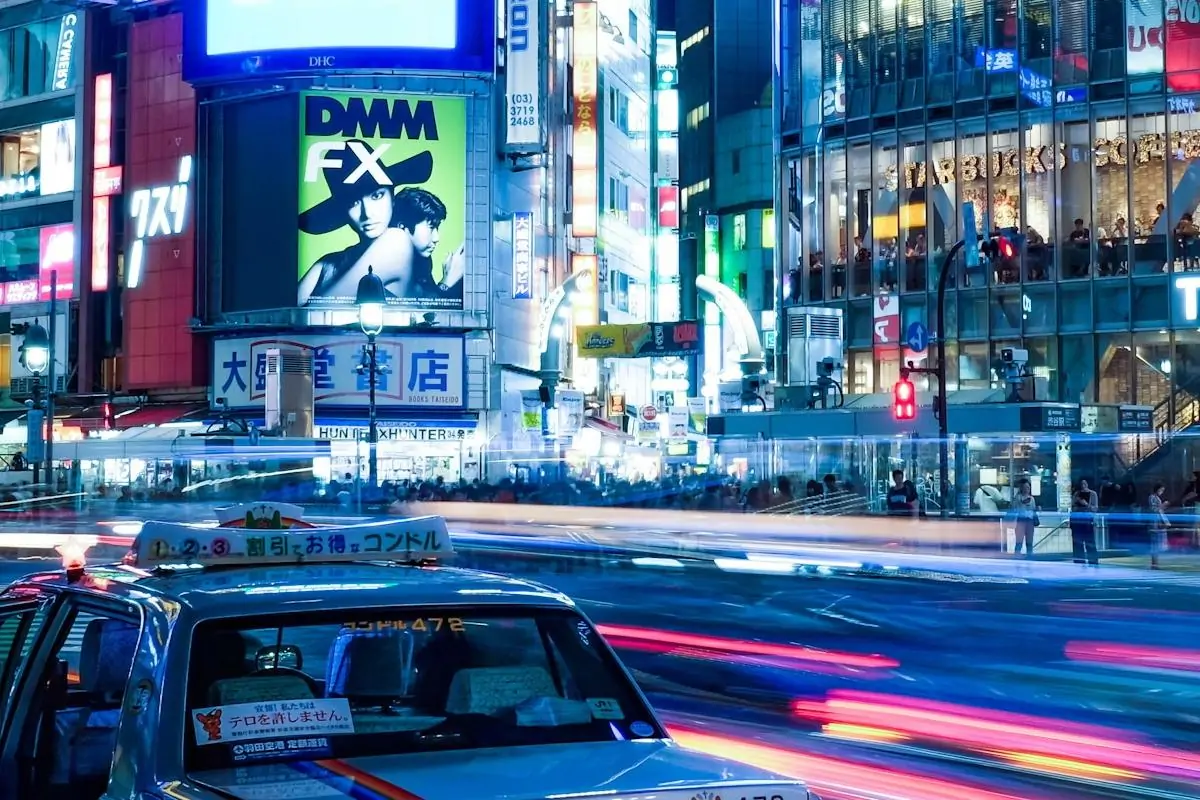
Plan the campaign before purchasing the advertising LED screen. Give each scene one main idea: identify the brand, show the product or offer, and provide a clear next step. Build separate daytime and evening versions if lighting changes the image. Review the display from outside the store rather than approving only a desktop video.
A transparent LED screen for advertising should complement the physical window presentation. Keep important products visible, avoid covering every pixel with busy imagery, and check how the display looks when playback stops. A transparent LED display can be visually striking, but the campaign still needs a readable message and a relevant offer.
Measure outcomes appropriate to the goal, such as campaign-specific enquiries, QR visits, offer redemptions, or changes in store entry. Compare similar periods and account for promotions, seasonality, and other advertising. Playback logs show that content ran; they do not prove that people saw it or that the screen caused a sale.
10. Frequently Asked Questions
01. Which is better: an advertising LED screen or a transparent LED display?
Choose an advertising LED screen with an opaque surface when a controlled image background is essential. Choose a transparent LED display when maintaining some daylight and sightlines adds value. Compare both using real content, the actual window or wall, and representative viewing positions.
02. Can a transparent LED display be used outdoors?
Only use a model specified for the actual exposure. An indoor transparent LED display installed behind glass is different from an externally mounted system exposed to rain and wind. Confirm enclosure protection, connectors, temperature limits, mounting requirements, and service access for the complete installation.
03. What pixel pitch is best for a storefront?
There is no universal best pitch. Start with the nearest normal viewer and the smallest essential text. Calculate native resolution, check both pitch directions on a transparent LED display, and approve a content sample through the intended glass before ordering.
04. How much does an advertising LED screen cost?
The installed price depends on size, pitch, brightness, environmental protection, control equipment, structural work, and support. Request an itemized quote for the same project brief from each supplier. A headline square-meter price without installation scope is insufficient for budgeting.
05. Is a transparent advertising screen fully invisible?
No. Pixels, conductive paths, frames, wiring, and equipment remain physically present to varying degrees. Transparency also depends on viewing angle, glass, and lighting. Inspect a sample both powered on and off rather than relying only on promotional photographs.
06. Can existing video files be used?
Often they can be adapted, but confirm supported formats and the final pixel canvas. Cropping, scaling, fine text, and dark backgrounds may behave differently on a transparent LED display. Test the final exported files on the actual playback system before launching the campaign.
11. Conclusion: Choose for the Site and the Message
The right advertising LED screen makes the message readable under the site’s real operating conditions. The right transparent LED display balances that message with the value of an open window or architectural view. Start with audience and environment, then verify resolution, brightness, structure, serviceability, and total cost.
To compare an advertising LED screen with a transparent LED display for your project, send EagerLED your dimensions, site photos, and content requirements. Request a documented configuration and a practical acceptance test so the final purchase decision rests on observable performance.
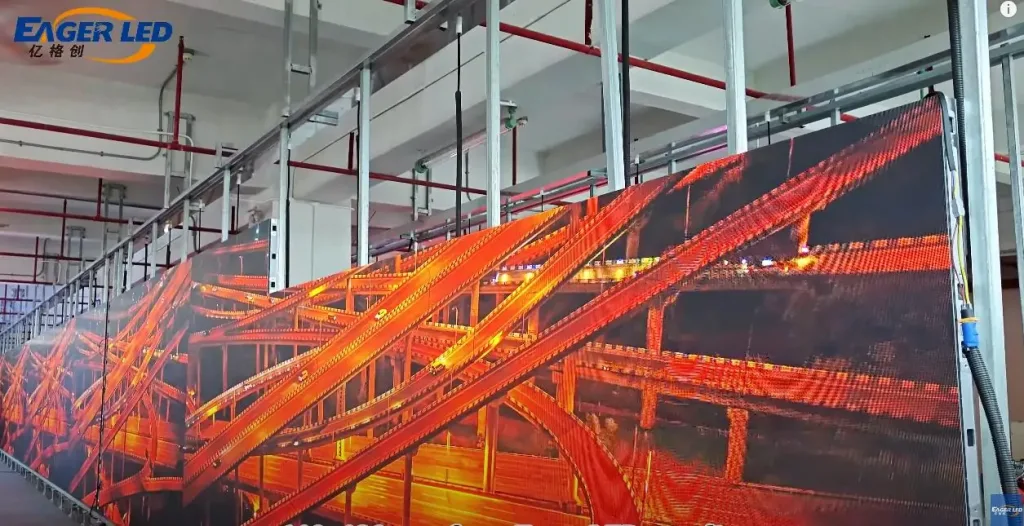 170 P2.5 EA640F2 Indoor LED Panels Will Be Shipped to Korea
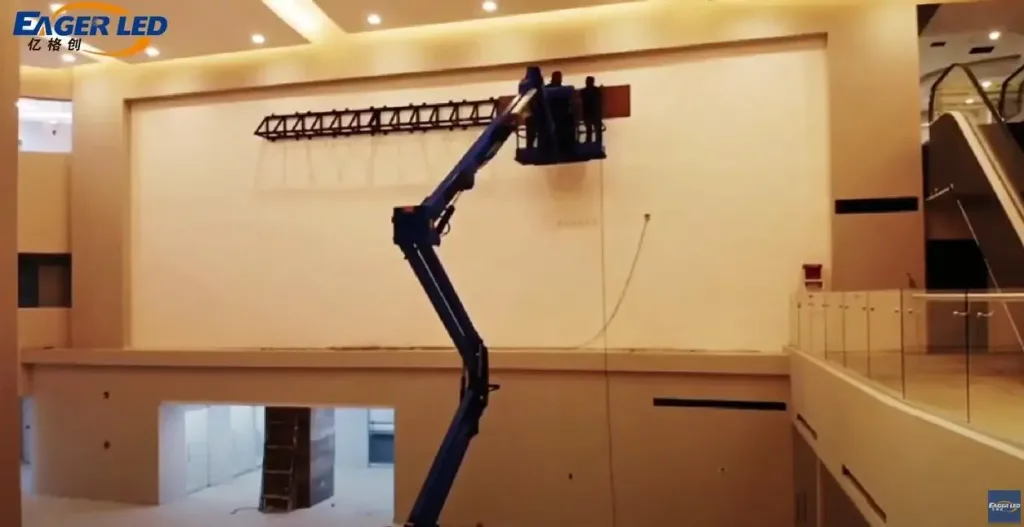 P5 LED Walls Installed in a Large Shopping Mall in Mexico
Related Posts

Fill In Your Needs In Detail
Fill in the screen usage scene and size you need in “Content”.You will get a quote.