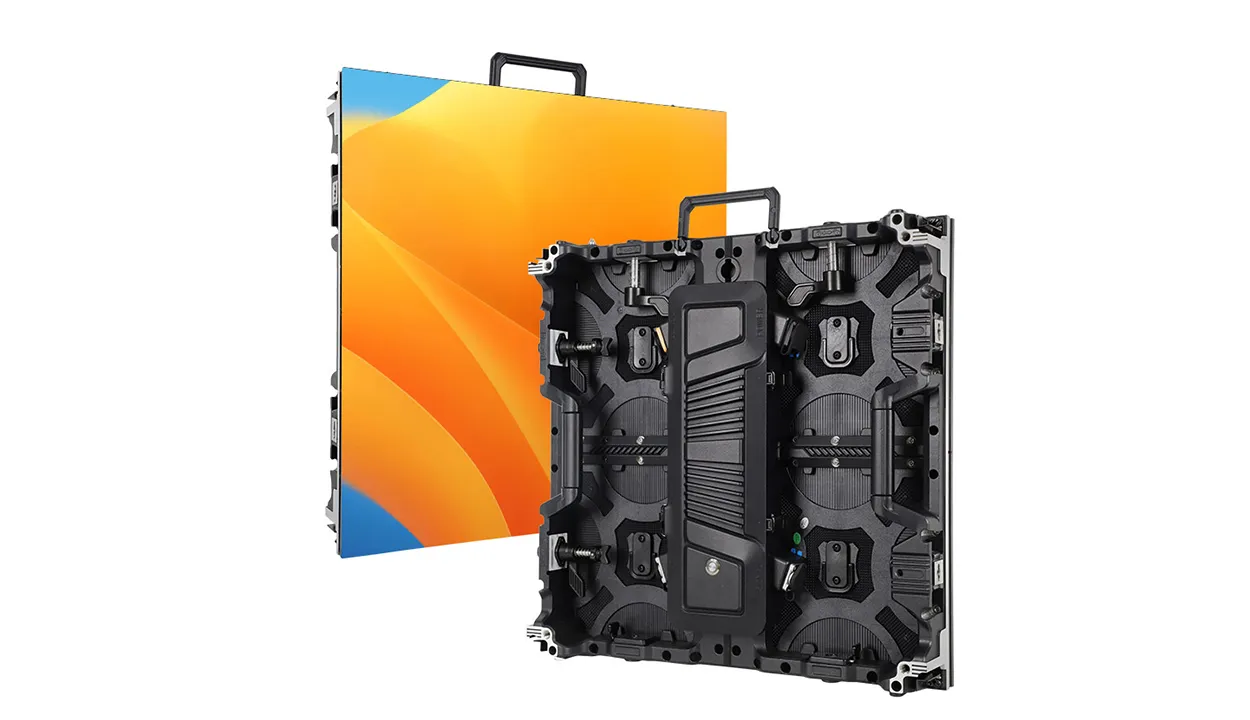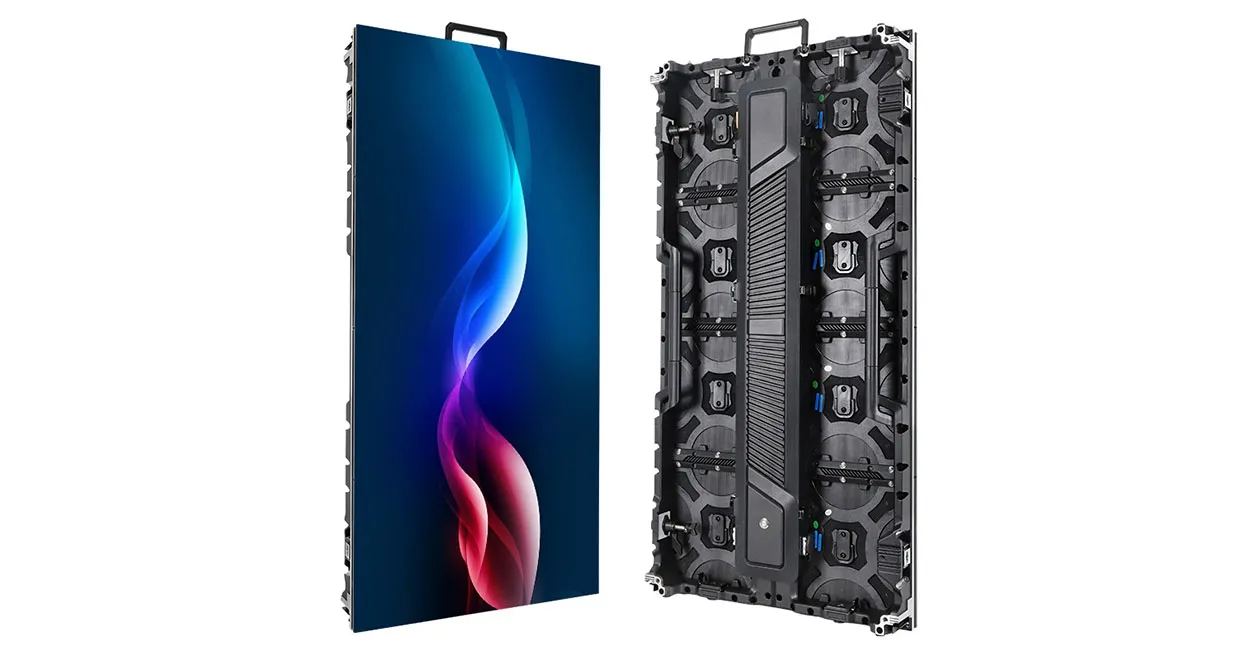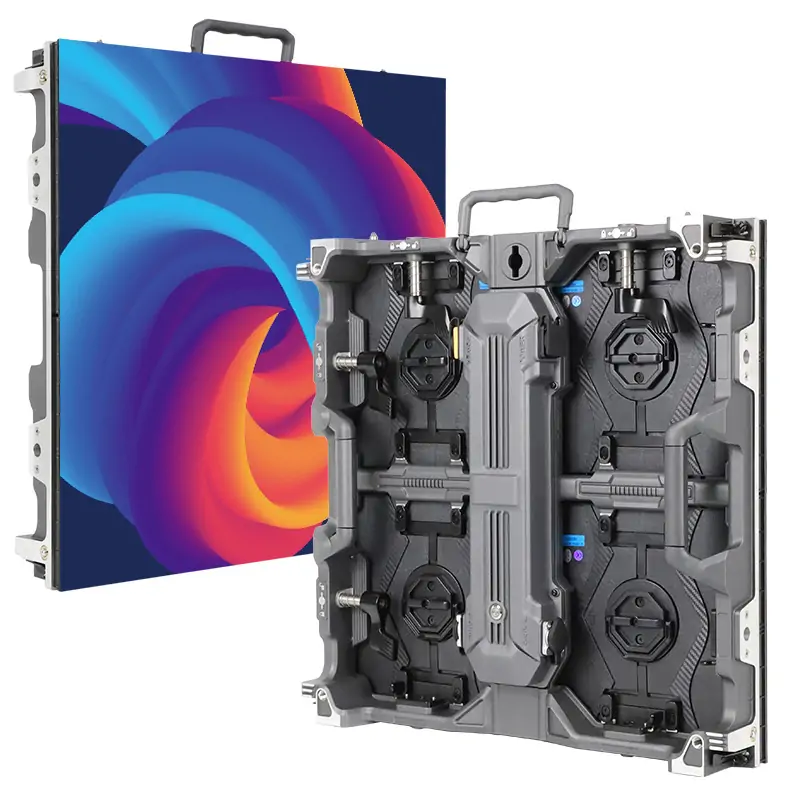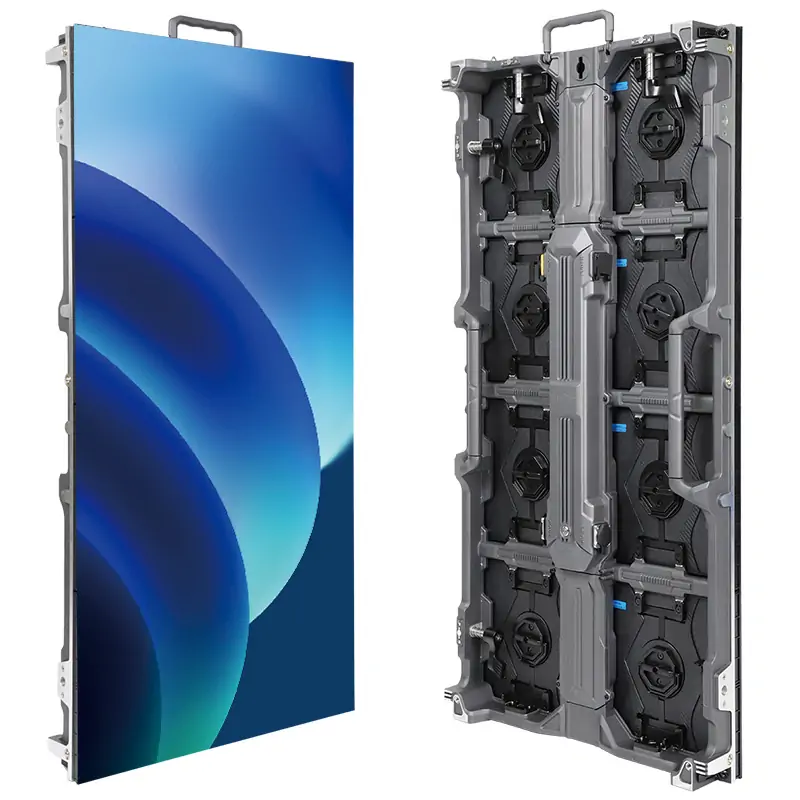
Stadium screens are LED displays used in stadiums and arenas for live video, replays, scores and sponsor advertising. The right stadium LED display depends on the venue layout, viewing distance, lighting and the content you need to show.
This guide compares display types, explains stadium screen cost factors and outlines the viewing, control and maintenance requirements to review before requesting a project quote.
1. What Is a Stadium LED Display?
A stadium LED display uses LED pixels to present video, graphics and match information to spectators. Stadium video screens can show replays and live feeds, while scoreboards and perimeter displays serve more specific scoring or advertising roles.
Choose the display format around the audience and its purpose. Screen size, pixel pitch, viewing position and control-system compatibility determine whether content is readable and practical to operate during an event.
2. Five Types of Stadium Screens
The five stadium screen types below cover scoreboards, ribbon displays, large video screens (Jumbotrons), centre-hung displays and perimeter LED displays. Each serves a different position and purpose within a venue.
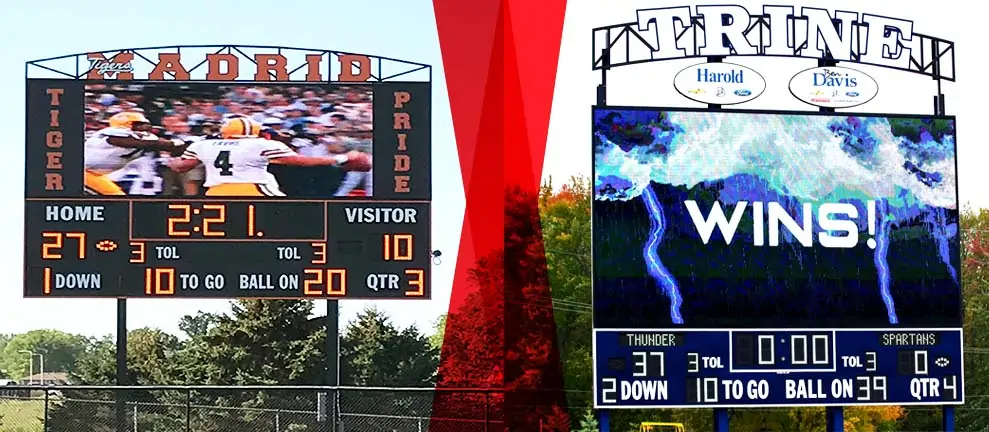
2.1 Stadium LED Scoreboard
It is connected to the competition timing and scoring system to broadcast the results and related information of the players. From the point of view of the game, the timing and scoring screen is more important. Some stadiums may not have big screens, but the timing and scoring screen should not be useless.
Mini jumbotron is also a compact LED screen designed for showing scores, replays, and footages.
2.2 Stadium Ribbon Displays
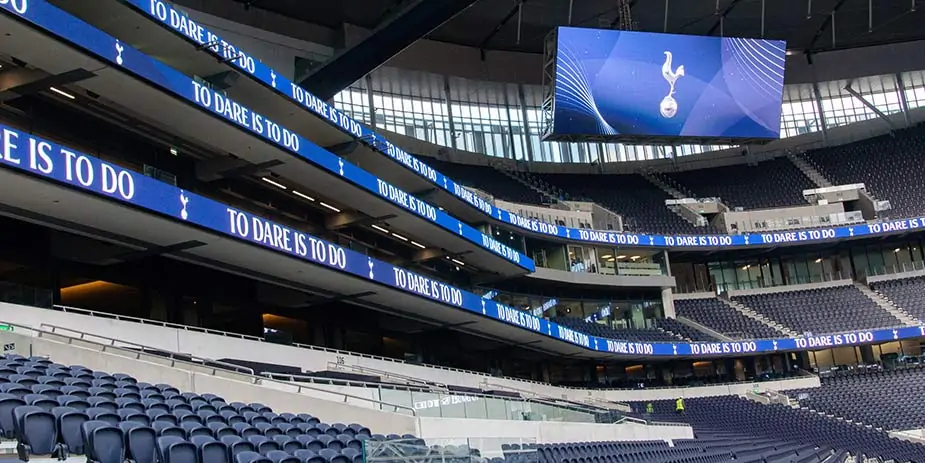
Outdoor LED ribbon displays have been designed to meet the specific requirements of stadiums, outdoor venues and other public places. Stadium ribbon displays can be used to display adverts, animations or promotions, as well as scores and statistics. They provide a bright image that enhances match-day experience.
Its slim, customisable display design even accommodates curved surfaces and 360° mounting, ensuring a flexible product that’s perfect for end zones, sidelines, stadium surrounds, outfield, concourse, stadium exteriors or other linear applications. There are two access options, front or top, for easy maintenance.
2.3 Large Stadium LED Screen (Jumbotron)
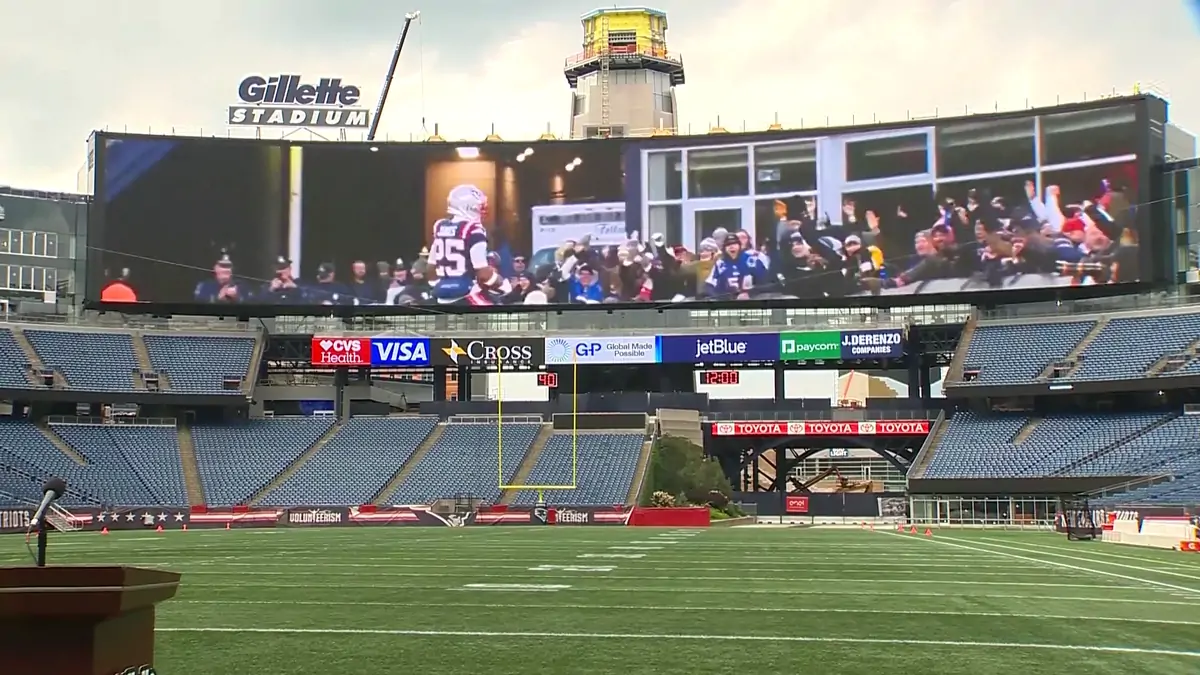
A large stadium LED screen, often called a Jumbotron, displays live footage, match highlights and replays. Compare the screen size, pixel pitch and viewing position against the nearest and farthest audience areas so important content remains readable.
2.4 Stadium Centre LED Display
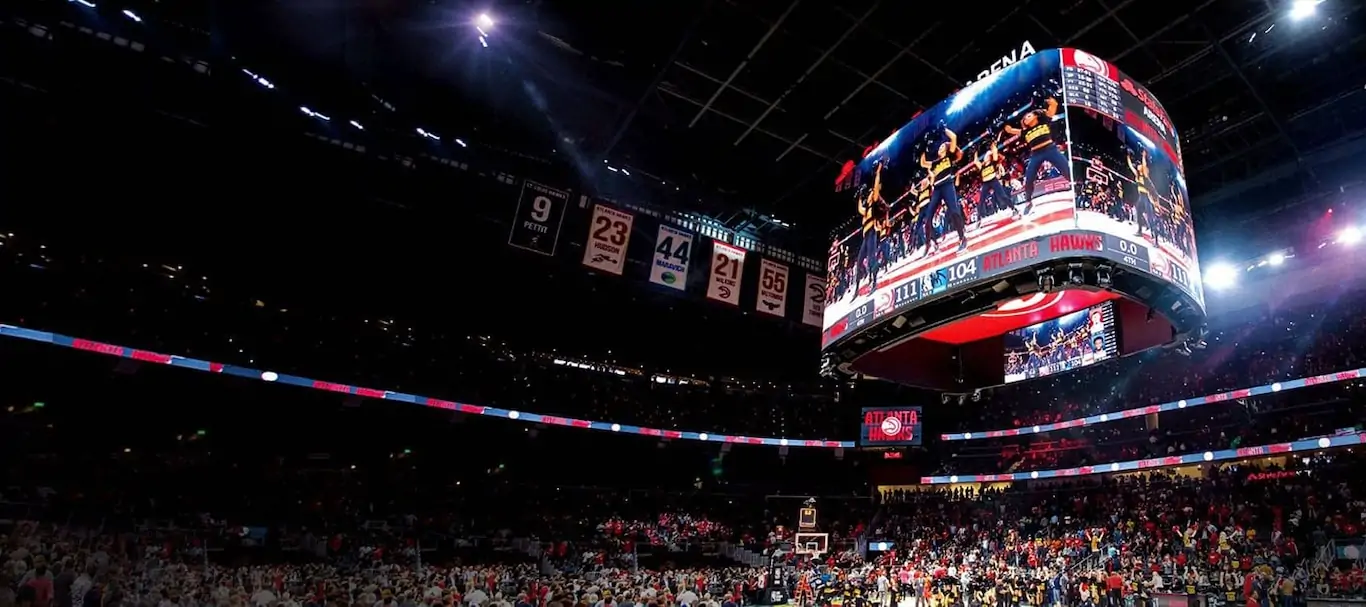
The square LED display located in the centre of the stadium, with lift adjustment function (vertical movement), can meet the needs of the game, performance, etc., and is regarded as an example of the application of LED bucket screen by the industry. It can also be divided into different areas for displaying various statistics, charts, animations or live broadcasts.
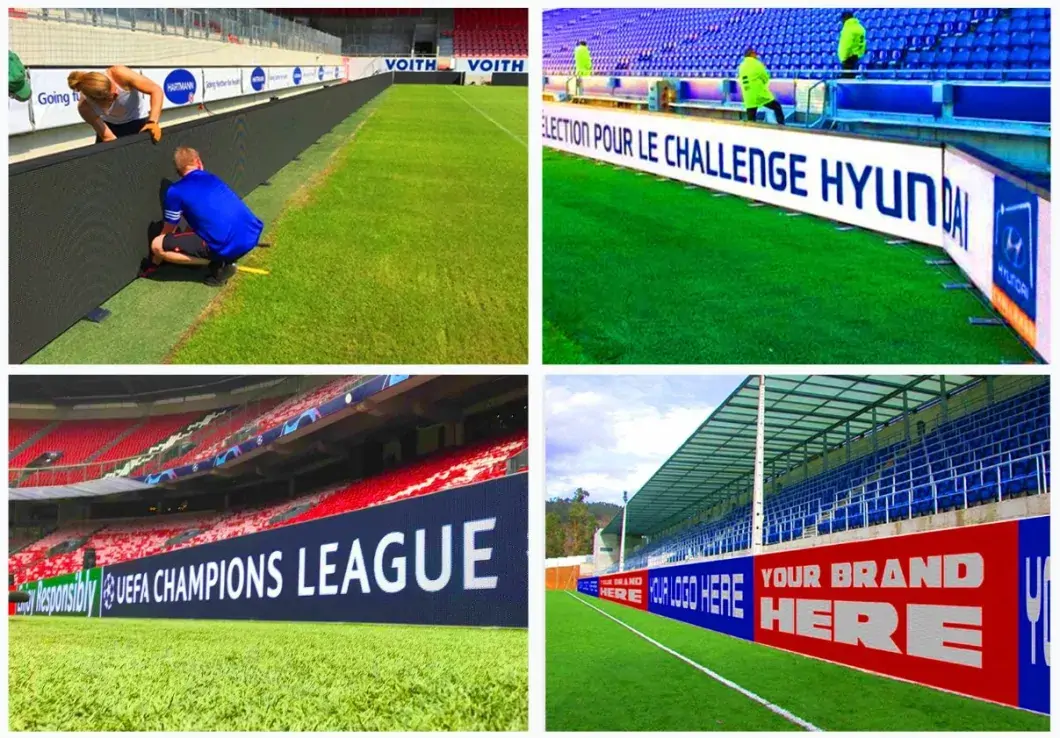
2.5 Stadium Perimeter LED Display Screen
A stadium perimeter LED display is installed around the playing area to show sponsor advertising and event messages. Assess the cabinet design, support structure, player protection and access requirements for the selected venue; a display should not be treated as a substitute for a required safety barrier.
3. Stadium Screen Features to Compare
Compare stadium screens by image quality, brightness, refresh performance, viewing angle, power use and environmental protection. The required specification depends on whether the display is indoors or outdoors, its viewing distance and whether it will appear on camera. Confirm the following features for the selected model.
3.1 Stadium Screen Resolution
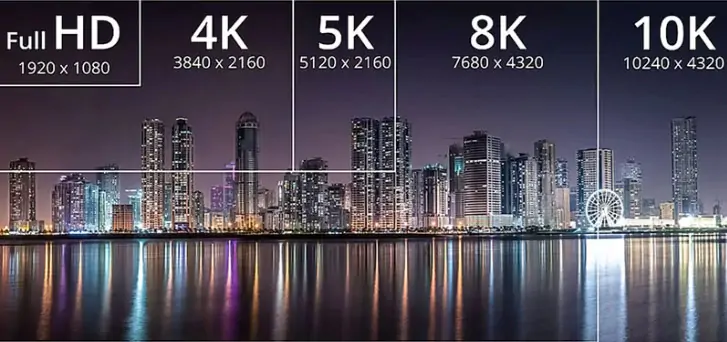
Stadium screens provide crisp, clear images in HD, 4K or even 8K quality, perfect for displaying detailed visuals such as player stats, close-ups or sponsor logos. This clarity is vital for both spectators and TV broadcasts, enhancing the overall viewing experience with crisp detail.
3.2 Refresh Rate for Stadium Video Screens
To ensure that spectators can accurately capture the excitement of a sporting event, stadium screens need a refresh rate of up to 3,840 Hz, and even 7,680 Hz for major sporting events. High refresh rates are critical to accurately displaying every movement of the athletes.
3.3 High Brightness and High Contrast Ratio
Stadium screens are designed with high brightness and high contrast, typically in excess of 6,000 nits, to ensure clarity in a variety of lighting conditions, including direct sunlight. This feature ensures that spectators can view content clearly, making it ideal for outdoor sporting events and venues where daytime or nighttime visibility is critical.
3.4 Power Use and Maintenance
When estimating operating costs, compare average and maximum power consumption under stated test conditions, daily operating hours and brightness settings. Also check cooling, cleaning, service access and spare-part availability so maintenance can be planned around the event schedule.
3.5 Real-Time Content Display
Stadium LED screens are designed to integrate with live information, scoreboards and interactive systems to enable real-time content updates. This functionality is essential for displaying live game footage, instant replays, statistics and interactive fan engagement to ensure that spectators stay connected to the action and adverts.
3.6 Customisable Shapes and Sizes
Stadium LED screens offer great flexibility in terms of shape and size, allowing stadiums to install screens that meet their specific design and functional needs. Whether it’s a huge jumbo electronic screen, a ribbon display around the seating area or a curved screen, the adaptability of football stadium LED displays ensures that they can meet the aesthetic and practical requirements of any venue.
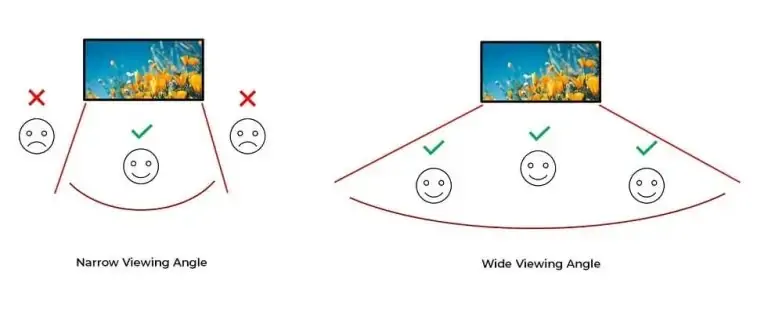
3.7 Wide Viewing Angle
Stadium displays typically have viewing angles in excess of 120-140 degrees, allowing 95% of spectators seated in all areas of the stadium to have a clear view of the screen. Sports LED screens maintain uniform brightness and colour accuracy at all angles, ensuring a consistent viewing experience for fans no matter where they are seated in the stadium.
3.8 Waterproofing and Durability
Athletes will inevitably collide with the LED perimeter displays around the venue. It is essential that both outdoor and indoor LED screens are impact resistant to protect athletes from injury and extend the life of the LED display.
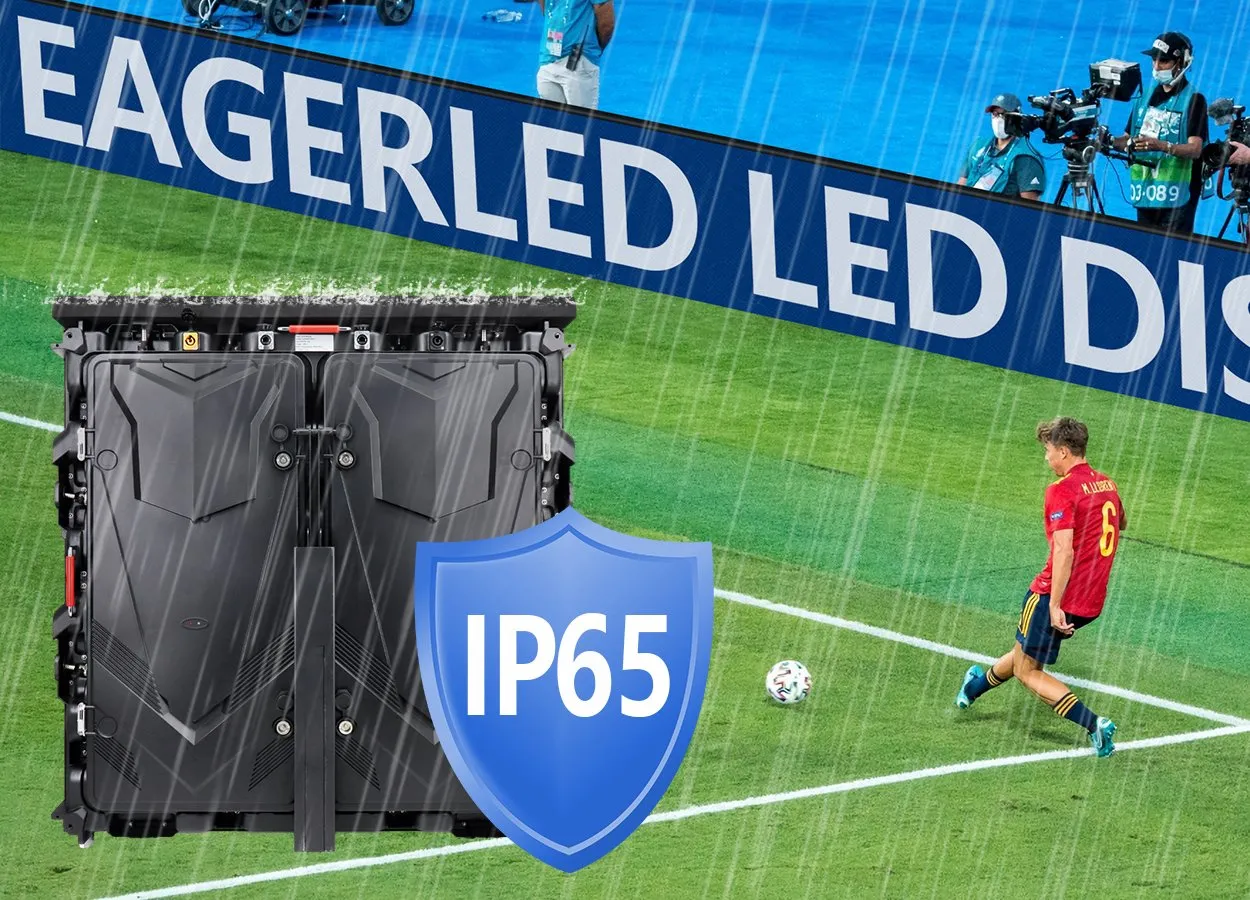
In addition, the football stadium screens have a high flame-retardant rating, are IP65 rated, use V0 flame-retardant wiring, and have built-in cooling fans to withstand rain, wind, extreme temperatures, and other elements.
4. Stadium Screen Cost and Price Factors
How much does a stadium screen cost? Screen size, pixel pitch, display type, control equipment and installation requirements all affect the quote. Compare the scope as well as the price, including the supporting structure, power distribution, commissioning, spare parts and support.
The examples below cover different screen types and configurations. Confirm current pricing and what is included with the supplier before using any figure as a project budget.
4.1 Stadium LED Display Prices
Typically, stadium screens cost US$400-1000 per square metre. Pricing varies greatly depending on a number of factors, such as size and resolution, LED chip and packaging technology, refresh rate and grey scale, maintenance and installation requirements.
However, the minimum price for a perimeter outdoor banner display measuring 960×960 mm is $390. Prices may drop slightly with the number of pieces you order in bulk, depending on the manufacturer’s policy. For example, if you choose to order close to 1,000 pieces, the cost would be approximately $376.58. The maximum cost for a stadium display is approximately $960.
4.2 Stadium Centre Video Screens
These stadium LED displays range in size from 75 inches to 300 inches or even larger. 75-inch stadium center-mounted displays cost between $2,500 and $6,000. On the other hand, 300-inch displays cost between $35,000 and $120,000. In addition to size, resolution also determines the price of a screen.
A 100-inch Full HD (1080p) screen typically costs between $5,000 and $10,000. A 300-inch screen with the same resolution can cost between $50,000 and $100,000 or more. A 100-inch screen with 4K resolution sells for between $10,000 and $20,000, while a 300-inch screen sells for between $100,000 and $200,000 or more.
4.3 Stadium Scoreboards
Sport-specific factors affect the cost of LED stadium scoreboards and video scoring boards for football, basketball, baseball and rugby. Pricing is also affected by the size of the field, the angle of LED perimeter display, installation ways, pixel pitch, and structure.
For baseball, core boards cost between $36,000 and $750,000. For football, the average price range is $25,000 to $550,000. Finally, basketball scoreboards cost between US $10,000 and US $140,000.
4.4 Funnel-Shaped LED Displays
The larger the screen and the higher the resolution, the more LED modules and pixels are typically required, so the price goes up accordingly. For example, a large P6 indoor 4.3 funnel-shaped LED screen costs approximately $450.00-$600.00 per piece.
On the other hand, a funnel-shaped LED display with a pixel density of 65,536 dots per square metre can cost as much as US$699.00-1,299.00 per square metre.
4.5 Ring or Curved LED Displays
You can use curved stadium LED screens to create columns, rings and corner curves. Your choice will determine the use. Curvatures can be concave, convex or flat. Flexible LED modules can be attached magnetically to metal cabinets for any design.
Factors such as pixel pitch, brightness options and the structure chosen for the curved LED display combine to determine cost. For example, a panel size of 500*500 with a maximum resolution of 4096*2180 would cost approximately $190.
5. How to Choose Stadium Screens
Start with a venue survey: identify viewing distances, seating angles, ambient light, screen locations and required content. Compare stadium video screens for image readability and live production, and perimeter displays for advertising visibility and placement. Review model specifications, installation constraints and service access before choosing a system.
5.1 Viewing Distance and Viewing Angle
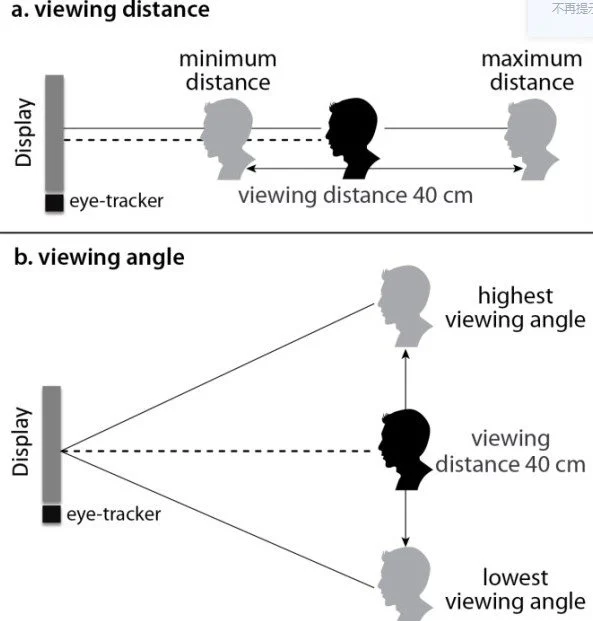
You can select a screen with a 3mm, 4mm or 5mm thickness if the audience density is very high and the viewing distance is short. Choose LED perimeter displays in full colour with larger spacing points, like 6mm, 8mm or 10mm.
The stadium LED screen must have a viewing angle of 120-140 degrees both vertically and horizontally to give the best visual effect. The LED cylinder or LED bucket screens support 360 degree viewing angles.
5.2 High Optical Performance
When the background illumination is less than 20lk, the contrast ratio of the stadium screen needs to reach 100el. The white point coordinates can be adjusted between the colour temperature 5000k-9500k according to the usage environment, which complies with the CIE 1931 Chromaticity System, and the allowable deviation is △x∣≦0.030 and ∣△y∣≦0.030.
5.3 High Brightness and Energy Saving
The brightness requirements of outdoor stadium LED display is higher than indoor stadium LED screen, but it is not the higher the brightness the better the picture quality. There is a balance between brightness, contrast, and energy saving. Excessive brightness may make the screen difficult to truly restore the colour, so it is important to choose a good colour and spectral coverage.
5.4 Refresh Rate and Camera Compatibility
As the shooting or live broadcast of the game requires high-definition cameras, the refresh rate of the stadium screens is required to be high, and the stadium LED display usually adopts a high-brush driver IC to ensure that the refresh rate reaches more than 3840Hz.
5.5 Protective Performance
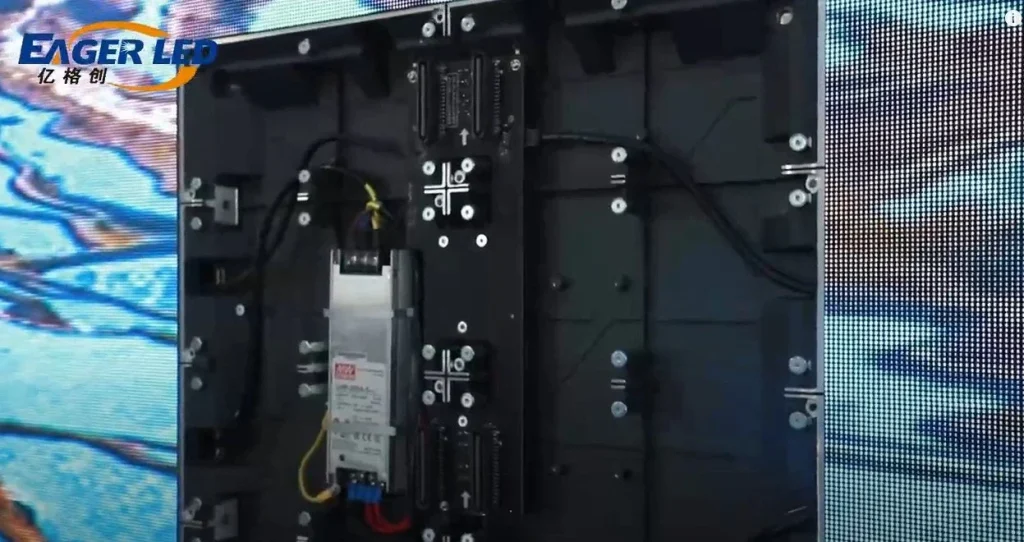
In both indoor and outdoor stadiums, taking into account heat dissipation, especially in hot outdoor weather, LED perimeter boards must have a high flame retardant rating, meet IP65 protection standards, have V0 flame retardant cabling, and have a built-in cooling fan.
Some possible protection options include the use of cordons or protective film on the surroundings (e.g. surrounding walls) and the addition of extra layers such as bubble wrap.
These two stadium screens, EA1600SP and EA1280SP1, are our EagerLED top recommendations. They fulfil all of the above requirements and we also supports the customization of stadium displays according to your needs.
6. Why Use LED Displays in Stadiums?
Installing LED displays in a stadium can bring many benefits to the venue and spectators. The reasons why stadiums need LED screens are listed below:
6.1 Enhanced Fan Experience
LED perimeter displays provide real-time updates, instant replays and live match footage, allowing fans to experience the game from all angles. They can also provide interactive elements such as fan voting or social media displays to increase engagement and excitement during the match.
6.2 Advertising and Revenue Generation
Football stadium screens provide advertising space for sponsors during matches and other events. The commercial value depends on audience reach, screen visibility, content scheduling and sponsorship agreements, so assess those factors as part of the venue business case.
6.3 Customisable for Each Event
Football stadium LED displays can be adapted to different types of events, from sporting events to concerts or other large gatherings. Their flexibility makes them a valuable long-term investment for venues hosting a wide range of events.
By investing in sports LED displays, stadiums can enhance their functionality, provide a better experience for fans and open up new revenue streams through advertising and promotions.
6.4 Enhance the Aesthetics of the Stadium
Well-designed stadium screens can enhance the visual appeal of a stadium. The high brightness and vibrant colors of LED screens can change the atmosphere of a stadium, making it look more modern and professional.
6.5 Improved Communication
Stadium perimeter LED displays provide a platform for communicating important information such as match scores, match statistics and player profiles. This real-time communication enhances spectator understanding and engagement, ensuring they are kept up-to-date throughout the event.
7. How to Control Stadium and Perimeter LED Displays
7.1 Control Software
Content Management System (CMS): A CMS allows the operator to schedule and manage content such as match statistics, video feeds, adverts and score updates. Modern systems are often easy to use and support multiple media formats such as video, images and live feeds.
Remote Access and Monitoring: Many stadium LED control systems provide remote access through a web-based platform or application, allowing operators to control and monitor screens from different locations. This helps to dynamically adjust content.
Real-Time Updates: Control systems allow content to be updated in real-time to dynamically display live scores, social media feeds, fan messages or sponsor logos throughout a game or event.
7.2 Control System Hardware
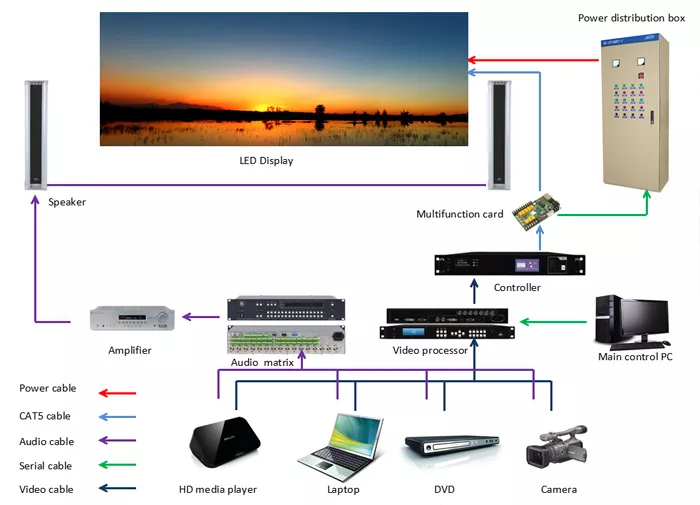
LED Display Controller: A controller (e.g. Novastar or Linsn system) is responsible for processing the video signal and sending it to the sports LED display. This controller is connected to a central control computer or server that manages the content.
Video Processor: The video processor improves the quality of the input signal by optimizing the resolution, aspect ratio and format to ensure a seamless display on large stadium screens (Jumbotron). This is particularly useful for switching between live broadcasts, commercials or replays.
Signal Transmission Equipment: Data is transmitted from the control room to the LED screen via cable (e.g. fibre optic) or wireless transmission systems. Stadium screens typically use CAT5/CAT6 cables or fibre optics to transmit signals over long distances without delay.
7.3 Input Sources
Multiple Input Channels: Stadium screens typically support multiple input sources, including live camera feeds, satellite broadcasts, and prerecorded video. The video processor can seamlessly switch between these sources during the event.
Audio Integration: Stadium LED displays can be synchronised with the stadium’s audio system to coordinate announcements or commentary to match the visual content on the screen.
7.4 Network Integration
LED perimeter displays are often integrated with the stadium’s wider IT network, which includes ticketing systems, scoreboard data and real-time statistics for the game. This ensures that the screens display accurate and up-to-date information.
7.5 Control Room Setup
Football stadium screens are typically managed from a control room equipped with computers, control software, video processors and audio systems. This setup allows for centralized management and ensures that operators can effectively adjust content and monitor screen performance.
7.6 Mobile and App-Based Control
Some modern LED systems allow control via mobile apps so that content or settings can be quickly changed from a smartphone or tablet. This is particularly useful for smaller stadiums or when quick adjustments are required during an event.
7.7 Backup Systems
Redundancy and Fail-Safe Systems: Review backup power, signal paths and failover options with the system supplier. Confirm which functions are included in the selected configuration and test the recovery procedure before a live event.
8. Stadium Screens FAQ
What are stadium screens used for?
Stadium screens show live video, replays, scores, match information and sponsor advertising. Scoreboards, ribbon displays, large video screens, centre-hung displays and perimeter LED displays serve different viewing and content needs.
How much does a stadium screen cost?
Stadium screen cost depends on screen size, pixel pitch, display type, control equipment, supporting structure and installation requirements. Request a project-specific quote and compare what is included, such as power distribution, commissioning, spare parts and support.
How do you choose a stadium LED display?
Start with the venue layout, viewing distances, ambient light and content requirements. Compare screen size, pixel pitch, brightness, viewing angles, camera compatibility, weather protection and maintenance access using the specifications of the selected model.
How are stadium screens controlled?
A stadium display system uses control software, LED controllers and, where required, video processors to manage advertising, scores and video feeds. Confirm input compatibility, scoreboard integration, signal transmission and backup requirements with the system supplier.
9. Stadium Screens Buying Summary
Choose stadium screens around the venue, audience and content requirements. Compare display types, image quality, control compatibility, installation and maintenance access, then assess the full project cost.
For a stadium LED display project, send EagerLED your venue layout, screen size, viewing distances and intended use through the enquiry form below to discuss a suitable configuration and request a quote.
Related Posts

Fill In Your Needs In Detail
Fill in the screen usage scene and size you need in “Content”.You will get a quote.