LED screen resolution represents the sharpness and color accuracy of images. It is the backbone of how we perceive display content and plays a key role in clear visuals.
What exactly it is and why it is very important for LED displays? This article will explain everything you want to know including definitions, types, differences, importance, and calculations, helping you comprehensively learn about LED display resolution and choose ideal resolution for LED displays.
1. What is LED Screen Resolution?
When it comes to LED screen resolution, you are curious about why it affects the clarity and sharpness of images. Here we will dive into what it is and core terms related to LED display resolution.
1.1 Definition of LED Screen Resolution
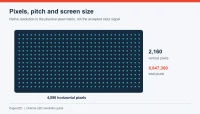
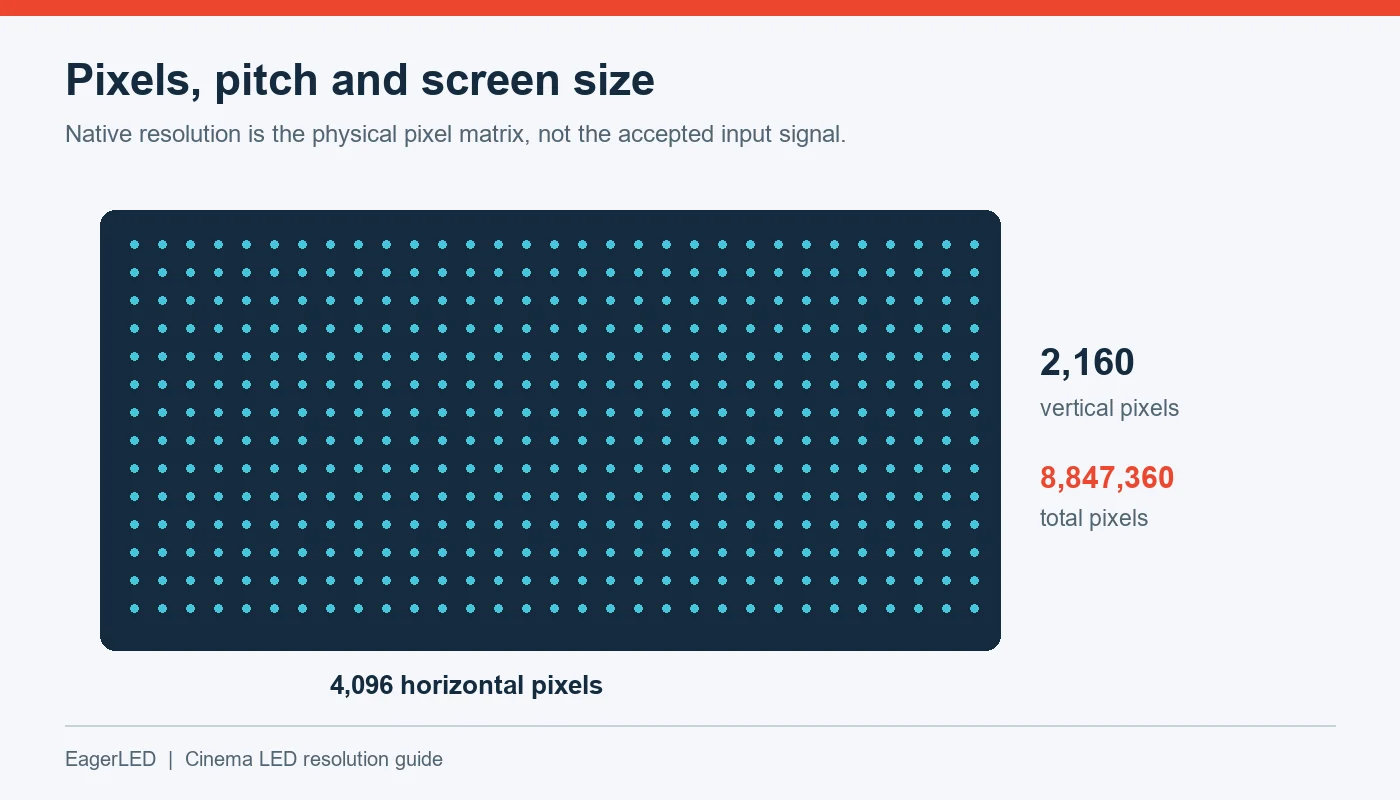
LED screen resolution defines the total number of pixels(dots of light) on a screen, calculated by width and height. For example, the LED video wall resolution of 3840×2160 means the screen contains 3,840 horizontal pixels and 2,160 vertical pixels.
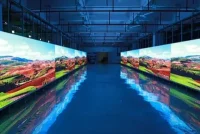
For a modular LED wall, native resolution depends on the pixel dimensions of each module or cabinet and the number installed. For a cinema-specific example, see our cinema LED resolution guide, which connects native pixel counts with pitch, active screen size, and viewing distance. At the same physical screen size, smaller pixel pitches pack more pixels per meter, resulting in sharper and more vibrant picture quality. Therefore, LED screen resolution represents image clarity and content compatibility. High resolution LED display provides audiences with a stunning, crisp, and vivid visual effect.
Resolution is separate from brightness, color accuracy, bit depth and refresh rate. Evaluate these specifications together when comparing displays.
1.2 Core Terms about LED Screen Resolution
The core terms of LED display resolution include pixels, pixel density, pixel pitches, and aspect ratios, which are critical components to help you further understand LED resolution.
1. Pixels
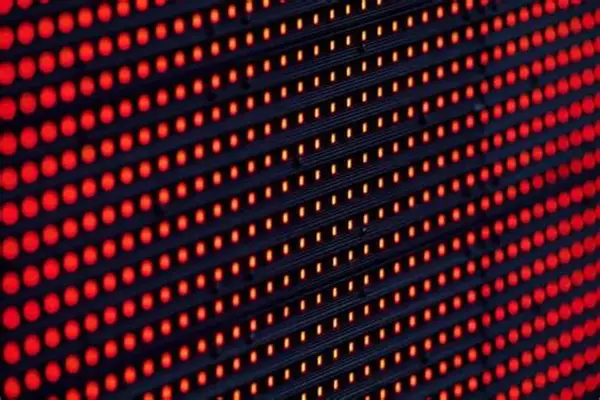
Pixels are the smallest unit of an LED screen. Think of it as a single “dot” of light that makes up images. More pixels mean higher resolution.
2. Pixel Density
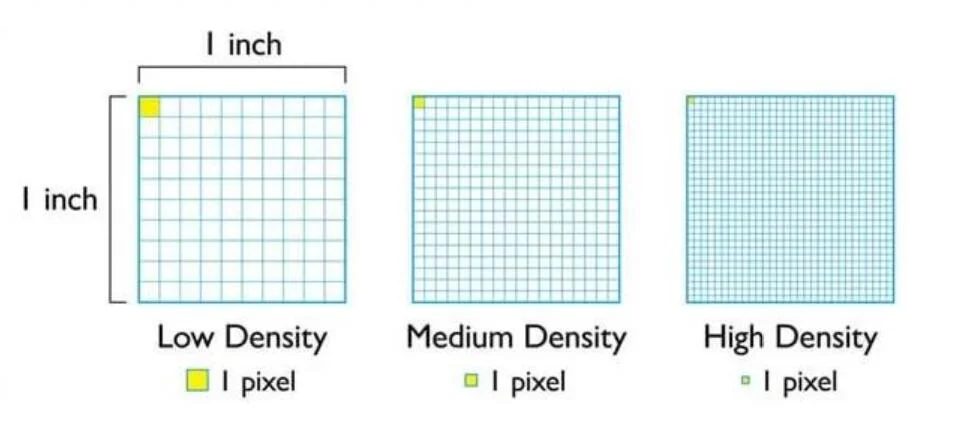
Pixel density measures the quantity of pixels in a given screen surface, expressed in pixels per inch (PPI) or pixels per meter (PPM). High pixel density means more detailed and crisp picture displays.
3. Pixel Pitch
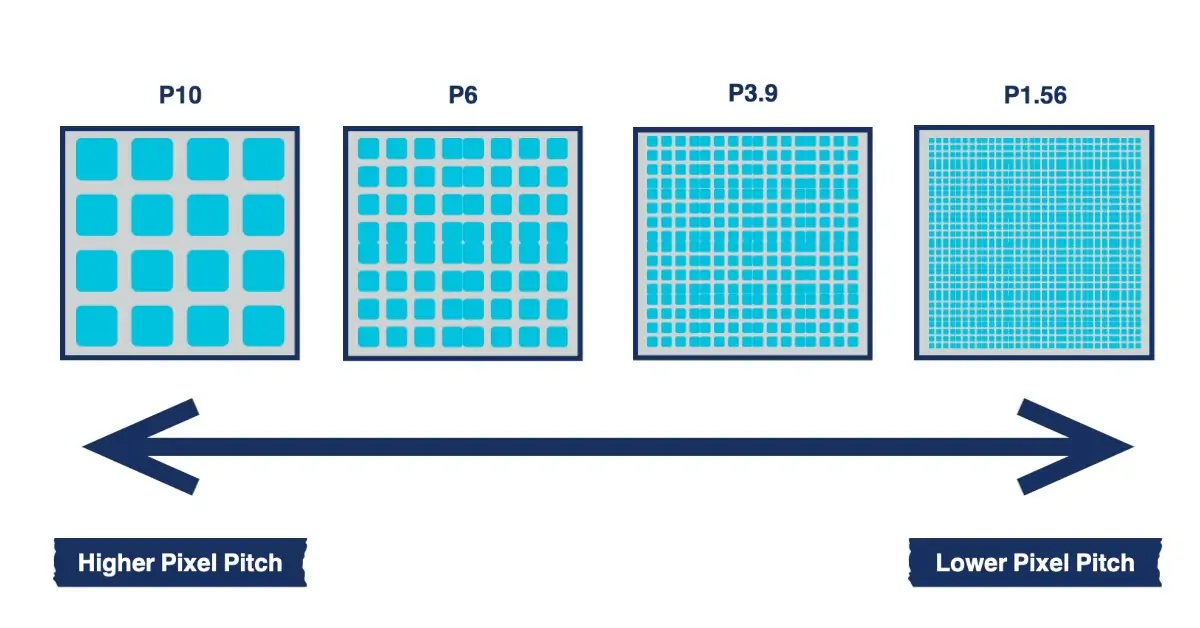
Pixel pitch is the distance from the center of one LED pixel to the center of the adjacent pixel. A smaller pixel pitch means a closer distance between pixels while indicating higher resolution. It is an important spec defining an LED screen’s clarity.
4. Aspect Ratios
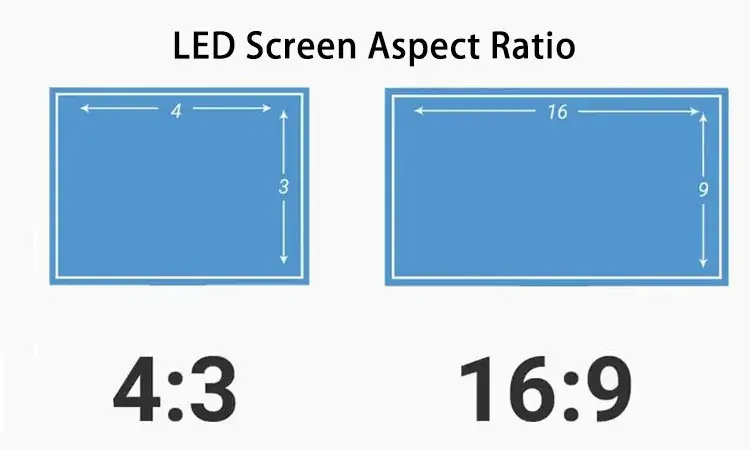
Aspect ratio is the proportion of a display’s width and height, usually expressed in width:height like 4:3, or 16:9. It impacts how content is displayed and defines the shape of the viewing area.
These elements work together to influence LED screen resolution. It is beneficial for you to understand how resolution determines image clarity and quality.
2. 5 Types of LED Display Resolutions
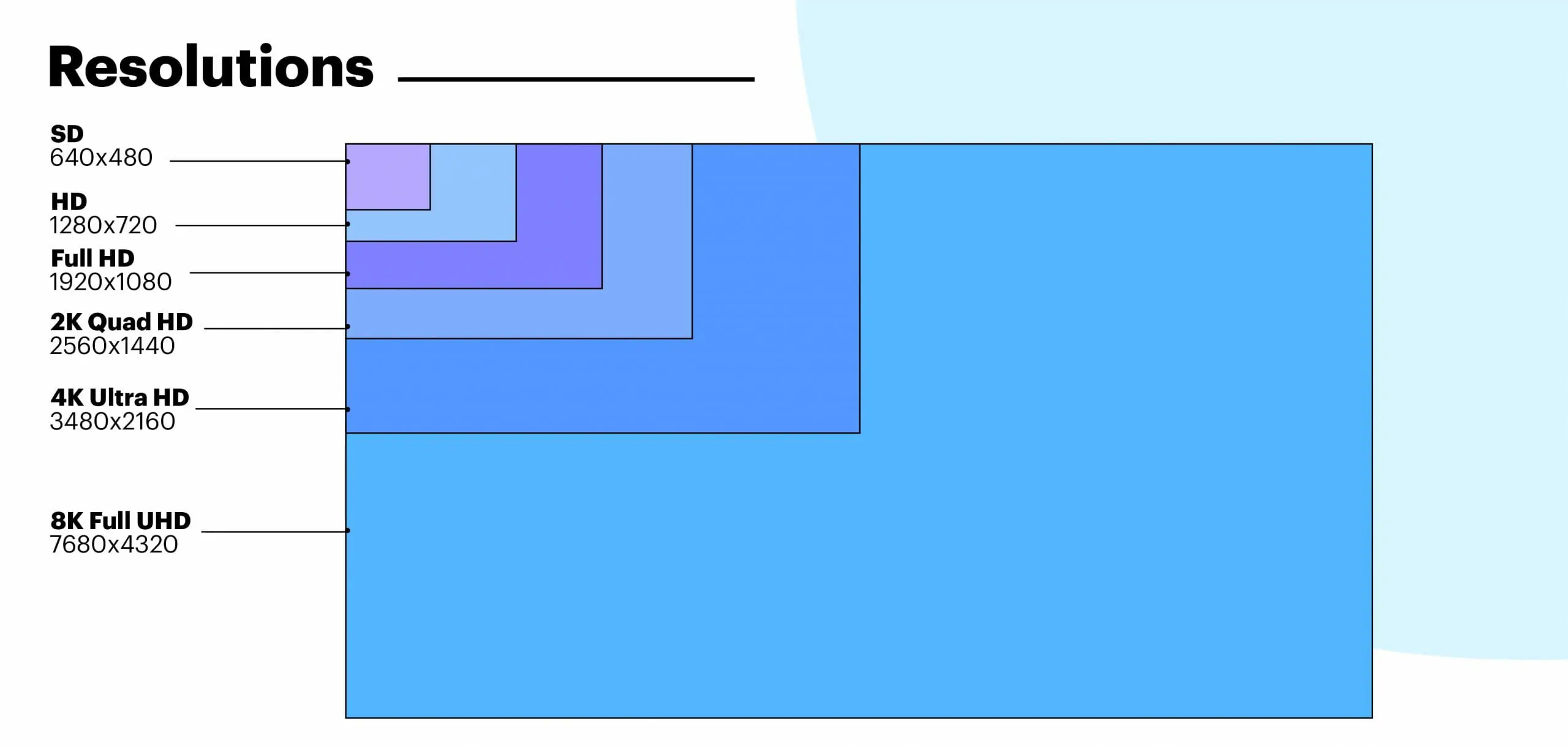
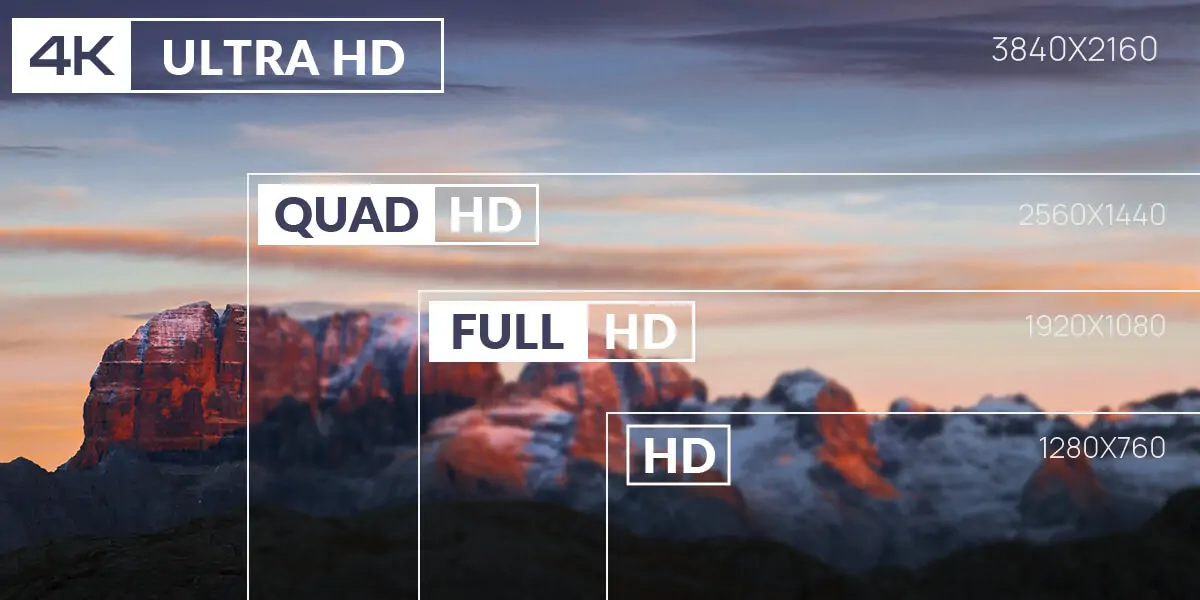
The LED screen resolution is divided into HD, Full HD, QHD, and Ultra HD. These terms mean the number of pixels on the screen and decide the level of sharpness and clarity. Let’s break down the common LED display resolution types.
2.1 HD(720P)
The entry-level of the high definition is 1280×720 pixels. Compared with standard definition(SD), it offers better clarity. It is suitable for small screens, older TVs, and budget phones.
2.2 Full HD(1080P)
1920×1080 pixels(FHD) offer sharper and more detailed images, which is a common standard for monitors, modern TVs, smartphones, and digital signage.
2.3 QHD(2K)
QHD, also called 2K(1440p), denotes 4 times as the standard 720p HD(not Full HD). The 2K resolution size is 2560×1440. It is ideal for larger screens, gaming monitors, and premium laptops.
2.4 Ultra HD(4K)
4K UHD(3840×2160 pixels) has four times more pixels than Full HD, providing exorbitantly sharp details for image and video displays, which is widely used in LED screens, laptops, TVs, and monitors.
2.5 8K
In addition, 8K UHD is the newest resolution with 7680×4320 pixels, which is 16 times better than Full HD. They both are applied to large high-tech LED displays.
Each resolution has its unique advantages. Choosing the right one depends on how clear and crisp the images you would like.
Learn more information: 4K UHD vs QLED: Key Differences & Which Is Better?
3. What Are the Differences Between HD, 1080p, 4K, and 8K in LED Screens?
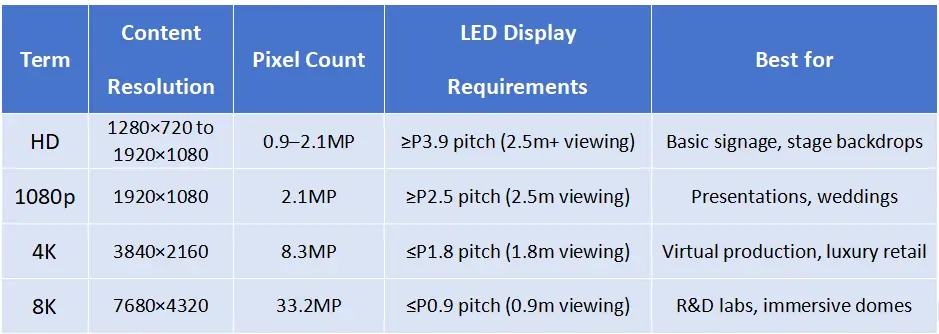
HD, 1080p, 4K, and 8K refer to LED screen resolution–how many pixels are used to display an image. For LED screens, these differences are vital for understanding image detail, clarity, and visual experience.
3.1 HD(High Definition)
High Definition (HD) is often defined as those images or videos that have a vertical resolution of 720 or higher. Typical HD displays are 1280 x 720 and 1920 x 1080 pixels.
High definition becomes the baseline for modern digital clarity and offers clearer images than SD(Standard Definition). Now, HD is still ideal for budget devices and secondary monitors.
3.2 1080p(FHD)
The ‘p’ refers to progressive scan. So, 1080p means a high-definition resolution of 1920×1080 pixels using progressive scan. Today, it is the global standard for high-definition content.
With a 16:9 widescreen aspect ratio, 1080p is a core spec for LED screens or monitors that need to capture facial expressions or fast motions. It is best for live events, concerts, retail presentations, etc.
3.3 4K
4K refers to a screen resolution of 3840 × 2160 pixels, also known as Ultra High Definition (UHD). It offers four times the detail of Full HD (1080p) and ultra-detailed and lifelike images, providing an immersive viewing experience.
4K is especially important for large LED displays or screens viewed up close such as 3D billboards, LED volumes, and high-end digital signage.
3.4 8K
8K refers to an Ultra HD LED screen resolution of 7680 × 4320 pixels, with a total of more than 33 million pixels. It has four times the resolution of 4K and 16 times the resolution of Full HD (1080p).
8K LED screens offer the image with unmatched detail and lifelike without visible pixels. And they are widely used in luxury brand displays, high-end trade shows, virtual productions, control rooms, ultra-premium 3D ads, and so on.
Key Differences at a Glance
4. 2K vs 4K vs 1080p LED Screen
Resolution is an important factor that should be considered when selecting an LED screen as it determines the clarity of the image and general viewing experience. The most common resolutions are 1080p (Full HD), 2K (1440p), and 4K (Ultra HD). Although they vary in number of pixels, the actual choice would be on the usage of the screen and its location.
4.1 1080p LED Screen (1920×1080)
- Viewing Distance: Ideal viewing distance of medium to long (3m-10m+)
- Screen Size Compatibility: It can be used on medium to large screens and does not need ultra-fine pixel pitch.
- Best Uses: Outdoor advertising and conference rooms, churches, and general commercial use.
- Energy Consumption: Reducing power consumption than higher resolutions.
4.2 2K LED Screen (2560×1440)
- Viewing Distance: Ideal for medium viewing distances (2m–6m)
- Screen Size Compatibility: Excellent with medium size LED screens that require enhanced clarity over 1080p.
- Best Uses: Retail exhibits, exhibitions and in-store digital signs.
- Power: Adequate power consumption, performance and efficiency.
4.3 4K LED Screen (3840×2160)
- Viewing Distance: Best for close viewing distances (1m–4m)
- Screen Size Compatibility: Supersize screens with small pixel pitch to use high resolution to the fullest.
- Best Uses: Control rooms, broadcast studios, upscale retail, and upscale interior video walls.
- Energy Consumption: More power consumption because of the greater pixel density.
1080p is affordable and feasible, 2K is a middle ground between quality and affordability and 4K resolution provides the optimal visual quality in high-end applications. The selection depends on how far you view, what size your screen is and your available budget-an increase in resolution may not be essential but it is huge in situations where you are viewing near.
5. Why is Resolution Vital for LED Displays?
The LED screen resolution is fundamental to screen performance because it impacts how clear the content displays and the overall visual effects customers watch. Why resolution matter for LED displays? Here are the reasons.
5.1 Image Clarity
The clarity and details of an image on an LED display are directly dependent on resolution. The higher the LED screen resolution, the more packed pixel density in the display, and as such, the LED screen can show finer lines, textures, and gradients.
It is of particular importance when displaying complicated visuals, like high-definition images, complicated graphs, and video material.
5.2 Immersive Visual Effect
Resolution is critical to making the visual experience immersive, particularly when large LED screens are being employed at a concert, exhibit, virtual production or an interactive location.
With enough pixels to make it an ultra-clear display, viewers will feel immersed in the content like they are part of the screen instead of just being observers.
5.3 Viewing Distance Optimization
When the resolution is low, the closer the LED display appears to the viewer, the larger the gaps between the pixels get.
Inconsistent LED screen resolutions make the audience either uncomfortably lean towards or away, evincing less interaction.
Thus, fine-pitched LED displays are essential in getting rid of the noticeable pixelation and making images more lifelike and vibrant.
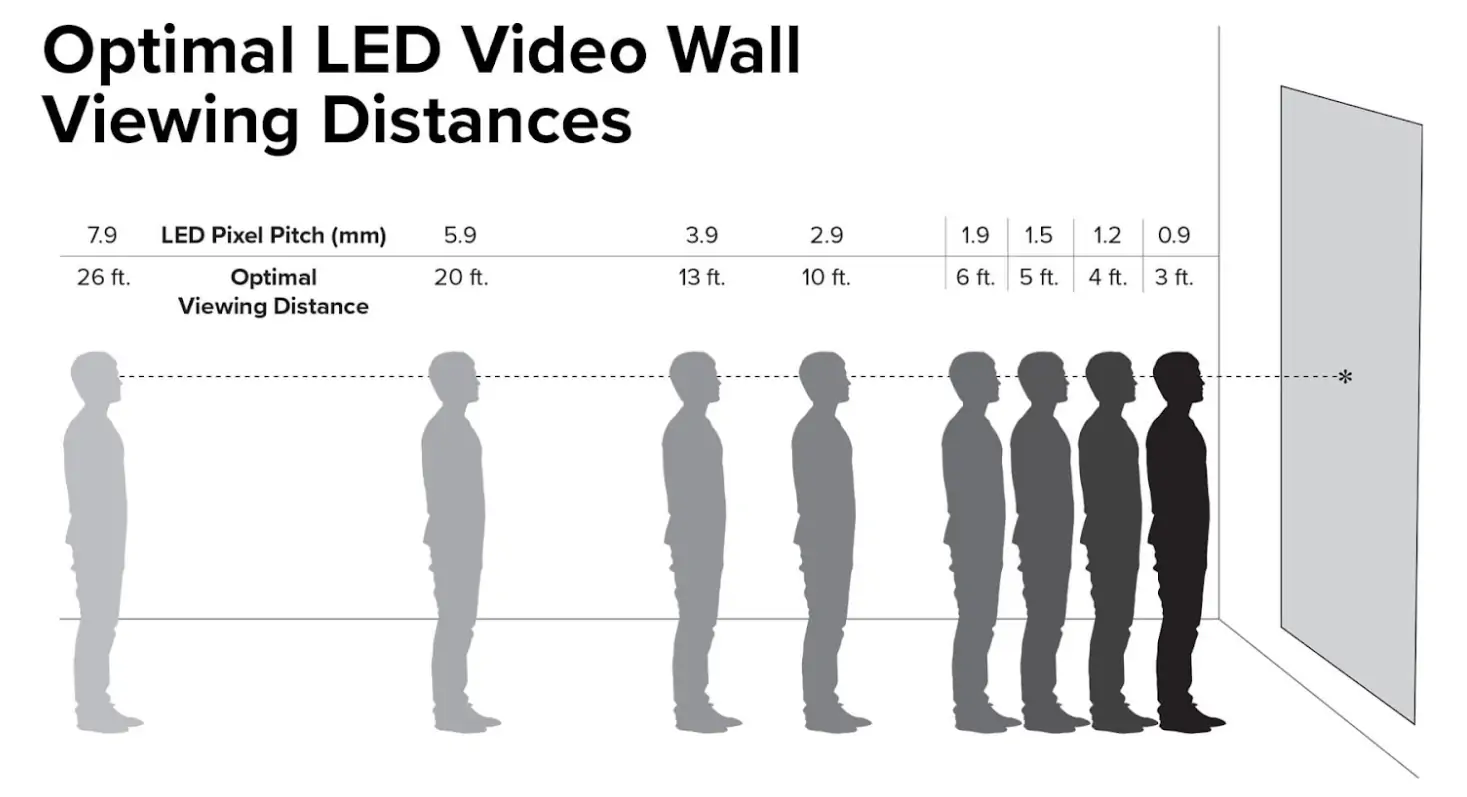
Approximate starting viewing distance (m) ≈ Pixel pitch (mm)
5.4 Improve Brand Awareness
In public places, high-resolution LED screens stand out amidst the noise, attracting attention and strengthening the brand image through sharp, high-quality visual storytelling.
In short, better resolution means better perception, and better perception can enhance brand awareness and recall. You also can custome resolution according to your needs.
5.5 Color Depth and Gradient Accuracy
High resolution would not just increase clarity, but also enhance the perception of color accuracy and gradients.
The greater the pixel count, the more accurately LED displays may depict minor variations in hues and shadows, making the image look more natural and lively.
This is especially relevant in use like an art exhibition, movie production, or product exhibition where visual realism is significant.
5.6 Forward-Compatible
Investing in high-resolution LED displays is a smart way to future-proof your visual infrastructure.
As content standards continue to evolve (from Full HD to 4K resolution and now 8K resolution), having displays capable of supporting higher resolutions ensures long-term compatibility with future media formats and playback systems.
High-resolution LED screens safeguard your investment and keep your displays relevant for years to come.
Anyway, LED screen resolution is very important as it determines how clear, vivid, and immersive the content is. It is also a vital factor to consider when your ads need high clarity and accurate color consistency.
6. 7 Critical Factors Affecting LED Wall Resolution?
What are the key factors? There are totally 7 factors affecting LED screen solutions. Among them, pixel pitch, screen size, and viewing distance are the most important elements. Let’s get together to observe the secret behind LED wall resolution.
6.1 Pixel Pitch
The pixel pitch is the distance between the two adjacent pixels, typically measured in millimeters. A finer pixel pitch implies more pixels per square meter, which directly influences how sharp and clear the image appears.
6.2 LED Display Size
The physical LED screen dimensions would determine how many pixels it can have in both the vertical and horizontal directions. Having more pixels on a large LED screen is significant in creating high resolutions like full HD or 4K.
6.3 Viewing Distance
The distance between the viewer and the LED wall will decide the needed LED screen resolution. This is the reason why fine-pitch screens are only applied to indoor displays whereas larger pixel pitches are suitable for outdoor environments or distant applications.
6.4 LED Types
The LED screen resolution is also affected by the type of LED technology adopted such as SMD, DIP, COB and GOB. As an example, SMD LEDs are suited to high-resolution displays since they are compact and densely packed compared to traditional LEDs, permitting smaller pixel pitches.
6.5 Content Source
With a high-resolution LED wall, the content still needs to at least be as high res as the wall otherwise the content will appear fuzzy on it. Using a 4K LED screen to play low resolution content (e.g. 720p) will produce blurry images.
6.6 Budget
High resolution LED displays require fine pixel pitches, which involve more LEDs per square meter and more advanced manufacturing processes that add significantly to the cost.
6.7 LED Controller and Processing Capability
The required LED display resolution should be supported by LED controllers and video processors. Entry-level systems are capable of up to 1080p, whereas more advanced systems do 4K or 8K.
When the controller doesn’t support high-resolution display content, the screen will downscale the image, thereby decreasing the clarity and quality.
All in all, LED wall resolution was mainly influenced by pixel pitches, screen sizes, viewing distances, LED types, content sources, budgets, and LED controller and processing capability. Whether you want to buy a low or high resolution LED screen for events, these factors help you make the right choice for sharp and crisp image quality.
 EagerLED Holiday Notice 2025:Dragon Boat Festival
 Mobile Billboard Advertising: Benefits, Costs and How It Works
Related Posts
Fill In Your Needs In Detail
Fill in the screen usage scene and size you need in “Content”.You will get a quote.