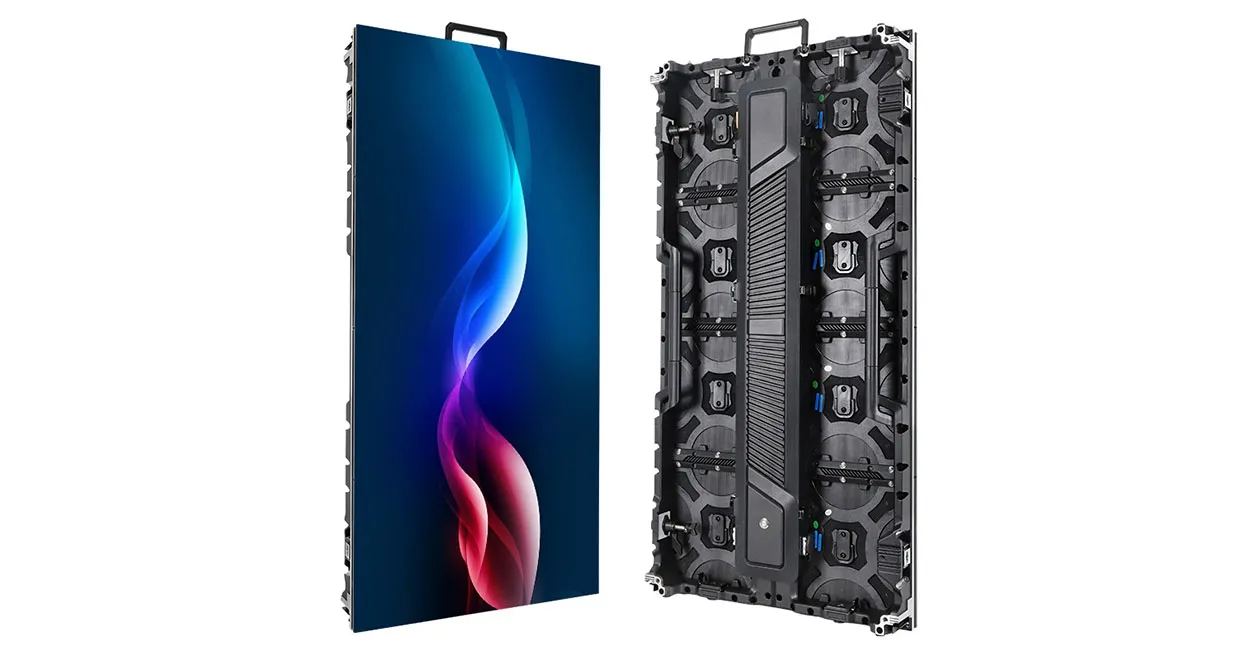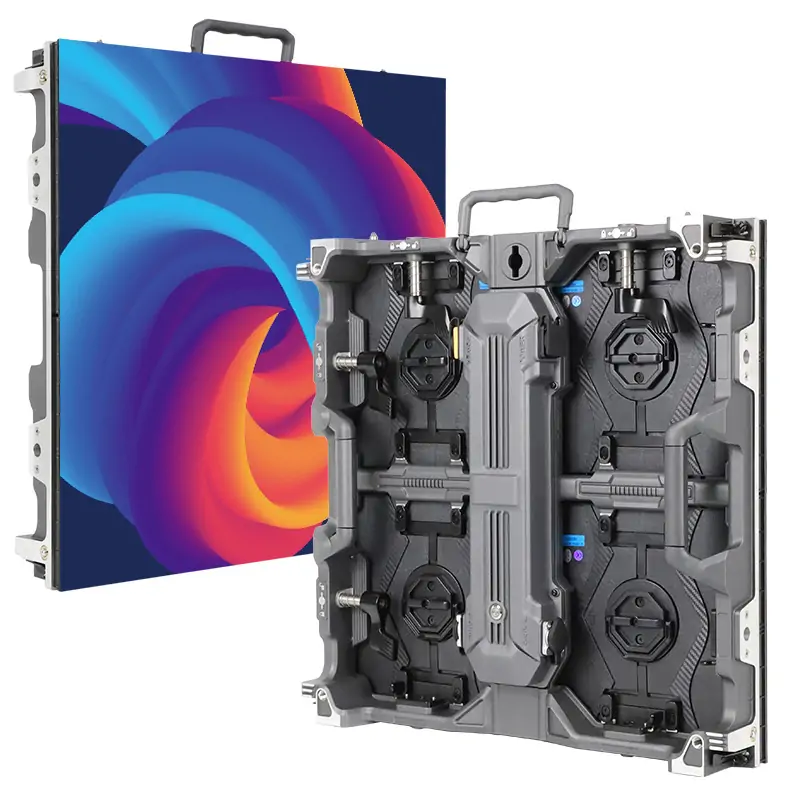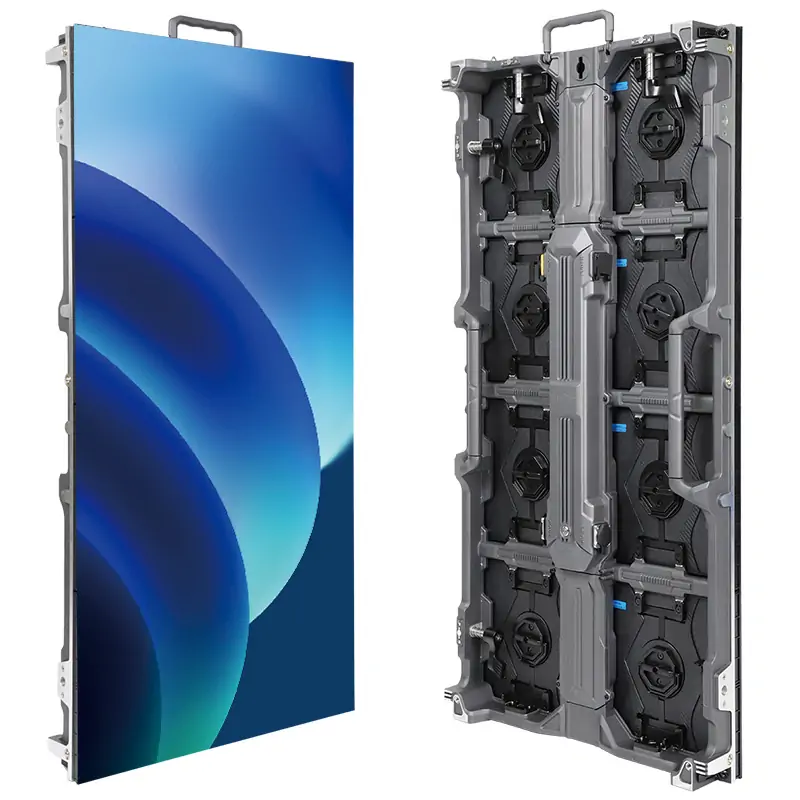
An indoor LED screen, an outdoor LED screen, and flexible LED screens solve different display problems. Indoor systems suit controlled spaces, outdoor systems address environmental exposure and daylight, and flexible construction enables curved surfaces. Choosing well means matching the display to the audience, location, content, and maintenance plan.
Quick answer: Choose indoor equipment for a suitable interior environment and outdoor-rated equipment wherever exposure demands it. Choose flexible LED screens when the design requires an approved curve. Flexibility does not establish weather resistance, and an outdoor rating does not establish image quality at close viewing distances. Confirm both requirements on the exact proposed model.
This EagerLED guide compares the options, explains the specifications that affect your purchase, and provides practical checks for quotations and installation. Product capabilities vary by configuration; examples and calculations below are planning tools rather than promises for every screen.
1. Understanding Indoor LED Screens
01. What is an indoor LED screen?
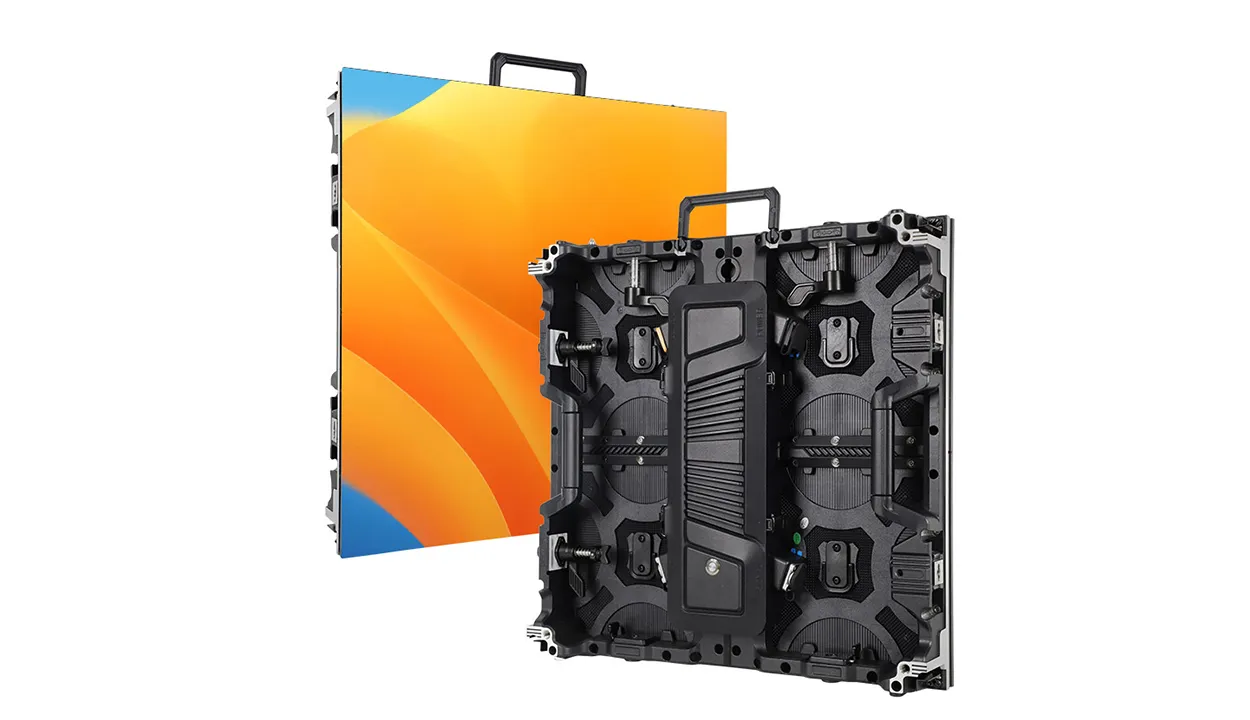
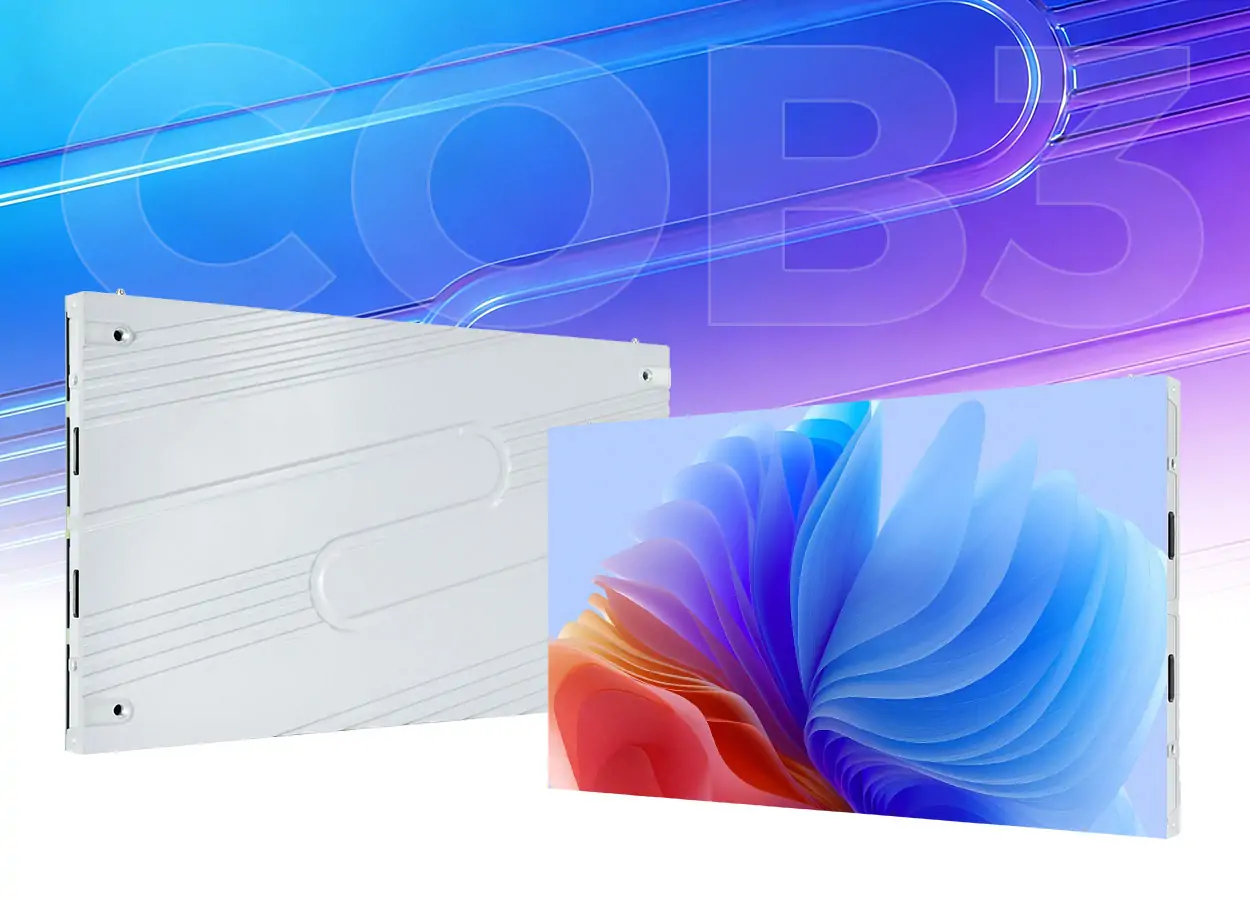
An indoor LED screen is a direct-view display assembled from LED modules or cabinets for interior use. The LEDs form the visible image rather than illuminating an LCD panel from behind. Typical projects include meeting rooms, retail walls, exhibition spaces, churches, and control rooms. Screen dimensions depend on the available cabinet or module grid.
An indoor LED screen often serves people standing relatively close to it. Small text, product detail, and dark image areas can therefore matter more than maximum brightness. A display showing spreadsheets needs a different resolution target from one showing large logos across a lobby. Define the smallest important content before choosing hardware.
02. Which features matter inside?
Evaluate pixel pitch, native resolution, color uniformity, low-brightness grayscale, and operating noise. Check the picture at the intended room brightness, not only in a brightly lit showroom. An indoor LED screen that looks impressive at full output may need careful adjustment for comfortable viewing during long meetings.
Installation depth also matters. Front-service modules can help where rear access is limited, but technicians still need clearance and safe access to the wall. Verify how power supplies and receiving cards are removed. A slim cabinet does not eliminate the space needed for mounting, cables, and ventilation.
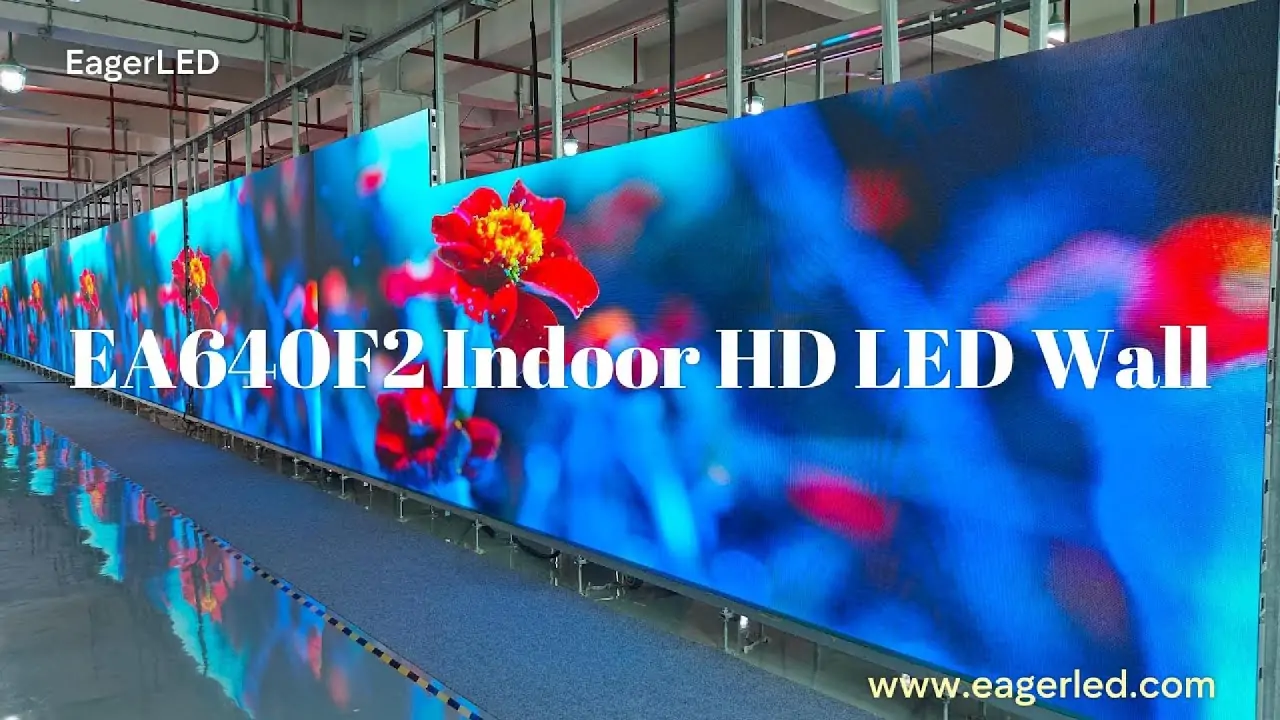
Use the EagerLED indoor LED screen range to shortlist products after measuring the site. Ask for the exact resolution and cabinet arrangement of the proposed wall, rather than relying on labels such as “HD” or “ultra-clear.”
2. Exploring Outdoor LED Screens
01. What makes an outdoor LED screen different?
An outdoor LED screen combines a display system with protection appropriate to its installation environment. Sunlight visibility, enclosure sealing, heat rejection, corrosion exposure, and structural loads all require attention. A covered entrance can still experience moisture, wind-driven rain, dust, and temperature changes, so a roof alone does not justify indoor equipment.
Outdoor applications include advertising façades, public information displays, stadium screens, and temporary event walls. Their requirements differ. A permanent roadside screen may need remote monitoring and scheduled dimming; a touring screen needs transport protection and approved assembly procedures. Confirm the intended use when requesting an outdoor LED screen quotation.
02. Evaluate brightness and weather protection separately
Brightness is usually expressed in nits, equivalent to candelas per square meter. The required output depends on ambient light, orientation, shade, content, and viewing conditions. Avoid treating one brightness number as suitable for every outdoor LED screen. Request a daytime demonstration or a comparable installation reference, plus a plan for reducing output after dark.
Ask for the ingress-protection rating of the relevant front and rear surfaces, together with its test scope. Inspect how cables, doors, joints, and service openings maintain protection. A module rating does not automatically establish the rating of an assembled installation. An IP claim also does not answer questions about wind loading, salt corrosion, or heat management.
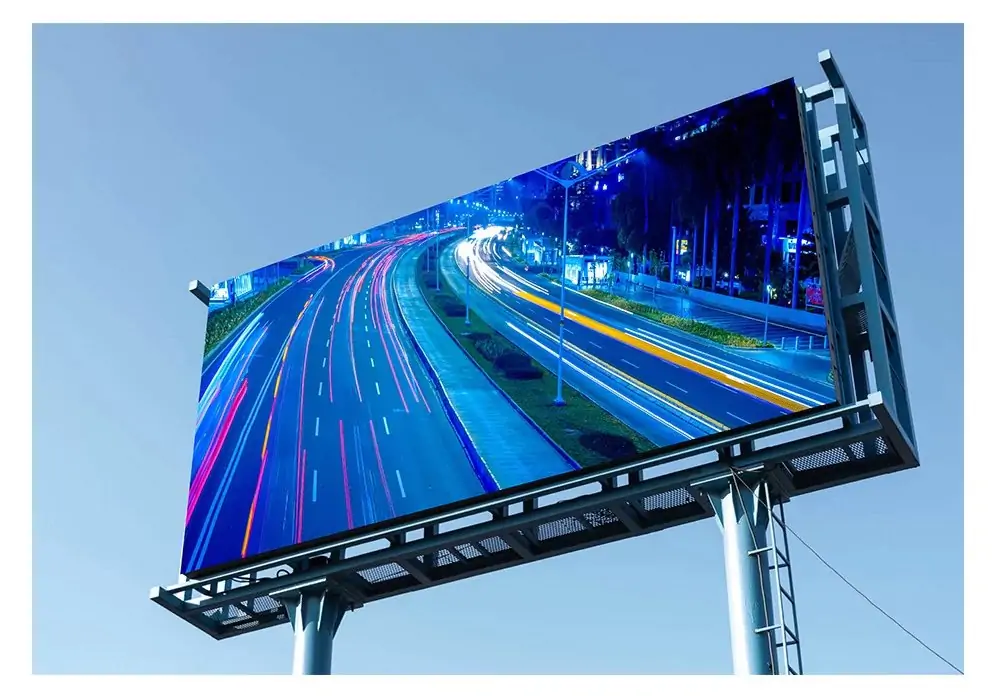
Start with EagerLED’s outdoor advertising display options, then confirm the selected configuration against the site. Specify the required service method and ask the installer to verify the mounting structure and electrical design.
3. The Flexibility of Flexible LED Screens
01. What are flexible LED screens?
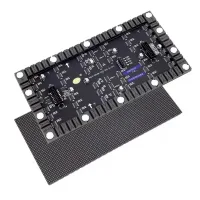
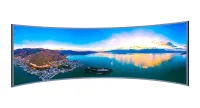
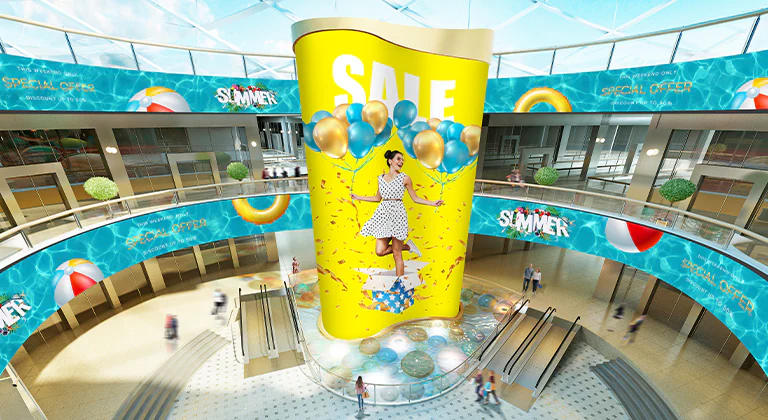
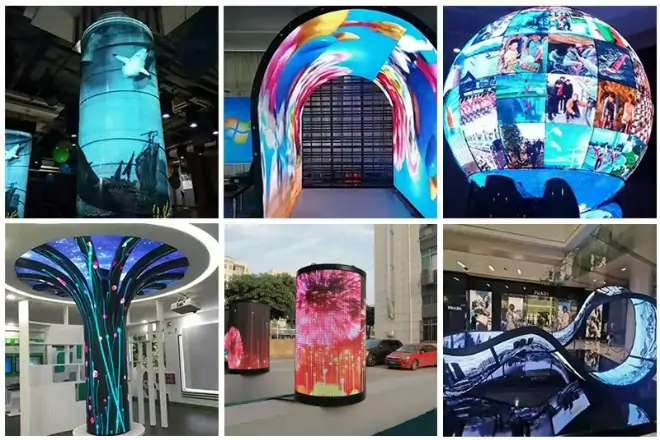
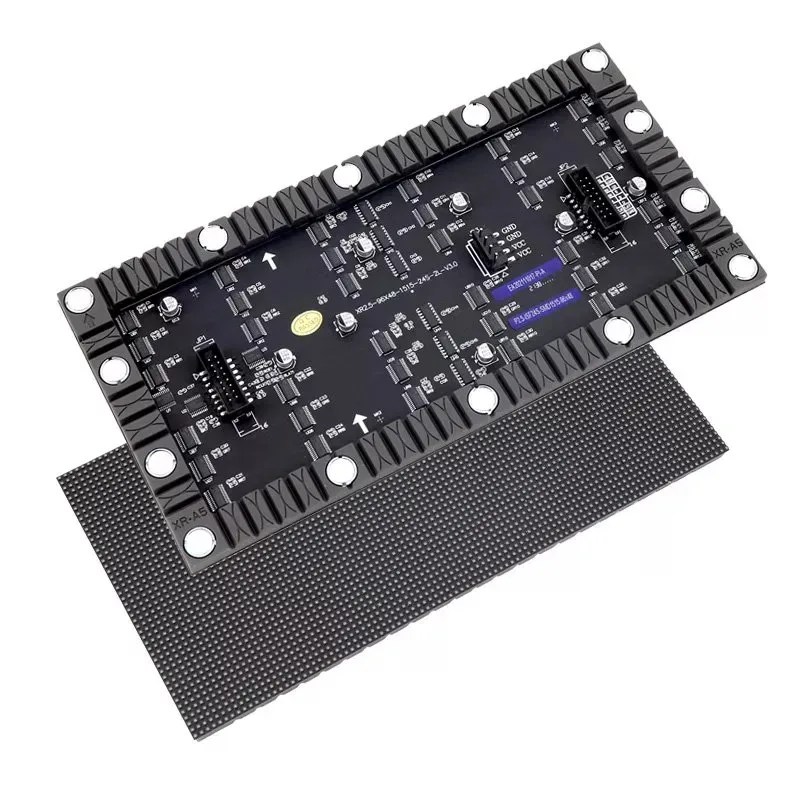
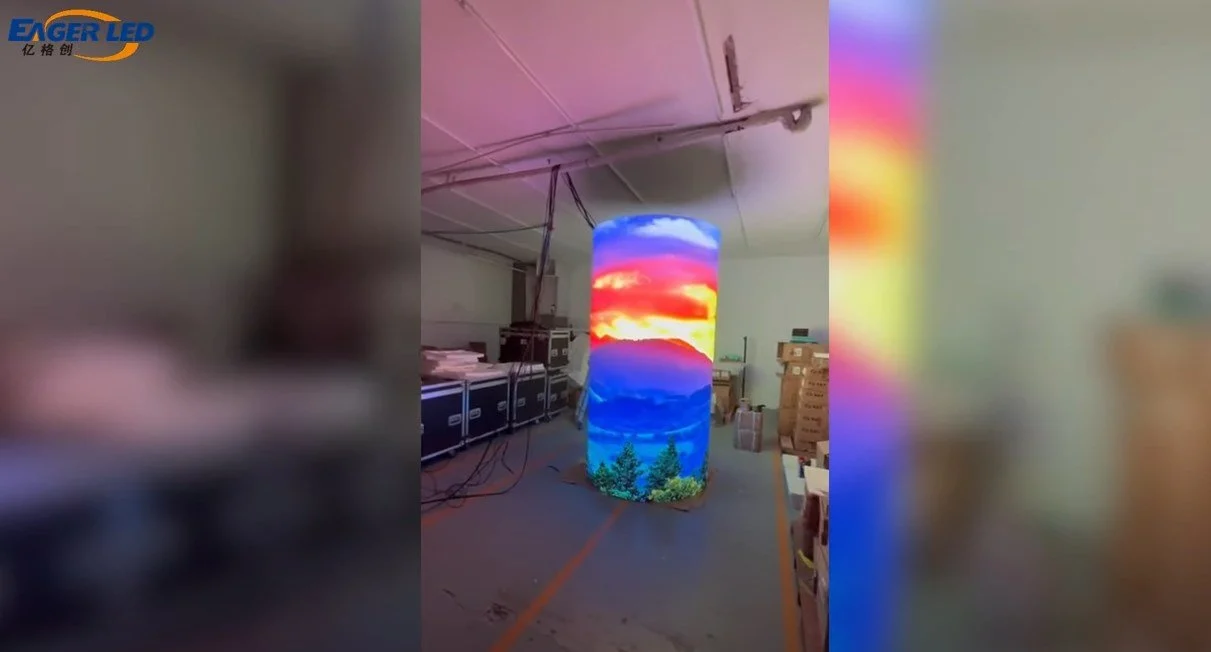
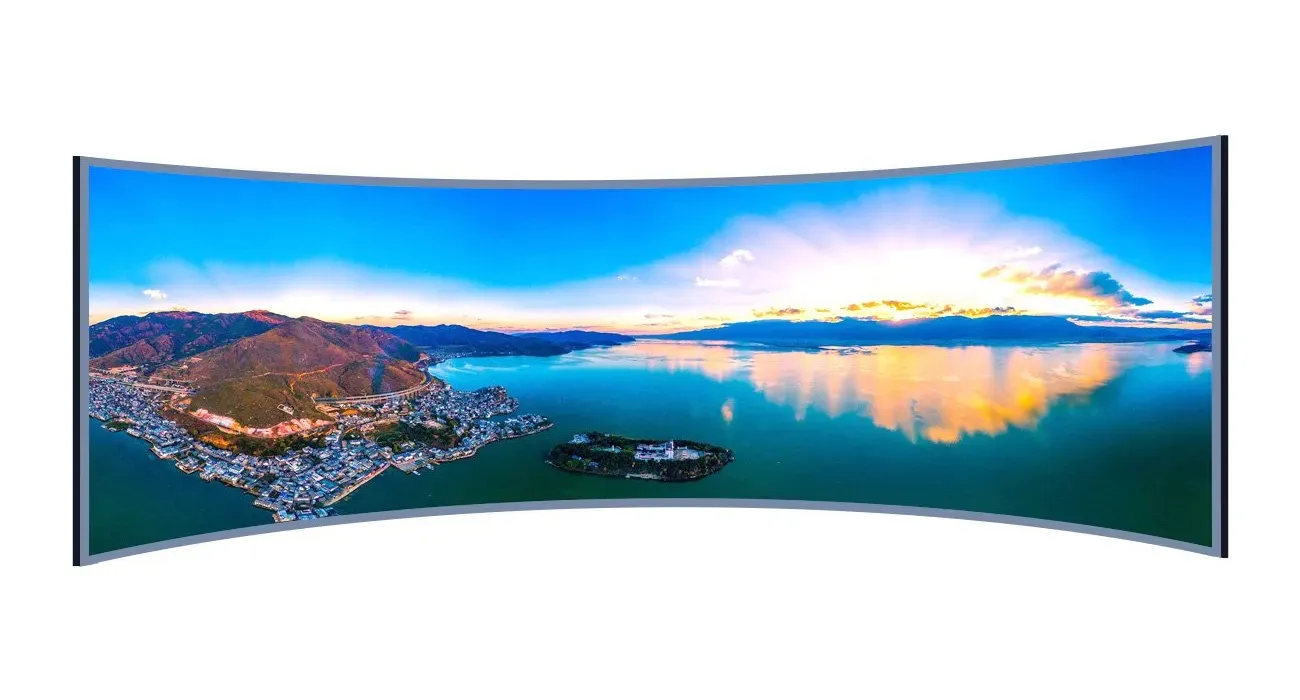
Flexible LED screens use modules designed to follow permitted curves. They can support cylinders, concave walls, convex features, and wave-shaped installations. A curved screen built from rigid cabinets is a different construction method; its curve comes from cabinet joints rather than a bendable module. Ask which approach the proposal uses.
The important distinction is that flexible LED screens can also be indoor products. EagerLED’s EA-Flex series is presented as an indoor flexible product with magnetic installation and front-service features. Do not assume that this establishes suitability for rain-exposed locations. An outdoor project needs explicit approval for the complete proposed configuration.
02. Understand bending limits and support requirements
Flexible LED screens need a defined minimum bend radius, permitted bending direction, and installation method. They do not stretch freely to fit every surface. Tight curves can create mechanical stress or visible alignment problems. Request a drawing showing module orientation, seams, mounting points, and access to service parts.
A flexible module is not the supporting structure. The frame must hold the intended geometry and provide a reliable attachment surface. Confirm whether the product is designed for a fixed curve or repeated handling. Do not assume that flexible LED screens can be rolled, folded, or reshaped indefinitely simply because a sample bends.
03. Compare the three approaches
| Selection factor | Indoor LED screen | Outdoor LED screen | Flexible LED screens |
|---|---|---|---|
| Main requirement | Image quality in an appropriate interior space | Visibility and protection under site exposure | Approved curved geometry and image mapping |
| Environment | Verify room conditions and ventilation | Assess weather, sun, dust and temperature | Indoor or outdoor suitability must be specified separately |
| Resolution choice | Often driven by nearby viewers and small text | Driven by actual viewing distance and message size | Driven by pitch, surface dimensions and viewing angles |
| Installation focus | Wall depth, noise and service clearance | Structure, sealing, drainage and safe access | Radius, frame accuracy, seams and module orientation |
| Common mistake | Choosing brightness instead of enough pixels | Treating a canopy as full environmental protection | Assuming bendability means weather resistance |
4. Why Select EagerLED for Your LED Display Needs?
01. Build a model-specific proposal
EagerLED offers product families for indoor, outdoor, and creative applications. The useful next step is a proposal that connects a particular model to your project requirements. Ask an indoor LED screen supplier to show the planned pixel map; ask an outdoor LED screen supplier to identify the environmental and installation assumptions behind the quote.
For flexible LED screens, request a drawing and a representative curved sample where practical. Check module dimensions, power-supply placement, controller selection, and repair access together. A compelling rendering is helpful for design approval, but it does not replace a buildable layout and component specification.
02. Verify quality and support evidence
Review EagerLED’s factory process information and request inspection records for your order. Agree acceptance criteria for pixel defects, alignment, color uniformity, and controller operation before production. Record the approved configuration so substitutions or revisions are visible to both purchasing and technical teams.
For any indoor LED screen or outdoor LED screen, clarify warranty scope, response process, replacement-part availability, and who pays repair freight. Flexible LED screens also need a replacement procedure that preserves their curve and calibration. Obtain written service responsibilities for your destination rather than assuming that international supply includes local on-site support.
5. Choosing the Right LED Screen for Your Needs
01. Start with the audience and content
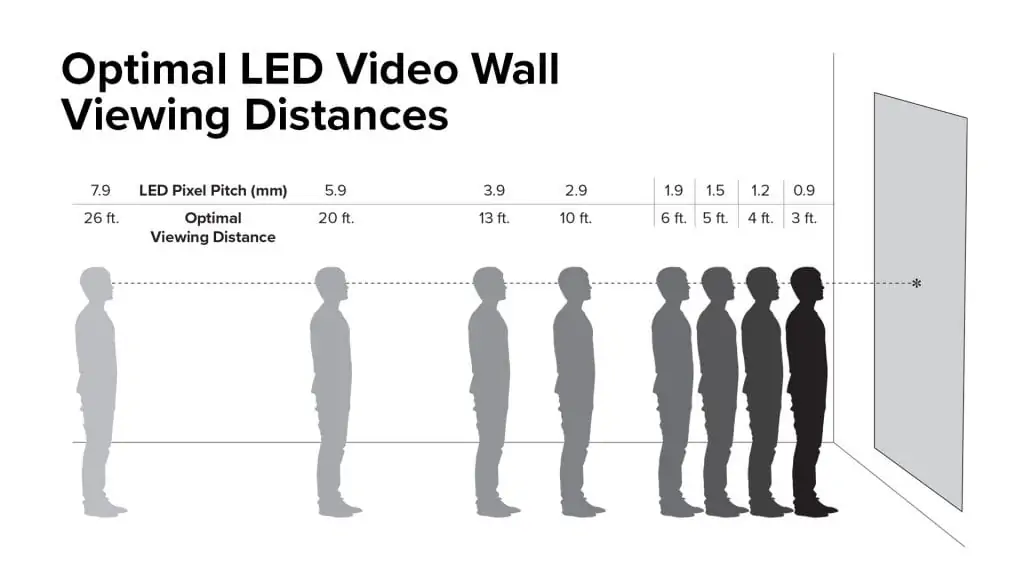
Measure the closest, typical, and farthest viewers. Then collect sample slides, advertisements, live video, or dashboards. Pixel pitch is the center-to-center spacing between adjacent pixels, measured in millimeters. Smaller pitch provides more pixels within the same physical area, but the benefit depends on what viewers need to see.
Planar’s pixel-pitch guide explains why viewing distance informs pitch selection. Use a sample-content test to refine the decision. A simple pitch-to-distance rule is only an initial estimate; font size, eyesight, contrast, and the intended experience change the result.
02. Calculate native resolution before comparing prices
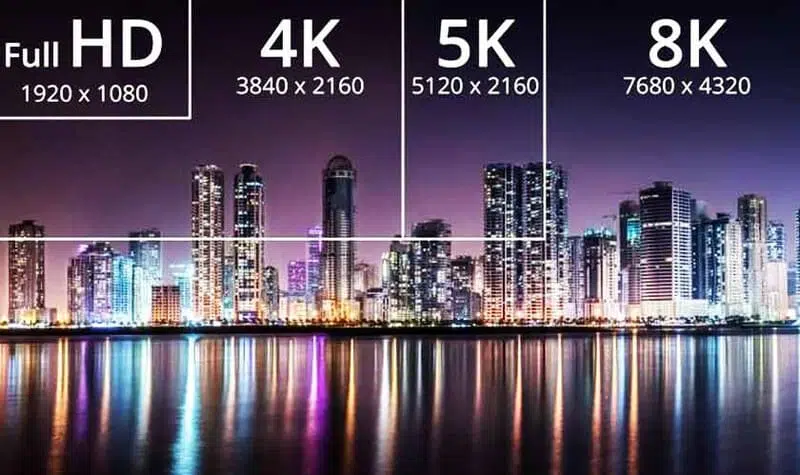
For a planning estimate, divide width and height in millimeters by pixel pitch. A hypothetical 4,000 × 2,000 mm screen at 2.5 mm pitch has 1,600 × 800 pixels. At 4 mm pitch, the same dimensions provide 1,000 × 500 pixels. Actual dimensions must fit the chosen module or cabinet grid.
This calculation applies to an indoor LED screen, an outdoor LED screen, and flexible LED screens. On a curved surface, use the developed surface dimensions along the curve rather than only its straight-line width. A controller accepting a 4K signal does not turn a smaller native pixel matrix into a physical 4K display.
| Item | Ask for | Acceptance check |
|---|---|---|
| Resolution | Pitch, cabinet matrix and full screen pixel map | Read the smallest intended text from the closest viewing point |
| Brightness | Calibrated output and operating range | Inspect the image under expected lighting and dimming settings |
| Environmental suitability | Rated surfaces, operating limits and installation conditions | Match documentation to the complete site exposure |
| Flexible geometry | Minimum radius, bend direction and frame drawing | Approve a representative curve and seam alignment |
| Power | Maximum and typical consumption with test conditions | Separate electrical capacity from running-cost estimates |
| Processing | Controller model, supported inputs and pixel capacity | Test the required source format and complete screen layout |
| Maintenance | Removal procedure, clearances and spare list | Demonstrate access to modules, supplies and receiving cards |
6. How to Select the Right Indoor and Outdoor LED Screen for Your Space
01. Survey mounting, power, and access
For an indoor LED screen, document wall construction, available depth, cable routes, room ventilation, and noise limits. For an outdoor LED screen, add screen orientation, weather exposure, structural loading, drainage, and access equipment. Ask qualified local professionals to establish the installation requirements for the actual building and location.
The technician must be able to reach every replaceable component. Front service does not mean zero clearance, and rear service needs a usable working route. On flexible LED screens, a narrow concave curve may make module removal difficult. Include the removal path in the design instead of discovering the obstruction after installation.
02. Compare total project cost and electricity use
Screen price depends on pitch, area, components, enclosure, geometry, and delivery scope. There is no dependable universal price per square meter for indoor LED screens, outdoor LED screens, or flexible LED screens. Compare quotations with the same resolution, dimensions, controller, installation responsibility, and spare-parts provision.
| Budget item | What to include | Question for the supplier |
|---|---|---|
| Display and control | Modules, cabinets, receiving cards, processor and player | Does the controller support the complete resolution and required inputs? |
| Supporting structure | Frame, trim, mounting hardware and engineering | Who provides and approves the site-specific design? |
| Power and cooling | Distribution, cabling, ventilation and any active cooling | Which maximum-load and heat figures support the design? |
| Creative installation | Custom framing, mapping and sample approval | Are curved-surface content preparation and commissioning included? |
| Delivery and installation | Packing, transport, access equipment and labor | What is excluded from the quoted delivery term? |
| Lifecycle support | Spares, training, maintenance and repair logistics | How long might a replacement take to reach the site? |
Estimate display energy using average W/m² × area × operating hours ÷ 1,000. A hypothetical 12 m² screen averaging 180 W/m² for 10 hours uses 21.6 kWh per day. Add control equipment and cooling where relevant, then apply the local tariff. This is an illustrative calculation, not a measured EagerLED product figure.
Compare average power at equivalent brightness and content. Maximum power helps the electrical designer size the system, while typical power helps estimate running costs. Flexible LED screens are not automatically more efficient because they bend. Likewise, a voltage label alone cannot establish whole-system energy savings.
03. Test and document the finished system
Inspect solid colors, dark gradients, moving content, and the final pixel map before accepting delivery. Record agreed settings and outstanding defects. At commissioning, test restart behavior, source switching, schedules, and recovery from a disconnected signal. Keep controller configuration and calibration backups with the handover documentation.
For indoor LED screens and outdoor LED screens alike, reserve compatible spare modules and record their identifiers. Flexible LED screens need spares compatible with the installed geometry as well as electronics. Ask how color matching will be handled when a module is replaced after the rest of the wall has aged.
7. How to Use Flexible LED Screens for Greater Impact
01. Design flexible LED screens around the viewing path
Identify where people approach, pause, and leave. A cylindrical display may be visible from many directions, but a single viewer cannot read every part at once. Place key messages within the visible arc, repeat essential information where appropriate, and avoid putting small text across a sharp change in direction.
Prepare content for the installed pixel map. Flexible LED screens may need a wide custom canvas, segmented zones, or geometric correction. Ask the content team to review a mapping template before producing final media. A standard rectangular video stretched around a curve can distort logos and make important information difficult to read.
02. Prepare flexible LED screens for events and cameras
For sports or live events, check sightlines, camera positions, content timing, and the approved mounting arrangement. Flexible LED screens used as decorative features do not automatically qualify as impact-protected perimeter displays. Where players or spectators could contact the installation, ask for an application-specific design.
Test the intended camera, shutter setting, and frame rate with the selected panels and controller. Brompton’s refresh guidance illustrates why LED timing and camera exposure need to work together. A refresh-rate headline alone cannot promise a clean camera image, and processor features depend on compatible hardware.
03. Keep flexible LED screens practical to maintain
Give technicians a safe route, suitable removal tools, and clear module identification. Schedule inspections for loose attachments, blocked ventilation, and visible seam changes. Follow the model’s cleaning instructions and handling limits. Flexible LED screens should deliver a creative result that the operating team can also maintain.
8. Conclusion: Match the Screen to the Project
Choose an indoor LED screen around its audience and interior conditions, an outdoor LED screen around visibility and exposure, and flexible LED screens around approved geometry and environmental suitability. Confirm the decision with model-specific specifications, real content, a complete budget, and a service plan.
Send EagerLED your project brief with location, dimensions, viewing distances, content examples, mounting method, and completion date. For flexible LED screens, include a drawing of the desired curve. These details help turn a general product inquiry into a proposal you can compare and approve.
9. Indoor, Outdoor, and Flexible LED Screens FAQ
01. Can an indoor LED screen be used outside under a roof?
Only if the exact system is approved for the actual conditions. A roof may reduce direct rain but does not remove humidity, dust, condensation, or temperature variation. Ask the supplier to assess the location and specify an outdoor LED screen where exposure requires it.
02. What makes flexible LED screens suitable for outdoor use?
Suitability comes from the complete design: appropriate enclosure protection, sealed connections, suitable materials, thermal management, and documented operating conditions. Bendability alone provides no weather rating. Request the front and rear protection details and installation requirements for the specific outdoor flexible system.
03. What is the best indoor LED screen pixel pitch?
There is no single best pitch. Choose from the closest viewing distance, screen dimensions, and smallest content that must remain readable. Compare sample content on the proposed model. A finer pitch is useful when it adds visible detail, but may be unnecessary for distant viewers.
04. Are flexible LED screens more expensive than flat screens?
Compare complete projects rather than modules alone. Flexible LED screens may require custom framing, mapping, and additional commissioning. A flat installation may be simpler, but pitch, size, components, and service access can outweigh shape. Request equivalent specifications before comparing prices.
05. Can flexible LED screens show live sports video?
Yes, when the selected controller and display support the required signal and performance. Confirm input format, scaling, latency, viewing angles, and camera behavior. For outdoor events, environmental suitability must also be verified. Curved construction by itself does not establish broadcast or stadium suitability.
06. Do 48 V DC systems automatically make flexible LED screens more efficient?
No. At equal power, higher distribution voltage reduces current and can reduce cable losses for a given resistance. Overall efficiency still depends on conversion losses, cable layout, LED drive, brightness, and content. Ask for measured system power; do not infer savings from the voltage label alone.
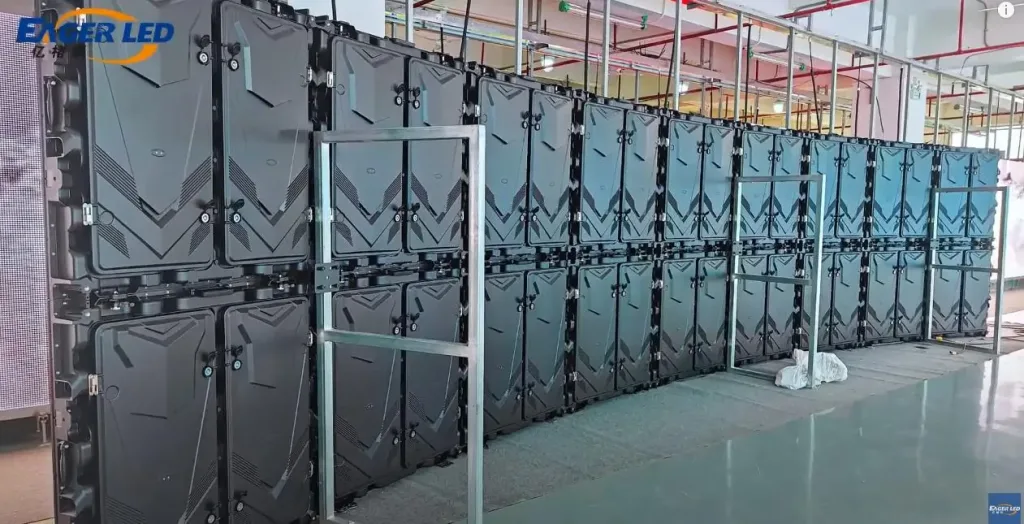 298Pcs EA960R3 Advert Displays Will be Shipped to Mexico
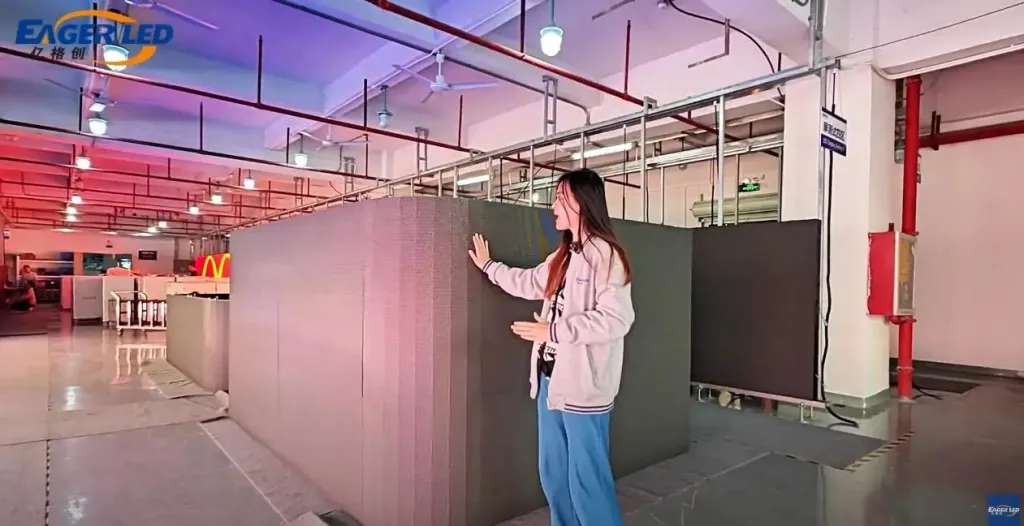 EagerLED Finished EA500H8V Right-Angle Rental LED Display
Related Posts
Fill In Your Needs In Detail
Fill in the screen usage scene and size you need in “Content”.You will get a quote.