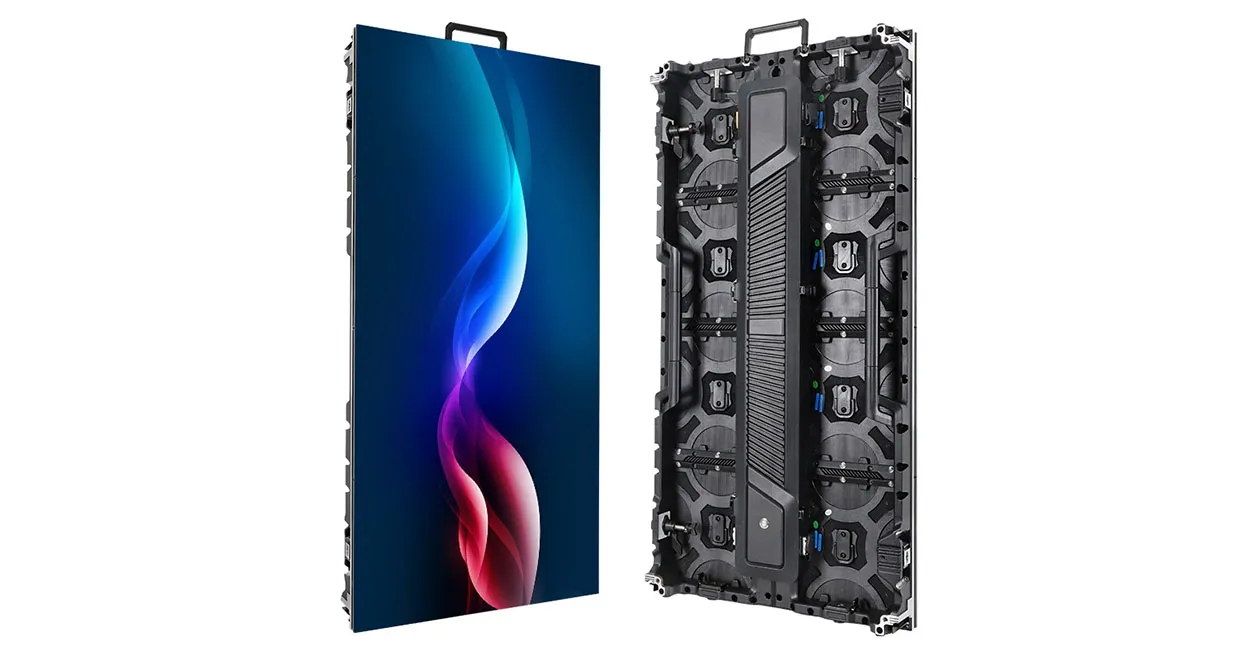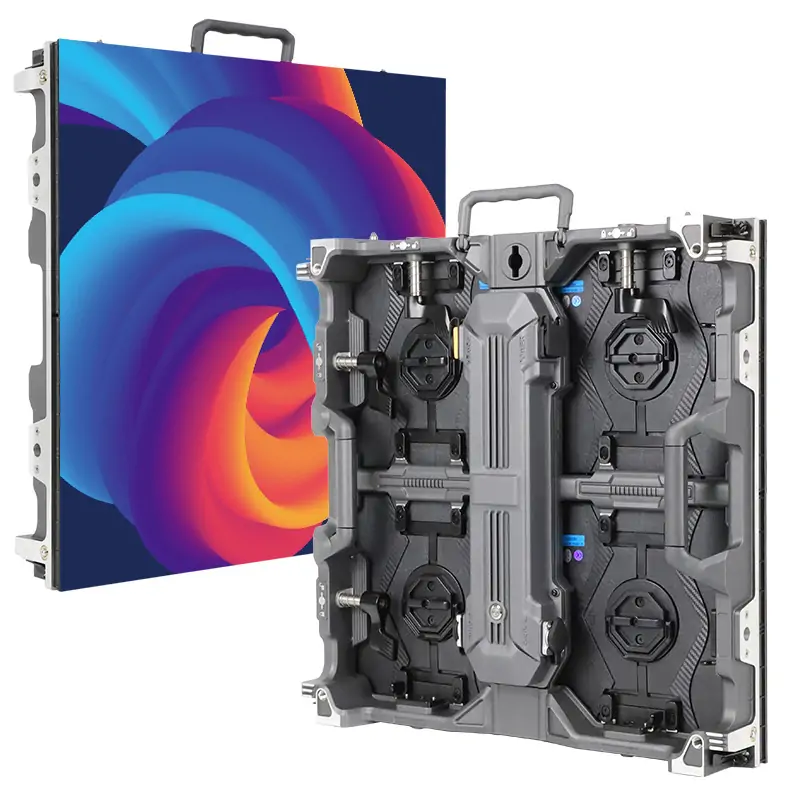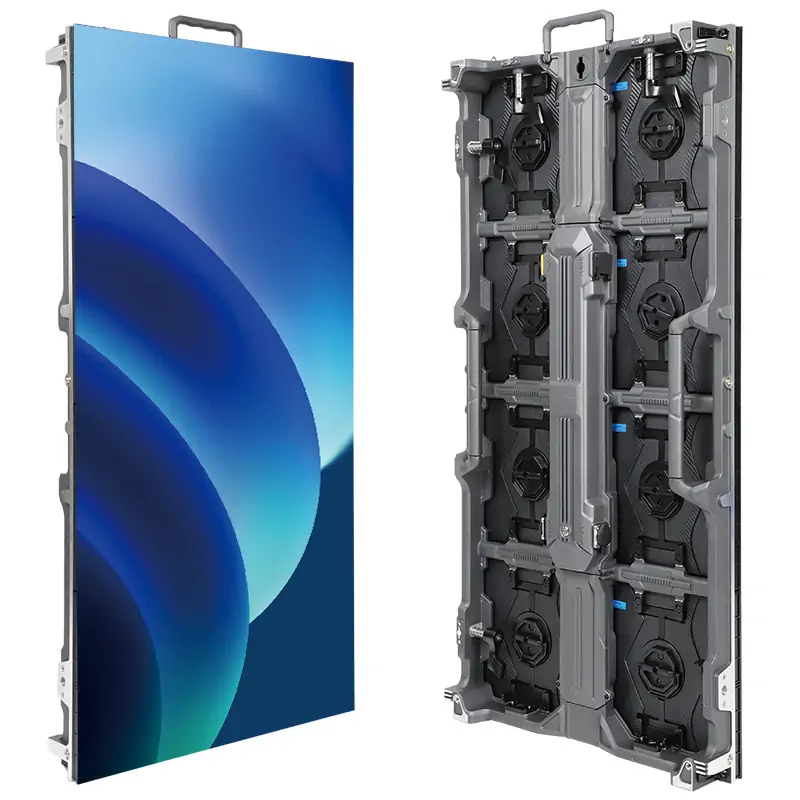
A translucent LED screen is a see-through LED display built from thin rows of LEDs with open gaps between them, so light and the view behind pass through while the screen shows video. “Translucent,” “transparent” and “clear” LED screen describe the same product family. How see-through it is depends on the transparency rate, the share of open area in the panel. EagerLED’s outdoor EA500TOR1 and EA1000TOF2 are specified at 60%. The trade-off is resolution: wider gaps let more light through, and finer pitch gives a sharper picture but blocks more of the view.
This guide is for event and rental companies, retail designers and facade integrators deciding whether a translucent LED screen fits a project. It explains how the screens work, what the transparency figure means, where they perform well and where they don’t, and how EagerLED’s indoor, outdoor and rental models compare.
1. What Is a Translucent LED Screen?
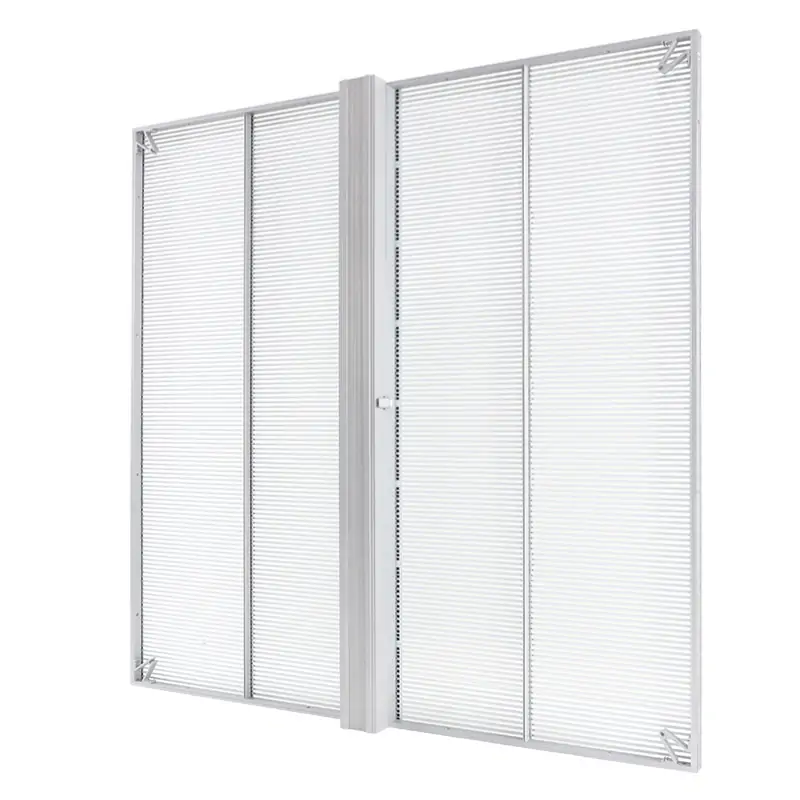
A translucent LED screen replaces the solid module of a normal LED wall with an open frame of LED strips. Each strip carries a line of red, green and blue LEDs, and the strips are spaced apart so most of the panel is open. Up close you see the strips and the scene behind them. From a normal viewing distance the strips blend together, and the picture appears to float over the background.
The terms overlap. Manufacturers and buyers use “translucent,” “transparent,” “see-through” and “clear” LED screen for the same kind of strip-based cabinet. EagerLED’s own product names use several of them. What separates products is not the label but the transparency rate, pixel pitch, cabinet size and whether the screen is built for indoor, outdoor or rental use.
It is also different from LED film. Film is a thin, flexible layer bonded directly to glass, while a translucent screen is a rigid cabinet that stands or hangs on its own. Our comparison of transparent LED screens vs LED film covers when each one fits.
2. What Does the Transparency Rate Mean?
The transparency rate is the open area of the panel divided by its total area. A 60% rate means about six tenths of the surface lets light pass, and the rest is taken up by LED strips and frame.

Two things follow from that definition. First, transparency and resolution pull against each other: packing the strips closer for a finer pixel pitch leaves less open area. Second, the figure is a geometric ratio, not a promise of how the screen looks in every setting. Perceived transparency also depends on how bright the scene behind is, how bright the content is, and how much of the frame is dark. Black areas in the content are simply LEDs switched off, so they read as see-through. That’s why designers often use dark backgrounds to make objects appear to float.
When you compare quotes, ask each supplier how the transparency figure was calculated and at which pixel pitch. Two screens quoted at the same rate can look different if one uses wider strips at a coarser pitch, so a short sample video or a site visit is worth more than the number alone.
3. Where Does a Translucent LED Screen Work Best?
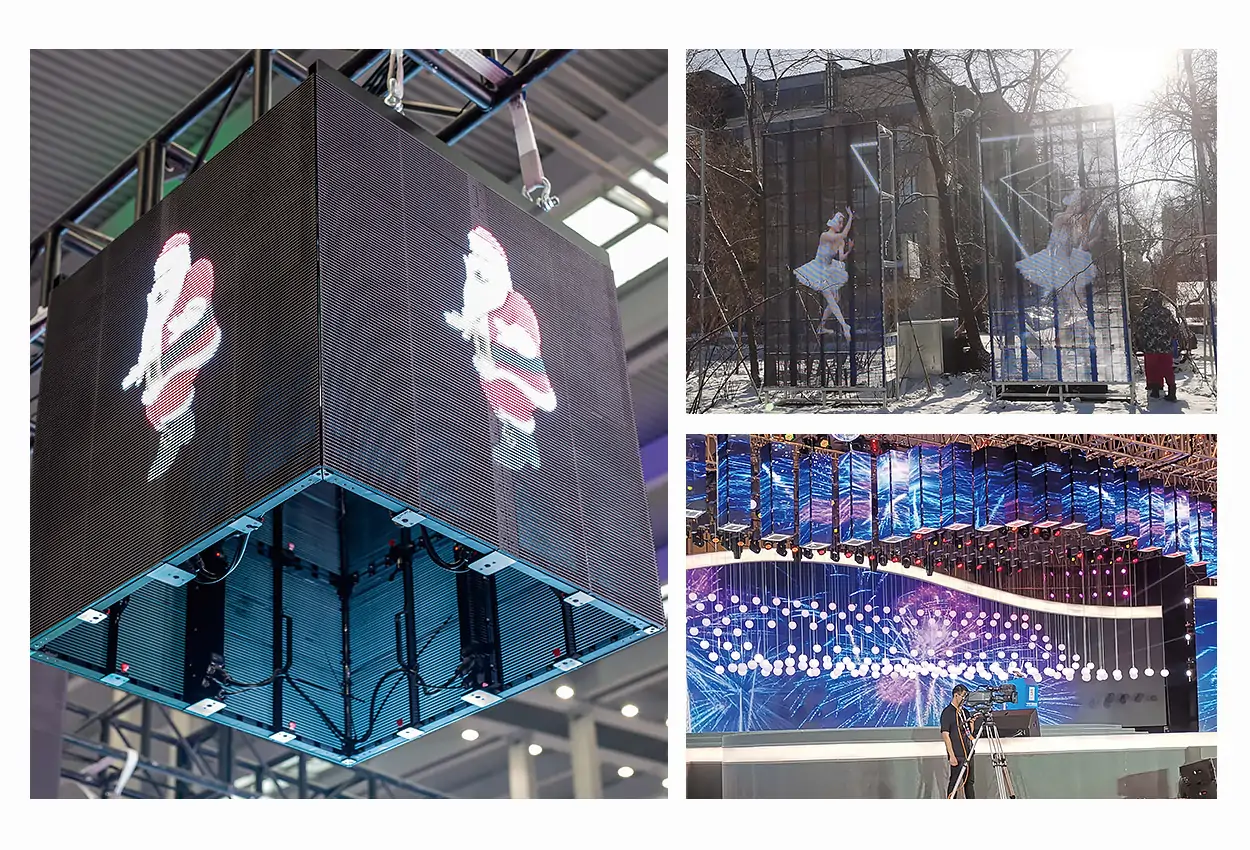
A translucent LED screen works best where you want moving images without blocking light, sightlines or architecture. Common uses include:
- Glass facades and shop windows: content faces the street while daylight still reaches the interior and people inside can see out.
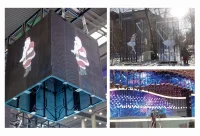
- Stages and concerts: layered scenery, with performers or lighting visible through the screen, as in the applications EagerLED shows for its EA500TOR1.
- Hanging cubes and columns: lightweight open cabinets suit suspended shapes and square columns that would be heavy as solid walls.
- Exhibitions and showrooms: product displays behind the screen stay visible, so the screen adds to the space rather than hiding it.
4. EagerLED Translucent LED Screen Models Compared
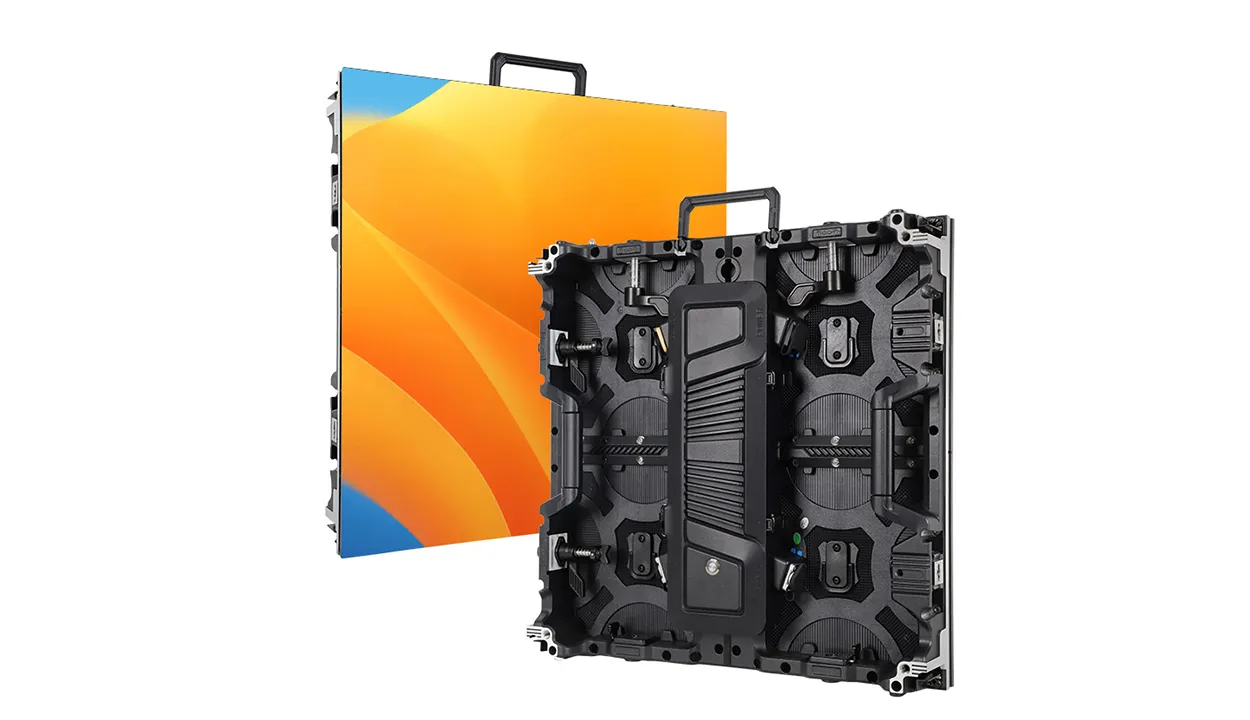
EagerLED offers see-through models for outdoor rental, outdoor fixed and indoor fixed use. The table summarizes the published features of each.
| Feature | EA500TOR1 | EA1000TOF2 | EA1000TiF2 |
|---|---|---|---|
| Main use | Outdoor rental and events | Outdoor fixed installation | Indoor fixed installation |
| Cabinet size | 500 × 500 mm (19.7 × 19.7 in) | 1000 × 1000 mm (39.4 × 39.4 in) | 1000 × 1000 mm or 1000 × 500 mm |
| Transparency | 60% | 60% | Up to 60% |
| Protection | IP65 | IP65 | Indoor |
| Notable features | −10° to 15° curve lock; splices with EA1000TOR1 for columns and cubes | Openable rear cover; lightweight cabinet | 5000 cd/m² brightness; 6.5 kg (14.3 lb) cabinet; rear maintenance |
Pixel pitch, brightness for the outdoor models and exact weights vary by configuration, so confirm them on the EA500TOR1 and EA1000TOF2 product pages or in your quotation. The full range is on our transparent LED display page.

5. What Are the Limits of a Translucent LED Screen?
See-through screens are not a replacement for a solid LED wall in every case. Plan for these limits:
- Lower resolution for the size: open gaps mean fewer pixels per square meter, so fine text and detailed images need more viewing distance or a solid screen.
- Background competes with content: a busy or very bright scene behind the screen reduces contrast. Content with dark backgrounds and bold shapes reads best.
- Brightness in sunlight: outdoor and window-facing screens need enough brightness for the site. Our guide to LED screen brightness in nits explains how to size it.
- Viewing from behind: people on the other side see the back of the strips and wiring, so plan where cables and frames run if the rear is on show, for example inside a shop.
- Structure and wind: open cabinets catch less wind than solid ones, but hanging and facade installs still need engineered rigging and fixings.
6. How to Choose a Translucent LED Screen
Start from the viewing distance and the view you need to keep, then match the model to the installation type.
- Viewing distance: closer viewers need a finer pitch, which lowers transparency. Decide which matters more for the site.
- Indoor, outdoor or rental: outdoor sites need IP65 protection and enough brightness; touring events need fast locks and curve options.
- Installation method: ground stack, hanging, behind glass or column builds each need different cabinet sizes and fixings.
- Content plan: budget for content designed for see-through use, with dark backgrounds and strong shapes.
- Service access: check whether modules or power can be reached from the rear or front once the screen is installed.
Frequently Asked Questions
Is a translucent LED screen the same as a transparent LED screen?
Yes, in practice. Both terms describe strip-based see-through LED cabinets. Compare products on transparency rate, pixel pitch, brightness and cabinet design rather than on the name.
Can people see through the screen while it is playing video?
Yes. The open gaps stay clear whatever is playing, and dark parts of the content are switched-off LEDs, so the background shows through them. Bright, full-frame content reduces how much of the background viewers notice.
Can a see-through LED screen be installed behind a shop window?
Often, yes. A window install is an indoor fixed install, which is what models such as the EA1000TiF2 are built for. Confirm the mounting method with your supplier, check brightness against the daylight on the window, and leave access for service.
Are see-through LED screens suitable for rental use?
Models built for it are. The EA500TOR1 is designed for outdoor rental with a 500 × 500 mm cabinet, IP65 protection and a curve lock for creative builds.
Getting a Quote for Your See-Through Display
For an accurate quote, tell us the screen size, viewing distance, whether it will be indoor, outdoor or touring, how it will be installed, and how much of the view behind it must stay visible. EagerLED can then recommend the right model, pixel pitch and brightness and share the full specification sheet. Send your project details to get started.
 LED Screen Burn-In: Does It Happen on LED Video Walls?
Related Posts

Fill In Your Needs In Detail
Fill in the screen usage scene and size you need in “Content”.You will get a quote.