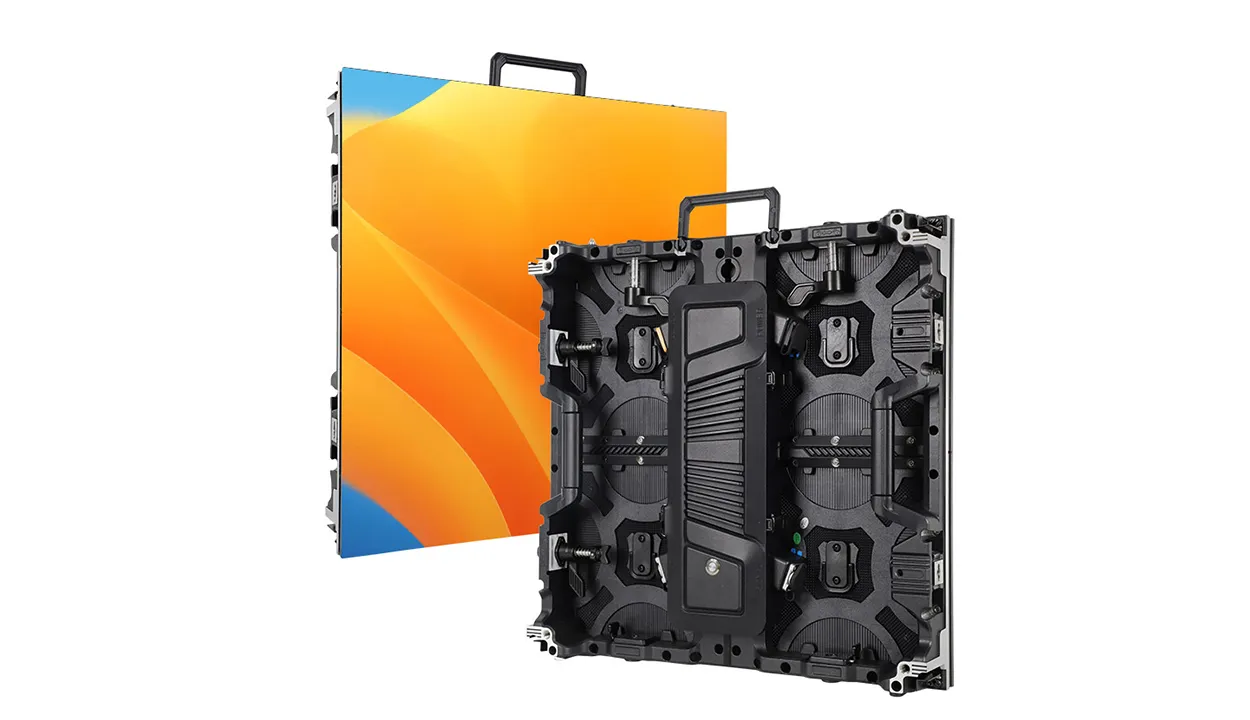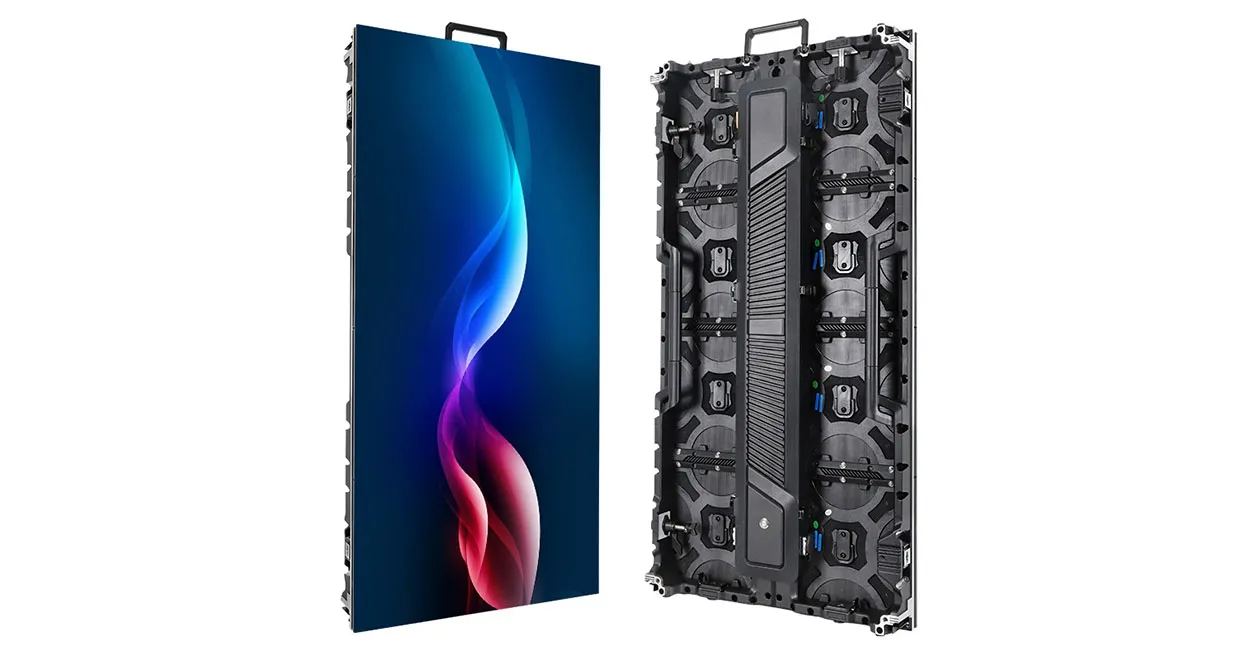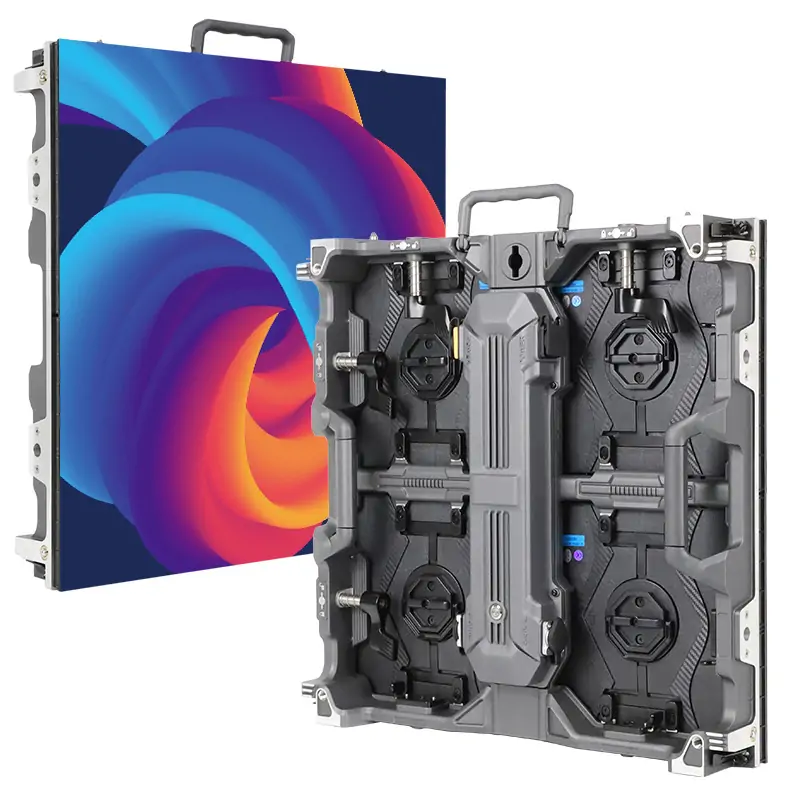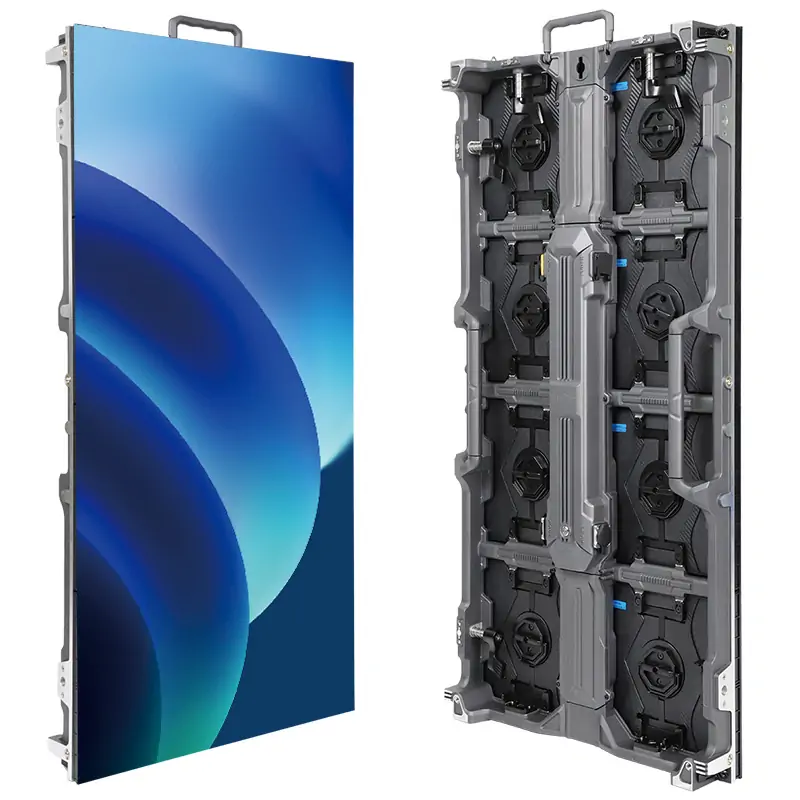
LED advertising screens help businesses display promotions, brand messages, and timely information in physical locations. Their value depends on the audience, the content, and reliable operation. A bright display alone does not guarantee more customers. This guide explains how to plan LED screen advertising, choose suitable equipment, budget for ownership or media space, and measure useful business outcomes.
LED advertising boards and advertising screens often describe the same direct-view display technology. Before requesting a quote, decide whether you want to buy a permanent installation, rent equipment for an event, or purchase advertising time on someone else’s screen. Those three decisions involve different costs and responsibilities.
1. What Is an LED Advertising Screen?
An LED advertising screen uses an array of light-emitting diodes to form images directly. Modules fit into cabinets, and cabinets connect to create the complete display. A control system maps the image across the assembled screen, while a media player or content management system supplies the scheduled material. This differs from an LCD display that uses an LED backlight behind a liquid-crystal panel.
LED advertising screens can show still graphics, text, animation, and video, subject to the screen’s capabilities and local operating restrictions. Their modular construction allows many dimensions and aspect ratios. However, a large physical screen is not automatically a high-resolution screen: its pixel count depends on the pixel spacing and active display area.
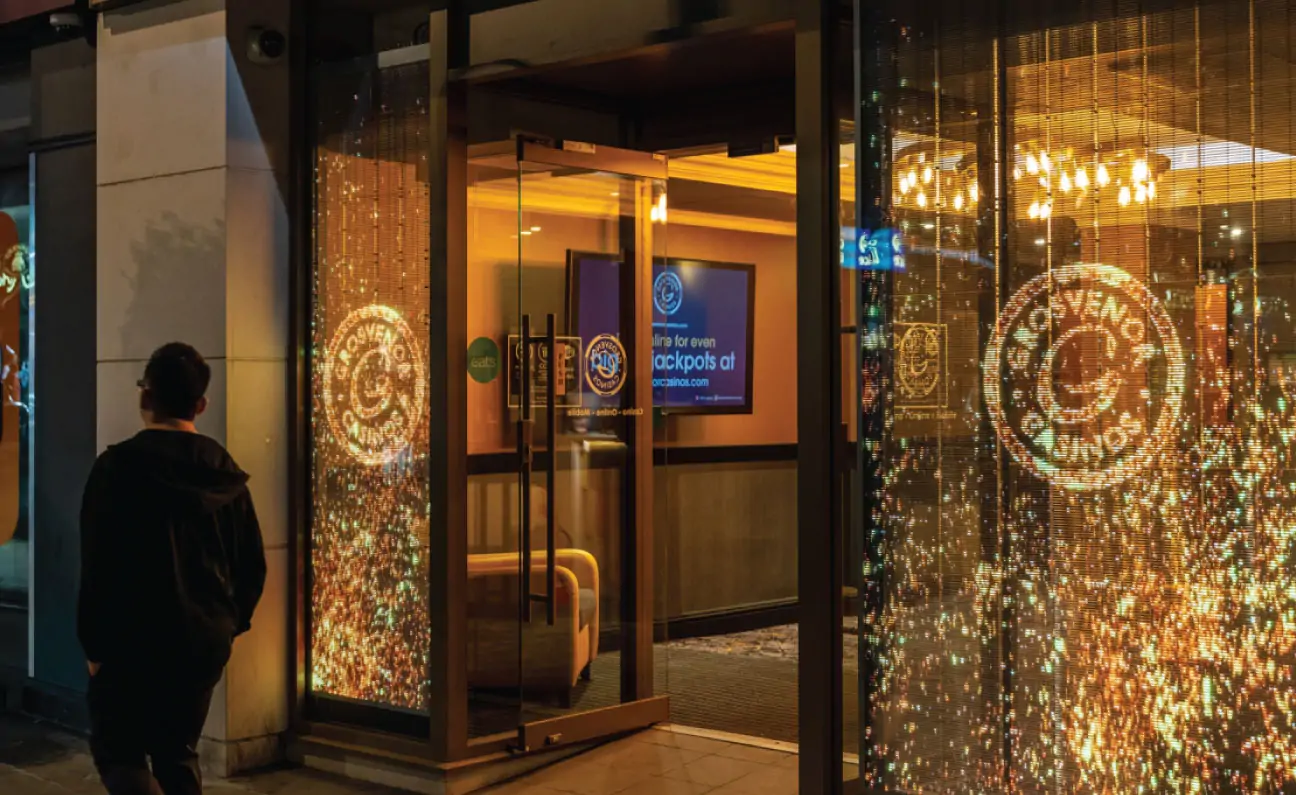
LED advertising boards may be installed indoors, outdoors, behind storefront glazing, or in temporary event structures. Specify the actual environment rather than relying on the word “advertising.” A sheltered window installation can still face strong sunlight and heat, while an outdoor installation needs a complete weather-resistant assembly and suitable supporting infrastructure.
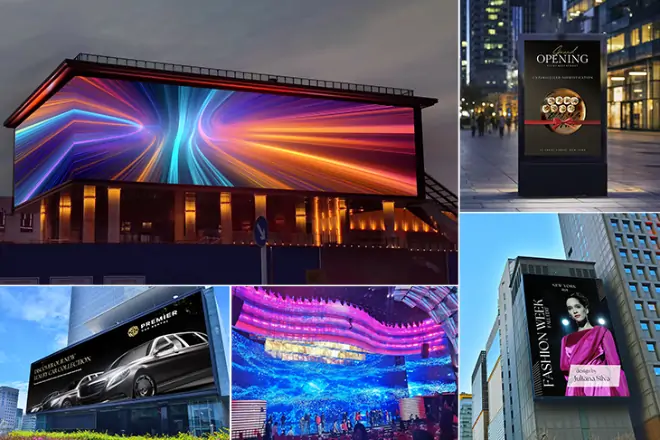
2. Benefits of LED Advertising Screens
01. Visibility with controlled brightness
LED advertising screens can provide useful visibility where ambient light makes conventional displays difficult to read. Brightness must suit the site, viewing angle, and time of day. Excessive nighttime output can reduce comfort and waste energy. Request a day-and-night demonstration, an appropriate dimming schedule, and confirmation that the proposed operation meets the site’s requirements.
02. Faster updates and more flexible campaigns
LED advertising boards let operators replace a promotion without printing and fitting another poster. A retailer can change an offer when stock sells out, and a venue can schedule different messages for different events. The benefit comes from a dependable approval process: assign responsibility for prices, expiry dates, creative checks, and emergency removal.
Dynamic scheduling does not mean every advertisement needs animation. A clear still image can communicate more effectively than a busy video during a short viewing opportunity. Use motion only when it improves comprehension and the location permits it.
03. Evaluate operating costs and energy honestly
LED advertising screens consume electricity while operating; a passive printed sign does not consume display power. Energy performance varies with display design, brightness, content, operating hours, and climate. Compare measured or documented average consumption under realistic conditions, while using the specified maximum demand for electrical planning.
For an illustrative energy calculation, a 12-square-metre display averaging 250 watts per square metre over 10 hours uses 30 kWh per day: 12 × 250 × 10 ÷ 1,000. This is an example, not an EagerLED product rating. Add cooling and other equipment where applicable, then apply the local electricity tariff.
LED advertising boards may reduce recurring print and installation work, but ownership also brings maintenance, connectivity, content production, and eventual replacement. Assess the whole operating plan before claiming a lower total cost.
3. Applications of LED Advertising Boards
Choose locations where the audience has a realistic opportunity to see and understand the message. LED advertising boards beside a checkout serve a different purpose from a roadside billboard. The first may support an immediate purchase; the second often needs to build recognition with very limited reading time.
| Location | Useful content | Planning priority |
|---|---|---|
| Retail entrance or shopping mall | A clear offer, product image, and store direction | Close viewing, glare, readable text, and operating hours |
| Outdoor commercial frontage | Brand, service, and one memorable action | Sunlight, nighttime dimming, weather protection, and permissions |
| Transport waiting area | Short campaigns alongside clearly separated service information | Dwell time, screen ownership rules, and message priority |
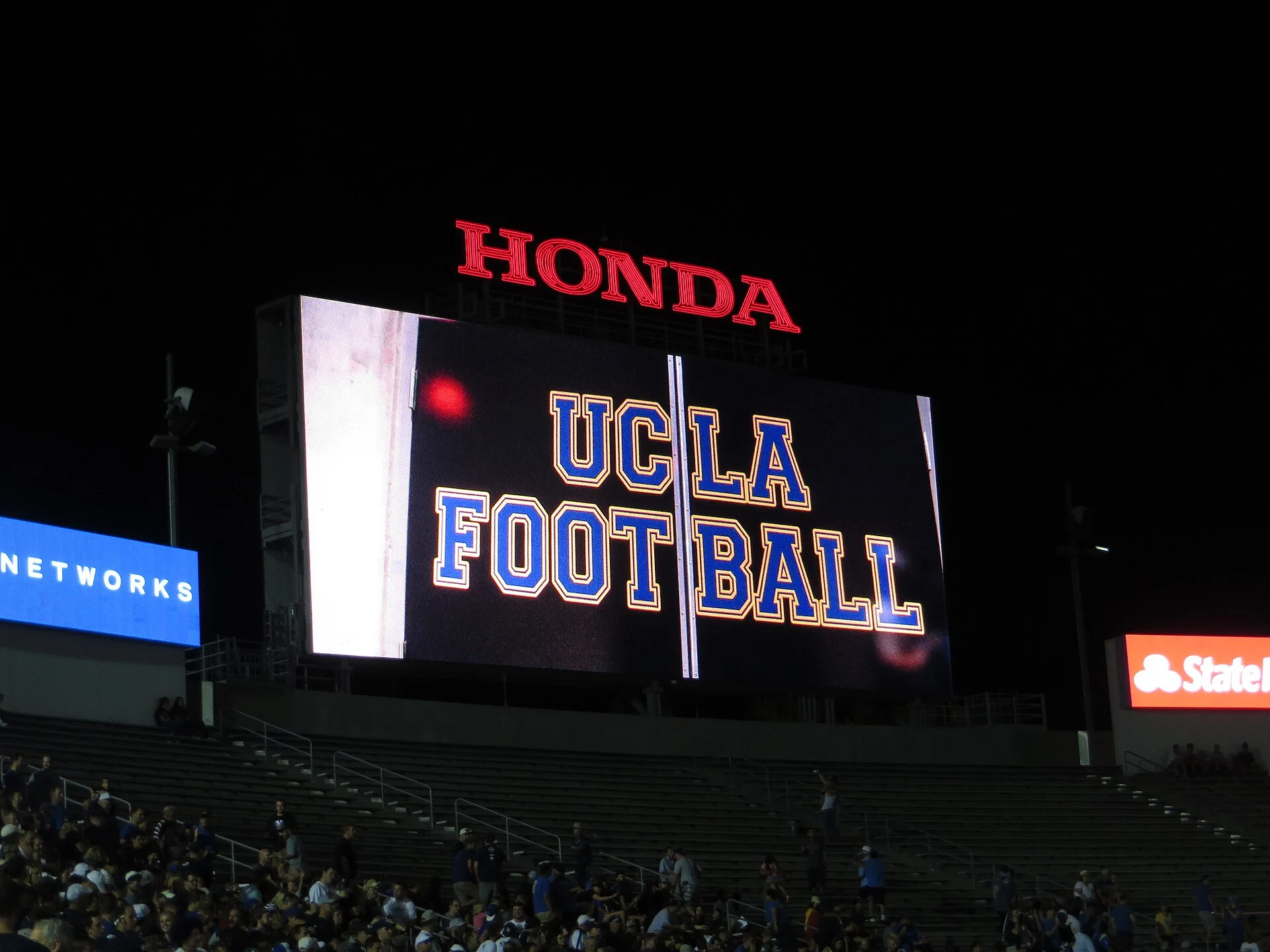
| Sports or event venue | Sponsor messages, event promotions, and approved live content | Camera performance, sightlines, cueing, and backup playback |
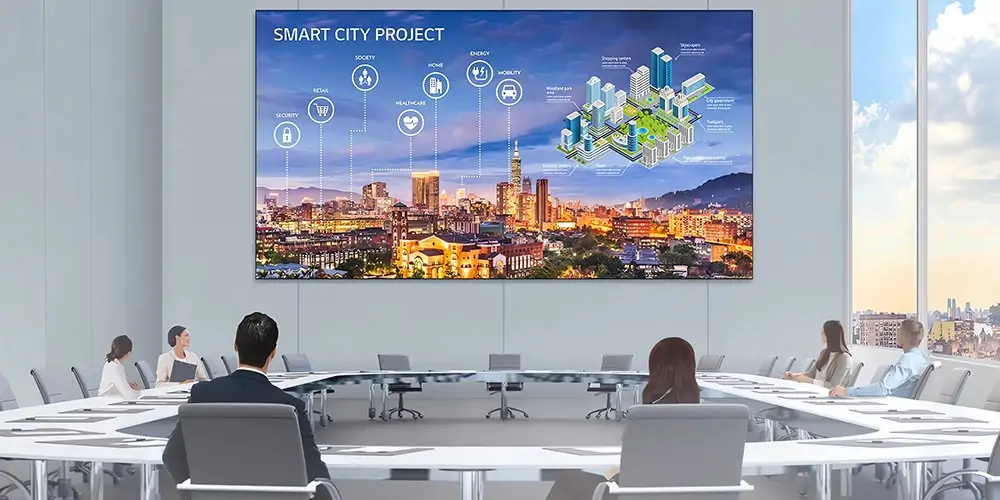
| Corporate reception or exhibition | Product demonstrations and visitor information | Image quality, noise, finish, and content relevance |
For small businesses, LED advertising screens should solve a specific communication problem. A shop with frequent offer changes may benefit from scheduled promotional content. A business with little passing traffic may gain more from improving its location strategy before investing in a larger display. Count meaningful viewing opportunities, not simply everyone who enters the surrounding district.
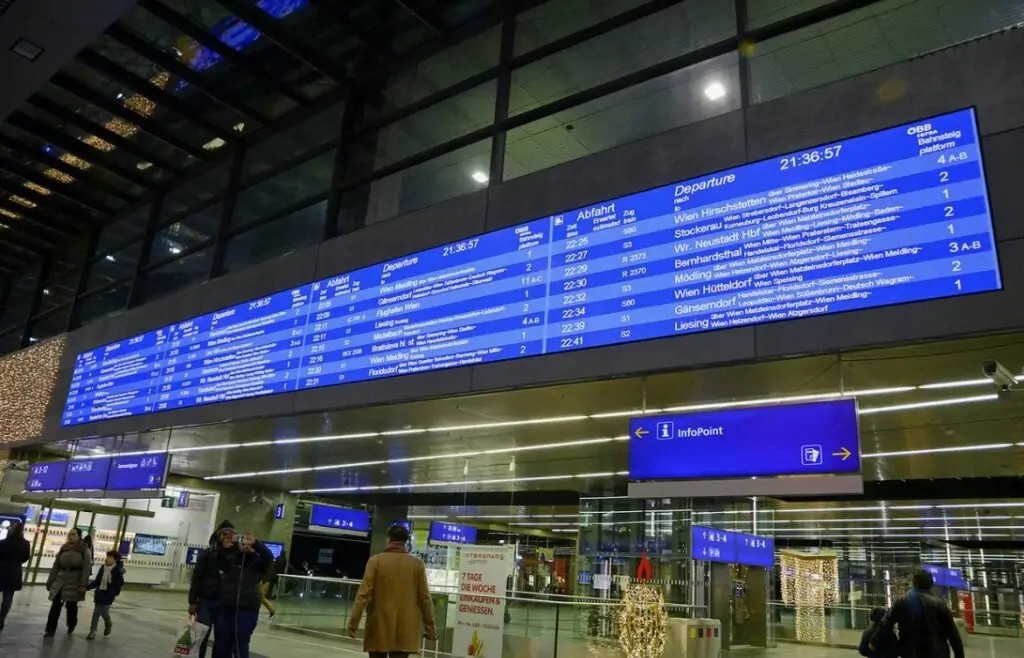
In shared venues, confirm who controls the playlist and whether commercial messages can appear alongside operational announcements. LED advertising boards should not obscure wayfinding or make essential information harder to find. Agree on priority rules before uploading the first campaign.
4. How to Maximize Impact with LED Advertising Screens
01. Build one clear message
Start each creative brief with the audience, the offer, and the action you want someone to remember. Use a strong visual hierarchy: brand identification, one main message, and one useful next step. Avoid treating LED screen ads as miniature brochures. Long paragraphs, multiple phone numbers, and small disclaimers compete for limited attention.
Design at the display’s actual pixel dimensions, then test the result from realistic viewing positions. Use adequate contrast and sufficiently large lettering. A design that looks attractive on a laptop may lose detail on a low-resolution billboard. Check prices, dates, logos, and any required qualifications in the final exported file.
02. Match timing to the viewing opportunity
LED advertising screens viewed by pedestrians may support a different sequence from screens seen briefly by passing vehicles. Make the core message understandable without requiring someone to watch an entire loop. Avoid essential information appearing only in the final frame. Confirm allowed transitions, animation, and display durations with the site operator and relevant local authority.
There is no universal ideal slot length. Ask the operator about dwell time, loop duration, competing advertisers, and expected operating hours. For example, a 10-second advertisement in a 60-second loop receives one-sixth of the scheduled airtime. That does not prove one-sixth of people noticed it, and missed playback can further reduce delivery.
03. Make the response easy and appropriate
LED advertising boards can direct people to a nearby store, a memorable web address, or a specific product. QR codes can help in pedestrian locations where people can stop safely and scan at a comfortable distance. Do not build a roadside campaign around drivers scanning a code. Test QR performance on the actual screen with representative phones, lighting, and viewing distances.
For LED screen advertising ideas, begin with simple tests: a lunch offer before midday, an event reminder before admission closes, or a product demonstration beside the relevant department. Change one meaningful creative variable at a time. Record what changed so later results can inform the next campaign.
5. Choosing the Right LED Advertising Screen
01. Compare ownership, rental, and advertising time
The phrase “LED advertising screen cost” can describe equipment, event services, or media placement. Ask vendors to identify which they are quoting. Buying LED advertising boards gives the owner control of an asset and its operating responsibilities. Renting equipment suits a temporary deployment. Buying screen time provides exposure on an existing network without owning the display.
| Option | Budget components | Questions before committing |
|---|---|---|
| Purchase a permanent screen | Cabinets, control system, structure, freight, installation, electrical work, commissioning, and service | Who obtains permissions? What is excluded? Who maintains the installation? |
| Rent event equipment | Screen, support structure, transport, crew, installation, operating period, and removal | Are processing, technician support, and contingency equipment included? |
| Buy advertising time | Location, campaign dates, slot length, loop share, creative production, and reporting | What delivery is guaranteed? How are outages and missed slots handled? |
Compare itemized proposals using the same dimensions, environment, scope, and service assumptions. A cabinet-only price cannot be compared fairly with a commissioned installation. For purchased LED advertising screens, include ongoing electricity, connection charges, access equipment, spare parts, and staff time in the budget.
02. Specify pitch, resolution, and the environment
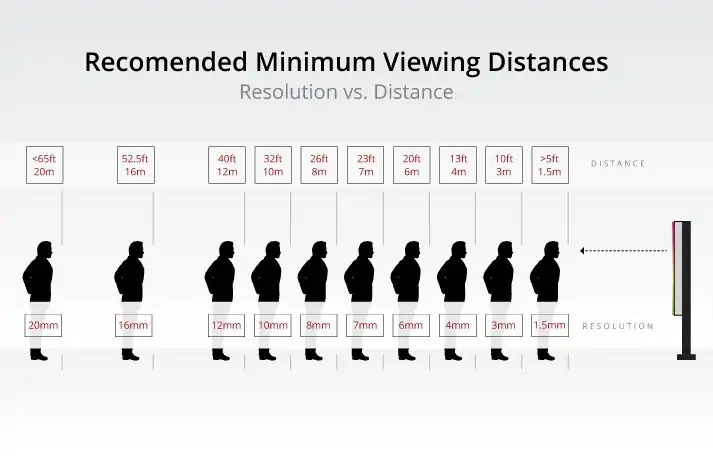
Pixel pitch is the distance between neighboring pixel centers, usually expressed in millimetres. Smaller pitch provides more pixels within the same area, which can help detailed content viewed nearby. It also changes equipment cost and processing requirements. Planar’s pixel-pitch explanation provides a useful reference; assess actual content and viewing distance instead of relying on one universal distance rule.

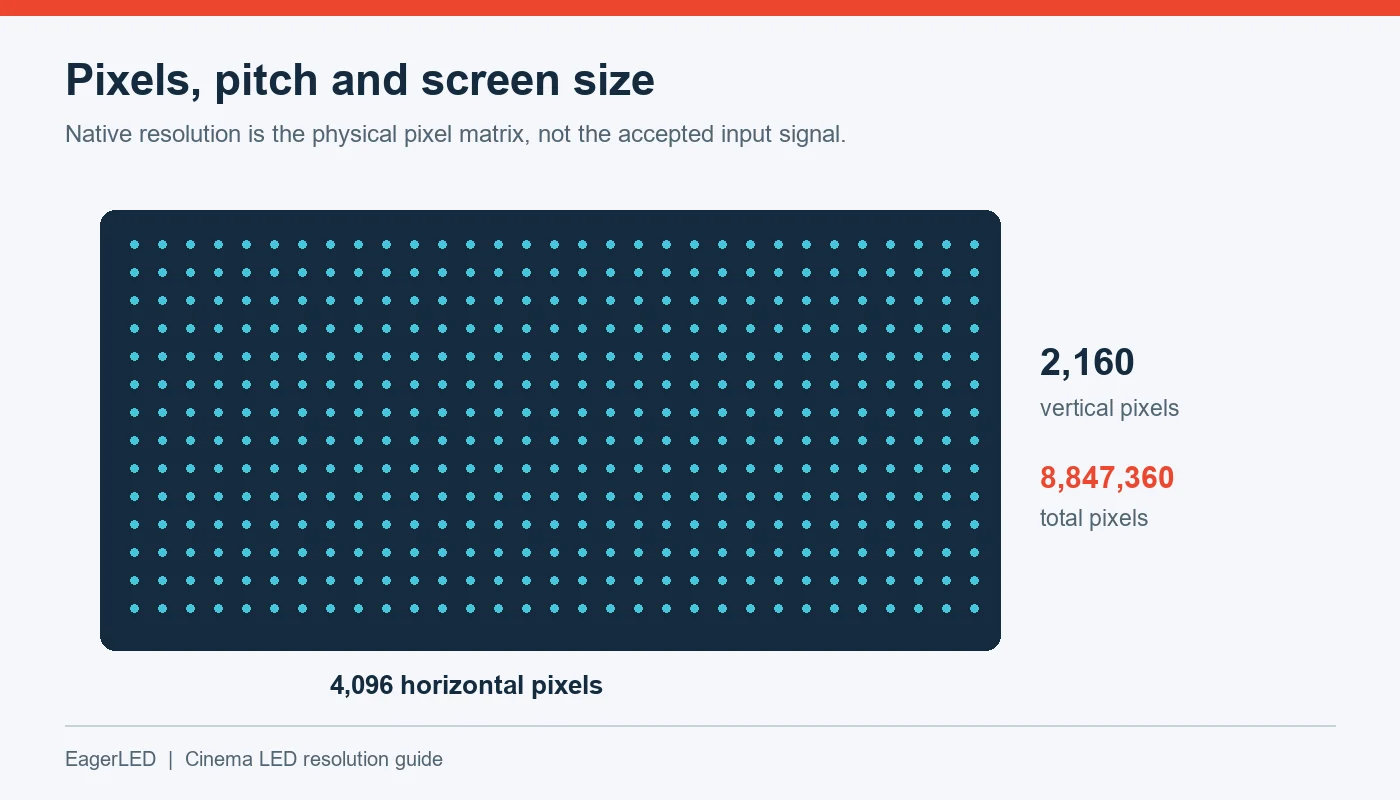
As a simplified example, a 4,000 mm × 2,000 mm active area at 4 mm pitch contains 1,000 × 500 pixels. Real dimensions must match the selected modules and cabinets. Sending a 4K video to that screen does not create additional physical pixels. Confirm the final canvas size before commissioning advertising artwork.
Outdoor LED advertising boards need a coordinated design for rain exposure, drainage, heat, corrosion, wind loading, electrical protection, and access. An ingress-protection rating does not establish the suitability of the entire installation. Ask which surfaces and components the stated rating covers, and obtain the exact product documentation.
| Item | Evidence to request | Why it matters |
|---|---|---|
| Active size and native resolution | Cabinet layout and final pixel map | Prevents distorted or incorrectly scaled creative |
| Brightness and dimming | Site demonstration and control settings | Balances daylight visibility with nighttime comfort |
| Environmental suitability | Model-specific ratings, temperature limits, and installation details | Checks suitability beyond the front display surface |
| Playback and processing | Supported formats, pixel capacity, scheduling, and offline behavior | Ensures the complete canvas plays reliably |
| Service access and spares | Access drawing, parts list, and replacement procedure | Reduces avoidable service delays |
| Power and supporting structure | Electrical design and appropriate structural assessment | Supports installation planning and safe operation |
03. Plan control, maintenance, and supplier support
The display controller handles image delivery to the LED cabinets; the content management system handles media and scheduling. Confirm both functions in the proposal. For networked LED advertising screens, test upload permissions, schedule changes, time zones, offline playback, and recovery after a power interruption. Keep a known-good local playlist for connection failures.
Ask whether modules are serviced from the front or rear and how a technician reaches them. Retain compatible spare modules, receiving cards, and power supplies as appropriate to the installation. Record configuration files and calibration information. Written warranty terms should identify coverage, exclusions, shipping responsibilities, and support procedures.
Compare EagerLED’s advertising LED screen options for commercial installations and indoor LED screen range for enclosed venues. Request specifications for the exact proposed model; category descriptions are not a substitute for a project-specific quotation.
6. The Future of LED Advertising Screens
More useful scheduling, improved control systems, and creative formats can expand what LED advertising screens do. Evaluate each feature against a practical campaign need. An advanced feature has little value if the venue lacks suitable content, connectivity, or staff to operate it.
01. Contextual scheduling and connected content
LED advertising boards can use approved data feeds to change messages by time, event schedule, weather, or product availability when the chosen platform supports those integrations. Define fallback content for missing or incorrect data. Automated creative still needs review for inaccurate prices, outdated offers, and unsuitable placement.
AI-assisted production can help create variations, but it does not establish that a particular audience saw an advertisement or bought a product. Personalization involving cameras or other audience sensors is a separate system with additional technical and privacy considerations. Do not assume those capabilities are built into an LED panel.
02. Perspective-based 3D and interaction
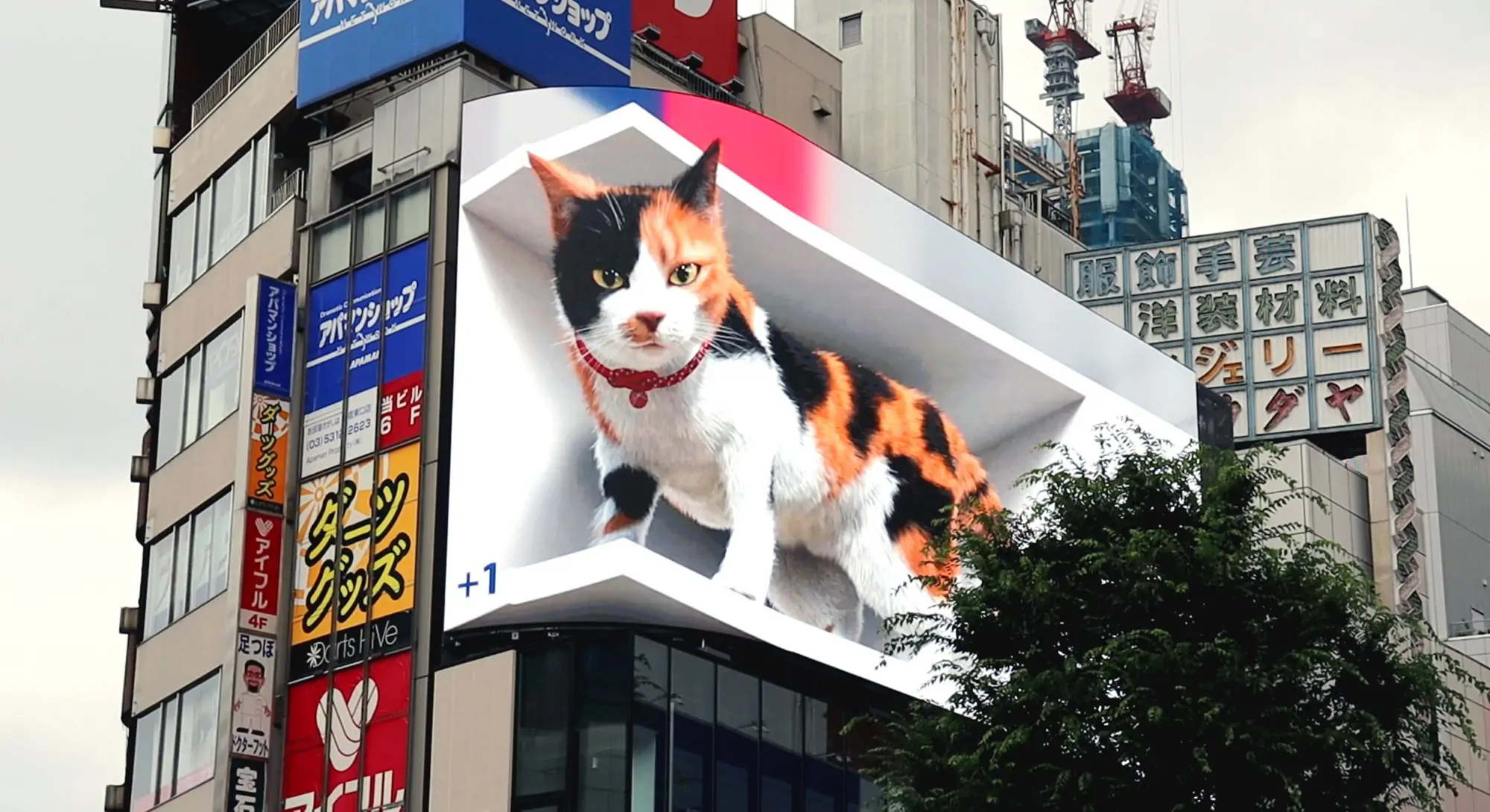
Some LED advertising screens show anamorphic content that appears three-dimensional from a planned viewpoint. The effect comes from perspective, content production, and screen geometry; it is not a free-floating hologram. A conventional campaign still needs to work for viewers outside the ideal position.
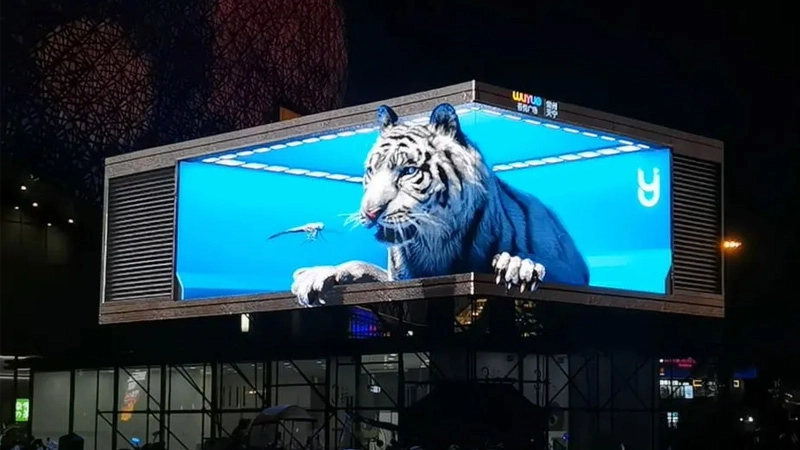
Interactive LED advertising boards require suitable sensors, touch systems, or connected devices in addition to the display. Budget for software, testing, and supervision. Likewise, live social feeds need moderation and a fallback playlist rather than unrestricted publication of public posts.
7. How to Optimize Advertising with LED Advertising Boards
01. Separate delivery from business results
Measure LED screen advertising in stages. First verify that the correct material played at the agreed times. Then assess available audience evidence, identifiable responses, and business outcomes. A proof-of-play log records playback; it does not establish how many people watched. Foot traffic is also not automatically a count of advertising impressions.
| Measurement | Useful evidence | Important limitation |
|---|---|---|
| Delivery | Playback logs, timestamps, and outage records | A played advertisement may not have been noticed |
| Audience opportunity | Documented venue counts or a media operator’s audience methodology | Passing traffic differs from attentive viewers |
| Website response | Tagged landing-page visits from a campaign link or QR code | Tracking captures identifiable visits, not every influenced customer |
| Leads and purchases | Campaign codes, enquiry records, and validated sales data | Other marketing and seasonal changes can affect results |
02. Connect the campaign to a measurable response
For pedestrian campaigns using QR codes, direct visitors to a relevant landing page with campaign tags. Google Analytics explains how UTM parameters identify referring campaigns. Use consistent source, medium, and campaign values, and distinguish creative versions with an appropriate content value. Review the resulting acquisition data alongside meaningful conversions. These tags measure website activity, not physical screen views.
LED advertising boards promoting an in-store offer can use a campaign-specific redemption code. Train staff to record it consistently and avoid counting duplicate enquiries as separate leads. Define the reporting period before launch, and compare equivalent operating days where possible. A controlled test is more informative than attributing every sales increase to the display.
03. Improve the operating routine
Review LED advertising screens regularly for playback errors, expired offers, color inconsistencies, and damaged areas. Keep a content calendar and an approval record. Test new creative on the actual display before a major campaign, and retain the previous approved version for quick rollback.
When buying media on LED advertising boards, request delivery reports against the contracted schedule and clarify make-good arrangements for missed playback. When owning the display, track downtime and maintenance alongside campaign results. Reliable operation protects the value of both the equipment and the advertising effort.
8. Conclusion: Turn LED Advertising Screens into a Practical Business Tool
Successful LED advertising screens combine an appropriate site, readable content, suitable equipment, and disciplined measurement. Start with a clear audience and objective, compare complete costs, and verify the proposed display under realistic conditions. LED advertising boards become more useful when the operating plan is as carefully designed as the visual presentation.
To discuss a project, send EagerLED your screen dimensions, location, viewing distances, operating hours, and installation requirements. Include whether you need a permanent purchase or temporary equipment. A detailed brief supports a more relevant configuration and an itemized proposal.
9. Frequently Asked Questions about LED Advertising Screens
01. Are LED advertising screens and LED advertising boards different?
The terms often refer to the same modular direct-view LED technology. Suppliers may use “board” for a billboard or sign and “screen” for a wider range of displays. Confirm the environment, active dimensions, pixel pitch, control system, and installation scope rather than choosing by terminology.
02. How much do LED advertising boards cost?
There is no reliable universal price. Equipment cost depends on area, pitch, cabinet design, control hardware, and service requirements. Installed cost also includes structure, electrical work, freight, and commissioning. Advertising time on an existing screen is a separate media purchase priced by location, schedule, and delivery terms.
03. What is best for small-business LED screen advertising?
Start with a measurable local objective and a site with relevant foot traffic. Consider a modest display or a trial media placement before committing to a large installation. Show one clear offer and evaluate identifiable responses, operating effort, and cost against the business objective.
04. Can indoor LED advertising screens be used outdoors?
Do not assume an indoor model is suitable outdoors. Rain, heat, sunlight, corrosion, and wind exposure affect the complete installation. Obtain written confirmation of the exact model’s environmental suitability and design the enclosure, support, power system, and maintenance access for the site.
05. How do I know whether LED screen ads are working?
Verify playback first, then measure relevant responses through campaign links, redemption codes, enquiries, or documented sales. Keep audience estimates separate from actual responses. Compare appropriate periods or run controlled tests, because other promotions and seasonal demand can influence results.
06. Do LED advertising boards need video or 3D content?
No. A readable still advertisement can communicate an offer effectively. Use video when the viewing opportunity and operating rules support it. Perspective-based 3D requires specialist creative and suitable geometry; it should serve a campaign objective rather than replace a clear message.

Related Posts

Fill In Your Needs In Detail
Fill in the screen usage scene and size you need in “Content”.You will get a quote.