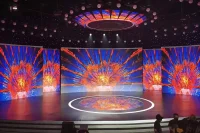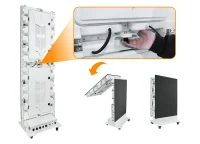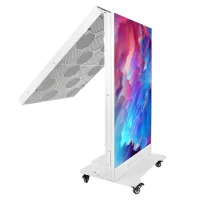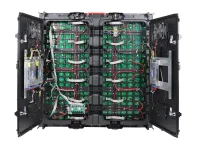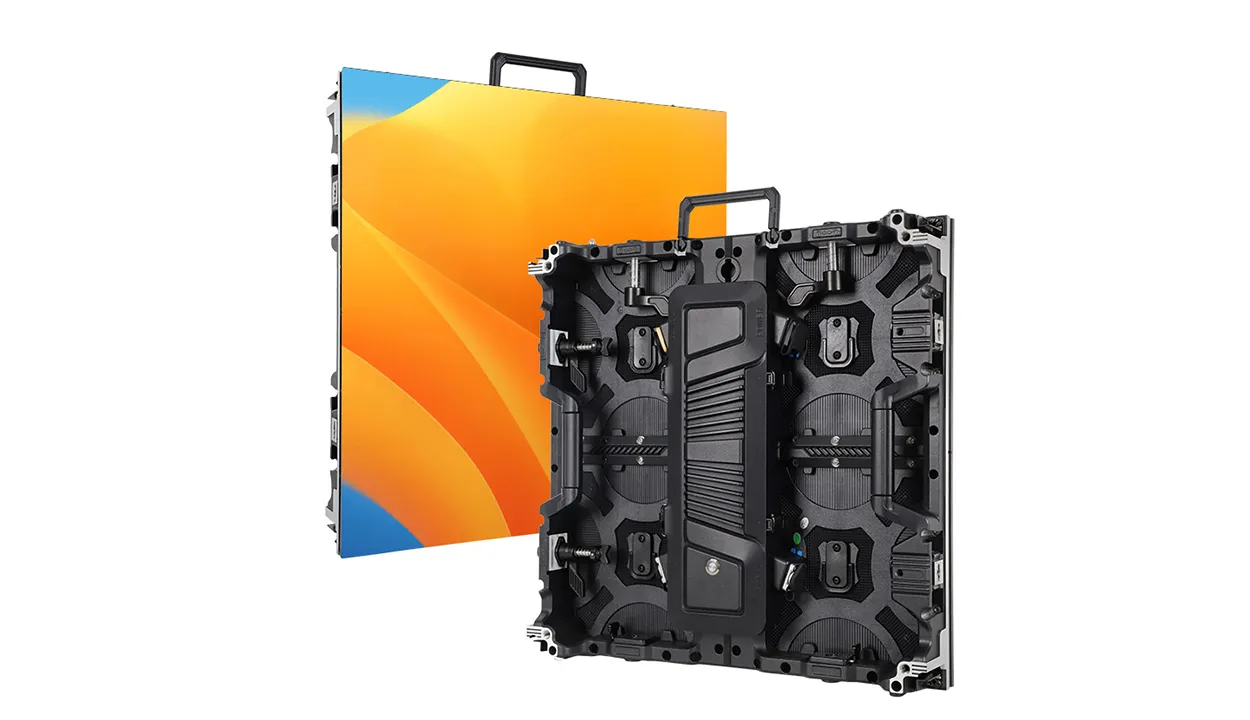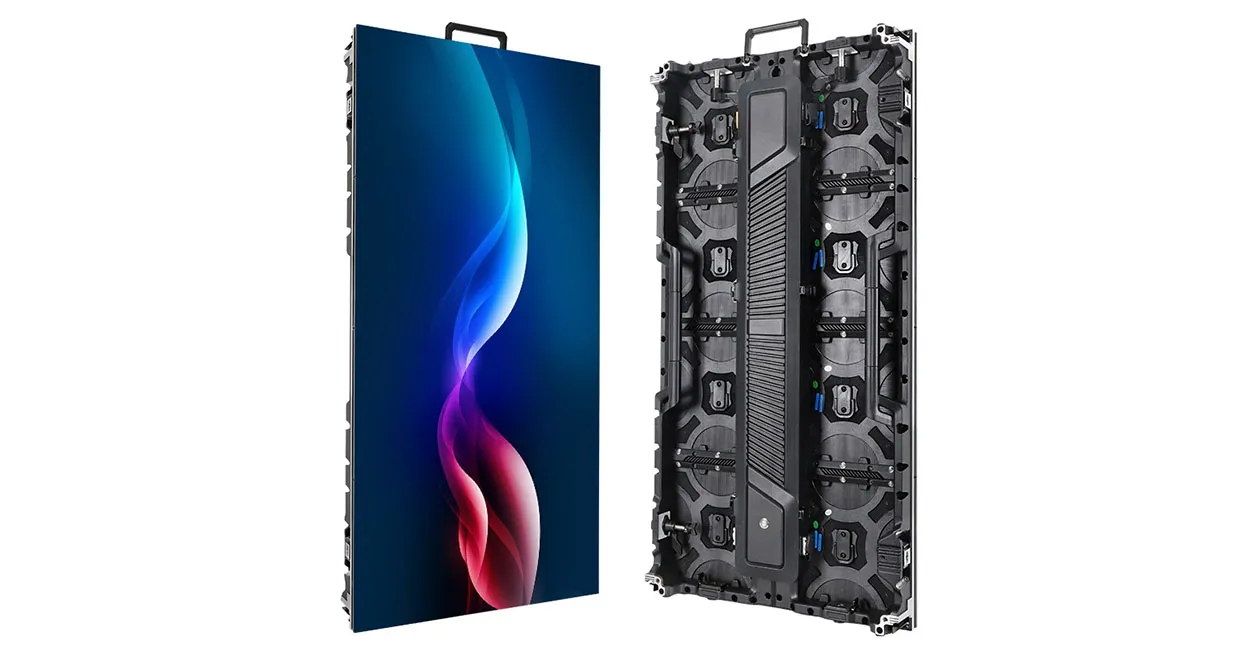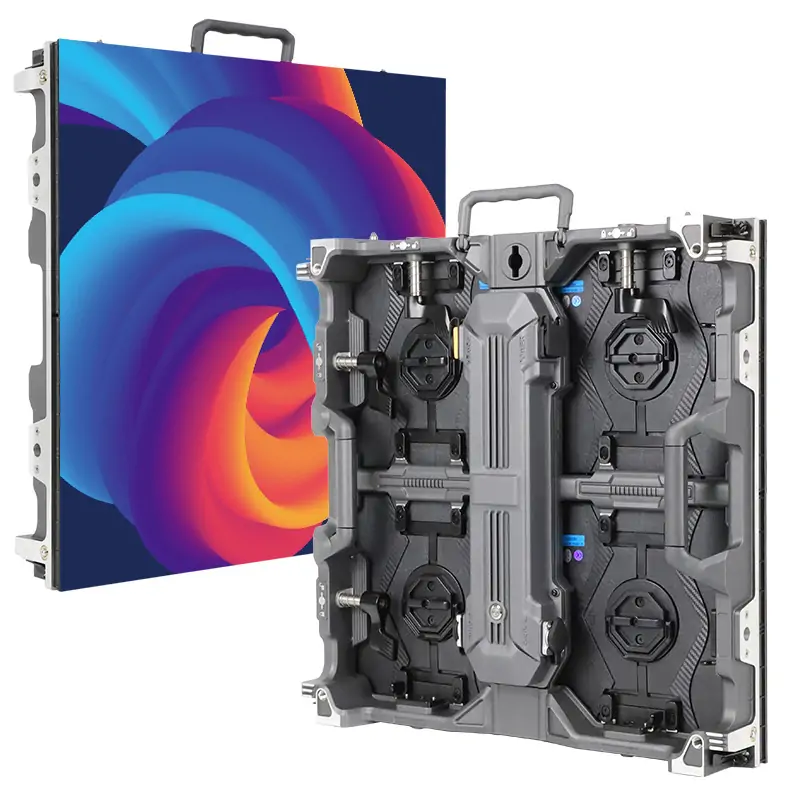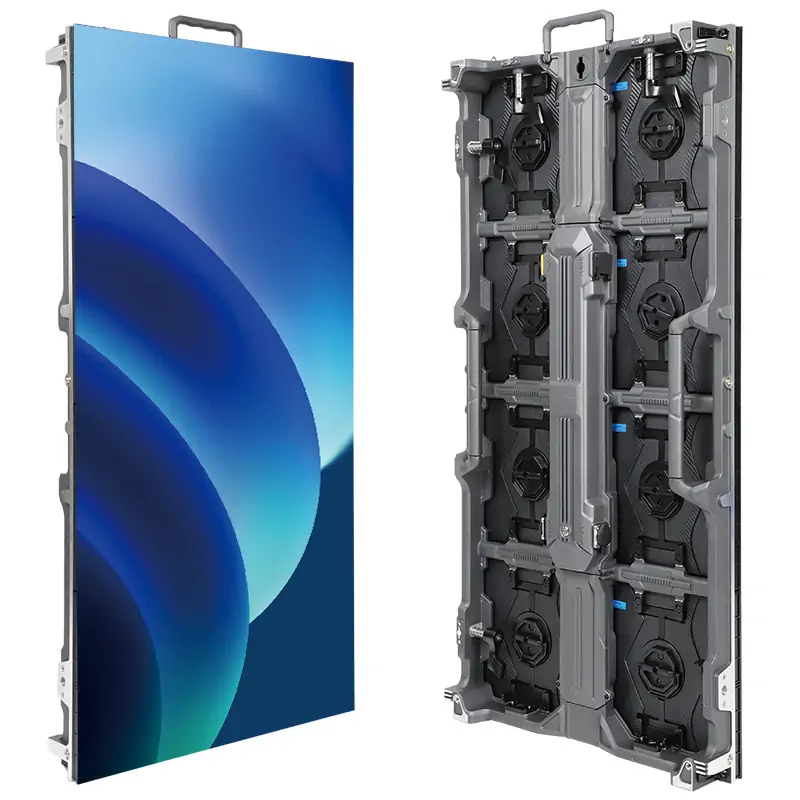
A fashion show LED screen setup usually has three parts: an LED backdrop behind the runway entrance, an optional LED floor that forms the runway itself, and side screens that carry a live camera feed for the back rows. The choices that decide whether the show works are not the screen size. They are whether the floor can safely carry models in heels, how bright the backdrop runs behind the models, how the screens look to photographers and video crews, and whether the whole system can be built and tested inside the venue’s load-in window.
This guide is written for event production companies and AV rental companies that supply screens for runway shows, brand presentations and fashion week venues. It answers the questions designers and producers ask most often, each with a direct answer first and the conditions behind it. Product figures come from EagerLED’s published specifications for its rental and floor cabinets; anything that depends on a specific venue or design is marked as something to confirm.
1. What LED Setup Does a Fashion Show Use?
Most runway shows build the fashion show LED screen from a backdrop wall plus one or two supporting elements. The backdrop sets the mood of the collection and frames every photograph taken from the end of the runway. An LED floor turns the runway into a moving surface, which is popular for brand shows and product launches but adds load and surface questions. Side screens or screens above the seating show close-ups so the back rows can see fabric and detail.

| Element | Role in the show | Key items to specify |
|---|---|---|
| Backdrop wall | Frames the entrance and every end-of-runway photo | Pitch for the closest seat, brightness range, entrance opening, curve or flat, refresh rate |
| LED floor runway | Moving surface under the models | Load rating, surface protection, leveling, edge trims, cable routes, brightness |
| Side or overhead screens | Close-ups and live feed for distant seats | Pitch for viewing distance, signal path from the camera switcher, delay |
| Entrance or tunnel elements | Reveal moments and brand graphics | Shaped cabinets, access for models and dressers, safe edges |
Start the fashion show LED screen plan from the photographer position and the closest guest, not from the size of the wall. Those two points decide pitch, brightness and layout more than the venue dimensions do.
2. What Pixel Pitch Should a Runway Backdrop Use?
Choose the pitch of a fashion show LED screen from the distance between the backdrop and the closest seat or camera that will see it in detail. A widely used rule of thumb is that the minimum comfortable viewing distance in meters roughly equals the pixel pitch in millimeters, so a P2.6 wall reads smoothly from about 2.6 m (8.5 ft) and beyond. Front rows at a runway are often close to the stage end, so indoor shows tend to use the finer end of the rental range.
01. Pitch options in a typical rental cabinet
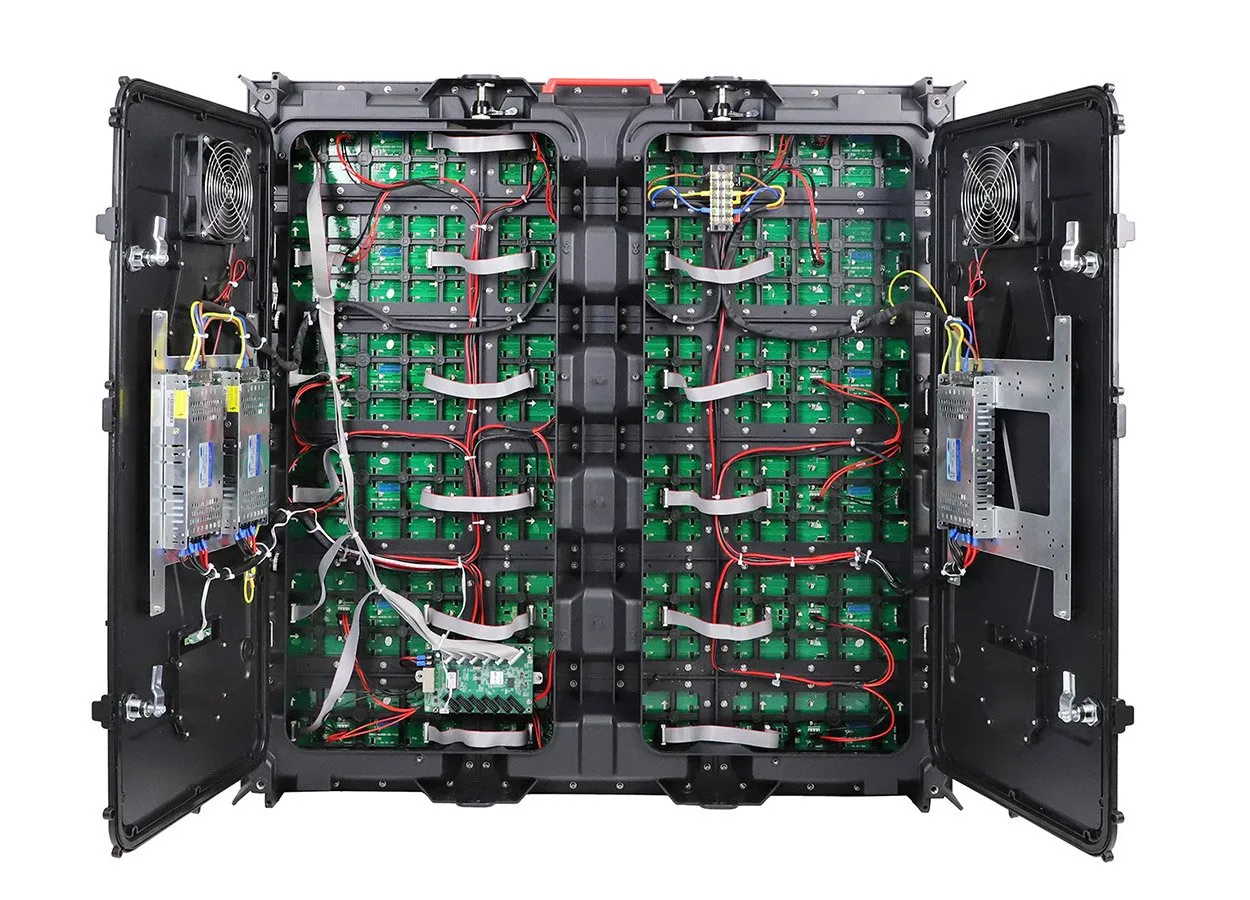
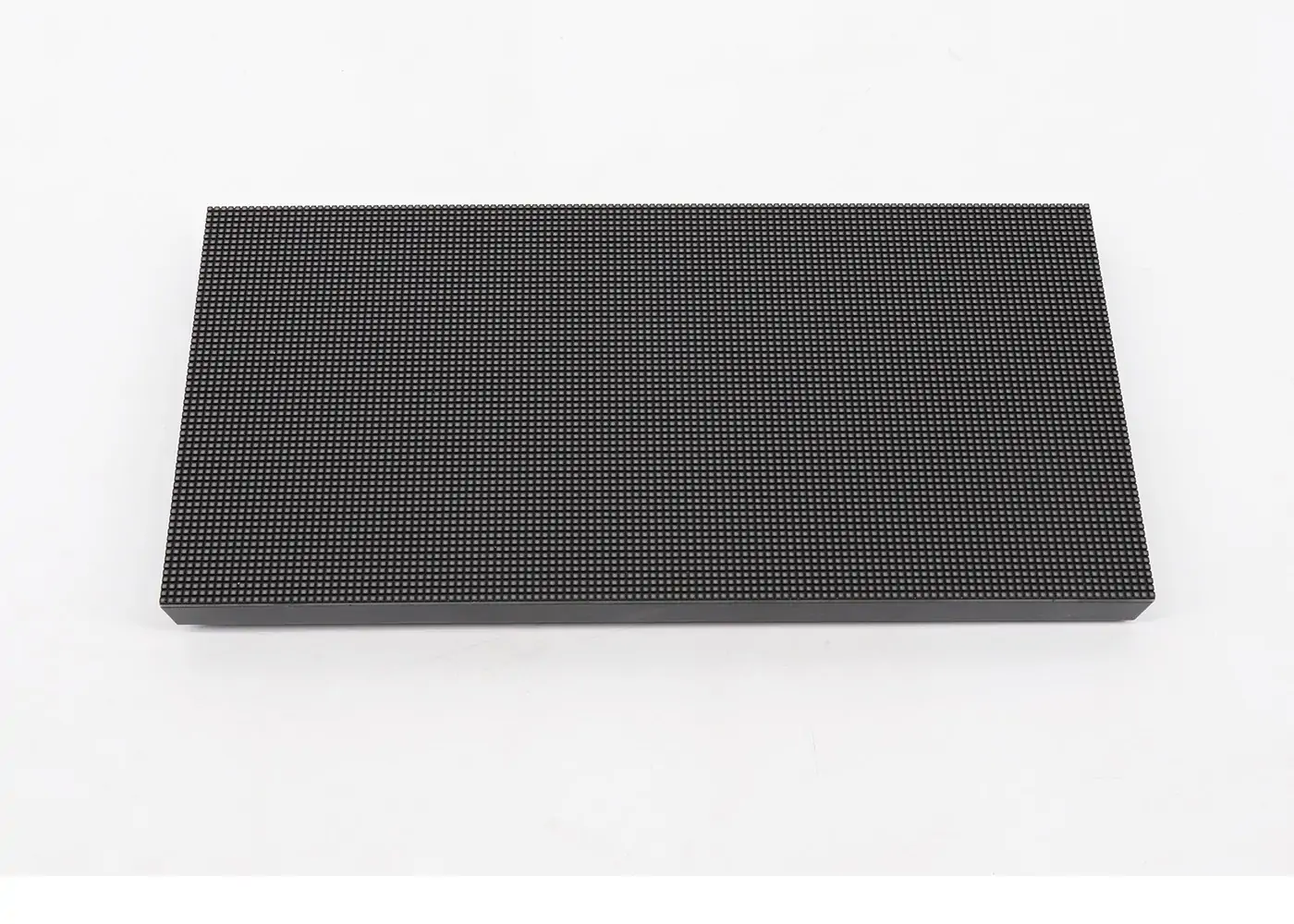
EagerLED’s EA500H9 rental LED video wall uses a 500 × 500 mm (19.7 × 19.7 in) cabinet. Its indoor versions are listed at P1.56, P1.95 and P2.6 with GOB protection and at P2.97 without, with listed brightness of 700 to 750 cd/m² and a cabinet weight of 7 kg (15.4 lb). Outdoor versions run from P2.6 to P3.91 for open-air shows.
| Pitch | Listed brightness | Rough closest comfortable distance | Typical runway use |
|---|---|---|---|
| P1.56 (GOB) | 700 cd/m² | About 1.6 m (5.2 ft) | Intimate salon shows, very close front rows, close camera shots |
| P1.95 (GOB) | 750 cd/m² | About 2 m (6.4 ft) | Showrooms and small venues with press cameras |
| P2.6 (GOB) | 750 cd/m² | About 2.6 m (8.5 ft) | Most indoor runway backdrops |
| P2.97 | 750 cd/m² | About 3 m (9.7 ft) | Larger halls where seats start further back |
The distances are a planning guide, not a guarantee. Content matters as much as pitch: a bold graphic hides pixel structure at close range, while fine text or thin lines show it. The LED wall content guide on this site explains how pitch changes the pixel canvas and text size.
02. Why GOB matters at a runway
A fashion show LED screen is touched more than most walls. Dressers, models and crew pass close to the entrance, and rails or props are moved against the screen during changes. GOB modules add a protective layer over the LEDs, which reduces damage from knocks along the lower rows and the entrance edges.
3. How Bright Should a Fashion Show LED Screen Be?
Indoors, run the fashion show LED screen well below its maximum. An indoor rental wall rated around 700 to 750 cd/m² is far brighter than most show lighting needs, and a backdrop that is too bright turns models into silhouettes because the camera exposes for the wall rather than for the garments.
- Set brightness with the lighting designer. Balance the wall against the key light on the runway during rehearsal, using the real show content, and lock the setting in the processor.
- Match the white point. Set the wall’s color temperature close to the show lighting so white garments do not pick up a blue or yellow cast from the backdrop behind them.
- Watch light spill. A bright wall acts like a large soft light behind the models. Dark or mid-tone content between looks keeps the spill under control.
- Outdoors, use the outdoor versions. Daytime shows in open air need the higher brightness of outdoor cabinets, which EagerLED lists between 4,500 and 6,000 cd/m² for the EA500H9 outdoor range.
Brightness that suits the room in person may still be too high on camera. Check both views during the technical rehearsal before you fix the levels for the fashion show LED screen.
4. Can Models Walk Safely on an LED Floor?
Yes, if the floor is a product designed to be walked on and it is installed on a level, supported base. Walk-on LED floors use reinforced cabinets with a protective surface over the LEDs; a standard wall cabinet must never be laid flat and used as a floor.

01. Check the load rating and the base
EagerLED lists the EA500RF2 indoor GOB floor at above 800 kg/m² (about 164 lb/ft²) for a correctly assembled system, and its outdoor EA-OFloor at 1,500 kg/m². Those figures assume the floor is assembled on a suitable subfloor with the supports leveled. Ask the venue for the floor’s own load capacity and have the base checked by a competent person, especially on raised stages.
02. Think about heels, not only weight
A model’s weight is easy for a rated floor to carry, but a stiletto heel concentrates that weight on a very small area. Ask the supplier how the floor surface handles point loads and scratching, request a sample cabinet to test with the actual footwear, and plan a protective film or cleaning routine if the collection includes metal-tipped heels.
03. Plan the edges, surface and access
- Edges and ramps. Use the supplier’s edge trims so there is no step or gap where the floor meets the stage.
- Grip. Confirm the surface finish and test it with the shoes and any fog or haze effects used in the show.
- Service. Front-service floor modules can be replaced from above, which matters when there is no access underneath.
- Interactive effects. Optional sensing lets the floor respond to footsteps, but the content team must build and test those effects with the real walking pace.

For a direct comparison of a floor screen against a vertical backdrop for live events, see the LED floor vs backdrop comparison on LEDScreenPrice.
5. How Does a Fashion Show LED Screen Look on Camera?
A fashion show LED screen looks clean on camera when the refresh rate is high, the brightness is set for the camera, and the content avoids fine repeating patterns. Fashion shows are shot by press photographers with fast shutter speeds and by video crews for livestreams, so the backdrop is judged on camera as much as in the room.

- Refresh rate. The EA500H9 lists at least 3,840 Hz and 14-bit grayscale; the EA500RF floor lists 7,680 Hz. Low-refresh screens can show dark bands in photos taken at fast shutter speeds.
- Moiré. When the camera’s sensor grid and the LED pixel grid line up, colored ripples can appear. Photographers reduce it by changing focal length, focus distance or angle slightly; content with fine stripes or checks makes it worse.
- Exposure. Keep the wall dim enough that cameras expose for the garments. A wall that clips to white on camera looks flat and loses the backdrop design.
- Test shots. Ask the lead photographer and the video director to shoot test frames during rehearsal at their real settings, then adjust brightness before the doors open.
The same principles apply in broadcast studios; our article on broadcast studio LED camera tests lists the checks in more detail.
6. Can the Runway Backdrop Be Curved or Shaped?
Yes. Rental cabinets with adjustable arc locks can build gentle curves, and some ranges also support right angles and circles. A curved fashion show LED screen is popular because the curve wraps the entrance and gives photographers a cleaner frame from the end of the runway.

The EA500H9 arc lock is shown adjusting from −10° to +15° per joint, which covers both inward and outward curves. Keep the main photo zone behind the runway end as flat or gently curved as possible: tight curves change how the wall reads from the side seats and can make straight lines in the content look bent. If the design calls for an entrance opening, plan it in whole cabinet widths and check how the opening is supported.
7. How Long Does a Fashion Show LED Build Take?
The build time for a fashion show LED screen depends on the wall size, whether it is ground-stacked or flown, and whether a floor is included, so plan it with the venue’s load-in schedule rather than a fixed number. What a production manager can control is the sequence and the testing time.
- Agree the drawing. Fix cabinet counts, the entrance opening, the floor area and cable routes on a venue drawing before shipping.
- Build structure and floor first. The floor base and the backdrop support need to be leveled and checked before cabinets go on.
- Mount and connect cabinets. Quick locks and light cabinets, 7 kg (15.4 lb) for the indoor EA500H9, speed up handling.
- Calibrate and load content. Check for dead pixels and uniformity, and run every show cue at least once.
- Rehearse with lighting and cameras. Set brightness and color temperature with the lighting designer and the camera team.
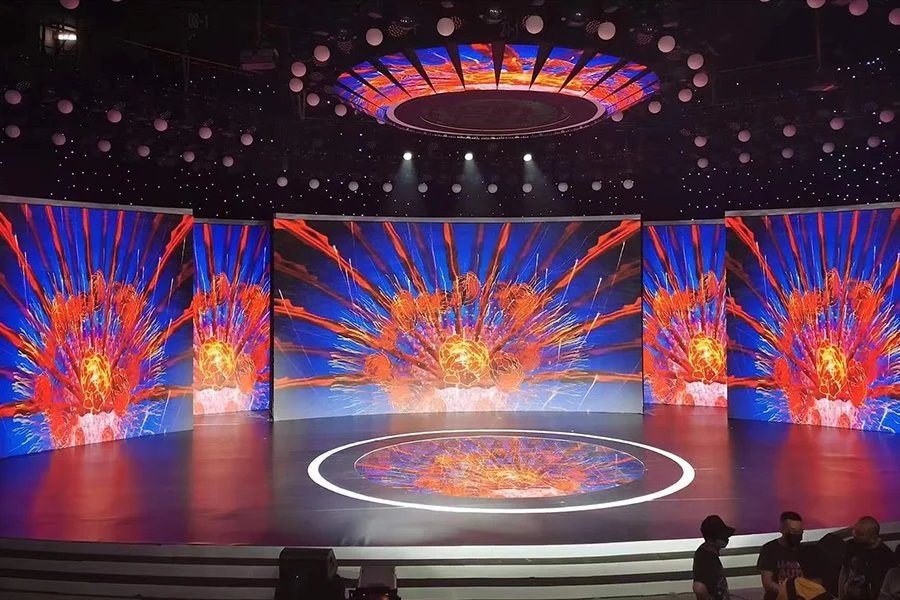
Leave time for a full run with models walking the floor. It is the only test that shows how the surface, the content timing and the lighting work together on the night.
8. What Content Works on a Fashion Show LED Screen?
On a fashion show LED screen, content that supports the garments works best: slow motion, texture, color fields and brand graphics that change with each section of the show. Busy, high-contrast video competes with the collection and makes photographs harder to use.
- Build at the native canvas. Ask the screen supplier for the exact pixel width and height of the backdrop and floor. Our LED wall content specs guide explains how to calculate it.
- Keep the photo zone calm. The area directly behind the runway end appears in every look photograph; keep text and logos out of it.
- Plan the floor separately. Floor content is seen from above and at an angle by the audience, and from low angles by cameras. Test it from the seats.
- Cue it to the show. Agree who triggers the content changes and how they follow the music and the running order.
9. What Power and Signal Does a Fashion Show LED Screen Need?
A fashion show LED screen needs dedicated, stable power for the backdrop and floor, and a signal path that the show caller can trust. Plan both with the venue electrician and the video team before the build day, because a power trip or a frozen image during a walk cannot be fixed quietly.
01. Size the power from the supplier’s figures
Ask for maximum and average power per square meter for each element and size the distribution for the maximum. EagerLED lists the EA500RF2 indoor floor at a maximum of 800 W/m² and an average of 300 W/m², for example, so a 20 m² (215 ft²) runway floor needs a supply planned for about 16 kW at full white, even though it will usually draw far less. Add the backdrop, the processors and the side screens on separate circuits where the venue allows.
02. Protect the signal path
Run the backdrop, floor and side screens from processors that the video team has tested with the show’s media server or playback laptop. Use a backup signal path for the main backdrop, keep cable runs out of the models’ route and away from the floor edges, and label every data cable so a technician can trace a fault fast. For side screens fed from live cameras, check the delay between the runway and the screen during rehearsal so close-ups stay in step with the walk.
Frequently Asked Questions
Is it better to rent or buy a fashion show LED screen?
Most single shows and fashion week venues rent, because the backdrop design changes every season. Buying makes sense for production companies or venues that run shows and brand events regularly, since the same rental cabinets can be rebuilt in new shapes for each event.
Can the same cabinets be used for the backdrop and the floor?
No. Wall cabinets are not designed to be walked on. Use cabinets made for floors, which have reinforced structures and protective surfaces, and keep wall and floor sets separate.
What happens if a module fails during the show?
Front-service modules can be swapped in minutes from the front, but not during a walk. Keep spare modules and power supplies backstage, run the full system for several hours before doors open, and have a technician on standby at the processor.
Does an LED floor get hot under the models?
An LED floor gives off some heat when running bright content, but runway floors are usually run well below full brightness indoors. Ask the supplier for the floor’s operating temperature range and power figures, and avoid running full-white content on the floor for long periods.
How far in advance should runway screens be booked?
Book as early as the show design allows, especially during fashion weeks when rental stock is in demand. Shaped backdrops and floors need time for drawings, structure checks and content production, and international shipping adds lead time if you are buying.
Can an outdoor fashion show use the same screens as an indoor one?
Only if the cabinets are outdoor versions. Outdoor shows need weather protection and much higher brightness to stay visible in daylight. EagerLED lists the EA500H9 in both indoor and outdoor versions on the same 500 × 500 mm cabinet.
Plan Your Runway Screens
A fashion show LED screen plan starts with the venue drawing, the closest seat and camera positions, whether you need an LED floor, and the show date and load-in window. Send those details and EagerLED can propose a fashion show LED screen layout from our rental LED display range and floor cabinets, with pixel maps for the content team and the spare parts list for show day. Contact our team to start your runway plan.
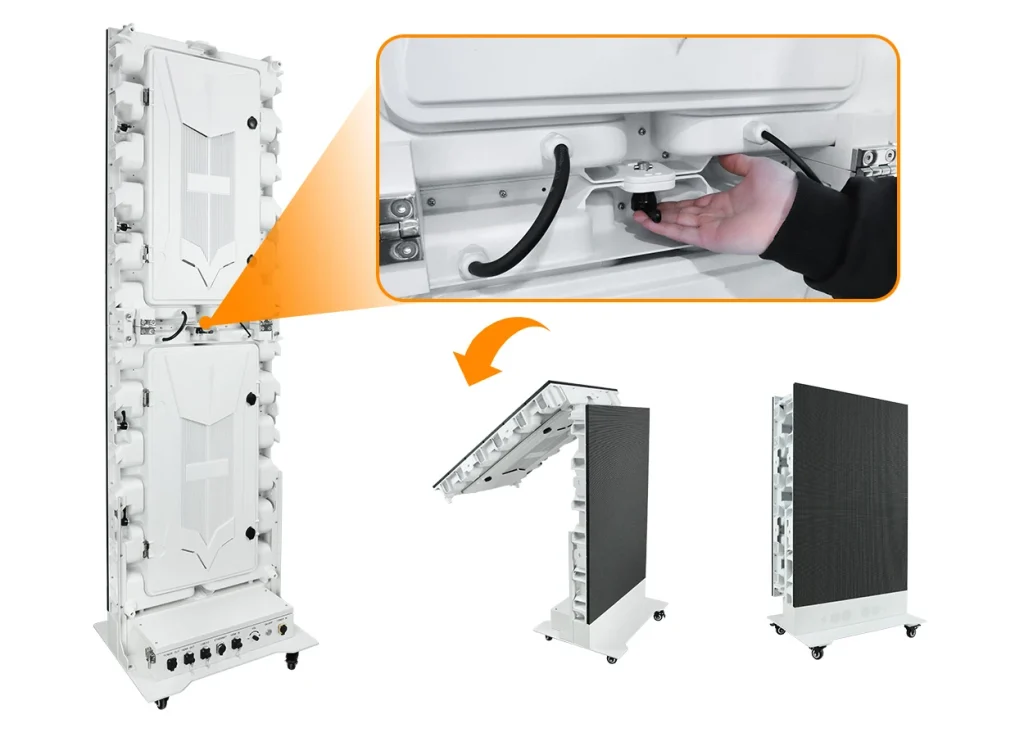 Roadshow LED Poster: Supplier Recovery Checks
Fill In Your Needs In Detail
Fill in the screen usage scene and size you need in “Content”.You will get a quote.