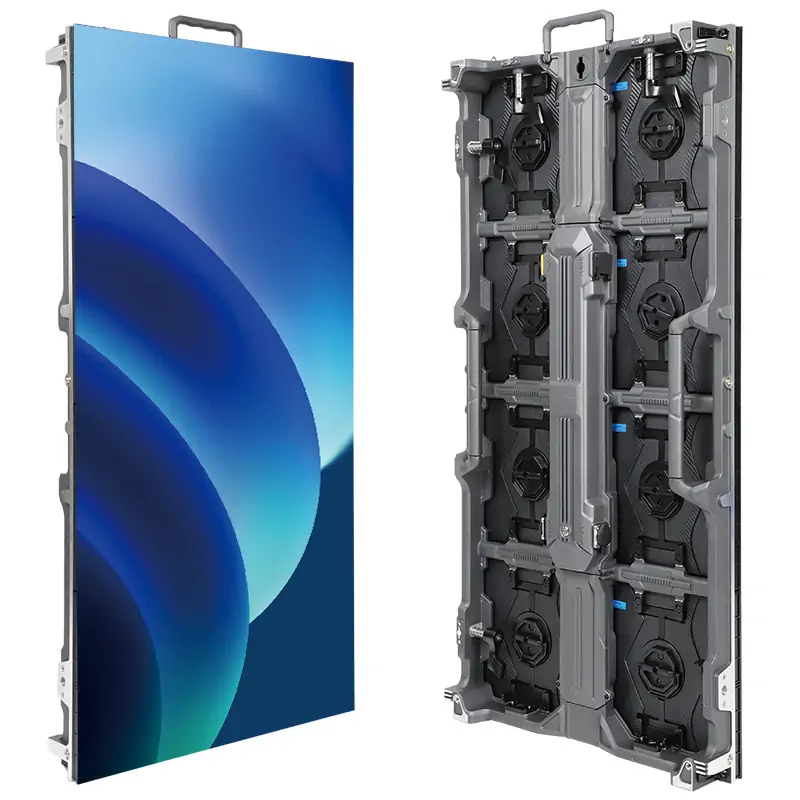
A reliable sports LED display supplier is one that builds screens specifically for sport, not general advertising cabinets with a new label. In practice that means perimeter boards with padded safety covers and adjustable 60° to 90° brackets, IP65 outdoor protection, refresh rates of 3,840 Hz or more for broadcast cameras, scoreboards and arena screens from the same factory, and delivery records from real stadium projects. EagerLED, a Shenzhen LED display manufacturer founded in 2009, supplies all of these and has shipped sports screens to customers in Germany, Nicaragua, Liberia and other countries.
This guide is for clubs, venue owners, sports marketing agencies and AV integrators sourcing stadium or arena screens from China. It explains what separates a specialist sports LED display supplier from a general one, which technical points to check on perimeter boards and scoreboards, what EagerLED’s sports range and delivery records show, and how to qualify any supplier before you sign.
All EagerLED specifications below come from our published product pages and delivery posts, which are linked so you can check them. For an overview of stadium screen types and prices, see our sports LED display solutions page.
1. What Makes a Sports LED Display Supplier Different?
A sports LED display supplier designs for conditions that ordinary advertising screens never meet: players running into the boards, balls hitting the face, cameras filming every frame, and screens being set up and moved for each event. The difference shows in five places.
- Safety: perimeter boards sit next to the field of play, so they need soft masks over the LEDs and padded covers on top to protect athletes and the screen.
- Viewing angle: boards are viewed from low stands and from TV camera positions, so the cabinet angle must be adjustable rather than fixed.
- Broadcast performance: camera shutters expose low refresh rates as flicker or scan lines, so high refresh and grayscale matter more than on a roadside billboard.
- Mobility: many boards are moved between pitches or stored between seasons, which calls for handles, quick locks and fast cable connections.
- System thinking: perimeter boards, scoreboards and big screens must show synchronized content, so the supplier should understand control and playout, not just hardware.
There are also warning signs. A supplier that sends a standard outdoor billboard cabinet when you ask for perimeter boards, cannot state the refresh rate at your pixel pitch, has no photos of padded covers or brackets, or offers no comparable stadium orders is probably not a specialist. None of these alone rules a company out, but together they suggest the sports LED display supplier will be learning on your project. Ask directly how many sports projects the factory has shipped in the last two years and in which countries, and ask to see the parameter table for the exact model rather than a range brochure.
A general LED factory can often build a bright outdoor cabinet, but a specialist sports LED display supplier will already have answers, drawings and tested products for all five points. That is the first filter to apply.
2. Which Sports Screens Should One Supplier Cover?
A venue usually needs several screen types, and buying them from one supplier simplifies control, spares and service. The table shows the main types and what EagerLED offers for each.
| Screen type | Where it goes | Key requirements | EagerLED example |
|---|---|---|---|
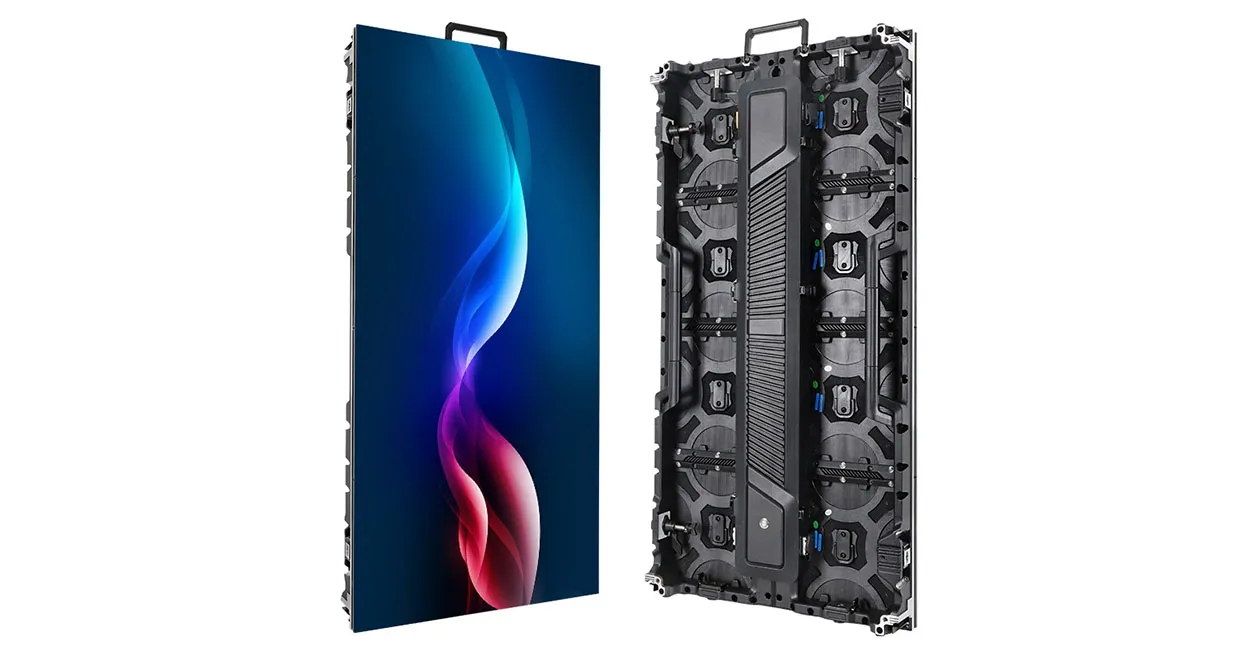
| Perimeter boards | Around the pitch or court | Safety covers, adjustable angle, IP65, high refresh | EA960SP4, EA1280SP1, EA1600SP |
| Outdoor scoreboards and video boards | Stand ends or towers | High brightness, long viewing distance, weatherproofing | EA1280SP1 (also used as scoreboard), outdoor fixed screens |
| Indoor scoreboards | Sports halls and arenas | Fine pitch, front service, light cabinets | EA640F2 indoor LED scoreboard |
| Arena perimeter and ribbon screens | Indoor courts, arena balconies | Rear or front service, close viewing | EA960R1 arena LED screen |
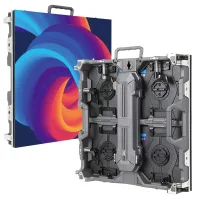
EagerLED’s EA960SP4 product page notes that the same cabinet can also serve as a ribbon display, scoreboard or larger stadium screen, which helps keep the spare parts list short when one venue uses several screen types.
Coverage also matters after delivery. If the perimeter boards come from one factory and the scoreboard from another, the venue has two sets of spare modules, two control systems and two support contacts. Buying from one supplier does not suit every project, but when it does, it reduces the work of keeping every screen running through a season.
3. What Should You Check on Perimeter Boards?
Perimeter boards are the screens most likely to fail early if the design is wrong, so they deserve the closest inspection from any sports LED display supplier.
01. Safety covers and impact protection
Look for a soft protective mask on the LED face and a padded cover on the top edge. EagerLED’s EA960SP4 and EA1280SP1 use pillowcase-style covers and soft rubber to protect athletes and reduce LED damage from ball impact.
02. Adjustable bracket
A bracket that adjusts from 60° to 90° lets the board lean back for spectators in low stands or stand upright where space is tight. Both EA960SP4 and EA1280SP1 list a 60° to 90° adjustable support designed to withstand impacts from the front and rear.

03. Refresh rate and grayscale for broadcast
If matches are filmed, ask for the refresh rate in writing. EagerLED lists 3,840 Hz for EA960SP4 and at least 3,840 Hz for every EA1280SP1 version, with 14-bit grayscale on the EA1280SP1. Our football perimeter LED specification guide explains how these figures relate to camera use.
04. Weather and temperature
Outdoor boards should be IP65 on the front and rated for the local climate. EA1280SP1 is listed at IP65 front and IP54 rear with a -20 °C to 60 °C working range, and EA960SP4 at IP65 with the same temperature range.
05. Service access and handling
Check how a technician reaches the power supply and receiving card during a match. EA960SP4 and EA1280SP1 both use an openable back cover, and EA1280SP1 adds two quick locks and cable holes in the cabinet sides for faster setup.

4. What Does EagerLED’s Sports LED Range Include?
EagerLED’s sports range covers outdoor perimeter boards, stadium screens and indoor scoreboards. The table compares the published figures of the two outdoor perimeter models with full specification pages.
| Item | EA960SP4 | EA1280SP1 |
|---|---|---|
| Cabinet size | 960 × 960 mm, die-cast aluminum | 1280 × 960 mm, iron cabinet |
| Cabinet weight | 26 kg | 36 kg |
| Pixel pitch options (listed) | Confirm on request | P5, P6.67, P8, P10 (320 × 160 mm modules) |
| Brightness | 6,000 cd/m² | 5,500 to 6,000 cd/m² depending on pitch |
| Refresh rate | 3,840 Hz | 3,840 Hz or higher |
| Protection | IP65 | IP65 front, IP54 rear |
| Working temperature | -20 °C to 60 °C | -20 °C to 60 °C |
| Bracket | 60° to 90° adjustable | 60° to 90° adjustable |
| Service | Openable back cover, two cooling fans | Openable back cover, quick locks |
Full parameter tables are on the EA960SP4 and EA1280SP1 product pages. The EA1280SP1 page lists, for example, 40,000 pixels/m² and 892 W/m² maximum power at P5, and 10,000 pixels/m² at P10.
Two other models fill specific needs. The EA1600SP is an 800 × 1200 mm P10 perimeter screen with a foldable corner design and a safety channel function: wheels and hinges let sections fold away to open an access route. Indoors, the EA640F2 is a 640 × 480 mm front-service cabinet weighing 7.5 kg that customers have used as an indoor LED scoreboard.
5. What Changes for Indoor Sports Halls and Arenas?
Indoor sports halls, school gyms and arenas need a different screen from an open stadium, and a good sports LED display supplier will adjust the specification rather than offer the same outdoor board. The main differences:
- Finer pixel pitch: spectators sit closer, so indoor scoreboards and courtside screens usually use a finer pitch than outdoor perimeter boards. The EA640F2 cabinet, for example, is offered from P1.25 to P4.
- Lower brightness: indoor screens need far less brightness than outdoor boards in sunlight, and running them lower reduces glare for players and heat in the hall.
- Front service: scoreboards are often fixed to walls or hung from the roof, where there is no space behind them. Front-service cabinets let staff replace modules from the court side.
- Weight and rigging: hung scoreboards need light cabinets and a certified rigging plan. The EA640F2 weighs 7.5 kg per cabinet.
- Ball protection: screens in the line of play may need a protective net or frame in front, which the supplier should allow for in the mounting design.
Ask the sports LED display supplier to show both outdoor and indoor products if your venue has both, so the control system and spare parts can be shared.
6. Fixed, Rental or Event Use: Which Supply Model Fits?
How the screens will be used changes which products a sports LED display supplier should offer. A club stadium with permanent perimeter boards needs fixed brackets, cable routes under the stands and a long service life. A sports marketing agency that moves boards between venues needs cabinets that can be stacked, hung or folded quickly and survive transport.
EagerLED’s sports models reflect both uses. The EA1280SP1 product page lists stack or hang installation for rental and fixed installation for advertising. The EA1600SP adds foldable corners and a safety channel function that lets sections fold away to open an access route, which is useful when perimeter lines must stay passable for staff and emergency services. For permanent stadium video boards, outdoor fixed screens with steel structures are usually the better fit than perimeter cabinets.
Tell the supplier early whether the boards will move. It affects cabinet choice, cases or carts, the number of spare boards and how quickly crews must be able to set up.
7. What Do EagerLED’s Sports Delivery Records Show?
Delivery records are the strongest evidence a sports LED display supplier can offer, because they show the products have been built, tested and shipped for real venues. EagerLED’s published records include:
- Germany: 132 pieces of P10 800 × 1200 mm EA1600SP outdoor stadium LED displays.
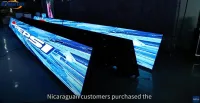
- Nicaragua: EA960SP4 outdoor perimeter screens assembled for a 72-hour aging test before shipment.
- Liberia: 35 EA640F2 indoor LED scoreboards, with customer feedback.
- Democratic Republic of the Congo: EA640F2 indoor LED scoreboard, with customer feedback.
- Bahrain: EA960R1 arena LED screens providing perimeter advertising around an event area; venue name and screen size are not confirmed in that case study.
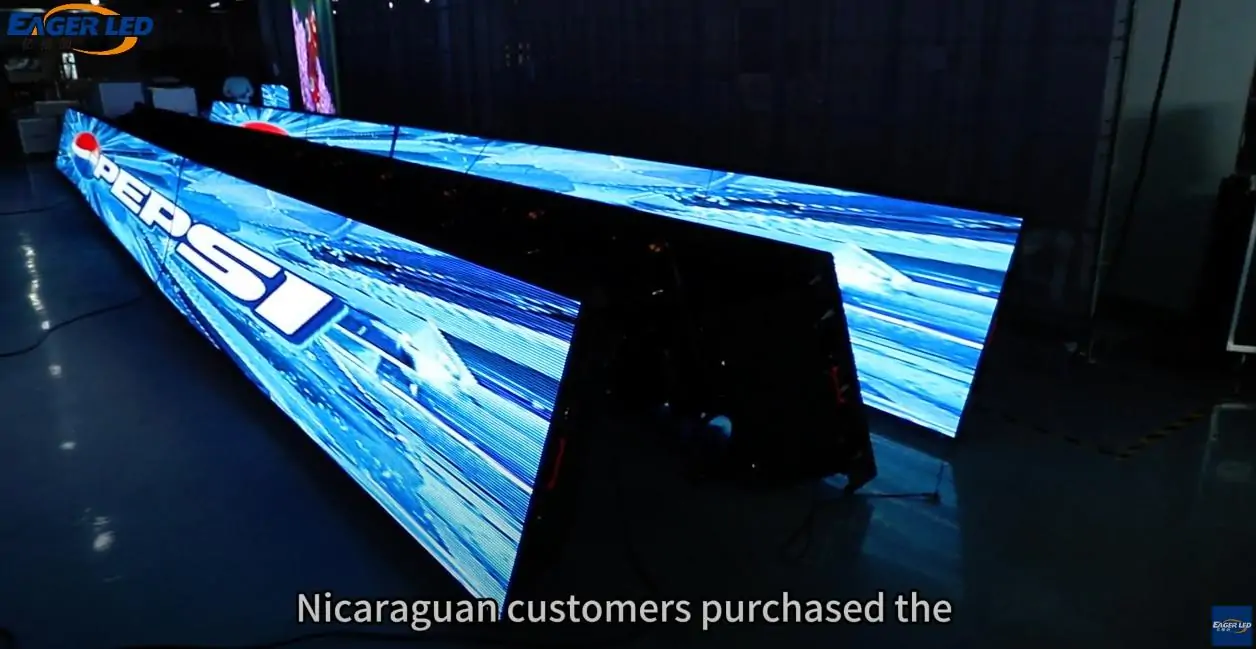
Records like these are what separate a sports LED display supplier with real stadium experience from one that only shows renderings. When you speak to any supplier, ask for records like these that match your own project: the same screen type, a similar quantity and a comparable climate. Ask for the order date and, where the customer agrees, a contact or photos from site.

8. How Do You Qualify a Sports LED Display Supplier?
Qualify a sports LED display supplier by asking every shortlisted company for the same evidence and comparing the answers side by side. The checklist below works for EagerLED and for any other supplier.

- Sports product sheets: full parameter tables for perimeter, scoreboard and arena models, not a general brochure.
- Safety design: photos of the mask, padded cover and bracket, plus the bracket’s angle range.
- Broadcast figures: refresh rate and grayscale stated for the exact pixel pitch you are buying.
- Weather rating: IP rating front and rear, and the operating temperature range.
- Delivery records: comparable projects with quantities and countries.
- Aging proof: photos or video of your own boards during the aging test. EagerLED’s quality control process includes module aging and a 72-hour screen aging test.
- Control and playout: which receiving cards and software are used, and how content is synchronized across boards. Our article on perimeter LED playout acceptance tests lists tests to run on delivery.
- Warranty and spares: the warranty term, spare quantity and whether spares come from the same production batch.
Price comes after these checks. Our guide to stadium screen cost explains the main cost drivers, and our article on choosing a cost-effective LED display manufacturer in China shows how to compare quotes line by line.
9. What Warranty, Spares and Match-Day Support Should You Expect?
Sports screens work to a fixed schedule: a board that fails an hour before kick-off cannot wait for a shipment. Agree the support plan before you order.
- Warranty: EagerLED gives complete screens a 2-year standard warranty, with an extended warranty available at a modest extra cost.
- Spare parts: EagerLED includes 2% spare parts with complete screens as standard. For perimeter systems, many venues also keep one or two complete spare boards so a damaged board can be swapped during a match.
- Batch matching: spares should come from the same production batch so replaced modules match the rest of the line.
- Training: ask for basic training for venue staff on swapping modules, power supplies and receiving cards, and on checking content playout before each event.
Ask for installation documents before production starts: cabinet weights, bracket drawings, cable and power plans, and the content resolution for each screen. A sports LED display supplier that provides these early lets your local contractor prepare foundations, power and cable routes while the boards are being built, which shortens the time from delivery to the first match.
A sports LED display supplier that is far from the venue should make up for distance with good documentation, complete spares and fast remote diagnosis. Ask how faults are reported and how quickly replacement parts ship.
Frequently Asked Questions
What refresh rate do sports LED perimeter boards need for TV?
Ask for 3,840 Hz or higher for boards that will be filmed, together with good grayscale at the working brightness. EagerLED lists 3,840 Hz for EA960SP4 and at least 3,840 Hz for all EA1280SP1 versions.
Which pixel pitch is common for stadium perimeter boards?
Outdoor perimeter boards commonly use P5 to P10, depending on how close the nearest spectators and cameras are. EA1280SP1 is offered in P5, P6.67, P8 and P10, and EA1600SP in P10.
Can perimeter LED boards be moved between venues?
Yes, if they are designed for it. Look for handles, quick locks, side cable entries and stack or hang options. EA1280SP1 supports stack or hang installation for rental use as well as fixed installation.
Can the same supplier provide scoreboards and perimeter boards?
A specialist sports LED display supplier usually can. EagerLED supplies outdoor perimeter boards such as EA960SP4 and EA1280SP1, and the EA640F2 cabinet has been used for indoor scoreboards, which keeps control systems and spares simpler.
How are sports LED boards protected from ball impact?
Through soft masks on the LED face, padded covers on the top edge and brackets built to absorb impacts. Ask the supplier for close-up photos of these parts on the exact model offered.
Do perimeter boards and scoreboards need separate control systems?
Not necessarily. Many venues drive perimeter boards, scoreboards and video boards from one control room, with each screen mapped as its own area. What matters is that the supplier confirms the receiving cards, sending devices and playout software for every screen, and tests synchronized content across all boards before delivery.
What warranty does EagerLED offer on sports screens?
Complete screens carry a 2-year standard warranty and ship with 2% spare parts as standard, with an extended warranty available for a modest increase in price.
Planning Your Sports LED Display Project
Send us the sport and venue type, the length of perimeter or the size of each screen, viewing and camera distances, indoor or outdoor use, and whether boards will be fixed or moved between events. EagerLED will recommend models from its sports range, share full parameter tables and comparable delivery records, and quote warranty and spares in writing. You can also review our sports LED display category first. Send your project details to get started.
 Cost-Effective LED Display Manufacturer in China: How EagerLED Balances Quality and Price
Related Posts
Fill In Your Needs In Detail
Fill in the screen usage scene and size you need in “Content”.You will get a quote.