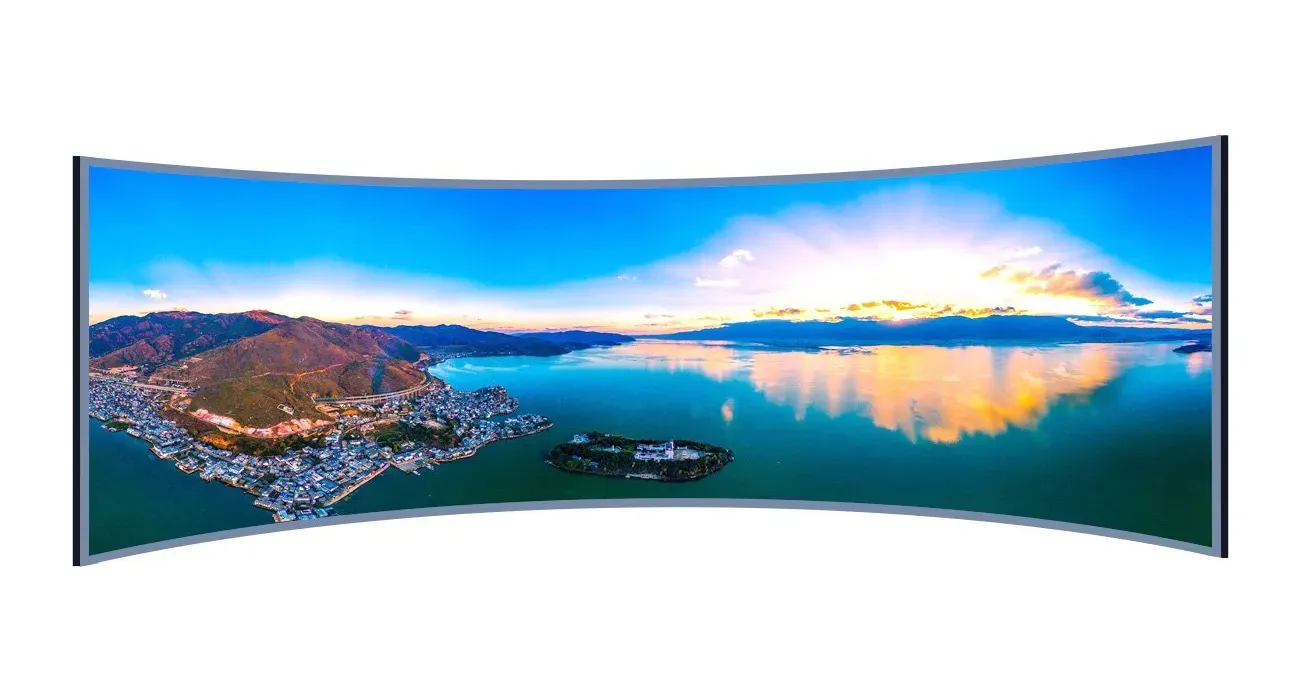
Evaluate a visitor center LED display supplier with one agreed package linking the physical shape, pixel map, content handoff and future service access. A dramatic curved-screen video is useful inspiration, but it cannot prove that a proposed installation will preserve your exhibit’s labels, transitions and maintainability.
This guide is for architects and experiential buyers shortlisting Chinese manufacturers for immersive visitor centers in Latin America. It focuses on the handoff between the exhibit designer, content studio, LED manufacturer and local installer. The article is in English; your team should separately approve the languages used in the exhibit.
- Give every supplier the same dimensioned surface and visitor viewpoints.
- Request a module layout and pixel map tied to that drawing revision.
- Inspect a representative content transition on the proposed shape.
- Resolve maintenance openings before decorative finishes are approved.
1. Define the visitor center LED display geometry
Send a drawing with a clear datum, units, surface dimensions, curve direction and intended mounting position. Mark where visitors enter, pause and move to the next exhibit. Distinguish the visible LED surface from surrounding architecture, decorative edges and any gaps deliberately left between surfaces.
Ask each manufacturer to return the achievable module arrangement and the assumptions behind it. A concept rendering does not identify the construction method. Continuous flexible modules, faceted rigid cabinets and custom shaped assemblies can produce different boundaries and service requirements, even when their concept images look similar.
The EA-Flex indoor flexible LED screen page describes magnetic modules for curved forms and front service. Ask for the permitted bending conditions, selected module revision and supporting structure for your proposal. Do not infer an unlimited radius or a finished support design from the word “flexible.”
2. Use a design-to-content handoff sheet
A visitor center LED display needs more than a total width and height. Ask the manufacturer and content studio to agree on the relationship between the physical surface and the pixels the player sends. Identify the origin, direction and any seams or hidden regions on the same revision-controlled drawing.
| Deliverable | Supplier or project-team evidence | Buyer acceptance question |
|---|---|---|
| Physical surface | Dimensioned plan and section with module boundaries | Does it match the approved geometry and viewing route? |
| Pixel map | Canvas dimensions, origin, direction and surface identification | Can the studio map its test grid without guessing? |
| Content test asset | Agreed grid, labels, moving line and boundary-crossing image | Are stretching, reversed areas and discontinuities identifiable? |
| Service envelope | Removal direction, tool clearance and access to electronics | Can the specified service be done after finishes are installed? |
| Final handoff | Accepted drawings, mapping files, asset revision and backups | Can an authorized replacement team reproduce the accepted layout? |
Keep concept approval and equipment acceptance separate. If the factory cannot reproduce the full geometry, document what the sample covers and which checks remain for the installed visitor center LED display. A reduced sample should not be recorded as a full-scale installation pass.
3. Review a representative shaped sample
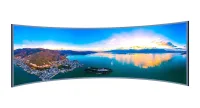
Choose the most difficult relevant transition: a concave-to-flat joint, a visible edge, a label crossing a module boundary or a cylindrical wrap seam. Request an agreed grid and representative exhibit artwork on the proposed assembly. Review it from the intended viewpoints rather than only straight in front of a convenient showroom screen.
For a visitor center LED display, separate ordinary content mapping from perspective-dependent imagery. If a visual effect is designed around a particular viewpoint, ask the studio to identify that position and show what nearby visitors see. Do not describe a single-view perspective effect as equally correct from every approach.
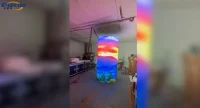
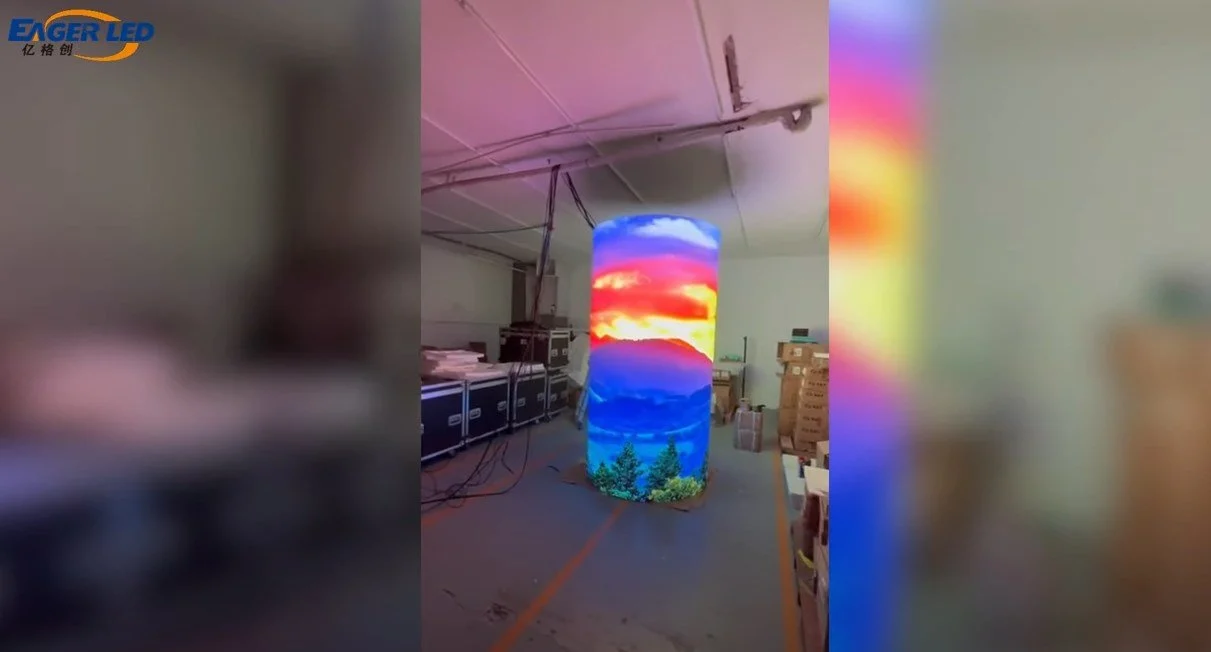
The company video below shows flexible modules and examples of curved screen forms. The reviewed segment shows a module being bent, which helps explain the construction approach. It does not specify a permissible bend for your selected revision or demonstrate an immersive visitor center acceptance test.
Company construction reference. Watch the original flexible LED module design video.
4. Keep a workable service route
Ask how a technician removes a module at the tightest curve and the least accessible edge. Include the tool movement and access to power and receiving equipment. Decorative trim, nearby glazing or exhibit objects can block a service action that was possible on an open factory frame.

The visitor center LED display proposal should identify replaceable parts and their compatible revisions. Request the supported mapping and calibration backup process. Clarify whether the content studio must adjust anything after a component or controller change, and who keeps the approved files after handover.
5. Check supplier scope and evidence
Compare the manufacturer’s responsibilities with those of the architect, structure supplier, local installer and content studio. Ask which party verifies site dimensions and resolves a drawing mismatch. The flexible LED selection guide provides broader product context; this shortlist should retain the coordinated design package specific to your installation.
During a factory review, request evidence of the relevant shaped assembly process, component identification and inspection records. Verify any comparable project through an authorized reference. A standard module photograph or a general factory tour does not establish experience with your exact geometry.
For the visitor center LED display shortlist, request destination-specific documentation for the offered equipment, written warranty scope, spare-part terms and the service escalation route. Ask local qualified project personnel to assess installation requirements. Do not assume that an overseas sales presence includes local technical attendance or content-production services.
Creative display purchasing questions
Can a concept rendering serve as the factory acceptance drawing?
Only if the parties have separately defined the construction details and acceptance information it contains. Normally, a rendering needs dimensioned geometry, module boundaries and a coordinated pixel map to support an equipment decision.
Does front service remove the need for an access review?
No. Confirm the removal movement, tools and access to each component after surrounding finishes are installed. “Front service” alone does not describe the complete service envelope.
Send a coordinated design brief
Send EagerLED the destination, dimensioned geometry, visitor viewpoints, indoor conditions, exhibit artwork, content-studio contact, module access constraints and scope responsibilities. Request a visitor center LED display proposal tied to one drawing revision, pixel map and representative sample plan.
 COB Control Wall: Supplier Visibility Checks
 Cylindrical LED Display: Column Fit Supplier Checks
Related Posts
Fill In Your Needs In Detail
Fill in the screen usage scene and size you need in “Content”.You will get a quote.