Shortlist a Chinese supplier of curved LED film only after it accepts the actual glazing geometry in writing and demonstrates the proposed layout on a representative curved sample. A flexible sheet shown in a product illustration does not establish the permitted bend direction, minimum radius, edge detail or replacement method for your storefront.
This guide is for architectural specifiers working on US and Canadian retail projects. It addresses the fit between an indoor film display and curved storefront glazing, rather than choosing between film and a framed transparent LED wall.
- Measure the surface that will receive the film, distinguishing curved length from straight span.
- Have the supplier identify permitted bending, module boundaries and edge connections.
- Approve a representative curved sample, including its off-state appearance and service procedure.
1. Specify the curved LED film geometry
Give every pane a drawing reference and identify the proposed attachment face. Show whether the curve is cylindrical, changes radius, reverses direction or bends in two axes. A supplier’s approval for bending around one axis should not be extended to a compound-curved surface without its written assessment.
Record the radius at the attachment surface, its direction, the usable height and the start and end of the display. Mark mullions, opening panels, seals, existing films and coatings. Measurements taken at the outer glass face can differ from those at the inner attachment face. Agree which surface the drawing describes before comparing suppliers.
Illustrative geometry calculation: for a single cylindrical surface with an assumed radius of 2 m (6.56 ft) and an included angle of 60°, the developed curved length is radius × angle in radians: 2 × π/3 ≈ 2.094 m (82.5 in). The straight chord is 2 × radius × sin(30°) = 2 m (78.7 in). The difference is about 94 mm (3.7 in).
These are geometric dimensions, not a cutting instruction or an approved bending radius. The example shows why ordering a curved LED film layout from the straight opening width alone can leave the module plan unresolved. Ask the supplier to return its approved active-area drawing, including any unlit edges and connection zones.
2. Compare supplier drawings, not flexibility claims
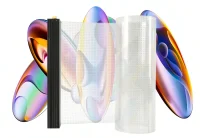
The EA-iFilm2 indoor transparent LED film page describes a flexible, self-adhesive format for glass surfaces and curved applications. It does not provide a universal radius approval for every storefront. Confirm the exact offered module revision, bending direction and limits against your drawing.
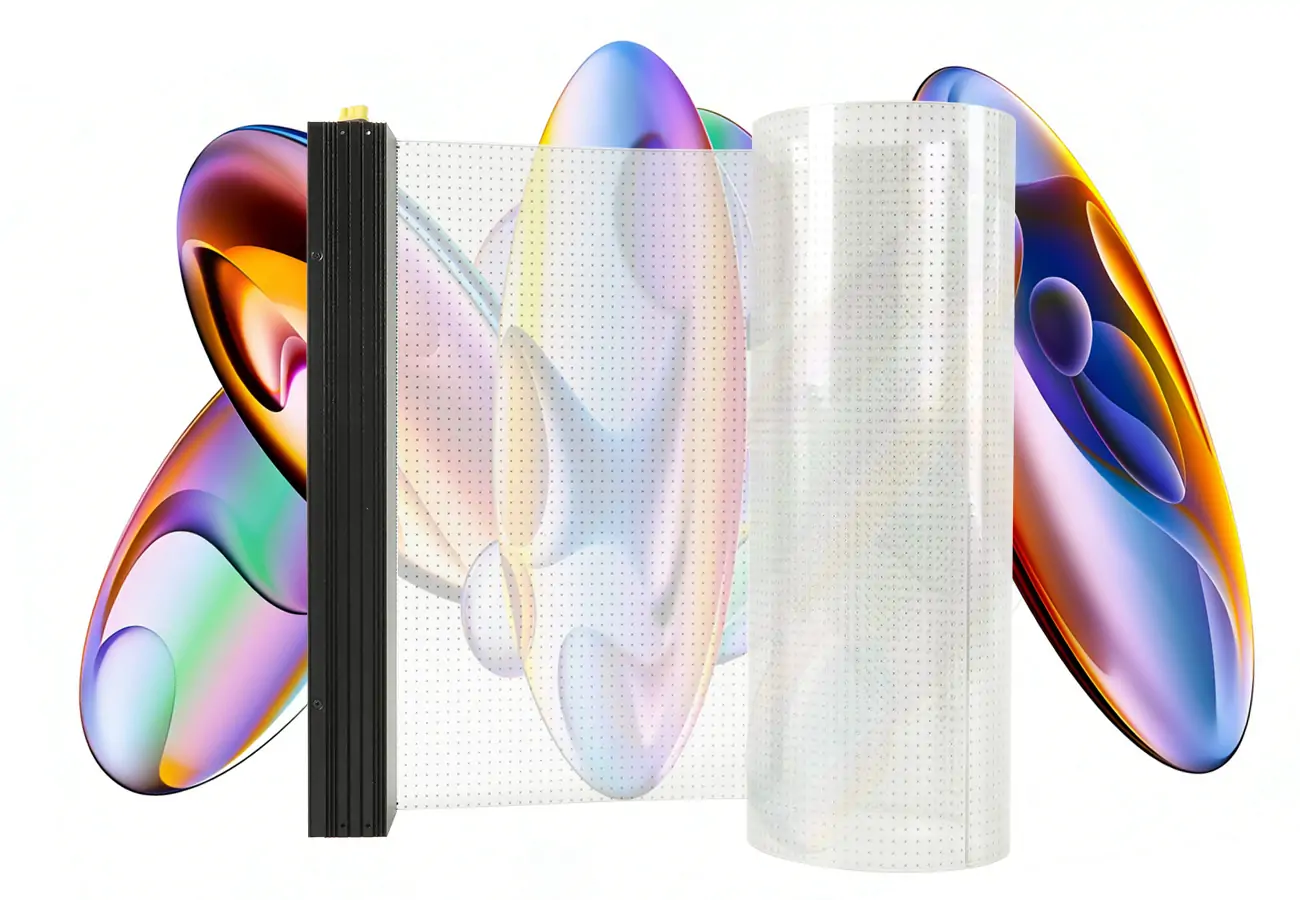
Use the following drawing request to compare curved LED film proposals. Ask the supplier to mark approved, revise or unsupported against each item. A proposal that identifies a limitation is more useful than an unqualified statement that the film fits any glass.
| Drawing input | Supplier response required |
|---|---|
| Attachment-face radius and bend direction | Permitted geometry for the identified module revision |
| Developed length, height and pane boundaries | Module layout with active area, seams and unlit margins |
| Connections and edge equipment | Termination positions, cable routes, clearances and access |
| Glass build-up and surface treatment | Approved preparation and attachment method for that surface |
| Future replacement route | Removal, spare-unit access and restored-image procedure |
Do not assume that film, LED rows and edge connection hardware share the same flexibility. Identify any rigid parts and the space needed for them. The curved LED film drawing should show where the image ends and where electrical equipment, covers and service access begin.
If the underlying display architecture is still undecided, use the transparent LED screen versus film comparison first. A flexible glass-mounted system and an independently supported cabinet system should not be evaluated as interchangeable installation methods.
3. Build a representative curved sample
A useful curved LED film sample reproduces the relevant radius, attachment face, glass surface and edge detail. A small loose strip bent by hand cannot establish the fit of a full module with its connections. Agree what the sample represents and which parts of the finished installation remain untested.
Have the glazing specialist and installer review the proposed preparation, application conditions and removal procedure with the manufacturer. Do not substitute cleaning chemicals or adhesive merely because they worked on another display. Record the sample identity, installer, preparation and observations; use the observation period and acceptance limits agreed for the actual project.
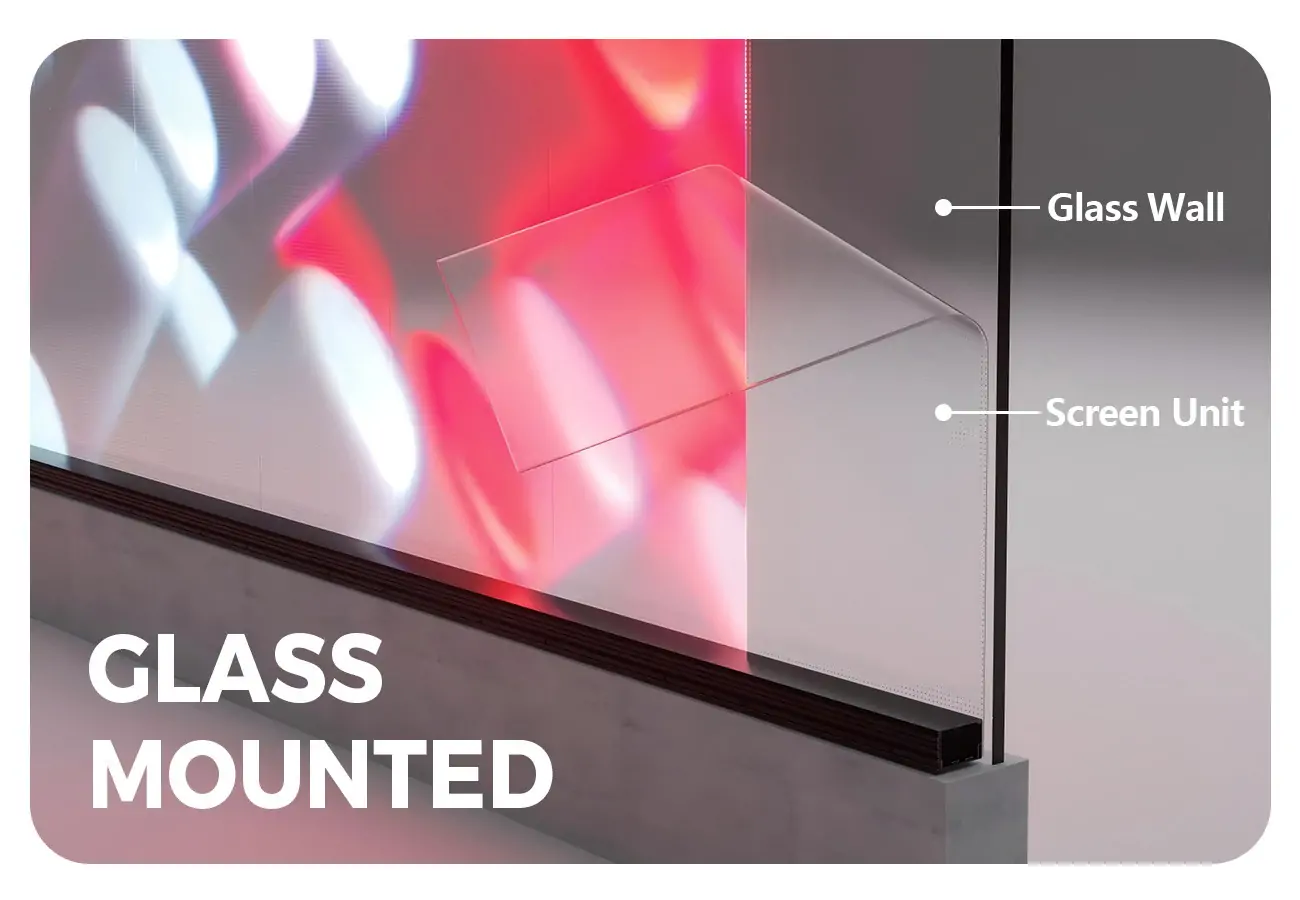
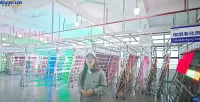
The company tutorial below shows EA-iFilm2 installation work on flat glazing, including positioning along the glass. Use it to prepare questions about alignment, access and workmanship. For curved LED film approval, require a separate demonstration on the agreed curved sample; the flat installation does not verify your radius.
Video: “EA-iFilm2 Indoor Flexible Film LED Display Installation Tutorial,” by LED Display Manufacturer-EagerLED. Watch the original YouTube tutorial.
4. Use a curve-specific acceptance worksheet
Inspect the curved LED film sample from the real pedestrian approaches and from inside the store. Agree the smallest essential text and representative graphics in advance. The view changes as a visitor moves around a curved window, so one photograph from directly in front is insufficient.
| Condition | What to inspect | Record to retain |
|---|---|---|
| Screen off | View through the pane, visible traces, seams and edge equipment | Glass/sample identity and viewing positions |
| Image on | Logo proportions, text direction and joins across the curve | Approved asset revision and native pixel map |
| Oblique approach | Readability and any blocked or excluded viewing positions | Marked plan and witnessed observations |
| Representative lighting | Useful contrast against the actual interior and reflections | Lighting condition and output setting |
| Service trial | Access, approved removal and reinstatement of a representative unit | Procedure, responsible installer and unresolved issues |
State whether the media is mapped along the developed surface or divided into separate pane sections. Review the output on the actual sample rather than promising undistorted content from every viewpoint. Ask the content team to agree which approaches matter most and how logos or text should span a seam.
Keep the product’s indoor designation separate from the storefront’s exposure. Identify the conditions at the attachment surface and at the power and control equipment, including direct sun through the glass. Request the applicable limits and measuring locations; do not infer the curved LED film assembly’s suitability from an outdoor air-temperature reading.
5. Connect the sample to the delivered system
A curved LED film supplier should connect its approved sample to the legal seller, production site, module identity and supplied components. During a live factory review, ask to see the identified module and connection arrangement rather than an unrelated showroom display. Keep the accepted drawing and any permitted substitutions with the purchase documents.
For each US or Canadian destination, have the project’s qualified professionals identify the installation and equipment documentation needed for that site. Check that any certification evidence covers the offered equipment; a company-level certificate or unrelated model should not close an open product question.
Agree who owns the glass assessment, installation, electrical work, content mapping and future service. Request written warranty and service terms that distinguish the film unit, attachment work, labor, travel and replacement delivery. Approve the curved LED film system only when the acceptance evidence and responsibility schedule describe the same configuration.
Questions about installation and ownership
Can the installer cut a film unit around an obstruction?
Only where the manufacturer approves the exact unit and cutting layout. A generic claim of cut-to-size capability is not permission to cut through any part of an LED film assembly. Have the supplier return the proposed layout before installation.
Does choosing a film display change who owns the glazing warranty?
Do not assume it does. Ask the glazing provider, building owner and display installer to confirm their respective conditions in writing before application. Keep that agreement with the approved attachment method and service plan.
Request a curved-glazing feasibility review
Send EagerLED the destination city, glazing schedule, attachment-face radius and direction, developed dimensions, pane drawing, viewing approaches, representative content, lighting/exposure information and proposed equipment locations. Identify the installer and any restrictions on attachment or future replacement.
Ask for an identified curved LED film configuration, marked module drawing and representative-sample plan before comparing final quotations. Request a curved-glazing LED review
 LED Screen Lifespan: How Long Does an LED Display Last?
 GOB Showroom Wall: Supplier Interaction Checks
Related Posts
Fill In Your Needs In Detail
Fill in the screen usage scene and size you need in “Content”.You will get a quote.