Italy’s LED display market offers several purchasing routes: locally engineered systems, specialist screen suppliers, installation partners, and international manufacturers. For AV integrators, distributors, and project contractors, the right choice depends on the equipment configuration, engineering support, installation scope, and maintenance arrangements.
This guide presents ten companies for buyers sourcing LED displays for projects in Italy, with EagerLED in fourth position. The list includes Italy-based businesses and EagerLED as an international manufacturing option. Its order is editorial and does not represent a verified ranking by revenue, market share, or product quality.
The guide focuses on the decisions behind a successful purchase: understanding supplier responsibilities, specifying the screen, comparing quotations, and arranging support after installation. Company descriptions reflect published offerings; product availability, manufacturing origin, service coverage, and commercial terms should be confirmed for the specific project.
A suitable LED display supplier should provide more than an attractive specification sheet. The proposal should explain how the complete system will perform, how technicians will maintain it, and who will resolve problems throughout its operating life.
1. Italy’s LED Display Market: Manufacturers vs. Suppliers
A company selling an LED display in Italy may manufacture the system, specify equipment produced by another factory, or integrate screens into a complete audiovisual installation. These roles can overlap.
For procurement, the distinction matters because it determines who controls component selection, product documentation, configuration changes, replacement parts, and warranty repairs. A local business address alone does not establish where the equipment was manufactured.
| Supplier role | Typical contribution | What buyers should establish |
|---|---|---|
| Manufacturer or engineering company | Product design, production coordination, assembly, or testing | Which activities it performs and where |
| Distributor or specialist supplier | Product selection, equipment supply, and channel support | Manufacturer relationships, stock, and parts access |
| AV integrator | System design, control integration, installation, and commissioning | Engineering deliverables and subcontracted responsibilities |
| Rental and staging provider | Temporary screen deployment and event operation | Equipment availability, crew scope, and contingency arrangements |
For a contractor, an experienced integration partner may reduce the work required to coordinate a complex installation. For a distributor building a repeatable product range, configuration consistency and replacement supply may carry greater weight.
Ask each shortlisted company to identify the legal seller, equipment manufacturer, installer, and service contact. Establishing those responsibilities early prevents a technical fault from becoming a dispute between organizations.
An LED display purchasing decision should therefore assess both the product and the delivery model. A technically suitable cabinet can still create problems if installation, documentation, or maintenance responsibilities remain unclear.
2. How the Ten LED Display Companies Were Selected
The shortlist considers identifiable businesses with published professional LED wall offerings relevant to buyers in Italy. It includes companies involved in manufacturing, engineering, equipment supply, installation, or rental.
Nine entries are businesses serving the Italian market through their local offerings. EagerLED appears as a China-based manufacturing option for professional buyers evaluating international sourcing.
The companies address different procurement needs. Some emphasize engineering and production; others concentrate on commercial signage, custom installations, content management, or event equipment. Inclusion does not establish that every company can meet every project specification.
Public websites provide an initial basis for comparison, but they cannot demonstrate delivery reliability or future service performance. Those factors require technical submissions, demonstrations, project references, and written commitments.
A useful evaluation has two stages. First, identify companies whose offerings match the project. Then assess the actual LED display proposals against a shared specification.
Avoid scoring suppliers from promotional language alone. Product suitability, installation quality, and service response must be evaluated through evidence relevant to the proposed installation.
3. Top 10 LED Display Manufacturers and Suppliers in Italy
The following table provides an initial comparison. EagerLED occupies the fourth position as an international manufacturing option, while the other entries represent Italian-market suppliers and service providers.
| Position | Company | Published offering | Procurement priority |
|---|---|---|---|
| 1 | Euro Display | LED screen production and installation | Production scope and custom construction |
| 2 | MacroPix | LED systems, engineering, software, and services | Hardware and software integration |
| 3 | OmegaLed | Indoor, outdoor, commercial, and rental products | Exact configuration and support scope |
| 4 | EagerLED | China-based manufacturing of professional LED screens | Factory configuration and local delivery responsibilities |
| 5 | VeroLED | Configurable screens across several applications | Component selection and configuration consistency |
| 6 | Lumio Italia | Indoor, outdoor, retail, and custom LED walls | Site design and architectural requirements |
| 7 | YesWeDigital | LED walls with content management and services | Publishing workflow and ongoing support |
| 8 | Jumbo Screen | LED walls, window displays, and signage | Installation scope and site suitability |
| 9 | Ledwall Italia | Sales, rental, installation, and maintenance | Responsibility across the project lifecycle |
| 10 | DSI Milano | Modular LED wall sales and rental | Event requirements and equipment availability |
01. Euro Display
Euro Display describes its activities as including the production and installation of indoor and outdoor LED screens. Its published company information identifies production activities at its Avigliana facility and discusses customized screen construction.
It is relevant to buyers investigating an Italian manufacturing route. Ask which elements of the proposed LED display are designed, assembled, and tested locally, and request documentation covering the quoted product.
For custom projects, examine drawings, cabinet tolerances, service access, and the process for approving changes. Establish how replacement components will be supplied if the original configuration changes during the installation’s working life.
02. MacroPix
MacroPix publishes an offering covering professional LED screens, engineering, installation, maintenance, and digital signage software. Its services extend beyond cabinet supply to system design and operation.
This makes it relevant when an LED display forms part of a broader communication system. Discuss the relationship between screen control, content scheduling, monitoring, and the client’s existing infrastructure.
Request separate descriptions of included software, commissioning, training, and maintenance. The quotation should explain which functions are delivered at handover and which require an ongoing service agreement.
03. OmegaLed

OmegaLed’s published range includes indoor and outdoor LED walls, commercial displays, and rental and staging products. Its website also presents technical assistance as part of its offering.
It is a candidate for buyers comparing several screen formats within one supplier’s portfolio. Begin with the application and service requirements before selecting a product family.
For the proposed LED display, request the exact cabinet model, component configuration, maintenance direction, and control equipment. Confirm that any demonstration uses equipment representative of the quoted configuration.
04. EagerLED
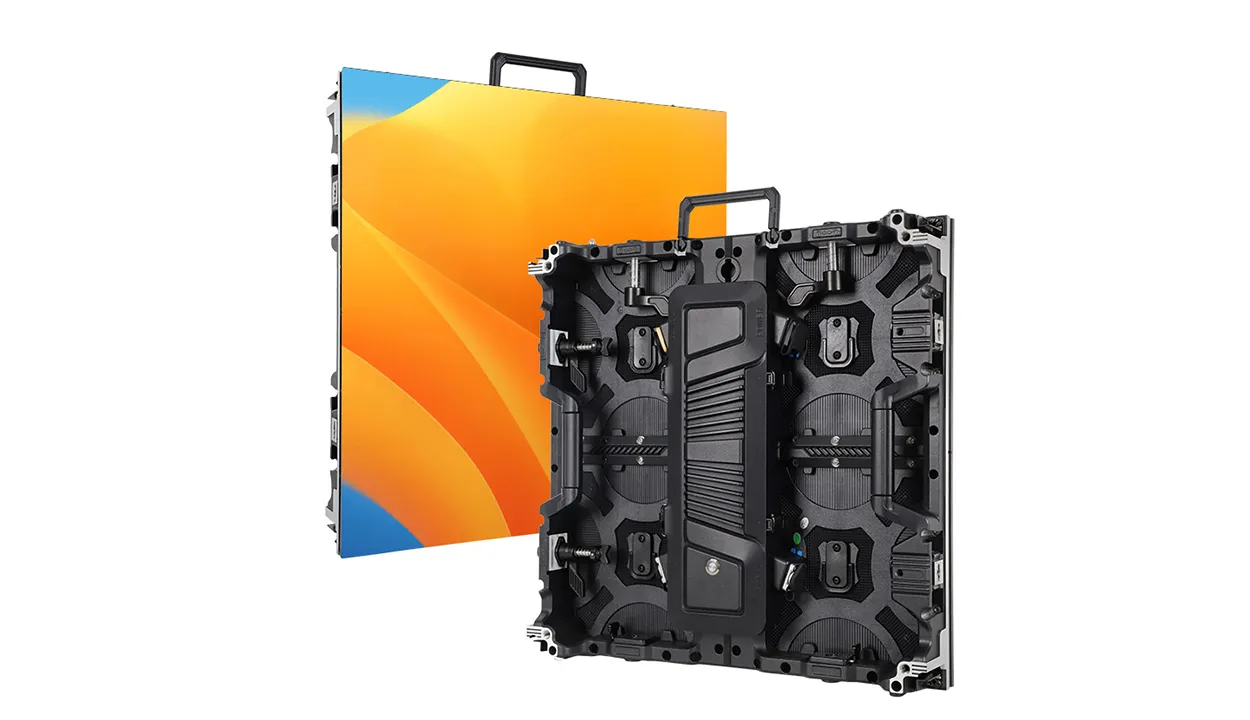
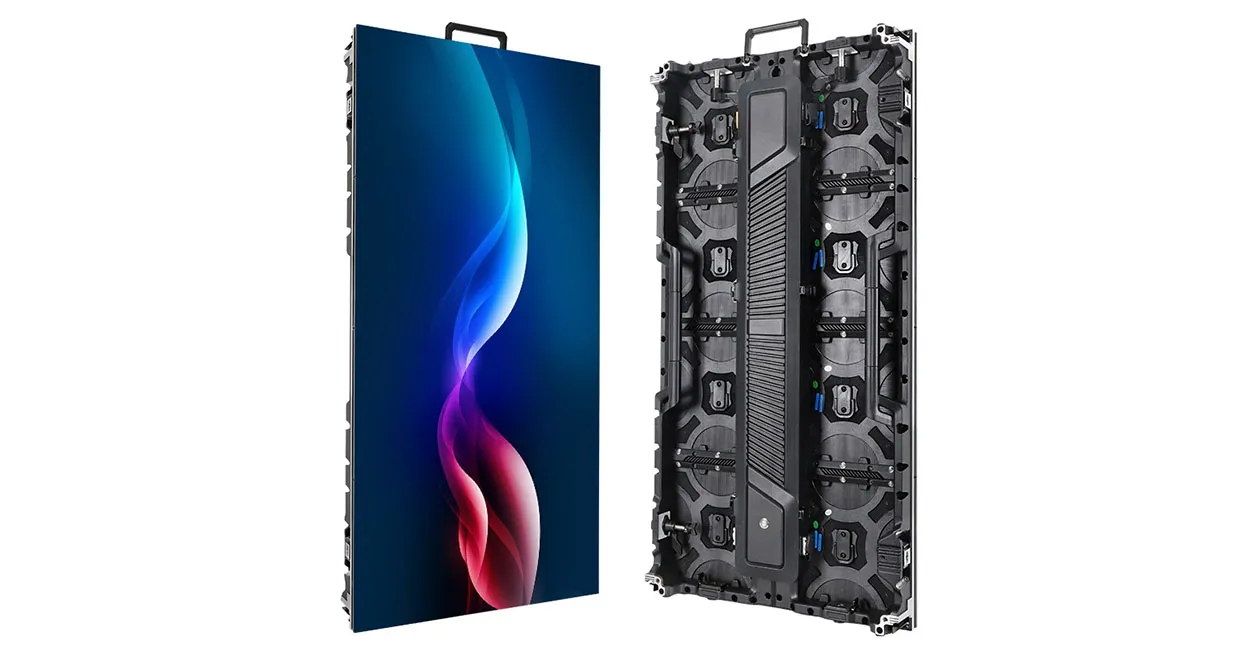
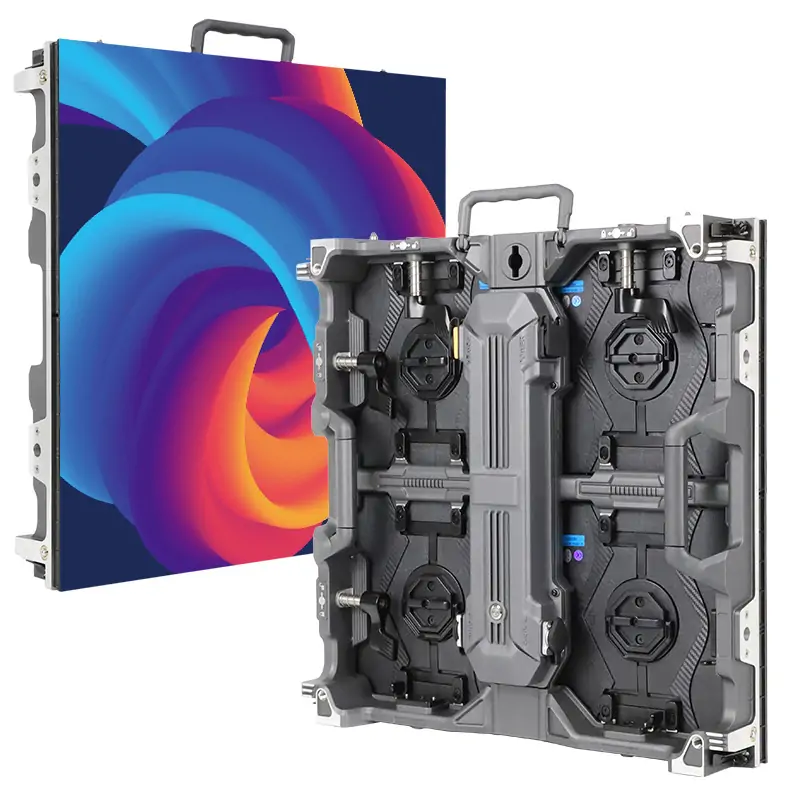
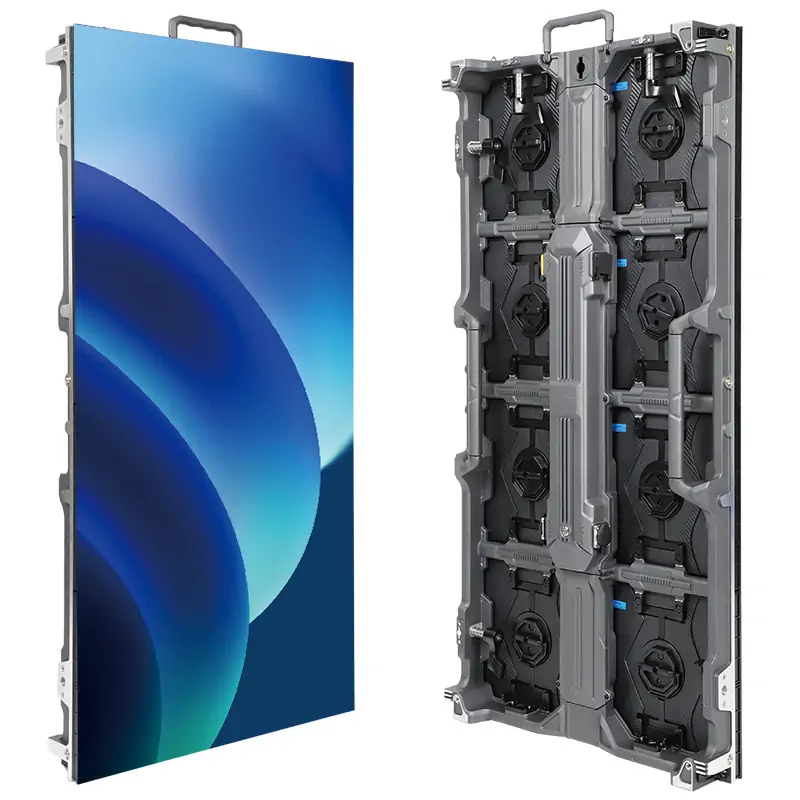
EagerLED is a China-based LED display manufacturer with a published portfolio covering indoor, outdoor, rental, transparent, fine-pitch, and other professional screen categories. It is included here as an international sourcing option for Italian distributors, AV integrators, and project contractors.
For buyers considering factory sourcing, the main discussion should cover configuration control, cabinet layout, processing compatibility, documentation, spare parts, and technical support. An equipment order should identify the approved configuration and the process for reviewing substitutions.
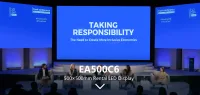
EagerLED’s published product range includes front-service indoor equipment, such as the EA640F2, whose documentation identifies access to modules, power supplies, and receiving cards from the front. Buyers should verify these features for the exact model and configuration proposed.
For an Italian project, confirm installation arrangements, delivery responsibilities, commissioning, and local maintenance separately. Do not assume that manufacturing supply automatically includes on-site services in Italy.
05. VeroLED
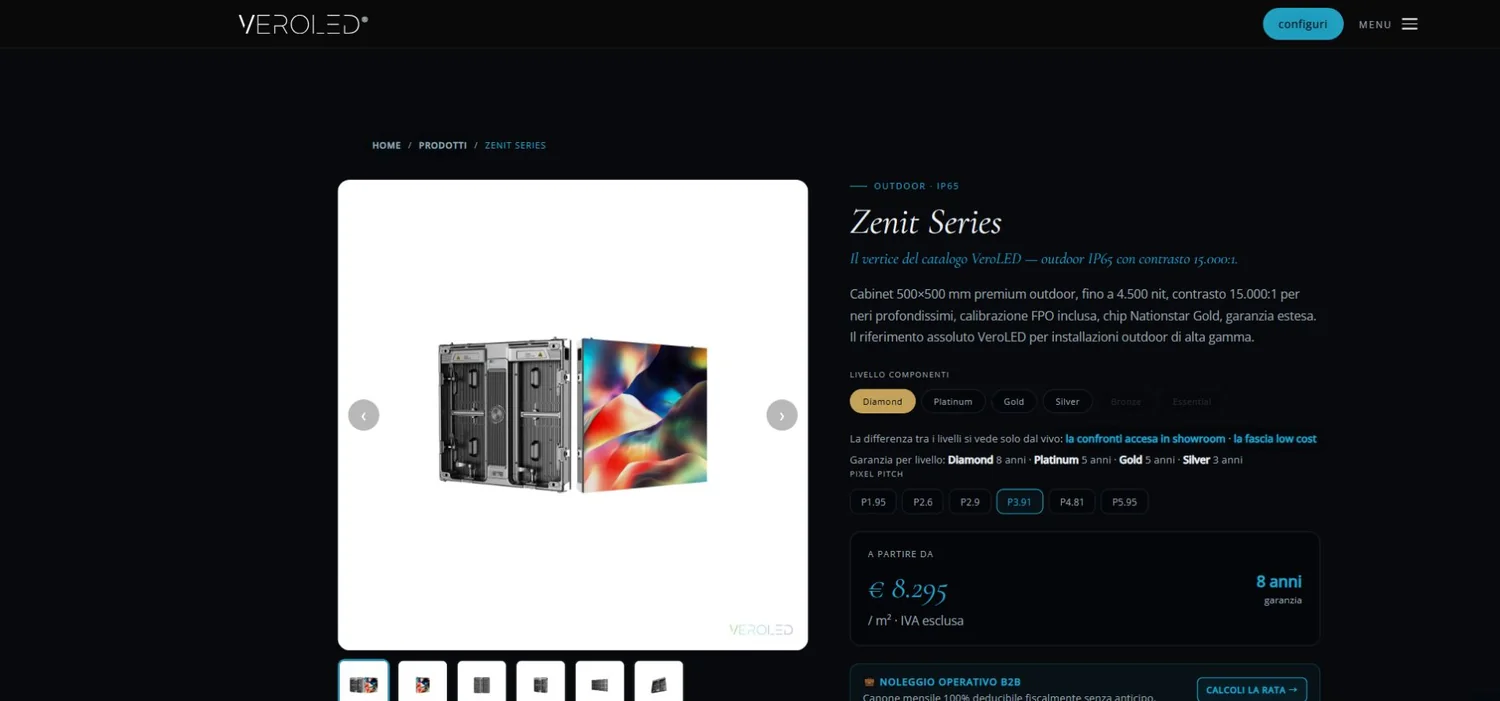
VeroLED presents configurable LED wall products covering indoor, outdoor, rental, window, and visual-production applications. Its catalog distinguishes component and commercial configurations within product families.
That approach makes configuration control central to procurement. Two quotations using a similar cabinet appearance may contain different components, warranties, or performance commitments.
Ask for an approved configuration schedule identifying the relevant LED package, driver electronics, power supply, receiving card, and service arrangements. Record which substitutions require approval, particularly when ordering an LED display fleet in several stages.
06. Lumio Italia
Lumio Italia publishes indoor, outdoor, retail, and custom LED wall solutions alongside purchasing, rental, and installation services. Its offering also includes curved and other customized formats.
It is relevant to projects where the screen must fit an architectural or retail concept. Discuss the physical envelope, audience position, content format, and access constraints together.
For an unusual LED display shape, request a pixel map and representative content preview. A compelling physical design still needs a usable content canvas, practical module replacement, and a maintainable supporting structure.
07. YesWeDigital
YesWeDigital describes LED wall design, sales, and rental for retail, corporate, event, and sports applications. Its offering includes content management through PlayUp and technical assistance.
It is relevant when the buyer needs both screen hardware and an ongoing publishing workflow. Evaluate who will create, approve, schedule, and monitor content.
For a multi-site LED display project, ask about user permissions, interrupted connectivity, remote diagnostics, subscription terms, and account ownership. Hardware acceptance and software acceptance should have separate requirements.
08. Jumbo Screen
Jumbo Screen markets LED walls, digital window displays, and LED signage, with sales, rental, and installation included in its published offering.
Its portfolio is relevant to commercial signage and storefront projects. A site survey should determine whether the audience views the screen directly, through glazing, or from changing outdoor positions.
Request an installation scope covering structure, power, cabling, commissioning, and access equipment. For window applications, evaluate reflections and heat conditions before accepting a screen based only on advertised brightness.
09. Ledwall Italia
Ledwall Italia presents indoor and outdoor LED wall sales, rental, installation, and maintenance. Its published services include support for routine and corrective maintenance.
It is relevant when a buyer wants coordinated equipment supply and project execution. Clarify which tasks are performed directly and which involve equipment partners or subcontractors.
For the proposed LED display, obtain a responsibility schedule covering site preparation, commissioning, troubleshooting, and replacement parts. Identify the contact responsible for resolving faults involving both the screen and its signal system.
10. DSI Milano
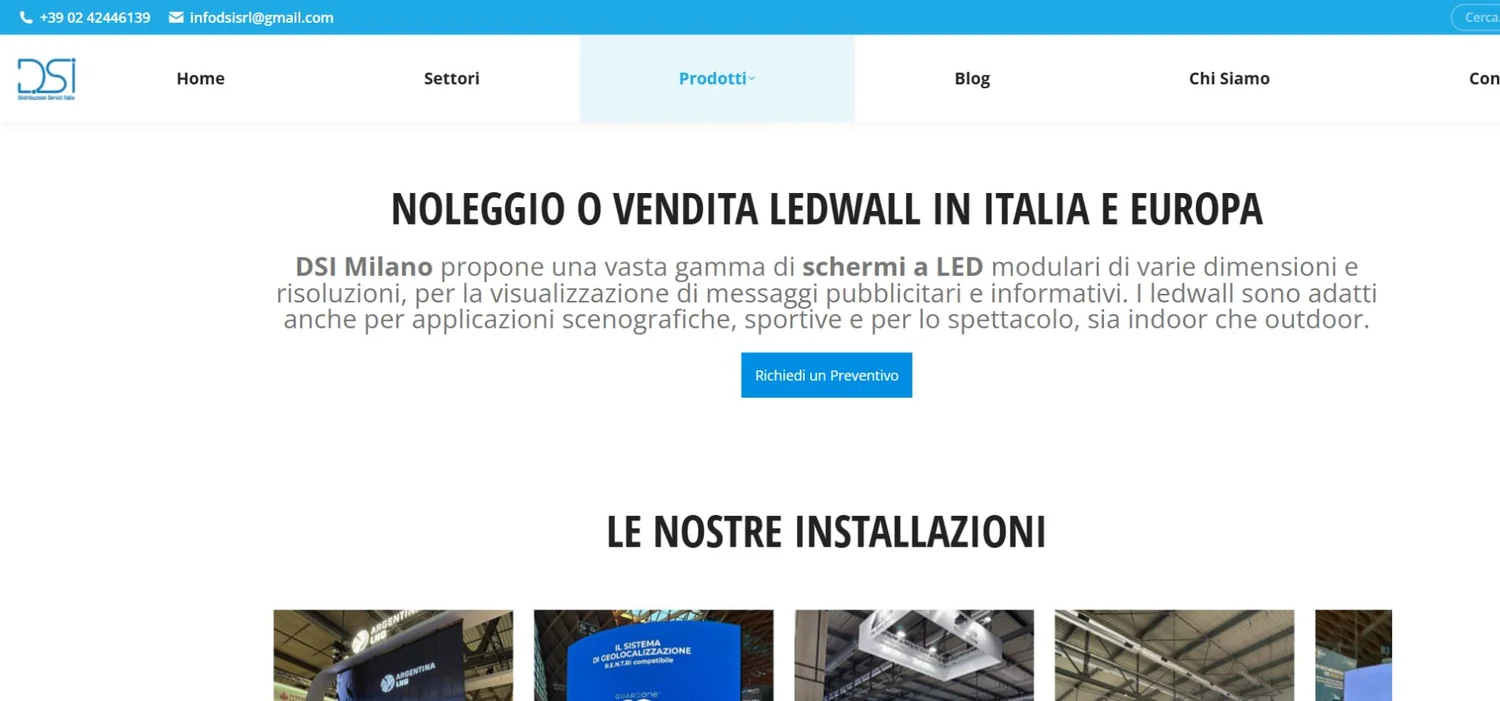
DSI Milano publishes LED wall sales and rental services for Italy and Europe. Its offering includes modular screens for promotional, exhibition, sports, and entertainment applications.
It is relevant to event contractors comparing temporary deployment with equipment ownership. Discuss the complete event workflow, including transport, setup, operation, and dismantling.
For filmed events, request a camera test using representative equipment. Confirm the LED display inventory reserved for the booking, compatible spares, technical crew availability, and the procedure for replacing a damaged cabinet.
4. Comparing Supplier Strengths and Limitations
The most useful comparison concerns responsibility and execution. A locally supplied LED display can simplify site coordination, while a direct manufacturing relationship may offer closer involvement in product configuration.
A turnkey supplier can reduce coordination work for an integrator, but the quotation must define the promised outcome. “Installation included” may leave structural work, electrical preparation, lifting equipment, or content commissioning outside the price.
Direct sourcing can suit distributors with engineering and service capabilities. It also requires clear arrangements for incoming inspection, documentation, logistics, and local repair.
For example, an integrator considering EagerLED should define which responsibilities belong to the manufacturer, the installer, and the end customer. These responsibilities should form one coordinated delivery plan.
A factory equipment quotation and a locally installed system price cannot be compared fairly until freight, installation, commissioning, documentation, spares, and service are accounted for.
Also examine communication quality during procurement. Clear responses to drawings, configuration questions, and acceptance requirements provide useful evidence about how the supplier manages technical detail. Record unresolved questions before issuing a purchase order.
5. LED Display Types and Specifications to Compare
Select the LED display around the content, audience, and installation environment. Labels such as “HD,” “fine pitch,” or “professional” do not replace a detailed specification.
01. Pixel pitch and native resolution
Pixel pitch is the distance between adjacent pixel centers, expressed in millimeters. At the same screen size, a smaller pitch provides more pixels.
For preliminary planning:
Horizontal pixels ≈ active width in millimeters ÷ pixel pitch
As a hypothetical geometry example, a 4,000 mm-wide active surface at a true 2 mm pitch contains approximately 2,000 horizontal pixels. The final resolution must follow the actual module and cabinet arrangement.
A controller accepting a 4K input does not make the LED display a native 4K screen. Ask for the physical pixel matrix and review how source content will be scaled.
02. Brightness, grayscale, and camera behavior
Evaluate brightness under the intended operating conditions. A demonstration at maximum output may reveal little about image quality at a comfortable indoor setting.
For filmed applications, distinguish LED refresh behavior from source video frame rate. Camera exposure, screen timing, scan behavior, and processing interact. A headline refresh figure alone cannot establish camera performance.
Request tests using the intended camera settings and representative screen brightness. Evaluate moving content and dark scenes as well as static graphics.
| Specification | Decision it supports | Evidence to request |
|---|---|---|
| Native pixel matrix | Text readability and content layout | Cabinet map and complete screen resolution |
| Calibrated brightness | Visibility and viewing comfort | Measurement conditions and operating range |
| Low-brightness grayscale | Dark-scene detail | Representative content at planned settings |
| Refresh and processing behavior | Camera compatibility | Recorded test using intended settings |
| Environmental protection | Suitability for exposure | Rating scope and relevant documentation |
| Service access | Maintainability | Demonstration of component removal |
| Power characteristics | Electrical and operating-cost planning | Maximum draw and stated typical-use conditions |
03. Outdoor protection and maintenance
IP ratings concern enclosure protection under defined conditions. They do not establish resistance to every outdoor hazard or substitute for structural, thermal, and corrosion assessment.
Confirm whether the stated rating covers the front, rear, or complete assembly. Review cable entries, connectors, drainage, and the installed enclosure arrangement.
Likewise, front-removable modules do not prove that every internal component is accessible from the front. Check power supplies, receiving cards, connectors, and extraction clearance.
For any LED display installed without a rear service aisle, ask the supplier to demonstrate the complete maintenance sequence before approving the cabinet design.
6. LED Display Applications: Retail, Events, Sports, and DOOH
The application determines which compromises are acceptable. Equipment suitable for distant advertising may be unsuitable for close-view presentation text.
| Application | Main operating challenge | Useful acceptance test |
|---|---|---|
| Retail window | Daylight, glazing reflections, and enclosure heat | View representative content through the actual glass |
| Corporate presentation | Small text and comfortable brightness | Review slides from the closest and farthest seats |
| Rental event | Repeated assembly and live fault recovery | Demonstrate cabinet replacement and signal recovery |
| Sports venue | Moving content and varied viewing positions | Test actual graphics from representative spectator areas |
| DOOH advertising | Exposure, scheduling, and unattended operation | Demonstrate dimming, monitoring, and restart behavior |
For retail projects, evaluate the complete viewing path. Glass affects reflections and contrast, while a confined window recess can alter thermal conditions.
For corporate rooms, use real spreadsheets, charts, and presentation slides. Promotional video may conceal weaknesses in small-text rendering.
For rental work, mechanical handling deserves attention alongside image quality. Examine alignment, connectors, transport protection, and the procedure for identifying damaged equipment between events.
For outdoor advertising, establish the operating schedule and fault-reporting process. A readable LED display still needs someone responsible for detecting missing content, failed sections, or inappropriate brightness settings.
Acceptance tests should reflect the contracted application. A showroom demonstration is useful, but it cannot reproduce every installation condition.
7. LED Display Prices in Italy and Total Ownership Costs
There is no dependable universal price for an LED display in Italy. Screen area, pitch, component configuration, structure, processing, installation conditions, and service scope all affect the quotation.
A square-meter price can help compare closely matched hardware configurations. It becomes misleading when one offer includes complete installation and another covers cabinets alone.
Request an itemized quotation using a common scope.
| Cost category | Items to clarify | Common comparison gap |
|---|---|---|
| Screen hardware | Cabinets, modules, power supplies, receiving cards | Different component configurations |
| Control equipment | Processor, sender, player, interfaces, licenses | Input capability mistaken for native resolution |
| Installation | Structure, labor, cabling, lifting, commissioning | Site preparation omitted |
| Logistics | Packaging, transport, delivery, unloading | Unclear delivery responsibility |
| Operations | Electricity, software, connectivity, monitoring | Recurring charges excluded |
| Maintenance | Spares, labor, access equipment, transport | Parts warranty mistaken for complete service |
01. Estimating electricity costs
For preliminary budgeting:
Annual energy cost = average operating kW × annual operating hours × electricity price per kWh
Use a documented average operating assumption. Maximum rated power is relevant to electrical design, but it does not automatically represent normal content playback.
Ask bidders to state the image, brightness, and operating conditions behind typical-power figures. Otherwise, apparently comparable efficiency claims may describe different tests.
02. Budgeting for downtime and repairs
An LED display mounted above a public entrance can cost more to access than one installed at floor level. Replacement labor, lifting equipment, and access restrictions belong in the maintenance budget.
Distinguish warranty duration from response time. A parts warranty may require shipping components away for assessment.
Specify who diagnoses the fault, supplies replacements, pays transport, and restores operation. Where uninterrupted service matters, evaluate the proposed spare-parts strategy and recovery procedure alongside the purchase price.
8. How to Choose and Buy From an LED Display Supplier
A clear request for quotation reduces revisions and makes competing proposals easier to assess.
01. Define the project before requesting prices
Provide the target active dimensions, installation drawings, closest viewing position, content examples, lighting conditions, operating schedule, and completion date.
Describe the available electrical supply, signal sources, network policy, mounting location, and maintenance access. Include camera requirements where relevant.
For phased deployments, explain how future screens must match the first order. An LED display specification should identify the approved configuration and the process for reviewing substitutions.
Use the same brief when requesting proposals from Italian suppliers and international manufacturers such as EagerLED.
02. Evaluate a representative sample
Use your own content during demonstrations. Check text, gradients, dark scenes, skin tones, and moving graphics at realistic brightness.
Inspect cabinet joints and alignment from the audience position. Ask a technician to demonstrate maintenance rather than describing it verbally.
For critical projects, agree on factory and site acceptance procedures before ordering. Specify test conditions, acceptance thresholds, corrective actions, and sign-off responsibilities.
03. Review documentation and handover
Request documentation identifying the actual product and responsible entities. Where CE marking applies, ask for the relevant EU declaration of conformity and supporting product identification. A logo alone does not establish the documentation required for the proposed equipment.
Structural and electrical requirements should be confirmed by qualified project professionals.
At handover, obtain drawings, cabinet maps, operating instructions, configuration backups, training records, and the agreed spare-parts inventory. Record access credentials and software ownership.
The LED display should enter service with a documented maintenance process, named support contacts, and a clear route for ordering compatible replacements.
FAQ
01. Can LED display modules from different brands be mixed?
Generally, they should not be treated as interchangeable. Matching dimensions and pixel pitch do not establish compatibility. Pin assignments, driver electronics, scan configuration, mounting, color characteristics, and calibration may differ. Obtain explicit compatibility confirmation before fitting an alternative module, and test it within the existing system.
02. Can an installed LED wall be expanded later?
Sometimes, but expansion depends on mechanical compatibility, controller capacity, power provision, and matching replacement stock. New modules may also look different from aged modules. If expansion is likely, agree on the future layout, configuration retention, and calibration approach during the original purchase.
03. Can an outdoor LED display operate near the coast?
Potentially, provided the proposed system addresses the actual exposure. Salt, humidity, wind-driven rain, and corrosion require assessment beyond a headline IP rating. Ask the supplier to identify suitable materials, protective measures, maintenance requirements, and any coastal-environment warranty exclusions for the quoted configuration.
04. Do transparent LED screens work behind every shop window?
No. Results depend on daylight, viewing angle, reflections, pixel structure, background conditions, and content. Transparency also affects the appearance of the image. Evaluate a sample behind representative glazing and assess both screen visibility and the view through the window before choosing the format.
05. Can a standard LED screen create a glasses-free 3D effect?
A conventional screen can show perspective-based content that appears three-dimensional from a planned viewing area. The effect depends on content design, screen geometry, and audience position. It does not establish stereoscopic performance or an equally convincing result from every direction. Review content-production requirements separately.
06. Can an LED display run without continuous internet access?
Yes, if the selected playback system supports local storage and offline scheduling. Remote updates and monitoring may still require connectivity. Ask for a demonstration showing what happens when the network fails, when power returns, and when scheduled content expires.
07. Who should retain receiving-card configuration files?
The maintenance agreement should ensure that the owner or authorized service provider can obtain the files needed to restore operation. Keep verified backups, cabinet maps, software versions, and calibration information where available. Replacing a receiving card becomes harder when essential settings are undocumented.
08. How should replacement modules be stored?
Follow the manufacturer’s storage and handling instructions. Protect modules from moisture, dust, electrostatic discharge, mechanical damage, and unsuitable temperatures. Label spares by model, batch, and intended screen. Keep records of their condition and configuration so technicians can identify the correct replacement quickly.
Conclusion
The most suitable LED display manufacturers and suppliers for projects in Italy are those whose equipment, engineering, and service responsibilities match the installation. Use this shortlist to identify relevant candidates, then compare actual configurations through a shared specification, representative demonstrations, and written acceptance criteria.
EagerLED appears in fourth position as an international manufacturing option for distributors, AV integrators, and contractors evaluating factory sourcing. Its proposal should be assessed alongside local offers using equivalent delivery, installation, documentation, and maintenance scopes.
Before committing to an LED display, resolve the questions that will matter after handover: whether the image meets the application, whether technicians can service the installation, and whether compatible parts and configuration records will remain accessible.
 LED Scan Rate Explained: 1/8 vs 1/16 Scan for Outdoor Screens
 LED Screen Lifespan: How Long Does an LED Display Last?
Related Posts
Fill In Your Needs In Detail
Fill in the screen usage scene and size you need in “Content”.You will get a quote.