An exhibition LED display budget should separate the fleet equipment you buy from the services required for each show. Cabinet area and pixel pitch affect the equipment quotation, while transport, booth access, power provision, installation, content preparation and support determine what it costs to put that equipment into service.
For AV rental companies serving indoor exhibitions in the USA and Canada, the useful comparison is a warehouse-ready purchase package plus a separately identified show deployment allowance. This guide provides a cost-ownership worksheet; it is not a price list or a local rental quotation.
- Define the active wall, content task and accepted indoor configuration.
- Identify purchased, already-owned and temporarily hired equipment.
- Separate destination delivery from movement to the booth.
- Assign every show service to one provider and one budget line.
1. Define the exhibition LED display budget scope
Start with the exhibitor’s content and viewing task. Record active width and height, closest intended viewing position, smallest required text, source devices and operating hours. Include the booth drawing, support method, service clearance and the date when the image must be ready for review.
The exhibition LED display budget should distinguish cabinet geometry from image resolution. A physically larger wall is not automatically a higher-resolution canvas. Ask for the native cabinet pixel dimensions, complete wall pixel map and processor configuration. Test representative product labels and presentation slides under the proposed conditions rather than selecting pitch from a generic distance rule alone.
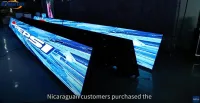
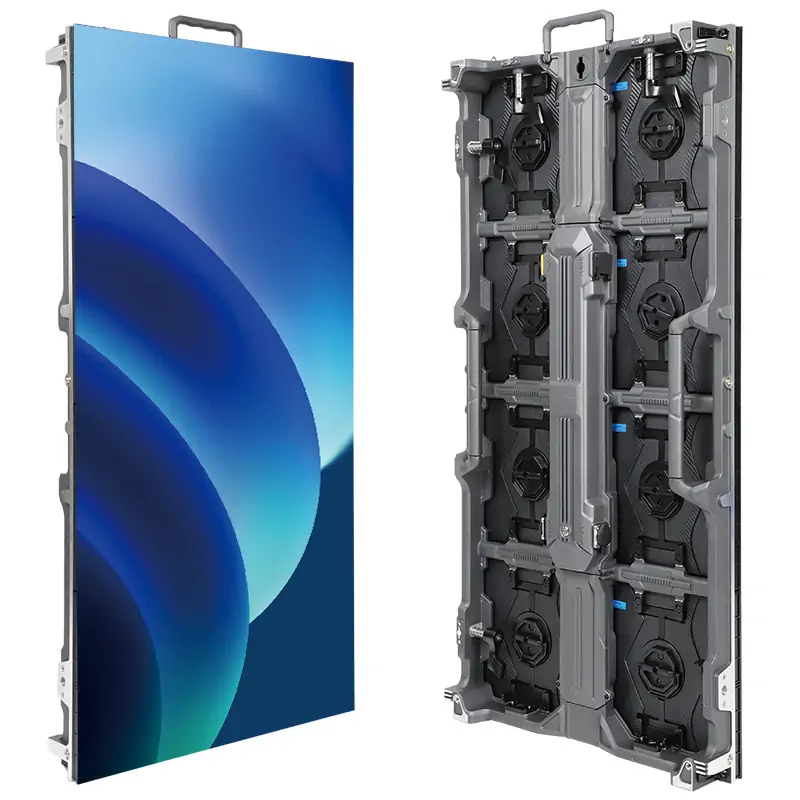
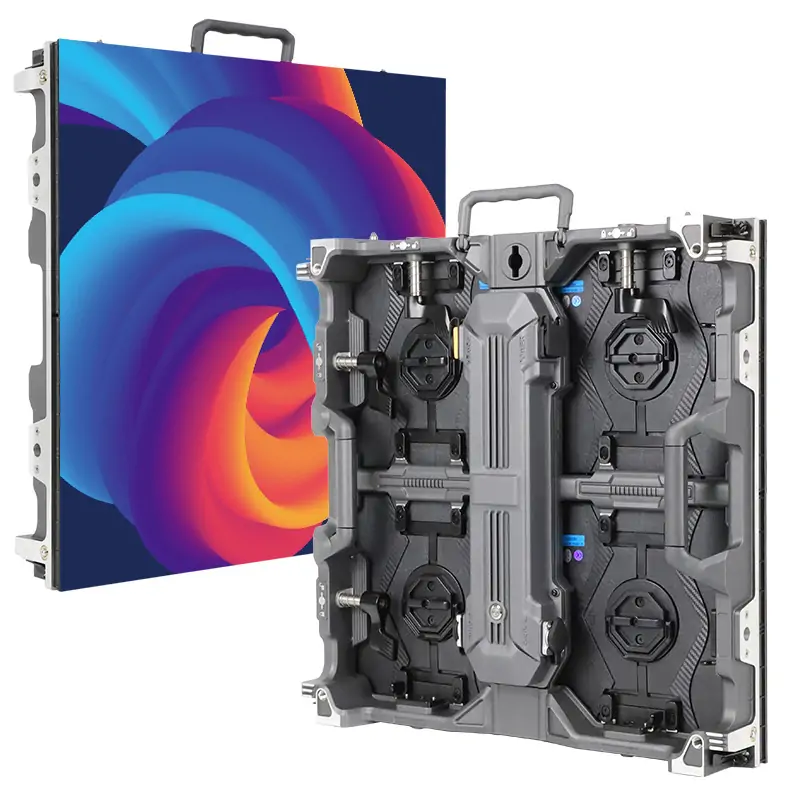
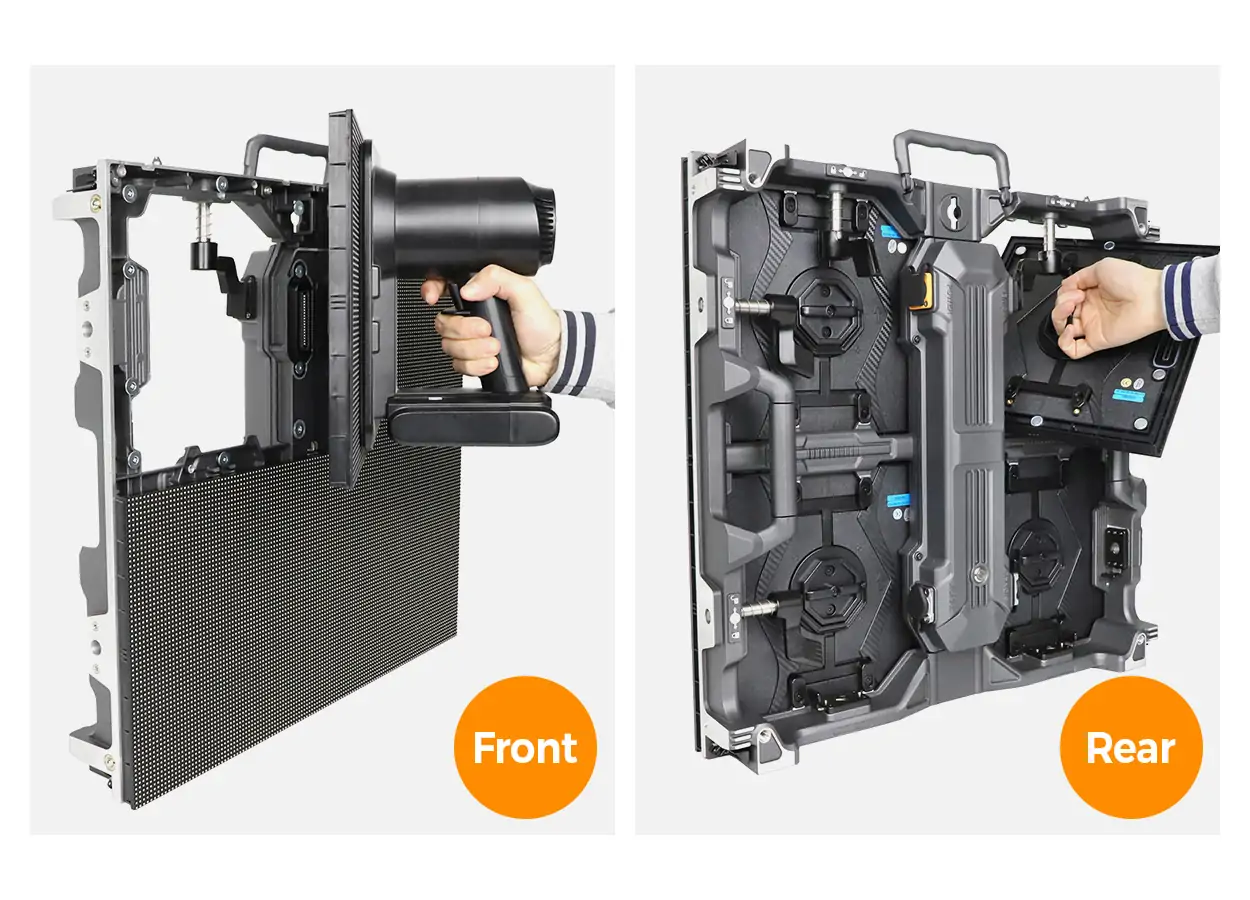
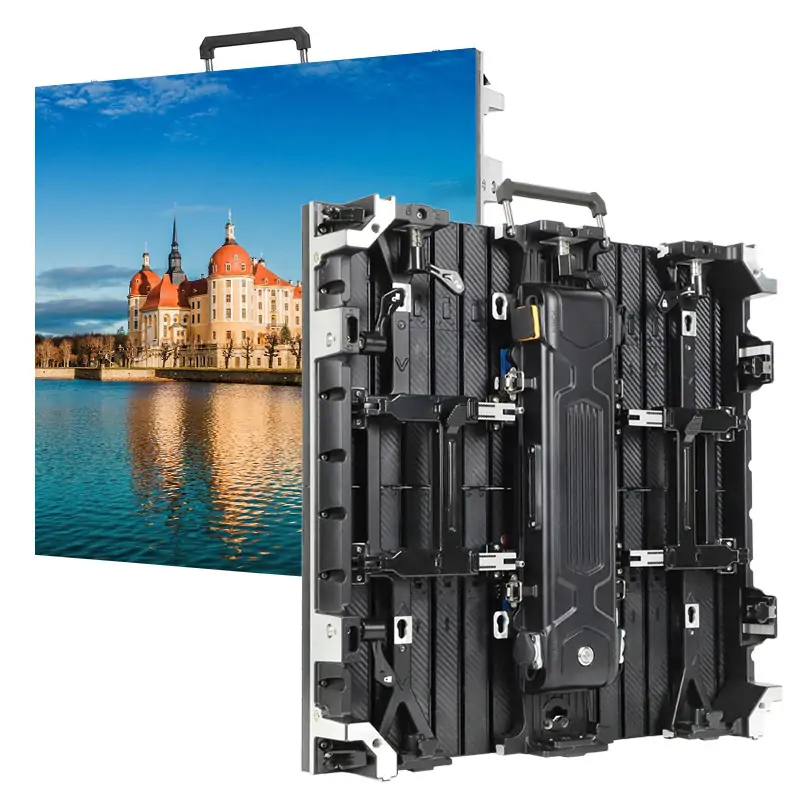
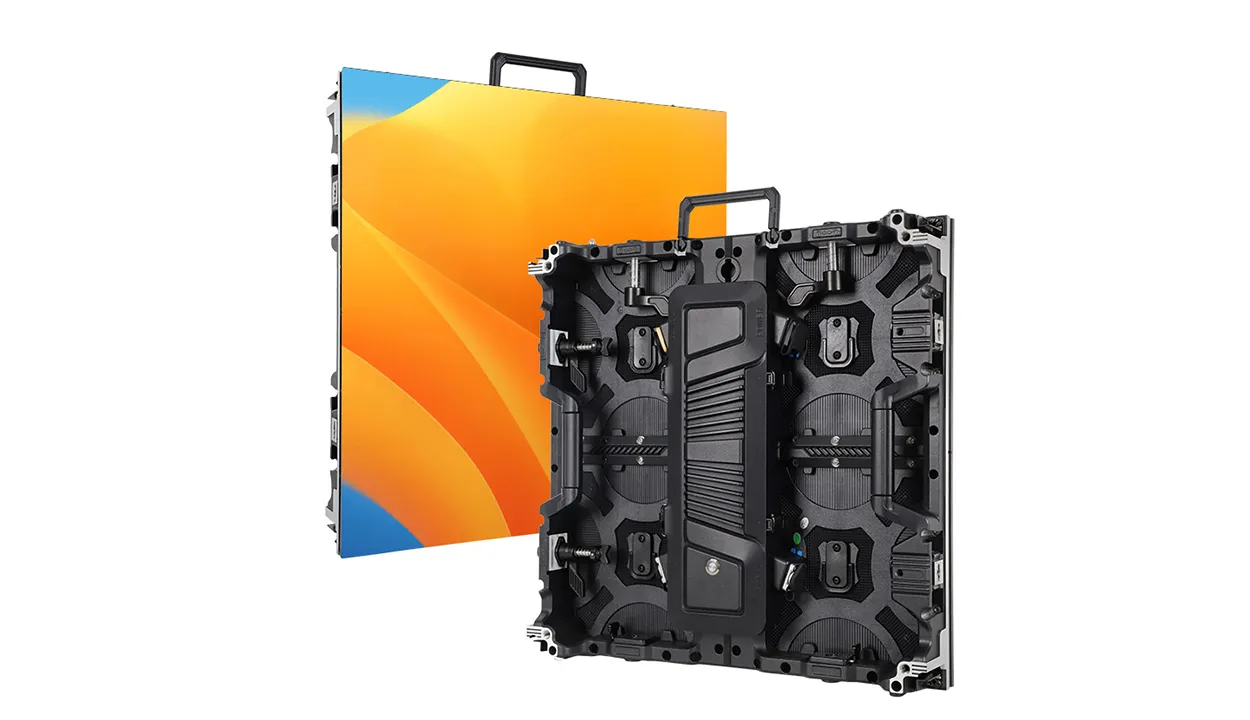
The EA500H9 rental video wall overview describes a 500 × 500 mm cabinet family with front and rear module maintenance and a detachable power box. Its page includes indoor and outdoor versions. Identify the exact indoor configuration and included options in the offer; do not treat every specification on a family page as applying to every version.
2. Allocate equipment and show costs
Use the following worksheet before comparing totals. Add quantity, currency, quoted amount and a supporting reference to every line. Identify whether the amount is a new cash purchase, an internal equipment allocation or a service bought for this event. An already-owned processor may avoid a new purchase but still needs an agreed project allocation and availability check.
| Budget line | Fleet purchase or preparation | Single-show check |
|---|---|---|
| Cabinets and spares | Exact version, active quantity, spare references | Available quantity, condition and reserved replacements |
| Processing and signal | Purchased equipment or identified existing inventory | Source adapters, configuration and operator scope |
| Cases and delivery | Packing, international freight and named destination | Outbound and return transport, handling and storage |
| Support and power | Included hardware and documented requirements | Approved structure, local provision and responsible provider |
| Build and content | Training, configuration backup and acceptance scope | Crew, content adaptation, review and dismantling |
| Fault response | Warranty boundaries and compatible service parts | On-site availability, remote support and recovery arrangement |
Reconcile the exhibition LED display budget by marking each item included, separately quoted, buyer supplied or unresolved. Name its owner. Do not count the same cable kit in both a supplier package and a local equipment hire subtotal, or assume an unanswered service line costs nothing.
3. Price a warehouse-ready system
A purchase package needs more than active cabinets. Request an itemized bill covering control equipment, connection accessories, approved support interfaces, cables, cases, service tools and compatible spares. Ask which components the buyer must supply and how those components will be checked with the ordered system.
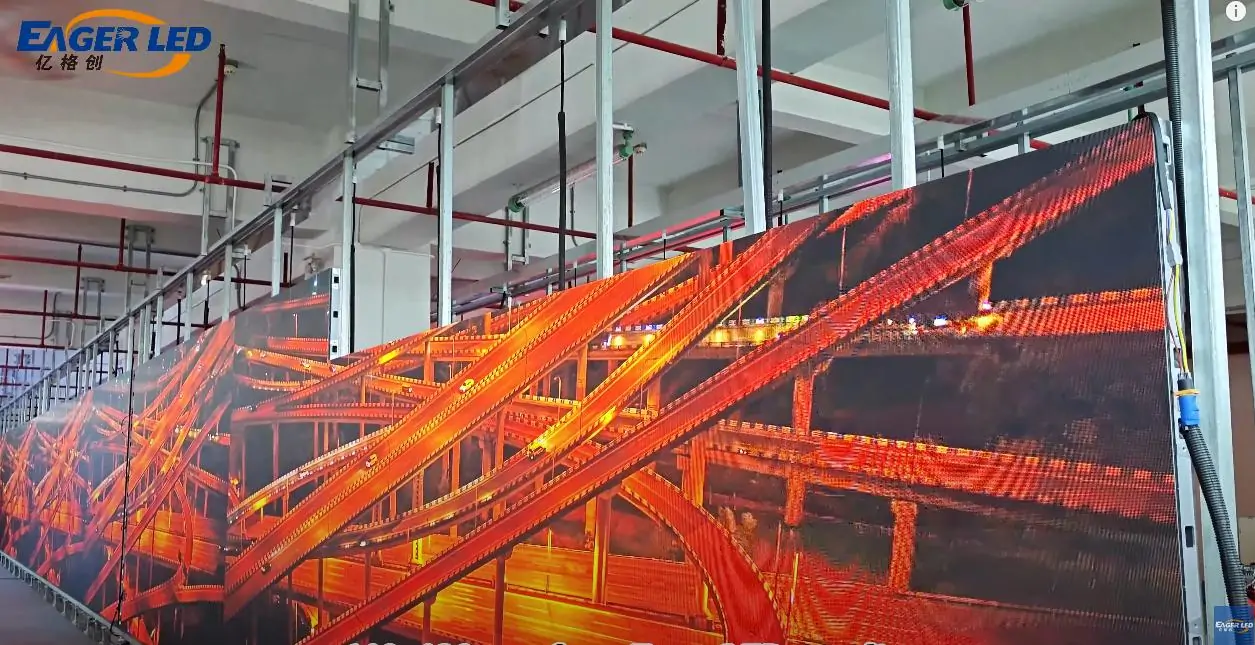
Ask the supplier to demonstrate the proposed assembly and service procedure. The company video below shows an EA500H9 display and cabinet details in a demonstration setting. It helps frame questions about the supplied hardware; it is not evidence of your booth’s installation time, local crew cost or completed acceptance.
Watch the original EA500H9 demonstration.
Keep initial training and configuration work visible in the exhibition LED display budget. Agree what records will be handed over: cabinet map, processor settings, connection labels, spare-part identification and a receipt inspection process. Confirm who resolves discrepancies before inventory is assigned to a paying show.
4. Build the single-show allowance
Obtain the current organizer’s service information for the actual venue and event. Confirm access windows, permitted work, material movement, empty-case storage, power provision, support approval and dismantling arrangements with the responsible parties. Services and conditions vary; do not assume one labor rule, tax treatment or fee schedule applies across the USA and Canada.
For each service, record the ordering party, provider, stated scope, deadline and change conditions. Clarify whether delivery stops at a warehouse, loading area or booth. Include return movement and equipment inspection after the event. A cabinet price or international freight quotation does not establish those local charges.
Include content adaptation and an agreed image review. Identify who supplies final files, who maps them to the wall and who accepts the presentation. Keep any last-minute content changes separate from equipment faults so the project team can allocate the work and its cost correctly.
5. Normalize supplier quotations
Compare the exhibition LED display budget in a common currency at a recorded conversion basis. Name the delivery point, trade term, quotation validity and payment scope. Ask a qualified logistics adviser to confirm destination charges and documentation for the actual shipment; no assumed duty rate or cross-border exemption is used here.
For the exhibition LED display budget, first compare warehouse-ready equipment subtotals on an equivalent bill of materials. Then compare the show allowance using the same service boundaries. Keep optional upgrades, unresolved allowances and buyer-owned equipment clearly marked. This makes a cheaper cabinet offer easier to evaluate without disguising missing local work.
Read the trade-show supplier delivery checks for rehearsal and handover evidence. Here, keep the commercial question explicit: which party pays for each agreed item, whether it recurs at the next show, and what change triggers a revised amount.
Exhibition budget questions
Should every show carry the full equipment purchase cost?
Keep the purchase cash requirement separate from internal project costing. Your company should choose its allocation method using its own operating assumptions. This guide does not assume a utilization rate, payback period or guaranteed rental revenue.
Does a front-service cabinet remove the need for booth coordination?
No. The actual access route, working space, tools and support must remain usable after scenery and products are installed. Verify that arrangement with the booth builder and service team before pricing the work.
Request a scoped equipment proposal
For a useful exhibition LED display budget, send the venue and city, show dates, booth drawing, active wall dimensions, viewing task, content sources, installation method, service space, required readiness time, destination address and existing equipment list.
Ask EagerLED to identify the exact indoor cabinet version, complete equipment schedule, packing, compatible spares, configuration support and written delivery boundaries. Confirm local event services separately with their providers.
 Concave LED Wall Budget: Curved Concert Screen Costs
 What is a Good Display Contrast Ratio? An Ultimate Guide
Related Posts
Fill In Your Needs In Detail
Fill in the screen usage scene and size you need in “Content”.You will get a quote.