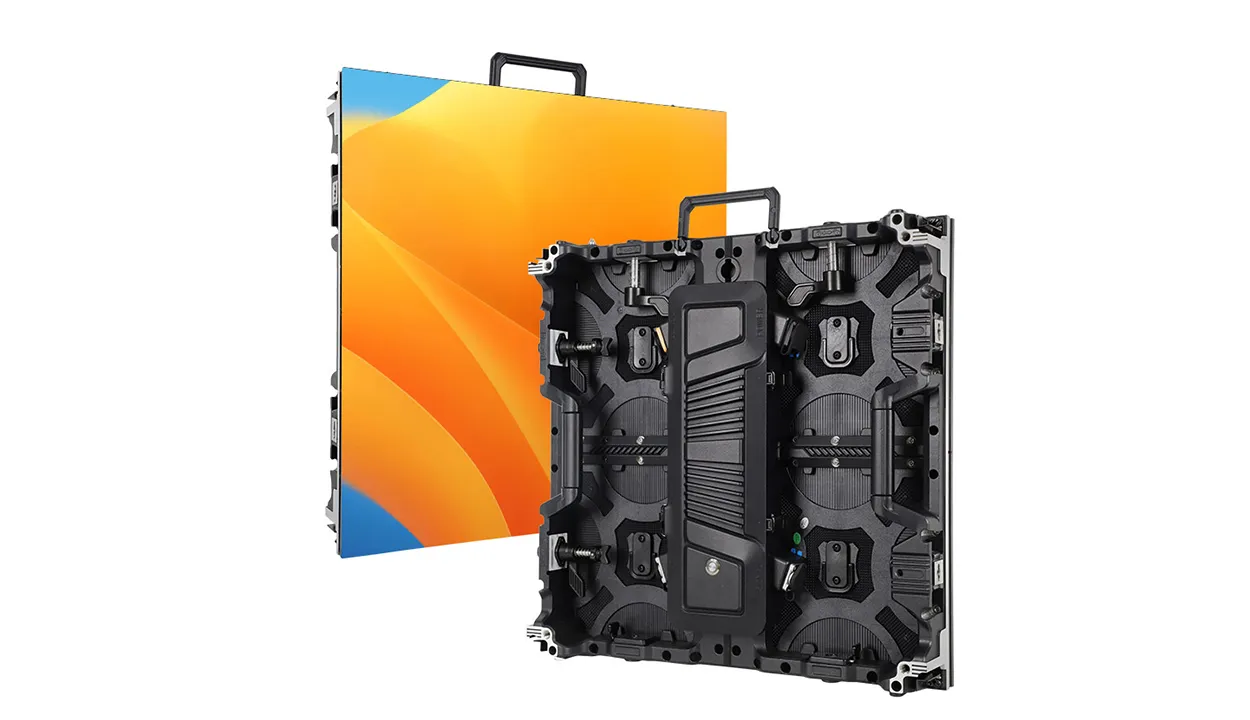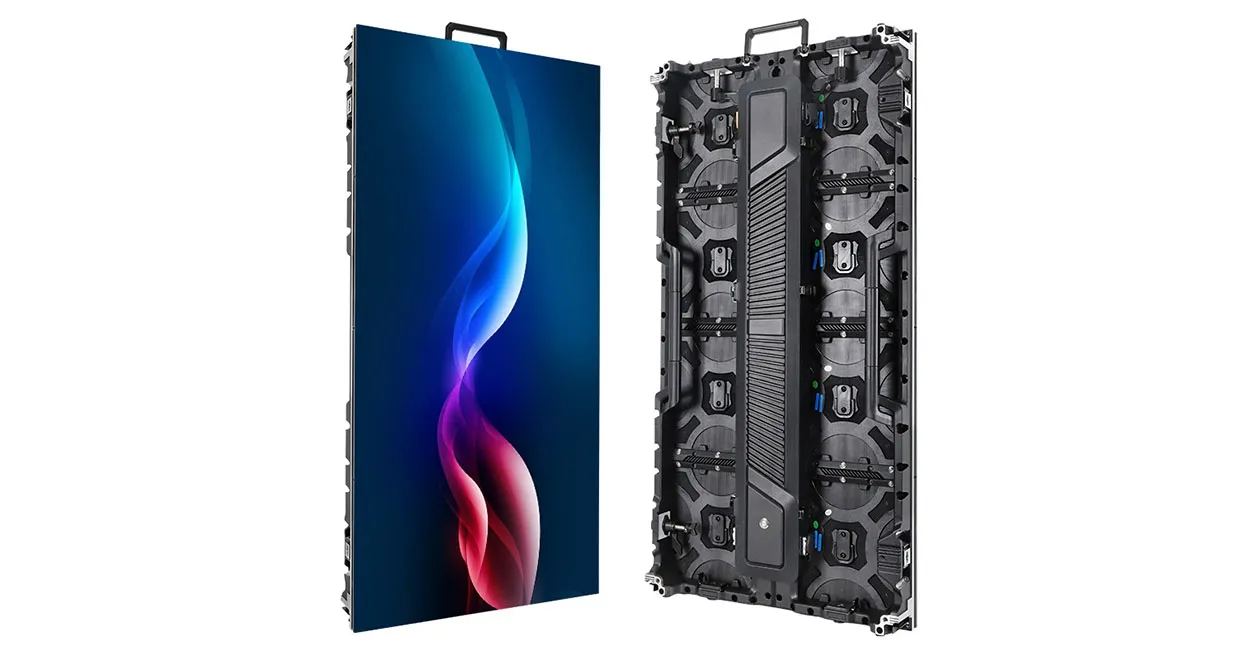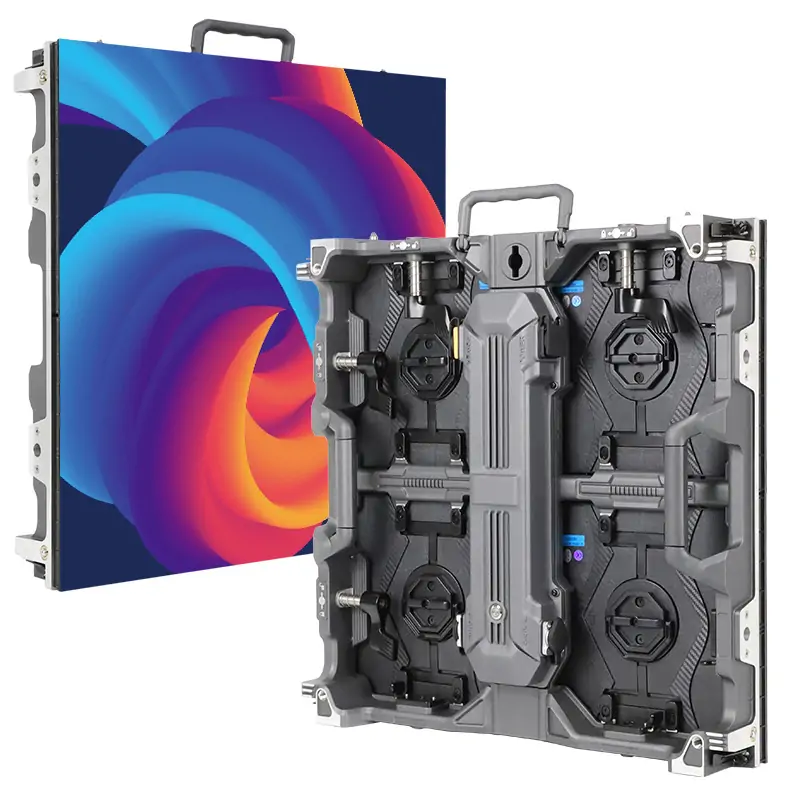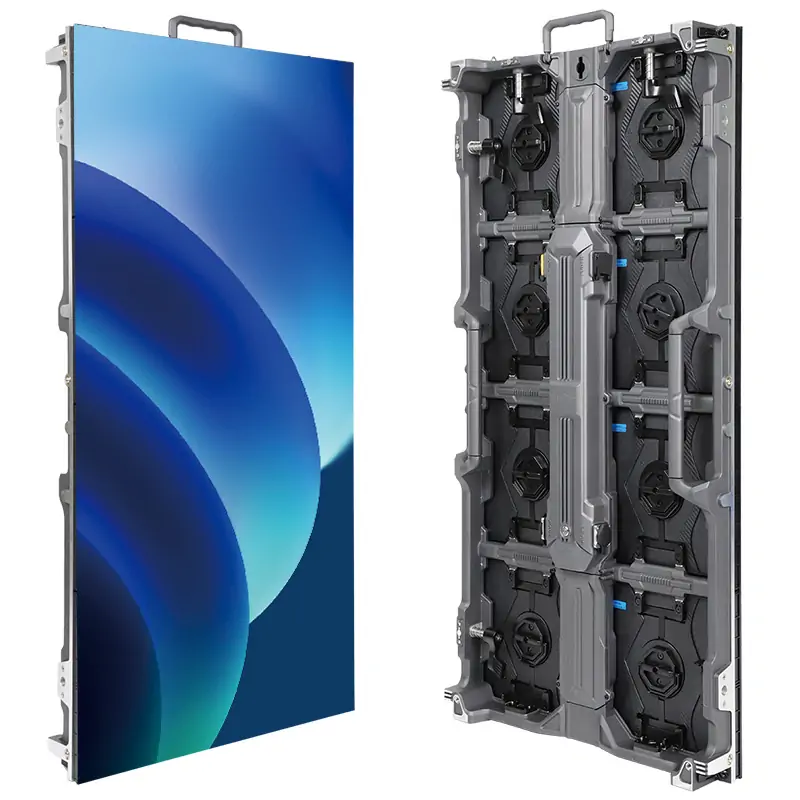
A giant LED display is not just a bigger version of a conference room screen. The physics change when you scale past 50 square meters. Light output has to fight direct sunlight. Pixel pitch has to satisfy a viewer standing 5 meters away and another standing 100 meters away. The structure has to survive wind loads that would flatten a building-mounted sign. And the cost of getting any of these wrong runs into six figures before you have paid for the first year of electricity.
This guide covers what defines a giant LED display, the landmark installations that show what is possible, the key features to evaluate, and a practical framework for choosing the right screen for your programme.
1. What is a Giant LED Display?
A giant LED display is a large-format video screen built from thousands of individual light-emitting diode modules assembled into a seamless surface. Unlike LCD video walls that show visible bezels between panels, a giant LED display produces a single uninterrupted image at any scale — from 50 square meters to over 4,000.
The key distinction between a standard LED screen and a giant LED display comes down to scale and the engineering that scale demands. A standard indoor LED wall in a boardroom spans 5 to 15 square meters, mounts to a reinforced wall, and runs in a climate-controlled room. A giant LED display outdoors spans 50 to 500-plus square meters, mounts to a steel structure engineered for wind loads, runs in direct sunlight at 6,000-plus nits, and must survive rain, dust, and temperature swings for a decade.
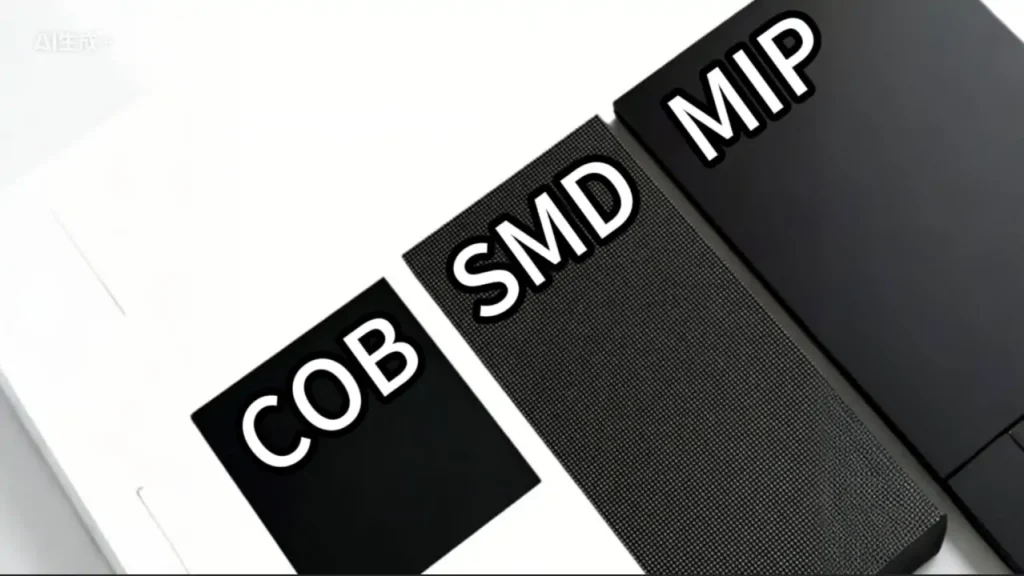
Two technologies power modern giant LED displays. SMD (Surface-Mount Device) packages red, green, and blue LED chips into a single capsule, delivering wide viewing angles and strong color consistency — the standard for most commercial installations today. COB (Chip-on-Board) mounts the LED chips directly onto the PCB and encapsulates them as one surface, offering better contrast, durability, and resistance to moisture and impact. COB is gaining ground in premium outdoor and fine-pitch applications where longevity and image quality justify the higher cost.
2. What Size of Display Can Be Called a Giant LED Screen?
There is no industry-standard threshold, but most AV professionals draw the line at 50 square meters. Below that, standard mounting, power, and content infrastructure apply. Above that, the project becomes a civil engineering exercise.
| Size category | Area | Typical context |
|---|---|---|
| Standard LED wall | 5–30 m² | Boardrooms, retail displays, small stages |
| Large LED display | 30–50 m² | Event backdrops, mid-sized outdoor signage |
| Giant LED display | 50–200 m² | Stadium screens, highway billboards, building facades |
| Monumental LED display | 200 m²+ | Record-breaking installations, arena wraps |
The distinction matters because the cost structure shifts. At 50 square meters, hardware accounts for 50 to 60 percent of the project budget. At 200 square meters, structural engineering, power infrastructure, and installation labour together exceed the panel cost. If you need a structural engineer to sign off, you are in giant LED display territory.
Pixel pitch is what connects size to viewing experience. A display is “giant” not just because it is physically large, but because it must serve viewers across a wide range of distances. A 100-square-meter P4 display viewed from 4 meters looks crisp. The same display viewed from 100 meters looks identical to a P16 that costs half as much. The right pitch for a giant LED display is the coarsest one that still looks sharp from the closest viewer position — anything finer is wasted money.
In addition, there is one LED display screen that is compact and portable, specially designed for small spaces such as homes, man caves, small-sized stadiums and so on. That is a mini jumbotron.
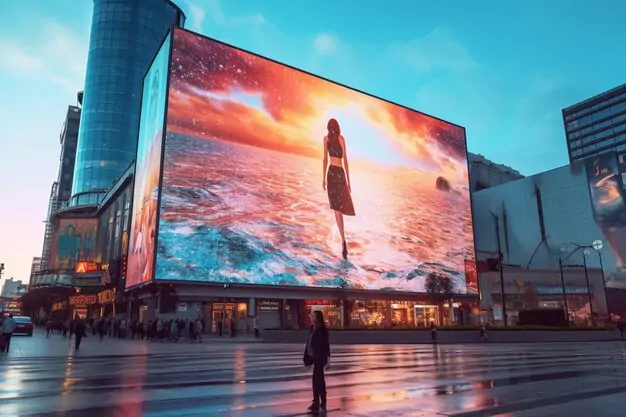
3. 5 Well-Known Giant LED Display Cases
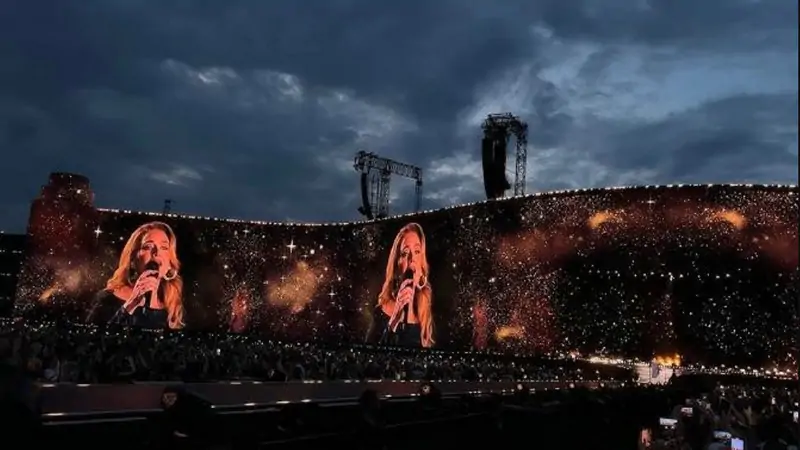
3.1 Adele Munich Residency — 4,159.7 m² (2024)
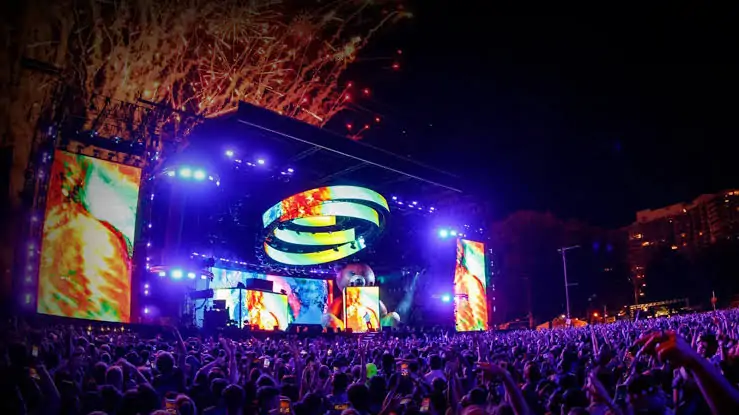
The largest continuous outdoor LED screen ever built for a temporary event. ROE Visual manufactured over 6,000 CB5 Mark II panels (5.77 mm pitch) for a curved display measuring 220 meters wide by 22 meters high. Solotech handled the installation in 70 days. The screen earned a Guinness World Record and served 740,000 attendees across 10 shows, surviving heavy rain and direct summer sun without a failure. The curved scroll-like shape wrapped the entire arena, creating an immersive backdrop that set a new benchmark for concert visuals.
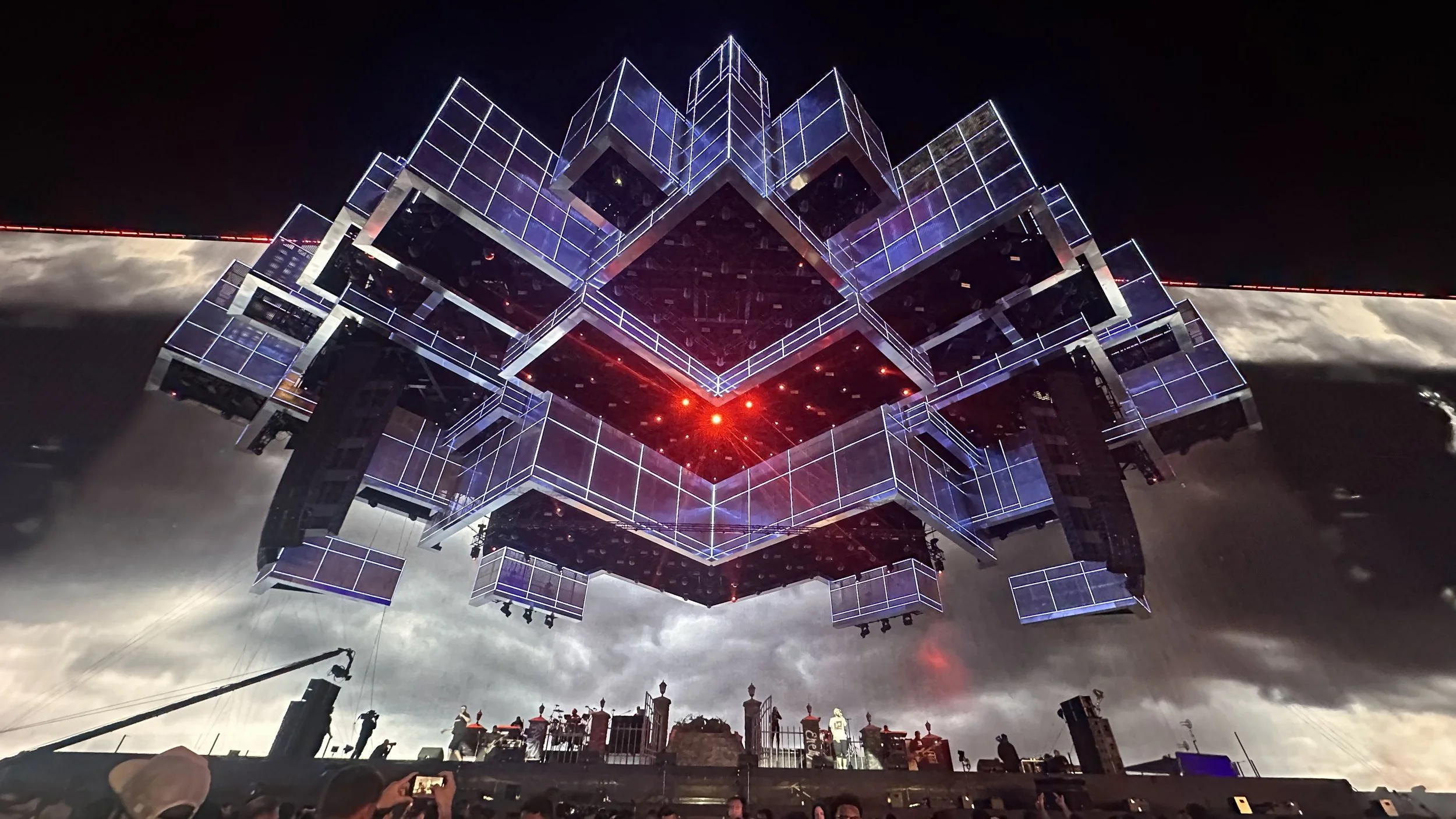
3.2 MDLBEAST Soundstorm, Saudi Arabia — ~4,800 m² (2024)
PRG deployed INFiLED TITAN X panels to build the largest continuous LED screen on a stage: 165 meters wide by 35 meters high. Each wing alone weighed 72 tons and was lifted by 90 hoists in a single operation. The screen supported headline performances by Eminem and Linkin Park under extreme desert conditions. This installation holds the Guinness World Record for the largest continuous LED screen (stage).
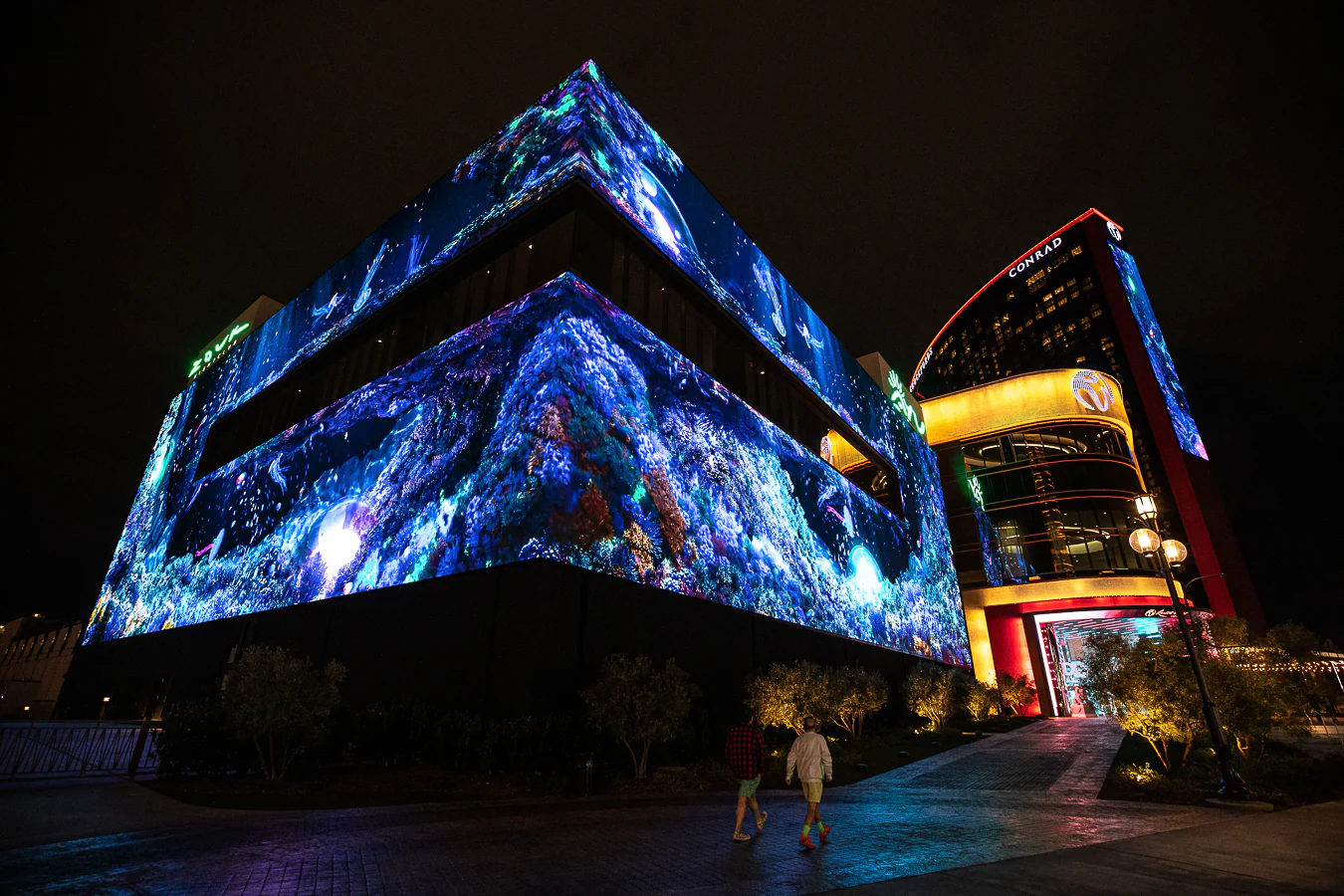
3.3 Resorts World Las Vegas — 7,673 m² Gaming Display (2023)
The outdoor LED screen at Resorts World Las Vegas earned a Guinness World Record for the largest digital videogame display. Xfinity and the Esports Awards projected Pac-Man across the screen’s full surface, demonstrating that modern giant LED displays can serve as interactive canvases, not just playback surfaces.
3.4 Times Square, New York City
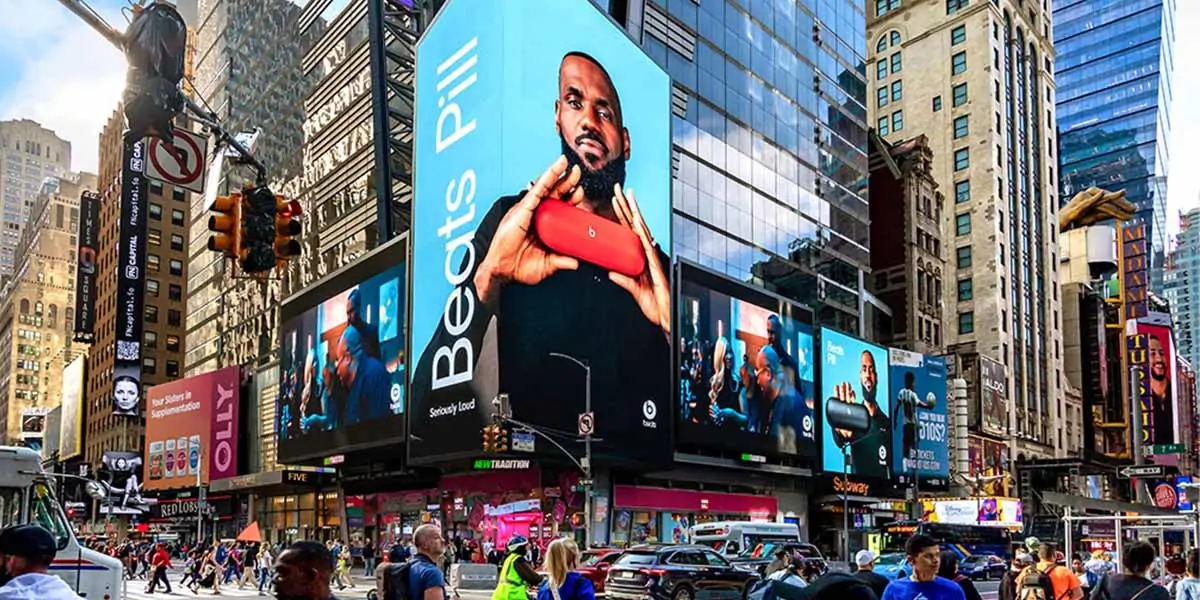
No single screen at Times Square sets a size record, but the intersection as a whole is the world’s most concentrated collection of giant LED displays. Brands including Samsung, Coca-Cola, and Nasdaq operate massive LED facades in the square, with the largest individual screens exceeding 2,000 square meters. The Times Square installations also pioneered the use of transparent and curved LED technology in high-traffic urban environments, where structural weight limits and daylight visibility push engineering to its limits.
4. Key Features of Giant LED Display
4.1 Pixel pitch and Viewing Distance
Pixel pitch — the distance in millimeters between the centres of adjacent LED clusters — is the number that drives everything. The rule of thumb: minimum viewing distance in meters should roughly equal pixel pitch in millimeters. P4 needs at least 4 meters. P10 needs at least 10 meters. For comfortable viewing where individual pixels disappear, multiply the pitch by 1.5 to 2.
The most expensive mistake in giant LED screen procurement is over-specifying pitch. A P4 panel costs $800 to $1,200 per square meter. A P10 panel costs $300 to $500. At 100 square meters, that is a $50,000 to $70,000 difference. For a viewer at 30 meters, the human eye cannot tell them apart.
4.2 Brightness and Sunlight Performance
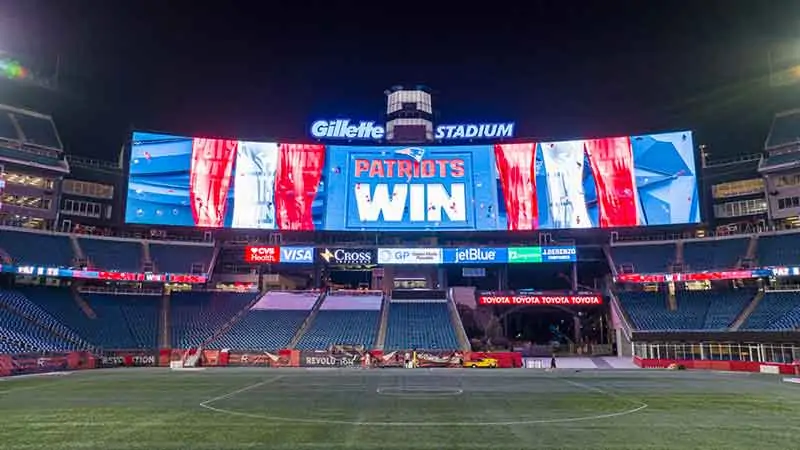
Indoor displays get by with 800 to 1,500 nits. Outdoor giant LED displays need far more. Full direct sunlight demands 5,000 nits minimum, with 6,000 to 8,000 nits as the practical standard for billboards and stadium screens. Desert and high-glare coastal installations push past 10,000 nits.
Auto-brightness sensors are not optional outdoors. Running at full output 24/7 wastes power, shortens LED lifespan, and creates light pollution. A sensor-adjusted display dims to 20 to 30 percent after sunset. Some municipalities now mandate automatic dimming — installing without it can mean fines or permit revocation.
Brightness uniformity matters as much as peak output. A 100-square-meter wall where the centre reads 6,500 nits and the edges read 5,200 nits looks patchy regardless of the average spec. Factory calibration should deliver ±3 percent uniformity with a per-panel report.
4.3 Weather Protection and IP Rating
| IP Rating | Protection level | Required for |
|---|---|---|
| IP65 front / IP54 rear | Rain and dust resistant | Standard outdoor, most billboards |
| IP65 front and rear | Fully weather-sealed | Coastal areas, heavy rain regions |
| IP67+ | Temporary submersion capable | Flood-prone zones, extreme weather |
The front face takes direct weather and needs IP65 minimum. The rear needs at least IP54. Cabinets with only front IP65 and an unsealed rear fail within two to three years in humid environments as moisture wicks into connectors and driver ICs. Temperature tolerance is equally important — specify the operating range against your climate extremes, and require anti-corrosion coating on internal components for coastal installations within 5 kilometers of salt water.
4.4 Structural Integrity
A giant LED display is a giant sail. A 100-square-meter display in a region with 150 km/h wind ratings experiences tens of tons of lateral force. The mounting structure must support at least 1.5 times the total display weight, and wind-load certification must be specific to the installation location and height. Freestanding displays need deep foundations engineered for local soil. Roof-mounted displays need the building’s structural engineer to sign off.
4.5 Refresh Rate and Camera Compatibility
For any giant LED display that will appear on camera — stadium screens, concert backdrops, broadcast environments — a refresh rate of 3,840 Hz or higher is essential. Lower refresh rates produce visible scan lines and flicker on broadcast cameras and smartphone screens. This is the difference between a display that looks good to the naked eye and one that looks good in photographs and on television.
5. Applications of Giant LED Screen
| Application | Typical size | Pixel pitch | Brightness | Key requirement |
|---|---|---|---|---|
| Highway billboard | 50–200 m² | P10–P20 | 6,000–8,000 nits | Sunlight visibility, remote CMS |
| Stadium scoreboard | 50–150 m² | P6–P10 | 6,000–10,000 nits | 3,840 Hz+ refresh, broadcast-safe |
| Building facade | 100–1,000+ m² | P10–P25 | 5,000–7,000 nits | Structural engineering, wind load |
| Outdoor event stage | 30–100 m² | P3.9–P5.9 | 4,000–6,000 nits | Fast rigging, rental-friendly cabinets |
| Retail flagship (outdoor) | 10–50 m² | P2.5–P4 | 5,000–6,000 nits | Close viewing, premium image quality |
| Indoor arena and concert | 50–200 m² | P2.5–P4.8 | 1,000–2,000 nits | Weight, rigging speed, floor loading |
| Digital out-of-home advertising | 50–150 m² | P6–P10 | 6,000–8,000 nits | Cloud CMS, remote health monitoring |
| Tourist attraction and landmark | 100–500 m² | P4–P10 | 5,000–8,000 nits | Creative shapes, transparent options |
Each application has a different primary constraint. For a highway billboard, the constraint is sunlight. For a building facade, it is wind load. For a stadium screen, it is broadcast compatibility. For a rental stage, it is rigging speed. Matching the display to the application means identifying which constraint matters most and letting it drive the specification.
6. How to Choose the Best Giant LED Screen?
Choosing a giant LED display means working through a specific sequence of decisions. Skip one and the spec sheet looks fine but the installation becomes a liability.
6.1 Start with Viewing Distance
Every decision flows from one number: how far away is the closest viewer? That distance determines the pixel pitch, and pixel pitch determines display cost more than any other single variable. Pay for the pitch your audience needs, not the one the spec sheet brags about.
6.2 Determine the Environmental Conditions
Will the display face direct sunlight? How much rain, dust, and temperature swing will it endure? The answers set the brightness requirement and the IP rating. A display that looks great in a warehouse will wash out or fail outdoors within months if the environmental spec is wrong.
6.3 Assess the Structure
Can the building or mounting surface support 2.5 to 4.5 tons per 100 square meters plus wind load? This question needs a structural engineer to answer. If the structure cannot support the display, the project stops here — or the budget expands to include structural reinforcement.
6.4 Plan the Content Infrastructure
A giant LED display without a content plan is a blank wall that cost six figures. Define who will create the content, how it reaches the display, and whether you need cloud-based remote management or a simple local media player. For multi-source live switching — a stadium screen mixing camera feeds, graphics, and replays — the video processor specification matters as much as the panel specification.
6.5 Budget for the Total Cost of Ownership
The per-square-meter hardware price is the beginning. A realistic budget includes structural engineering (15 to 20 percent), installation labour (10 to 15 percent), power infrastructure (5 to 8 percent), content and CMS (3 to 5 percent), and permits and contingency (5 to 10 percent). A P8 outdoor display at 100 square meters priced at $400 per square meter for hardware — $40,000 — will cost $65,000 to $80,000 installed and commissioned.
6.6 Decide between Rental and Purchase
A single event or seasonal display is better rented. Daily rates for outdoor panels run $45 to $80 per square meter depending on pitch, with Q4 holiday pricing 22 to 30 percent higher than Q1. Five or more events per year, or any permanent installation, favours purchase.
7. Giant LED Display Cost: What You Actually Pay
| Cost category | Share of total |
|---|---|
| Display hardware (panels, cabinets) | 50–60% |
| Structural engineering and mounting | 15–20% |
| Installation labour | 10–15% |
| Power infrastructure | 5–8% |
| Content creation and CMS | 3–5% |
| Permits, insurance, and contingency | 5–10% |
Hardware costs vary widely by pixel pitch. Entry-level outdoor panels from Chinese manufacturers run $300 to $500 per square meter at P10. Premium European-made panels at P4 run $800 to $1,200 per square meter. Fine-pitch COB panels below P2.5 command $1,500 to $3,000 per square meter. These are ballpark figures — get itemised quotes from at least three manufacturers for your specific configuration.
Where cost-cutting backfires: B-grade LED chips lose over 50 percent brightness in two years. Recycled aluminium cabinets with poor tolerances produce visible seams. Undersized power cabling causes thermal failure and fire risk. Cheap refresh-rate drivers below 1,920 Hz create visible scan lines on camera. If the price is suspiciously low, one of these corners has been cut.
8. FAQs
9. Conclusion
A giant LED display is a civil engineering project as much as an AV purchase. Start with the closest viewer — that sets the pixel pitch. Then the sun — that sets the brightness. Then the weather — that sets the IP rating. Then the structure — that determines whether the display can go up at all. Only after those four are locked in should the conversation turn to processors, content, and cost.
The record-breaking installations show what is possible. But whether your display is 50 square meters or 5,000, the same rule applies: get the physics right first. The pixels will take care of themselves.
 MIP vs SMD vs COB: LED Packaging Technology Guide
 Ceiling LED Screen: Complete Buyer's Guide 2026
Related Posts



Fill In Your Needs In Detail
Fill in the screen usage scene and size you need in “Content”.You will get a quote.