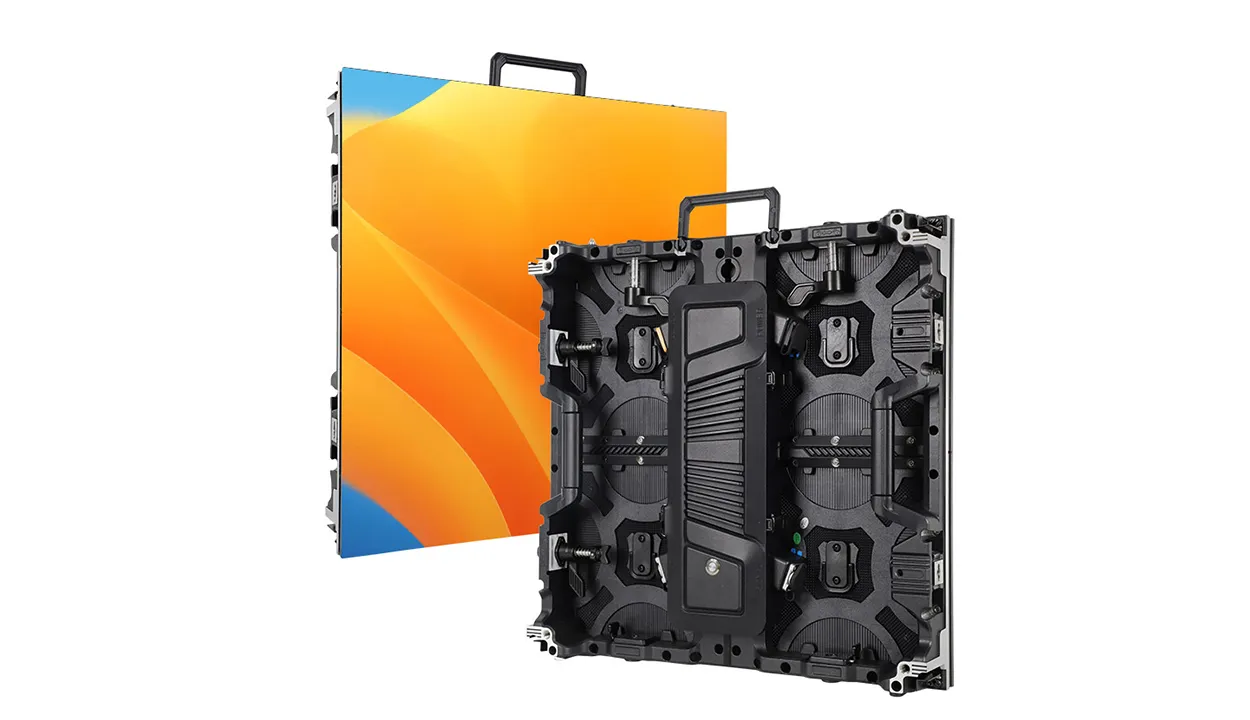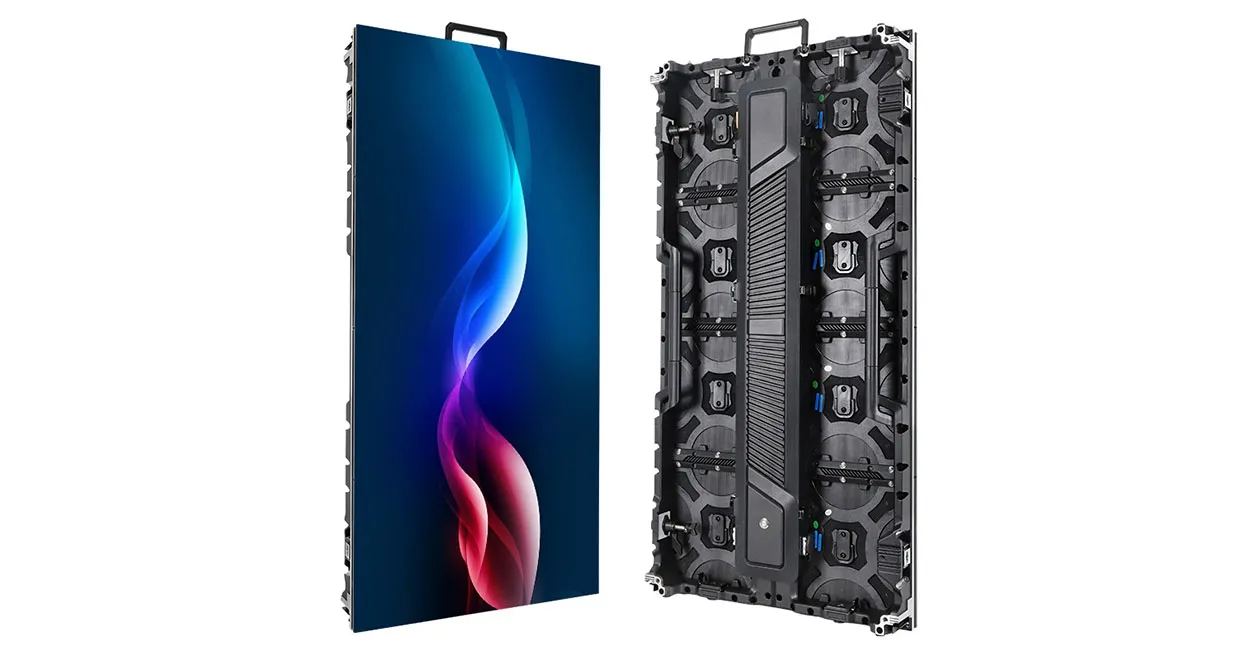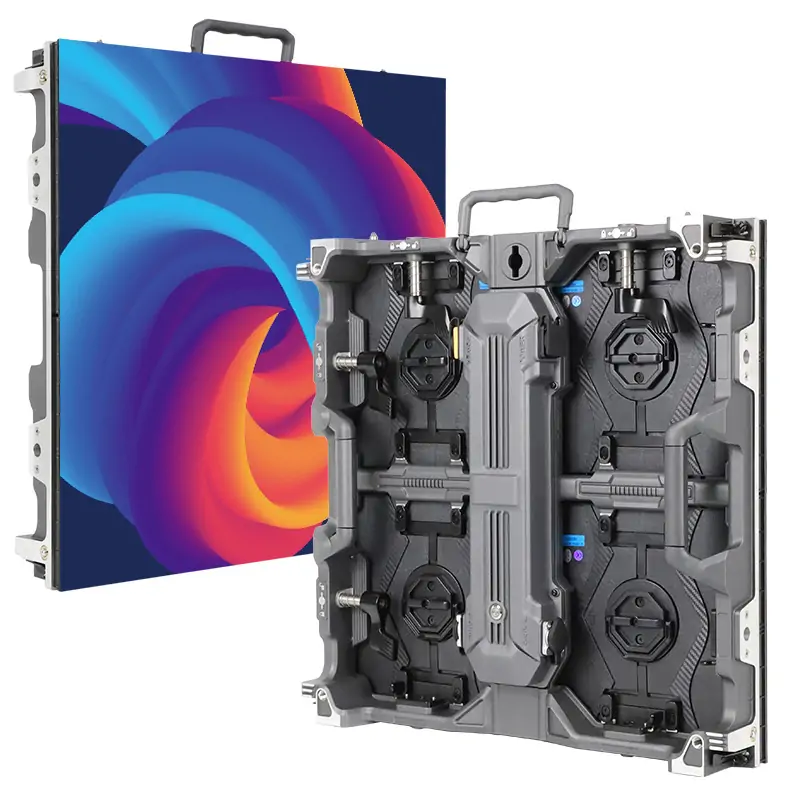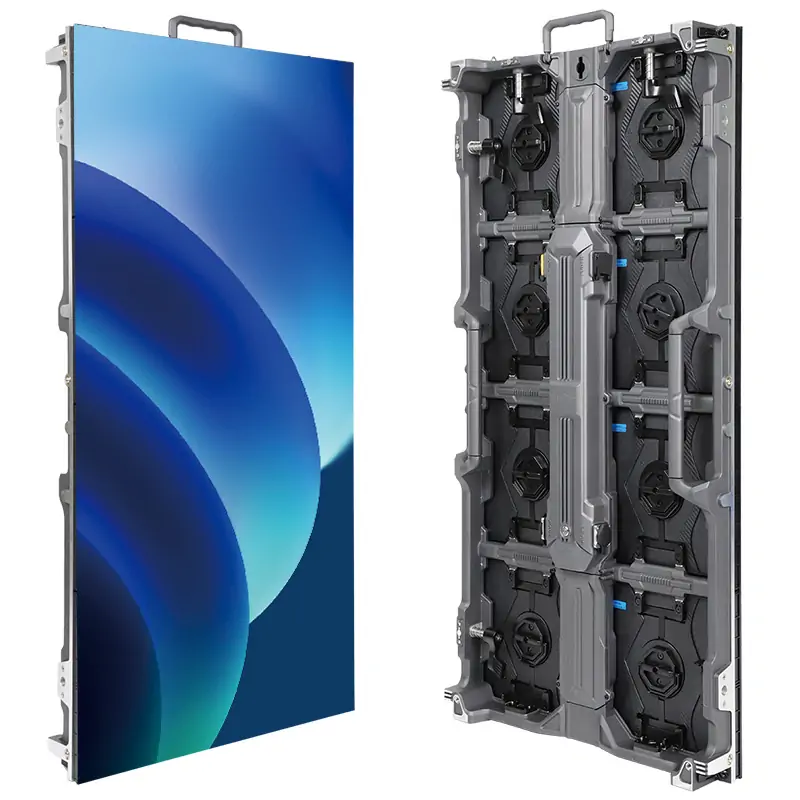
When an LED display spec crosses below P1.5, three packaging technologies enter the conversation: SMD, COB, and MIP. Each one mounts and protects LED chips differently. Each one produces a different visual result up close. And each one costs differently to buy, install, and maintain over time. If you are spec’ing a fine-pitch LED wall for a control room, broadcast studio, boardroom, or XR stage, MIP vs SMD vs COB is the decision that determines whether the display looks seamless at arm’s length, whether a dead pixel means a 15-minute fix or a module swap, and whether the upfront price tells the whole story.
This guide breaks down how the three technologies compare across image quality, durability, repairability, cost, and real-world application fit.
- 1. MIP vs SMD vs COB: What Each Technology is
- 2. MIP vs SMD vs COB: Head-to-Head Comparison
- 3. MIP vs SMD vs COB: Image Quality at Every Distance
- 4. MIP vs SMD vs COB: Durability in the Real World
- 5. MIP vs SMD vs COB: What Happens When a Pixel Dies
- 6. MIP vs SMD vs COB: Where They Came From and Where They’re Going
- 7. MIP vs SMD vs COB: a Real-World Decision Walkthrough
- 8. MIP vs SMD vs COB: Cost at Each Pitch
- 9. MIP vs SMD vs COB by Application
- 10. FAQs
- 11. Conclusion
1. MIP vs SMD vs COB: What Each Technology is
1.1 SMD — Surface-Mount Device
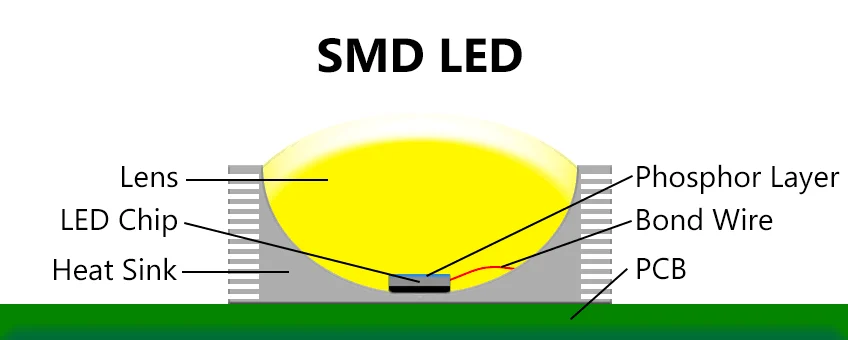
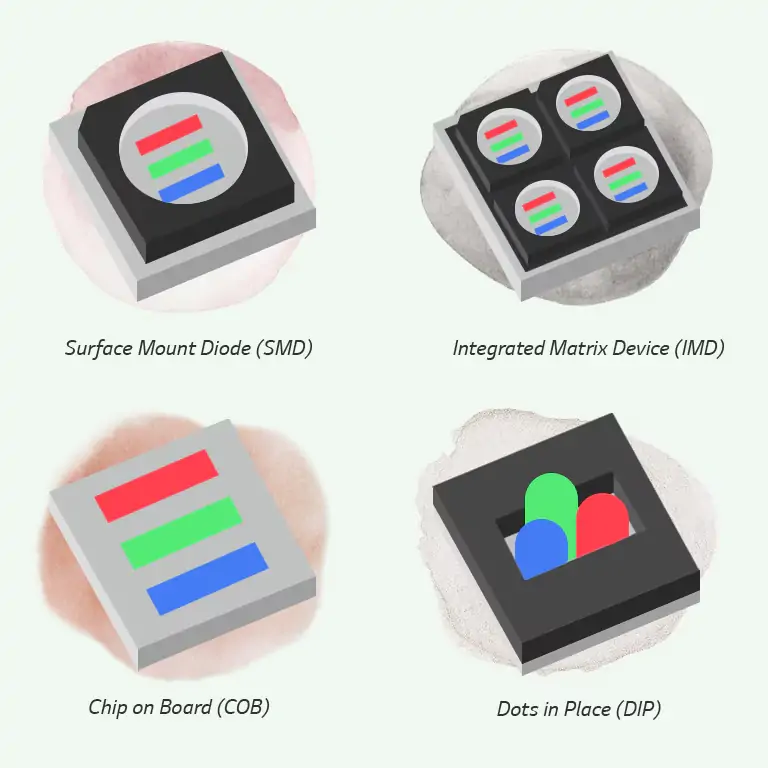
SMD is the industry standard. Red, green, and blue LED chips are encapsulated together in a small plastic bead, typically 2 to 5 mm across, which is then soldered onto the PCB surface by automated pick-and-place machines. Each bead is one pixel. The beads sit on top of the board with exposed solder joints underneath.
SMD covers the widest pitch range: P1.0 through P10. At P1.2 to P2.5, it is the default choice for conference rooms, retail displays, and rental staging. Individual dead pixels can be replaced on-site in about 15 minutes. The supply chain is mature, pricing is competitive, and every LED integrator knows how to work with it. The limitation is physical: below P1.0, the beads become tiny, fragile, and expensive, and the gaps between them create visible pixel structure at close viewing distances.
1.2 COB — Chip On Board
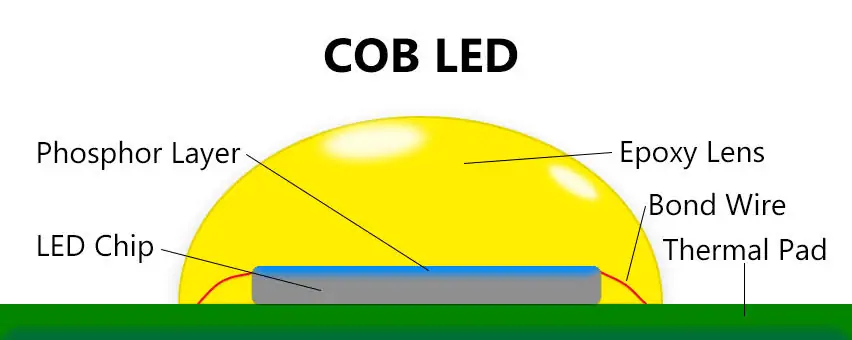
COB eliminates the individual bead package. Bare LED chips are bonded directly to the PCB substrate, wire-bonded for electrical connection, and then the entire board surface is sealed under a single monolithic layer of resin. There are no individual lamp beads, no gaps between pixels, and no exposed solder joints.
COB targets P0.4 to P1.5. It produces a completely seamless surface with no visible pixel grain at any distance. Contrast ratios hit 5,000:1 and above. The resin encapsulation provides native protection against dust, moisture, and impact. The downside is cost — roughly 2.5 times SMD at comparable pitches — and repairability: a single dead pixel requires replacing the entire module, which costs hundreds of dollars and takes the display offline.
1.3 MIP — Micro LED in Package
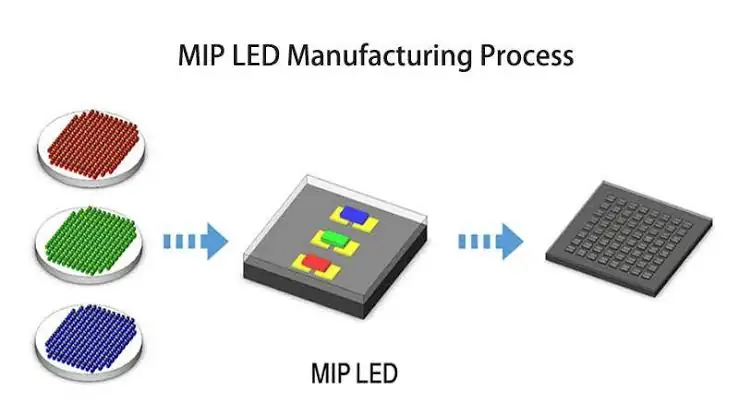
MIP is the newest of the three. Micro LED chips are wafer-level tested, binned individually for color consistency, then pre-encapsulated into standardized RGB packages. These packages are then mounted onto PCBs using conventional SMT equipment — the same pick-and-place lines that build SMD displays.
MIP targets P0.2 to P0.6, territory where SMD cannot physically go and COB struggles with yield. Because each pixel is an individually binnable, replaceable package, MIP solves COB’s repair problem while matching its image quality. The technology is SMT-compatible, which means manufacturers can adopt it without the massive capital investment COB production lines require. MIP is still scaling, so per-unit costs are the highest of the three, but the trajectory is downward.
2. MIP vs SMD vs COB: Head-to-Head Comparison
| Feature | SMD | COB | MIP |
|---|---|---|---|
| Pixel pitch range | P0.9–P10+ | P0.4–P1.5 | P0.2–P0.6 |
| Pixel structure | Individual beads, visible gaps | Seamless surface, no gaps | Seamless, minimal gaps |
| Static contrast ratio | 1,200–1,800:1 | 5,000–8,000:1 | 8,000–15,000:1 |
| Viewing angle | 120–160° | 170–180° | 170–180° |
| Black uniformity | Moderate | Excellent | Excellent |
| Screen door effect | Visible under 2 m | None | None |
| Durability | Low–moderate | Very high (fully sealed) | High |
| Repairability | Easy (bead-level, 15 min) | Difficult (module swap only) | Easy (package-level) |
| Brightness | 1,500–2,000 nits | 800–1,200 nits | 600–1,000 nits |
| Relative cost at P1.2 | 1.0× (baseline) | 2.5× | 3.0×+ |
| Annual failure rate | 2–3% | ~0.5% | ~0.5% (est.) |
| Manufacturing maturity | Very mature | Maturing rapidly | Early, scaling fast |
3. MIP vs SMD vs COB: Image Quality at Every Distance
Forget the spec sheets. Walk up to the screen and here is what you actually see at each distance.
At 3 meters, SMD at P1.5 looks crisp. At 1 meter, the pixel grid appears. At 0.5 meters, it is a mosaic of individual beads floating above dark gaps. COB has no grid at any distance — the resin surface emits light as one continuous plane. MIP pushes this even further: chip-level binning produces the tightest color uniformity of the three, and black ratios above 99 percent on premium modules mean dark scenes stay dark even in a dim room.
The practical filter is simple. Viewers farther than 2 meters? SMD is fine and costs half as much. Viewers at arm’s length or cameras pointed at the wall? COB or MIP. The screen door effect cannot be calibrated out. It is either there or it is not.
4. MIP vs SMD vs COB: Durability in the Real World
Put a module through the paces and the packaging difference shows up fast.
SMD’s exposed solder joints are the weak link. Drop a module during load-out and you are chasing dead pixels before the next show. Annual failure rates run 2 to 3 percent, higher if the display travels. In a clean, climate-controlled room, this is manageable. On tour, it adds up.
COB seals everything under resin. No exposed wires, no exposed joints, no path for moisture or dust. Drop one and it usually survives. Failure rates sit around 0.5 percent annually. That is why control rooms and 24/7 installations default to COB: a dead pixel on a dark dashboard stares at the operator for 12 hours a shift.
MIP pre-encapsulates each pixel before mounting, so a single failure stays contained. Real-world data is thinner than COB — the technology is newer — but the architecture is sound. Fail a MIP pixel and you replace that pixel, not the module. That is the advantage COB cannot match.
One caveat: environment matters more than packaging. A well-ventilated SMD wall in a clean office outlasts a COB panel suffocating in a hot, unventilated enclosure. The packaging sets the ceiling. The install determines whether you hit it.
5. MIP vs SMD vs COB: What Happens When a Pixel Dies
A dead pixel is coming. The only question is how much it costs to fix.
| SMD | COB | MIP | |
|---|---|---|---|
| Fix method | Replace bead | Replace module | Replace package |
| Part cost | ~$15 | ~$300+ | ~$30–$50 |
| Labor | 15 min on-site | Module swap, downtime | 15 min on-site |
| Skill level | Basic soldering | Plug-and-play | Basic soldering |
| Parts availability | Universal | Model-specific | Limited but growing |
SMD wins the repair math: cheap parts, fast turnaround, anyone can do it. COB costs more per incident but incidents are rare. MIP splits the difference — repair cost closer to SMD, reliability closer to COB.
Zoom out to a five-year window. An SMD display averaging 2 percent annual failures at $15 per fix costs less to maintain than a COB display at 0.5 percent failures at $300 per swap — the math favors SMD on pure maintenance spend. But factor in the downtime cost, and COB pulls even or ahead in environments where the wall going dark matters. MIP lands in the middle on both axes and improves as parts become more widely available.
6. MIP vs SMD vs COB: Where They Came From and Where They’re Going
Each of the three emerged to fix what the previous one could not.
SMD took over when indoor LED needed pitches from P10 down to P1.0. It rode existing SMT infrastructure and scaled faster than anything before it. Then P0.9 happened. Beads got too small, too fragile, too expensive. The gaps between them became the limiting factor.
COB removed the bead entirely — chips bonded straight to board, everything sealed in resin. Better image, better durability, worse repairability, higher cost. It solved the pitch problem and created a service problem.
MIP is the synthesis: pre-package each pixel like a tiny SMD bead, then mount it on standard SMT lines. You get COB’s image quality at COB’s pitches, but each pixel is individually replaceable. The cost curve drops faster than COB’s because MIP rides infrastructure that already exists.
For buyers: SMD is safe and mature. COB is premium and proven. MIP is forward-looking and gets cheaper every year. If you are buying today for a display that stays in service through 2030, weight MIP more heavily than its current market share suggests.
7. MIP vs SMD vs COB: a Real-World Decision Walkthrough
Suppose you are spec’ing a P0.9 LED wall for a broadcast studio. Cameras will be pointed at the screen from 2 meters. The wall runs 12 hours a day, six days a week. Downtime during a live production is unacceptable. Budget is significant but not unlimited.
First filter: viewing distance. At 2 meters with cameras, SMD is out. The pixel grid will moiré on camera. That narrows the field to COB or MIP.
Second filter: reliability and repair. The studio cannot afford a two-hour module swap during a production day. COB’s lower failure rate is attractive, but when a pixel does fail, the fix is disruptive. MIP lets the in-house tech replace a single pixel package in 15 minutes between shows.
Third filter: cost and supply. P0.9 MIP currently runs about 30 percent more than P0.9 COB. MIP parts are available from the manufacturer but not from every distributor. The studio needs spares on the shelf regardless of technology choice, so the supply chain concern is manageable.
Decision: COB. Not because MIP is worse — at P0.9, both produce excellent, camera-ready images — but because COB’s maturity, wider parts availability, and lower upfront cost fit this specific project better. The studio buys two spare modules and calls it done.
Change one variable and the answer shifts. If the pitch were P0.6, MIP would be the answer — COB yields drop at that density and MIP’s repairability becomes decisive. If the studio had no in-house tech and relied entirely on integrator service calls, COB’s lower failure rate might outweigh MIP’s easier repair. The point is not which technology wins on a spec sheet. It is which constraints your specific project cannot compromise on, and which ones you can afford to relax.
Scenario Variable Shift Rules:
- If pixel pitch = P0.6 → Pick MIP (COB production yield declines sharply at ultra-fine pitch)
- If no in-house maintenance staff → Pick COB (less failure reduces after-sales service reliance)
Core principle: Technology selection is determined by your project’s non-negotiable constraints, not simple specification comparison.
8. MIP vs SMD vs COB: Cost at Each Pitch
| Item | SMD | COB | MIP |
|---|---|---|---|
| Fix method | Replace bead | Replace module | Replace package |
| Part cost | ~$15 | ~$300+ | ~$30–$50 |
| Labor | 15 min on-site | Module swap, downtime | 15 min on-site |
| Skill level | Basic soldering | Plug-and-play | Basic soldering |
| Parts availability | Universal | Model-specific | Limited but growing |
The application table is a starting point, not a rule. A rental house running the same modules across dozens of shows may choose SMD at P1.5 even for close-viewing applications because repairability and spare parts commonality outweigh absolute image quality. A luxury retailer replacing a display every three years may choose COB at P0.9 for the showroom wall and SMD at P2.5 for the stockroom display. Apply the technology to the specific constraints of the project, not to the category label.
9. MIP vs SMD vs COB by Application
| Application | Recommended | Why |
|---|---|---|
| Conference room (2–4 m viewing) | SMD P1.5–P2.5 | Cost-effective, adequate at distance |
| Boardroom (1–2 m viewing) | COB P0.9–P1.2 | No pixel grain up close |
| Broadcast studio | COB P0.9–P1.5 | Anti-moiré, high contrast |
| Control room / NOC (24/7) | COB P0.7–P1.2 | Reliability, seamless viewing |
| XR virtual production | COB or MIP P0.6–P1.2 | Camera-friendly, anti-moiré |
| Luxury retail (close viewing) | COB P0.6–P1.2 | Premium image, dust-sealed |
| Rental and staging (indoor) | SMD P1.5–P3.0 | Repairable, cost-effective |
| Ultra-fine-pitch (< P0.6) | MIP | Only repairable option at this pitch |
| High-traffic public (indoor) | COB | Durability, cleanable surface |
At P1.5 and above, SMD is the cost winner and the right choice unless the environment demands COB’s durability. At P0.9 to P1.2, COB’s price premium over SMD narrows and the image quality gap widens — this is where most premium indoor installations land on COB. Below P0.6, SMD is not an option, and COB vs MIP becomes a question of repairability requirements and long-term supply confidence.
These prices shift year over year. SMD costs are stable — the technology is mature and the supply chain is fully amortized. COB costs are declining slowly as more manufacturers bring production lines online. MIP costs are falling the fastest because the technology rides existing SMT infrastructure and benefits from every improvement in micro-LED chip fabrication. A project budgeted at today’s MIP pricing may look significantly better in 12 to 18 months. If your timeline has flexibility built in, MIP is the technology that rewards patience.
10. FAQs
11. Conclusion
MIP vs SMD vs COB sorts itself by pixel pitch. SMD owns P1.5 and above. It is mature, repairable, cost-effective, and perfectly adequate at standard viewing distances where the pixel grid is invisible to the human eye. COB owns P0.7 to P1.5. It is seamless, reliable, and worth the premium when viewers are close and image quality is non-negotiable. MIP owns P0.6 and below, and its territory expands upward with each year of manufacturing scale and cost reduction.
The expensive mistake is paying for technology the viewer cannot see. If the closest audience member is 3 meters from the screen, SMD at P1.5 looks identical to COB at P1.5 but costs less than half. Paying the COB premium for a wall viewed from 3 meters is spending money on a difference nobody’s eyes can resolve. If the closest viewer is 1 meter away, SMD shows its pixel structure and COB earns every dollar of its premium. The technology decision is downstream of the viewing distance. Get the distance right and everything else follows.
 DIP vs SMD LED Display: Which One Fits Your Projects
Related Posts

Fill In Your Needs In Detail
Fill in the screen usage scene and size you need in “Content”.You will get a quote.