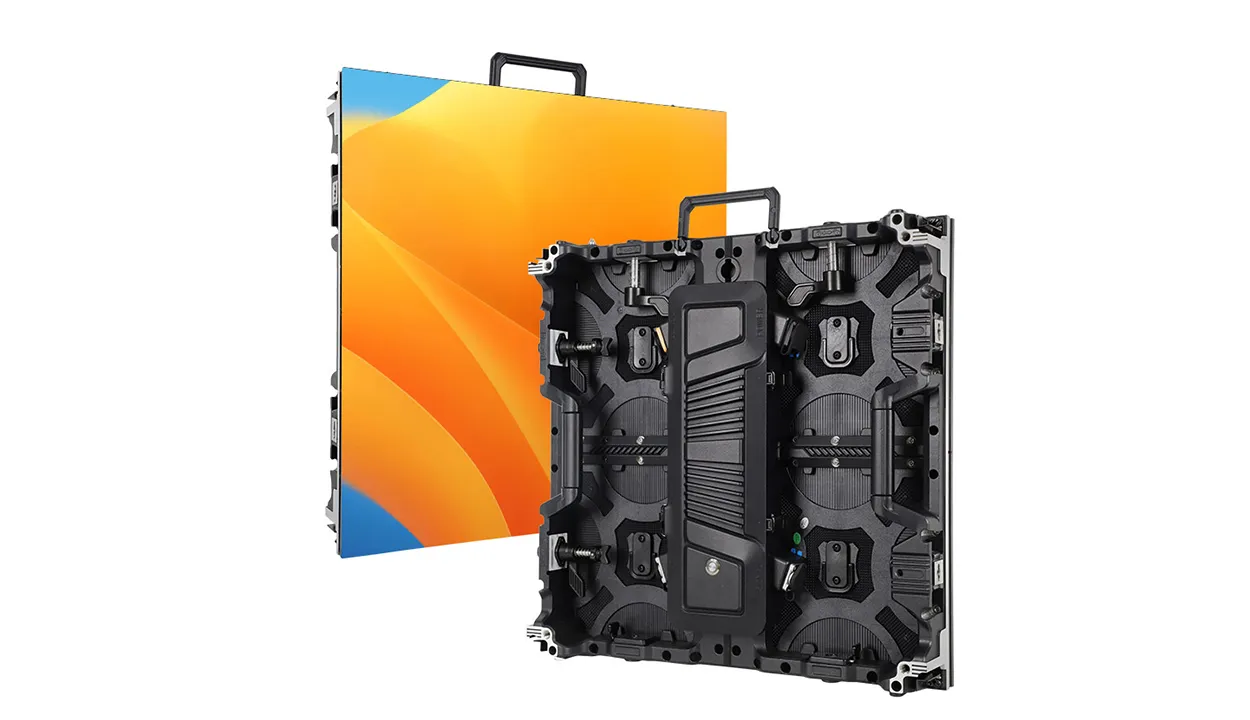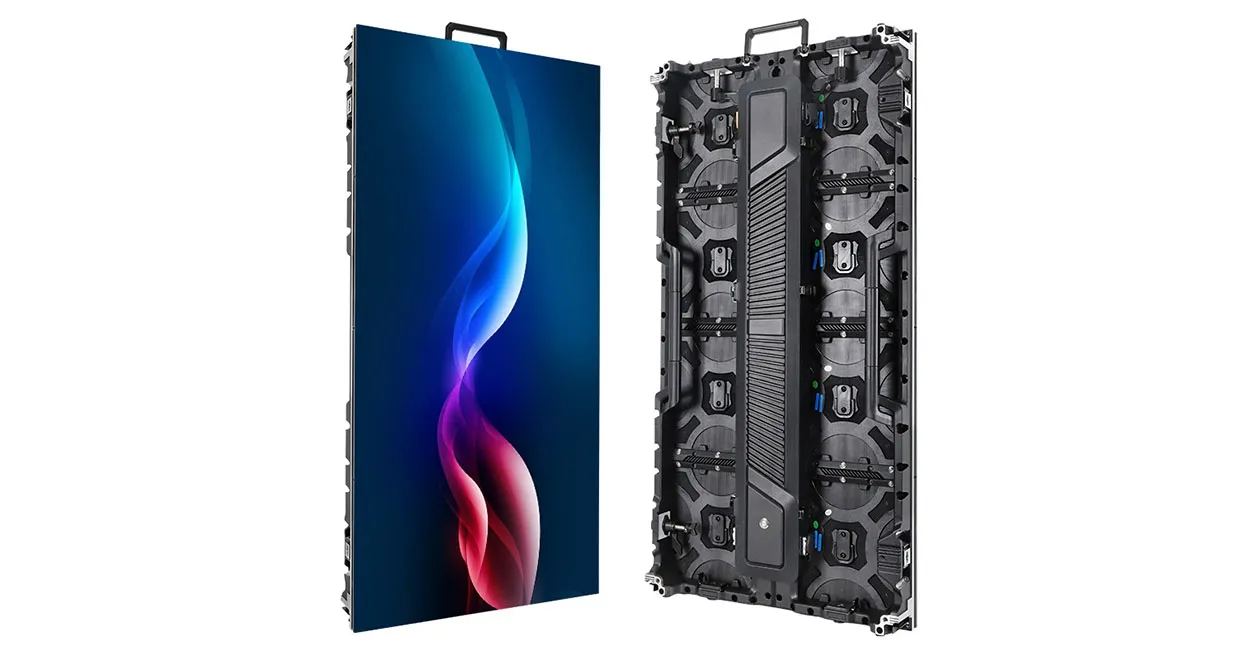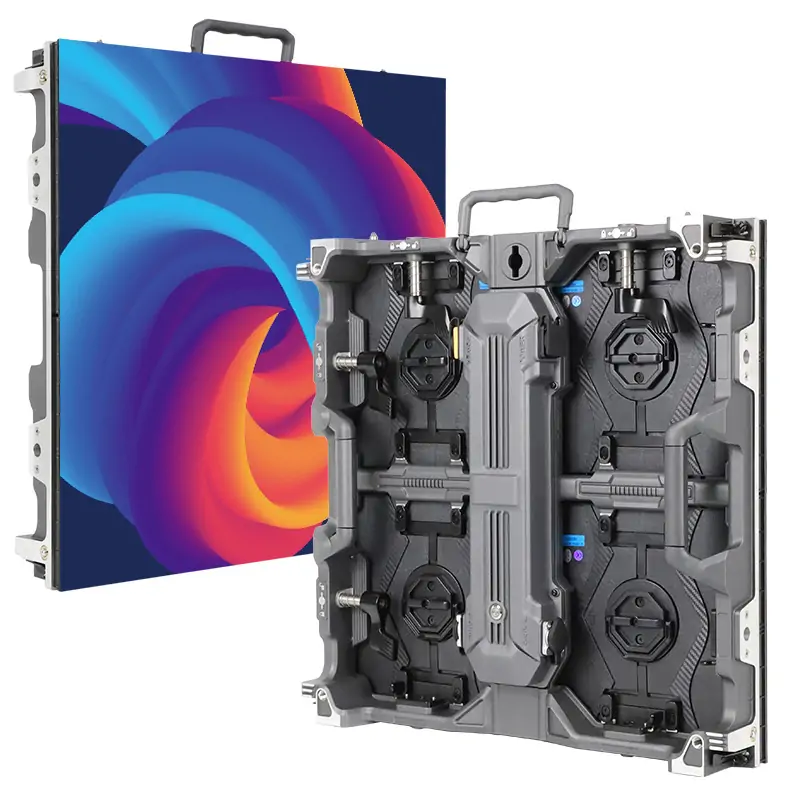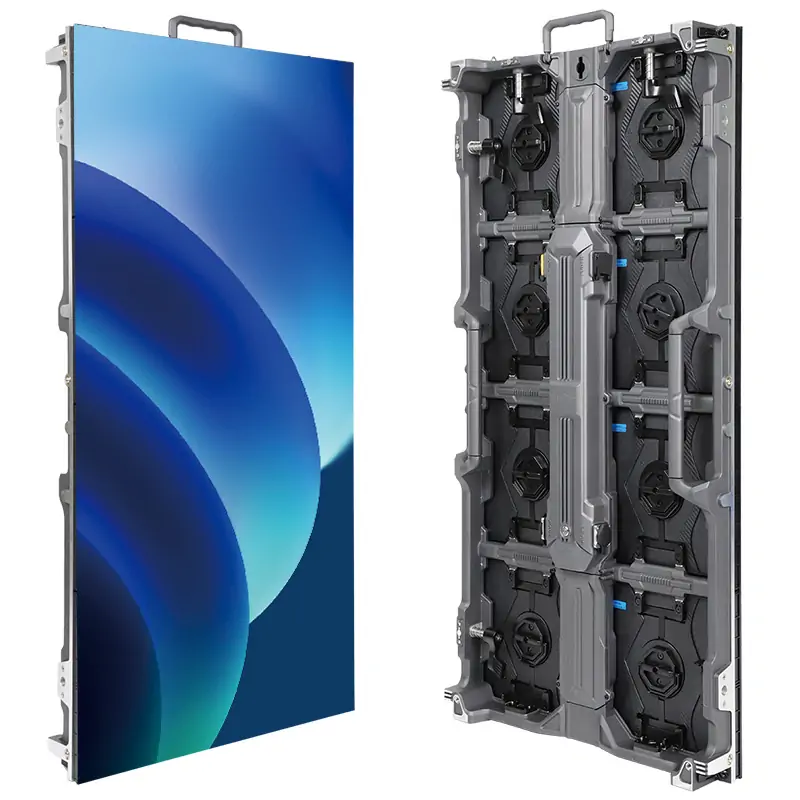
The world of display technology has advanced quickly, and LED screens are at the cutting edge of this change. From enormous publicizing announcements to modern floor LED screens, LED technology has re-imagined how we associated with visuals. Eager LED Screen, a worldwide pioneer in LED display solutions, is a trailblazer in this industry. This web blog investigates the key aspects of Eager LED Screen’s operations, centering on their state-of-the-art plant, their cutting-edge floor LED screens, and their notoriety as a dependable LED screen supplier.
1. What Is an LED Floor Screen and How Does It Work?
An LED floor screen is a load-bearing display surface that people walk on, combining the LEDs and driver ICs of a conventional display with a frame engineered to carry footfall. This guide covers how these floors are built, the specifications that matter, and how to vet an LED floor screen factory.
01. How an LED floor screen tile is constructed
An LED floor screen uses the same LED lamps and driver ICs as a conventional display, but its mechanical design is entirely different. Every tile is a sealed, load-bearing unit: a reinforced frame, a protective mask or resin layer over the LED surface, and a base that spreads point loads across the tile instead of concentrating them on individual lamps. Power and data daisy-chain between tiles through locking connectors rated for repeated assembly.
The load path matters more than any single component. A tile that flexes underfoot eventually cracks solder joints or delaminates the mask, and one that does not return to the same plane shows visible seams after a few hundred assembly cycles. An LED floor screen factory that publishes load and flatness figures is therefore a safer partner than one quoting only pixel pitch and brightness.
02. How an LED floor screen differs from a standard display
A conventional display is engineered to be seen. An LED floor screen is engineered to be seen and stepped on, which changes frame thickness, bracing, surface material, connector locking and the way heat escapes when the surface is covered by people.
| Parameter | LED floor screen | Standard LED display |
|---|---|---|
| Structural role | Load-bearing walking surface | Non-load-bearing, wall or truss mounted |
| Cabinet frame | Reinforced die-cast or steel, braced across the tile | Standard die-cast or sheet-metal cabinet |
| Surface | Anti-slip mask or resin layer over the lamps | Exposed lamps behind a louver or mask |
| Load rating | Documented per tile or per square metre | Not applicable |
| Typical pixel pitch | P2.6–P4.81 indoor, P4.81–P10 outdoor | P1.2–P10 depending on application |
| Brightness | 1,000–2,500 nits indoor, 4,000–6,000 nits outdoor | 600–8,000 nits depending on application |
| Ingress protection | Higher grade required at the walking surface | Rated to the installation environment |
| Price per square metre | Higher, because of frame, sealing and surface | Lower at the same pixel pitch |
2. Types of LED Floor Screen: Indoor, Outdoor and Interactive
Floor products fall into three families that differ in sealing, brightness and sensing, not just in price. Choosing the family first prevents the most common specification error: buying an indoor tile for a weather-exposed venue.
01. Indoor LED floor screens and dance floors
Indoor tiles are light and thin, and they assume a flat, protected subfloor. They typically run P2.6–P6.25, sit at 1,000–1,500 nits and use front service access. Clubs, hotels, showrooms and permanent installations use this family, as does our indoor floor LED screen series.
02. Outdoor LED floor screens
Outdoor tiles are heavier, sealed to IP65 or better across the assembled surface, and rated for 4,000–6,000 nits. They need drainage, cable management and edge ramps, and are normally laid on a levelling subfloor. The EA-OFloor outdoor series is built for this class of work.
03. Interactive LED floor screens
Interactive floors add a sensor layer, a media server and purpose-built content on top of the display. The sensing method changes the subfloor and cabling, so it must be selected before the hardware is ordered.
| Type | Typical pitch | Brightness | Surface sealing | Best suited to |
|---|---|---|---|---|
| Indoor LED floor screen | P2.6–P4.81 | 1,000–2,500 nits | IP40–IP54 | Stages, showrooms, studio floors |
| Outdoor LED floor screen | P4.81–P10 | 4,000–6,000 nits | IP65–IP67 | Plazas, forecourts, pool surrounds |
| Interactive LED floor screen | P3.91–P6.25 | 1,200–3,000 nits | IP54–IP65 | Museums, retail, brand activations |
| Rental LED floor screen | P3.91–P6.25 | 1,500–4,000 nits | IP54–IP65 | Tours, events, exhibitions |
3. How to Choose an LED Floor Screen Factory: Seven Vetting Steps
A brochure cannot tell you whether an LED floor screen factory can actually build a floor. These seven steps can, and each produces a document you can compare between suppliers.
01. Verify the manufacturing entity
Match the company name on the quotation, the invoice and the bank account, then confirm the factory address with a live video call from that location.
02. Audit floor-tile production, not general LED output
Floor tiles are a specific mechanical product, so a factory that assembles standard cabinets may not have the tooling for them. Ask how many floor-tile models are in production and which machines form the frames.
03. Demand load, flatness and ageing data
Request the load rating per tile, the flatness tolerance, and an ageing report for the exact model. Ageing runs assembled tiles under load for 48–72 hours to surface early failures before shipment.
04. Confirm the LED lamp and driver IC
Ask for the lamp brand and brightness bin, driver IC part number, power supply brand and receiving card model. Vague answers usually mean the bill of materials is not fixed.
05. Check sealing, slip resistance and certification
Ask for the IP rating of the module and of the finished tile, the slip-resistance result for the exact surface finish, and the fire performance of the mask and frame. Certificates must match your destination market; section 8 covers which ones apply.
06. Model total cost of ownership, not unit price
Spare-tile pricing, failure rate, freight weight, power draw and product longevity decide five-year cost. Two quotations that differ by 20% on paper often invert once total cost of ownership is modelled honestly.
07. Stress-test communication and after-sales
Send a technical question at the start of the supplier's working day and time the reply. Ask which engineer will support your installation and what the RMA procedure looks like: how a supplier behaves before money changes hands predicts what comes afterwards.
| Step | What to verify | Evidence to request | Pass signal |
|---|---|---|---|
| 1. Legal entity | Quotation, invoice and bank account name match | Business licence; bank details on letterhead | All three name the same entity |
| 2. Floor-tile production | Real tooling and capacity for floor tiles | Live walkthrough of frame forming and assembly | Walkthrough granted without scripting |
| 3. Test data | Load, flatness and ageing evidence | Load rating per tile; flatness tolerance; ageing report | Records supplied within 24 hours |
| 4. Bill of materials | Fixed component specification | Lamp brand and bin; driver IC; power supply; receiving card | Part numbers, not brand names only |
| 5. Safety and sealing | IP rating and slip resistance | IP test report; slip result; material fire rating | Reports match the model quoted |
| 6. Total cost | Five-year cost, not unit price | Spare-tile price list; power figures; freight volume | Willing to quote spares and freight |
| 7. After-sales | Named support and RMA path | Named engineer; written RMA procedure | Fast, specific, technical answers |
4. Floor LED Screen Specifications: What the Numbers Actually Mean
Four specifications decide whether an LED floor screen performs as promised, and each can be tested before you buy.
01. Pixel pitch and viewing distance
Pixel pitch is the centre-to-centre distance between LED lamps, and on a floor it is judged from where the audience stands. Because people look down at a steep angle, the nearest viewer is often one or two metres away, so a floor usually needs a finer pitch than a wall of the same size. P2.6–P3.9 suits indoor stages and showrooms, P4.81–P6.25 covers most rental and arena work, and P6.25–P10 is the practical range for outdoor floors.
02. Brightness and contrast under ambient light
Indoor tiles are usually quoted at 1,000–1,500 nits and outdoor tiles at 4,000–6,000 nits, but the ratio between screen brightness and the light landing on the surface matters more. A polished floor in a glass-roofed atrium loses contrast to reflections even at 1,500 nits, while a 900-nit tile in a dim club reads perfectly.
03. Refresh rate, scan mode and camera safety
Refresh rate decides whether the floor looks clean on camera. Below 1,920 Hz produces banding on broadcast and smartphone footage, and 3,840 Hz or higher is expected on floors filmed at high frame rates or in slow motion. Ask for refresh rate, scan mode and a filmed test rather than a specification sheet.
04. Load rating, flatness and tile geometry
These three figures separate a floor tile from a wall cabinet. A credible factory publishes a load rating of at least 1,500 kg/m² for event floors and 2,000 kg/m² for permanent public installations, a flatness tolerance measured across the assembled surface rather than a single tile.
| Application | Typical pixel pitch | Brightness | Load rating to require | Main risk to manage |
|---|---|---|---|---|
| Club and indoor dance floor | P3.9–P6.25 | 900–1,500 nits | 1,500 kg/m² | Surface wear from constant footfall |
| Touring stage and concert | P2.6–P4.81 | 1,200–2,500 nits | 1,500 kg/m² with fast assembly | Connector and frame fatigue |
| Museum and exhibition | P2.6–P3.9 | 800–1,200 nits | 2,000 kg/m² | Colour accuracy and reflective glare |
| Retail and showroom | P1.9–P3.9 | 1,000–1,500 nits | 2,000 kg/m² | Uniformity across a small floor |
| Broadcast and XR studio | P1.5–P2.6 | 1,000–1,800 nits | Static or 1/4 scan | Refresh rate and moiré on camera |
| Outdoor plaza and festival | P6.25–P10 | 4,000–6,000 nits | 1,500 kg/m², IP65 or better | Water ingress and surface slip |
| Sports arena and court surround | P4.81–P6.25 | 3,000–5,000 nits | 2,000 kg/m² | Impact from players and equipment |
5. Applications Where an LED Floor Screen Outperforms Other Displays
An LED floor screen is not a replacement for a wall display. It earns its cost when content has to sit underneath the audience, follow a performer, or turn a flat surface into a stage.
01. Concerts, tours and stage production
Touring floors are assembled and struck dozens of times a year, so frame life, connector locking and weight dominate the specification. A rental LED floor screen should be rated for thousands of assembly cycles, and a tile should be swappable without pulling surrounding units.
02. Museums, exhibitions and immersive rooms
Permanent floors prioritise colour accuracy, low heat and quiet operation over weight. Visitors walk the surface all day, so a matte, easy-clean mask and a service plan that does not close the room matter more than peak brightness.
03. Retail, brand activations and showrooms
Short-run activations need a floor that arrives in cases, installs in a day and looks seamless on camera. A 500 x 1,000 mm tile reduces the number of seams, which is what brand teams notice in photographs, and fine pitch keeps product names legible underfoot.
04. Broadcast, XR studios and virtual production
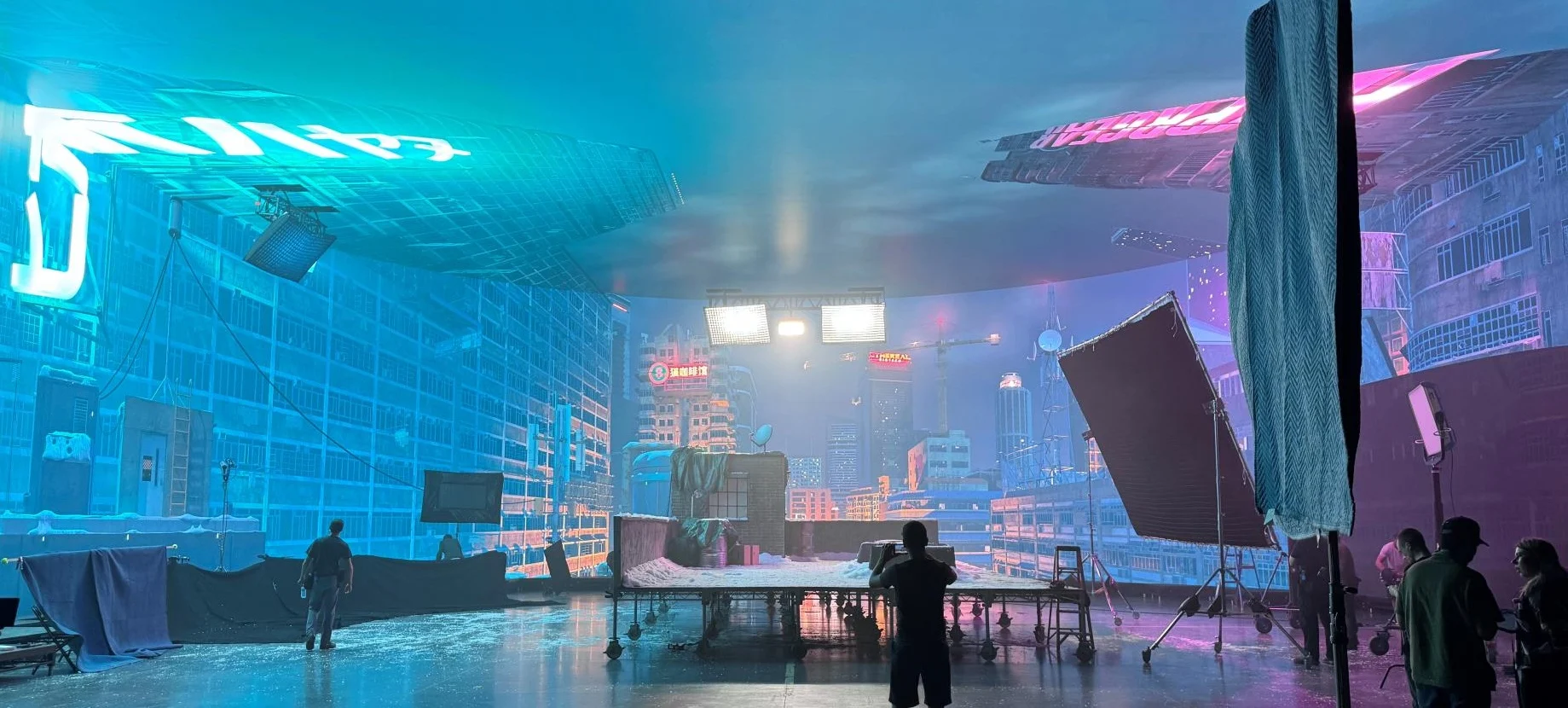
In a virtual production volume the floor contributes reflections as well as imagery, so refresh rate, calibration and consistent spectral output are critical. Floors used under camera must be tested with the actual cameras and frame rates of the shoot, because a tile that looks perfect to the eye can still band at 120 fps.
05. Sports arenas, hospitality and corporate venues
Court surrounds, arena entrances and hotel lobbies use floors for branding, replays and wayfinding. Load rating here is driven by crowds rather than performers, and impact from equipment becomes the leading failure mode.
6. Interactive LED Floor Screens: Sensing Technology and Content Planning
Interaction is the feature most often promised and least often delivered, because it depends on three systems working together: the sensor, the media server and the content.
01. Sensing technologies and what each one does well
Infrared frames suit small floors and simple trigger zones. Capacitive and pressure sensing give the most reliable footfall detection because they react to weight rather than shadow, and they work in bright ambient light. Camera tracking handles large floors and multi-person interaction but needs stable lighting and more processing power.
02. The latency budget that decides whether interaction feels real
Total latency is sensor input plus processing, rendering and the display pipeline. Under 100 ms feels immediate; above roughly 200 ms visitors describe the floor as broken and stop engaging. Publish the budget in the specification, because a fast tile cannot rescue a slow media server.
03. Planning content before you plan hardware
Interactive content needs a defined interaction model, a maximum simultaneous user count and a fallback animation for when nobody steps on the floor. Budget content production at 20–40% of hardware value, and ask for the pixel map and media-server compatibility list early. See how our interactive LED floor function works in practice.
7. Installation, Power and Maintenance Planning
Floor projects fail on site far more often than at the factory. Subfloor tolerance, power distribution and service access are decided before the tiles arrive, and each is expensive to correct afterwards.
01. Subfloor and structural preparation
An adjustable subfloor or levelling frame is almost always required, because few venues are flat to the tolerance a seamless floor needs. Specify the allowed deviation across the whole area rather than per tile.
02. Power, data and signal layout
Floor tiles are usually fed in columns, so a single power or data fault takes out a visible strip rather than one square. Plan power in balanced phases, keep data runs within the receiving card limit, and keep a spare output on every run.
03. Maintenance access and spare parts strategy
Service access must be designed rather than improvised. Decide whether tiles are removable from above with a suction tool or whether a pit gives rear access, and document the answer before installation. A permanent installation should hold 3–5% spare tiles plus spare power supplies and receiving cards; a touring floor should carry closer to 8%.
04. Cleaning, storage and life-cycle care
Masks and resin surfaces should be cleaned with a pH-neutral product and a soft pad, never a solvent. Touring tiles should be stored flat in cases with the surface protected, and failures tracked by tile position, because edge damage from stacking is a common cause of seam problems.
| Item | Spares to hold | Service interval | Replace when |
|---|---|---|---|
| Floor tiles | 3–5% permanent, 8% touring | Inspect every 6 months | Edges no longer sit flush |
| Power supply units | 5% of installed count | Check output yearly | Output drift above 5% |
| Receiving cards | 3% of installed count | Firmware check yearly | Column faults or data errors |
| Data and power cables | 10% of installed length | Inspect every 3 months on tour | Connector damage or intermittent faults |
| Mask or resin surface | Not field-replaceable | Clean monthly indoors | Scratches visible under content |
| Connector seals | Full set | Before every outdoor season | Any hardening or water ingress |
| Edge ramps and levelling feet | 2 sets | Each install | Deformation or lost parts |
8. Certifications and Compliance for Floor LED Screens
Compliance is where a cheap LED floor screen quotation and an expensive one stop looking similar. The paperwork has to match both the destination market and the model actually shipped.
01. Destination-market approvals
Every market has a mandatory marking: CE in the European Union, UKCA in Great Britain, FCC plus a recognised safety listing in the United States, and equivalents elsewhere. A supplier who has shipped to your market has the files ready; one who has not often offers a generic certificate issued for a different model.
02. IP ratings, slip resistance and fire performance
For an LED floor screen the IP rating must be stated for the finished assembled tile, not only for the module behind the mask, because water enters at the seams. Slip resistance should be tested on the exact finish you are buying, and mask, resin and frame materials should carry a documented fire rating.
03. How to verify a certificate instead of trusting a PDF
Check that the model number on the certificate matches the quotation, that the certificate holder is the entity that will invoice you, and that the issuing laboratory appears in an accreditation database. The chain from certificate holder to contracting entity must be documented in the contract.
| Market | Mandatory marking | Typical evidence | Notes |
|---|---|---|---|
| European Union | CE | EMC, LVD and RoHS test reports; Declaration of Conformity | DoC must name the importer |
| Great Britain | UKCA | Same test reports with a UK-approved body route | Separate from CE since 2021 |
| United States | FCC Part 15; UL or ETL listing | FCC report; NRTL listing for the power entry | Listing applies to the finished tile |
| Canada | ISED; CSA or cUL | IC report; CSA listing | Often satisfied by the US files |
| Australia and New Zealand | RCM | EMC and safety reports | Supplier must be registered |
| Saudi Arabia and the Gulf | SASO / SABER | Certificate of Conformity per shipment | Arrange before freight booking |
| Japan | PSE where applicable | PSE certificate for the power supply | Voltage and plug type differ |
9. What a Floor LED Screen Quotation Should Contain
Two quotations for what looks like the same LED floor screen are rarely the same product. Most of the gap sits in items that are simply absent from the cheaper document.
01. Reading a quotation line by line
Look for the tile model and firmware version, spare tiles, spare power supplies and receiving cards, cables, control hardware, flight cases, edge ramps, freight and insurance, installation support, and a written warranty with a response time. Our EA500 floor tile introduction shows what ships with a complete set.
02. The five cost drivers that explain most price gaps
Pixel pitch, lamp brand and bin, driver IC, mask material and load-rated frame design account for most of the difference between two prices at the same size. Ask for the bill of materials on both quotations and compare it line by line; a 30% price gap almost always resolves into one of these five items.
| Quotation line | What to check | Why it matters |
|---|---|---|
| LED floor screen tiles | Model, pixel pitch, load rating, IP rating | Defines the product you can enforce |
| Spare tiles | 3–5% permanent, 8% touring | Downtime cost far exceeds tile cost |
| Spare power supplies and cards | 5% and 3% of installed count | Most common field failures |
| Data and power cables | Length, connector type, 10% spare | Connectors fail before tiles do |
| Control hardware | Sending card, processor, software licence | Often omitted from cheap quotes |
| Flight cases and edge ramps | Quantity, wheels, ramp length | Protects the floor in transit |
| Freight, duty and insurance | Incoterm, volumetric weight | Floor tiles are heavy and bulky |
| Installation and training | Days on site, who pays travel | Prevents site-day disputes |
| Warranty and response time | Years, coverage, RMA turnaround | The only clause that matters after failure |
10. Common Mistakes When Buying an LED Floor Screen
01. Commercial mistakes
The most expensive mistake is choosing on price per square metre alone. The second is accepting a quotation without spares, cases or a written response time. The third is paying a deposit to an account that does not match the contracting entity, which removes most of your practical remedies. Buyers also underestimate freight and installation: a heavy LED floor screen costs far more to move than a wall of the same area.
02. Technical mistakes
Technical failures cluster around predictable choices: specifying pitch without checking the real viewing distance, forgetting that the floor will be filmed and accepting a low refresh rate, ordering tiles without a levelling subfloor, and buying seams that cannot be serviced from above in a venue with no pit. The least obvious mistake is ignoring content: a floor with no pixel map and no fallback animation sits dark most of the time. Our Greece project feedback shows how a properly specified floor performs in daily use.
11. Frequently Asked Questions About LED Floor Screens
01. What is an LED floor screen used for?
An LED floor screen is a load-bearing display surface people walk on, used for concert stages, club dance floors, museums, retail activations, broadcast and XR studios, arena surrounds and hotel lobbies.
02. How much does an LED floor screen cost per square metre?
Price depends on pixel pitch, lamp brand, mask material and frame design. A rental-grade LED floor screen at medium pitch costs far less per square metre than a fine-pitch permanent floor with a resin surface. Compare total delivered cost including spares, cases, freight and control hardware, which can add 20–35% to the tile price.
03. Can an LED floor screen be walked on in high heels and crowds?
Yes, if the tile is specified correctly. A properly built tile carries a documented load rating and a hardened anti-slip mask that resists point loads from heels. Ask for the load rating per square metre and the surface hardness, and check whether the mask is replaceable.
04. What pixel pitch does an LED floor screen need?
Match pitch to the closest viewer. P2.6–P3.9 suits indoor stages and showrooms, P4.81–P6.25 covers most rental and arena work, and P6.25–P10 is normal for outdoor floors. Finer pitch costs more and draws more power for the same area.
05. Is an LED floor screen waterproof enough for outdoor events?
Only if the finished tile, not just the module, is rated IP65 or better and the connectors are sealed, because water enters at the seams and cable entries. Outdoor floors also need drainage and cable management, and standing water must never share a space with mains power.
06. How long does an LED floor screen last?
LED lamps are rated for 100,000 hours, but a floor usually reaches end of life on mechanical wear first. A touring LED floor screen may need frame or connector attention after a few hundred assembly cycles, while a permanent indoor installation can run for years with scheduled maintenance and 3–5% spare tiles.
07. What makes an LED floor screen interactive?
Interaction comes from a sensor layer plus a media server plus purpose-built content. If total latency from footfall to pixel change exceeds roughly 200 ms, visitors perceive the floor as broken. Our indoor floor tile screen video shows the hardware.
08. How do I choose an LED floor screen factory?
Verify the legal entity, audit floor-tile production rather than general LED output, and demand load, flatness and ageing data for the exact model. model total cost of ownership rather than unit price, and test how quickly the factory answers technical questions. Compare models in our floor LED screen range.
09. What is the difference between an LED floor screen and an LED dance floor?
The terms overlap. A dance floor usually describes a rental or club product at medium pitch with a simple surface, while an LED floor screen covers the wider category, including fine-pitch permanent floors, outdoor IP65 floors and interactive installations.
10. How is an LED floor screen installed and serviced?
Tiles are laid on an adjustable levelling subfloor and daisy-chained for power and data in columns. Servicing is either from above with a suction tool or from a pit behind the tiles, and both the access method and the spares list should be agreed in writing before installation begins.
12. Conclusion: Your LED Floor Screen Decision Checklist
Successful projects are decided by five things: a tile that is genuinely load-rated and flat, a pitch matched to real viewing distance, a factory you have verified rather than believed, a quotation that includes spares and control hardware, and a content plan that makes the floor worth switching on.
Work through this checklist before you order:
- Load rating and flatness tolerance documented for the assembled surface.
- Pixel pitch, brightness and refresh rate matched to the closest viewer and to any camera.
- Manufacturing entity, floor-tile production and ageing records verified.
- Certification matching the destination market for the exact model quoted.
- Spare tiles, power supplies, cards and cables included in the quotation.
- Subfloor, power distribution, service access and edge treatment planned.
- Content, media server and interaction latency budget agreed in advance.
EagerLED builds both indoor floor LED screen and outdoor LED floor series, and supplies the spares that keep them running. For a specific project, send us the venue, floor area and closest viewing distance and we will return a specification and a quotation you can check line by line through our contact page.
 EagerLED LED Supplier Welcomes Uzbekistan Customers
 64 Pieces EA1000C4 LED Rental Displays Shipped to Angola
Related Posts

Fill In Your Needs In Detail
Fill in the screen usage scene and size you need in “Content”.You will get a quote.