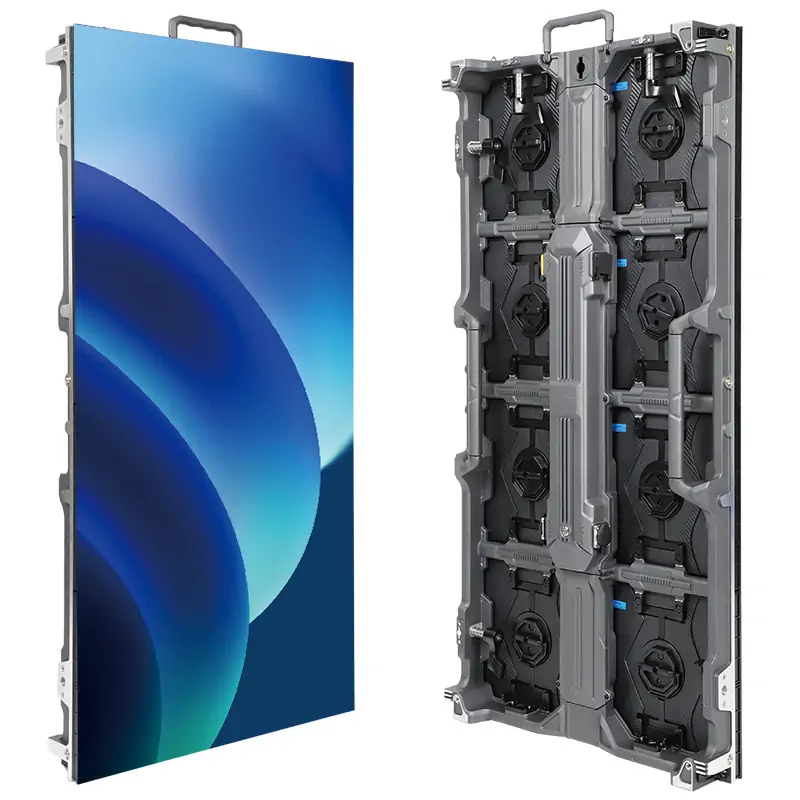
A street pole LED display turns a pole location into a digital advertising or information point. Choose a single-sided screen for one useful approach and consider a double-sided screen where both directions matter. Then match image detail, brightness, and service access to the site.
The difficult decisions usually sit between the screen and the installation: a second face with no audience, a lighting circuit that is off during the day, or a cabinet that cannot be serviced. This street pole LED display guide explains those trade-offs for AV integrators preparing a purchase.
- 1. Qu'est-ce qu'un panneau d'affichage LED sur poteau de rue ?
- 2. Single-Sided vs. Double-Sided Street Pole LED Displays
- 3. Street Pole LED Display Specifications That Matter
- 4. How to Set Up Street Pole LED Displays
- 5. Installation Requirements for Pole-Mounted LED Screens
- 6. Benefits and Limitations of Street Pole LED Displays
- 7. Applications: Advertising, Public Information and Smart Cities
- 8. Street Pole LED Display Price and Total Project Cost
- 9. How to Evaluate a Street Pole LED Display Supplier
- 10. FAQ
- 11. Conclusion
1. Qu'est-ce qu'un panneau d'affichage LED sur poteau de rue ?
Which configuration should you start with? One clear viewing direction favors a single-sided screen. Two useful approaches can justify two faces. For scheduled advertisements, consider a compatible player that stores content locally; reserve live-feed requirements for projects that actually need them.
01. A Small Screen with a Site-Specific Job
A street pole LED display combines LED modules, power supplies, control electronics, an enclosure, and a mounting assembly. The modules produce the image; the controller determines how the pixels are addressed. The pole and attachment structure carry the complete installed equipment.
Unlike a large billboard, a pole-mounted screen often has a narrow content canvas and a limited viewing opportunity. That makes message design part of equipment selection. An event name and direction arrow ask less of the screen than a detailed timetable or a paragraph of promotional text.
The first useful question is therefore what the audience must understand before moving on. A pedestrian near an entrance may read several lines; a distant passing viewer may only register a headline and image. Extra resolution cannot create more viewing time.
A street pole LED display can use stored programs or a continuous live source, depending on its controller. Stored playback runs a downloaded schedule locally. Live playback depends on an active signal path, so these two operating methods should be specified separately.
02. Where a Display Fits into a Smart Pole
A smart pole may combine lighting, cameras, communications, sensors, and a screen. A street pole LED display supplies the visual component. It does not automatically include the other devices, the information they generate, or the software connecting them.

This matters when a proposal includes weather information, traffic updates, or alerts. Someone must supply the data, define the interface, and decide what appears when the source fails. Treating integration as a separate scope makes the quotation and later support responsibilities clearer.
2. Single-Sided vs. Double-Sided Street Pole LED Displays
01. Choose the Face Count from the Viewing Route
A single-sided street pole LED display is the sensible starting point when most viewers approach from one direction. An entrance-facing screen is a typical example. A second face becomes useful when it reaches a different audience with an equally clear sightline.
A double-sided street pole LED display can address opposing approaches, but the two sides rarely deserve automatic approval. Trees may obscure one face, or the return route may have little foot traffic. Assess each viewing direction before paying for another message surface.
| État du site | Point de départ pratique | Raison |
|---|---|---|
| Audience approaches a single entrance | Simple face | Concentrates the message on the useful direction |
| Both approaches offer clear viewing | Assess double-sided | Each face can serve a distinct audience |
| One side faces trees or a building | Single-sided or a different position | A second face cannot remove the obstruction |
| Each side needs different messages | Two-face system with suitable mapping | Independent content depends on the control arrangement |
| Rear clearance is restricted | Compare service arrangements first | Face count alone does not establish maintenance access |
Walk the actual route rather than judging a location from a front-on photograph. Note where the screen first becomes visible, where obstructions appear, and when the viewing angle becomes uncomfortable. These observations help determine message length as well as cabinet orientation.
02. Two Faces Change More Than the Screen Area
A double-sided street pole LED display changes the assembly around the pole. Cabinet depth, bracket offset, accessory enclosures, and service clearances all contribute to its installation envelope. Structural assessment needs the assembled arrangement, rather than the weight of one cabinet.
Content architecture also matters. Opposite faces might repeat a program or operate as separate logical screens. One player can support some arrangements, while others need different hardware; the answer depends on loading limits, output layout, and the required playback behavior.
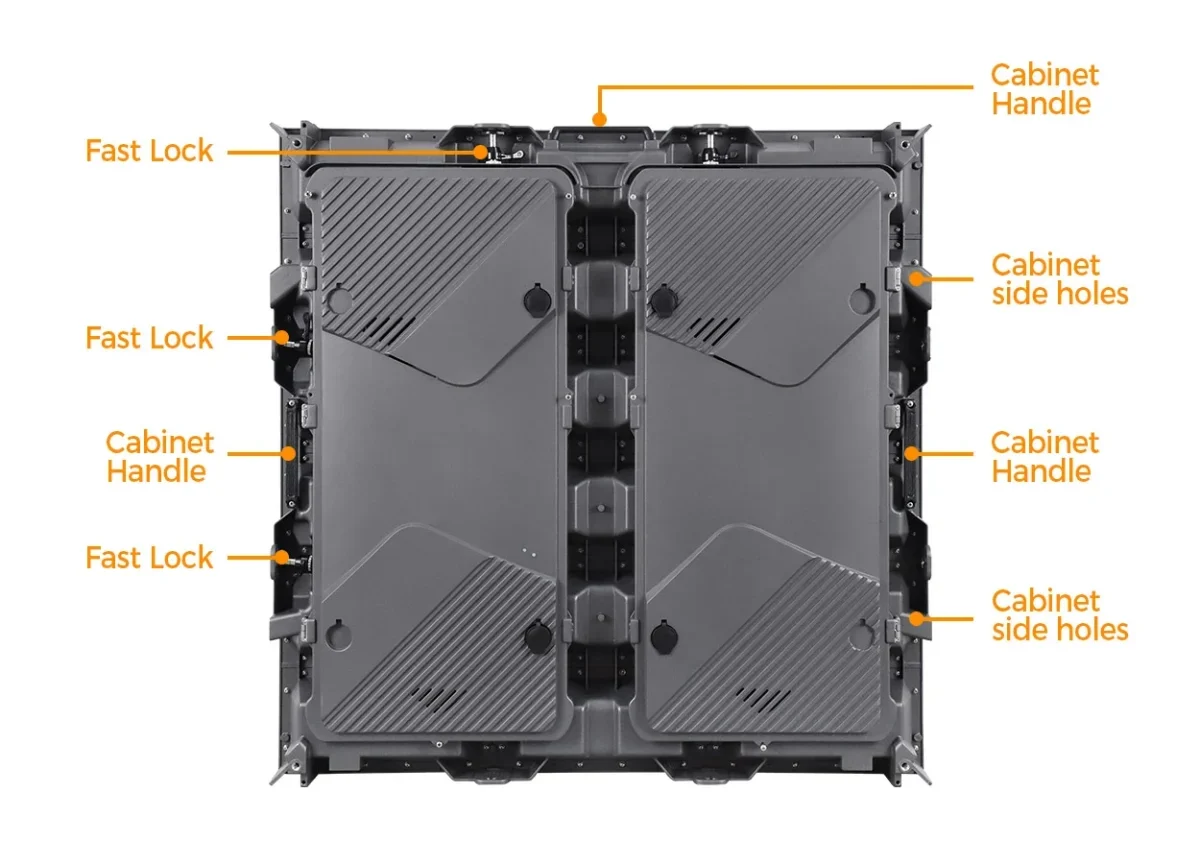
Cabinet joining hardware is another distinction worth understanding. Handles and quick locks can help assemble a supported cabinet layout, but they are not a pole-mounting design. The attachment to the pole needs its own approved structure.
3. Street Pole LED Display Specifications That Matter
01. Pixel Pitch: Buy the Detail the Audience Can Use
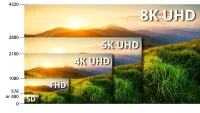
Street pole LED display pixel pitch is the spacing between neighboring pixels. Reducing the pitch increases the pixel count within a given active area. That helps with fine detail, but screen dimensions and viewing distance still determine whether the detail is useful.
For illustration, an active width of 960 mm (37.8 in) at a 4 mm pitch contains 240 pixels across. This is a calculation example, not a proposed EagerLED configuration. Real resolution must follow the selected modules and active display dimensions.
A finer-pitch street pole LED display deserves consideration when required text or logos lose important detail on the alternative. If the intended message is already readable, ask what the upgrade changes for the viewer. A higher pixel count alone is an incomplete purchasing argument.
Compare candidate resolutions using the same sample content. Include the longest place name, the actual logo, and any required language. Viewing the result at the intended distance tells you more than inspecting an enlarged design on a laptop.
02. Brightness: Daylight Readability Needs Night Control
Street pole LED display brightness is usually expressed in nits, equivalent to cd/m². The maximum figure describes available output, not the correct setting for every hour. A useful specification includes adjustable brightness and a clear method for controlling it.
The same screen may face strong daylight and then sit beside a dark pedestrian area. Keeping daytime output after sunset can make the message uncomfortable to view. A schedule or a compatible light sensor can manage changes, subject to the selected equipment and site requirements.
A sensor needs a representative position. Shade from the cabinet or direct illumination from a nearby lamp can distort its reading. Its response, operating limits, and behavior after a lost reading should be part of configuration, rather than left to an assumed default.
03. Outdoor Protection Is an Assembly-Level Question
A street pole LED display faces weather through more than its front surface. Service doors, cable entries, connectors, and added equipment boxes can become vulnerable points. The installation must preserve the protection described for the actual equipment.
An IP rating addresses specified ingress protection; it does not answer every question about temperature, coastal corrosion, or condensation. Those conditions need their own model-specific evidence. A generic statement that a screen is weatherproof gives an integrator little basis for acceptance.
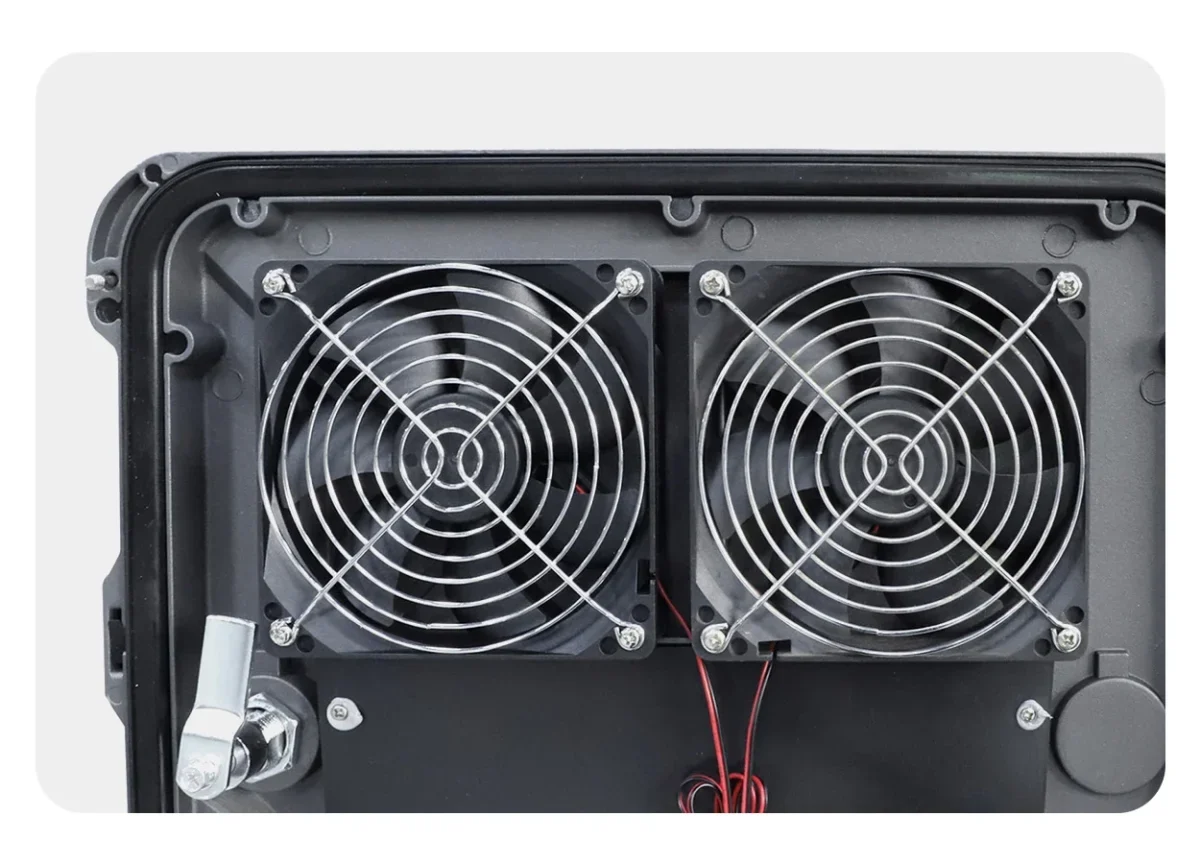
The cabinet’s thermal design also depends on its surroundings. Fans need usable air paths and access for cleaning. Placing a ventilated cabinet tightly against another enclosure can undermine the arrangement, even when the fan count looks adequate on a specification sheet.
| Spécifications | What it helps determine | Ce qu'elle ne peut établir seule |
|---|---|---|
| Pixel pitch and active resolution | Détails de l'image disponible | Readable text without considering size and viewing distance |
| Plage de luminosité | Potential daylight output and adjustment | Suitable nighttime operation without configured control |
| Indice de protection | Protection under the stated conditions | Resistance to every climate or cleaning method |
| Puissance maximale | Electrical supply planning | Consommation énergétique quotidienne moyenne |
| Service avant ou arrière | Required component-access direction | A safe working position at screen height |
4. How to Set Up Street Pole LED Displays
01. Get the Picture Correct Before Raising the Screen
Set up a street pole LED display on the bench before installation wherever the project allows. It is easier to identify an incorrect cable order or configuration file while the cabinet is accessible. Keep the approved hardware revision, firmware information, and configuration together.
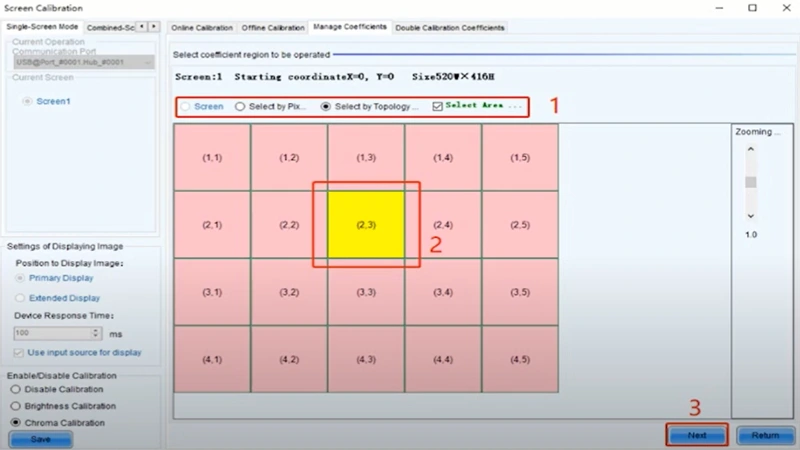
Receiving-card parameters govern the module electronics; screen mapping determines where the image regions appear. They solve different problems. A numbered grid helps reveal rotated, repeated, or misplaced regions after the approved electrical parameters have been loaded.
Matching pixel pitch does not prove that cabinets use identical driver electronics or scan settings. Use the supplier-approved file for the actual hardware. EagerLED's Guide de configuration d'écran NovaLCT explains this stage for applicable NovaStar systems.
02. Choose How the Player Will Go Online
A remotely managed street pole LED display needs a communication route to its player. The best option depends on available infrastructure and operating responsibility. Ethernet, Wi-Fi, and cellular service each solve a different site constraint.
| La connexion | Utile quand | Dependency to resolve |
|---|---|---|
| LAN câblé | The site offers a suitable network route | Cable access, network approval, and player connectivity |
| Wi-Fi to an upstream network | A suitable wireless network reaches the enclosure | Coverage, credentials, supported mode, and ongoing access |
| Cellulaire | A fixed site network is unavailable or unsuitable | Modem compatibility, antenna position, coverage, SIM, and data plan |
| Local-only publishing | Remote operation is unnecessary and the player supports it | A practical visit and content-transfer process |
A local Wi-Fi hotspot is not the same as an Internet connection. It may let a nearby laptop configure the player without providing cloud access. Likewise, Ethernet outputs to receiving cards carry display data; they should not be confused with the player’s management-network port.
Cellular-ready also needs clarification. A compatible modem may be optional, and regional network support matters. Test the final connection with the cabinet closed, since an installation location that looks convenient can still give poor wireless reception.
03. Build a Schedule the Operator Can Maintain
A street pole LED display program should use the native pixel canvas and the correct orientation. A landscape advertisement squeezed into a narrow portrait screen can lose its intended hierarchy. Prepare a readable layout for each screen group rather than relying on automatic scaling.
Set the clock and time zone before assigning campaigns. Then separate content schedules from operating hours and brightness rules. This distinction makes it easier to explain why a screen is showing a particular message at a particular output level.
Several screens receiving the same file does not necessarily mean synchronized playback. Supported player combinations may need a common timing method, compatible platforms, and matching plans. Apply the actual manufacturer’s synchronization instructions when coordinated transitions are part of the brief.
04. Prove Playback Survives Normal Interruptions
A street pole LED display should be tested beyond a successful upload. Inspect the physical image, interrupt the network, restore connectivity, and perform a controlled restart. Record which program and operating settings return after each event.
Stored-content playback can continue only when the accepted program has actually reached and been retained by the player. Cloud publication status alone is not proof. Monitoring and logs help where supported, but a physical playback check remains useful at handover.
5. Installation Requirements for Pole-Mounted LED Screens
01. Establish Whether the Pole Can Carry the Proposal
A street pole LED display adds an assembly and environmental loads to a structure designed for a particular duty. An existing lighting pole does not automatically have spare capacity. Its pole, foundation, brackets, and other attached equipment need project-specific assessment.
Cabinet weight is only one input. Screen geometry, height, mounting offset, wind exposure, and attachment positions affect the assessment. Provide the complete proposed arrangement to a qualified structural professional rather than requesting a mounting decision from a catalog photograph.
Cabinet quick locks join cabinets in supported display arrangements; they do not establish an approved connection to a pole. EagerLED's méthodes d'installation d'écrans LED extérieurs provide broader context for comparing locations and support structures.
02. Solve Power Availability and Service Access Together
A street pole LED display may be required to operate during the day even though the existing lighting circuit is energized only at night. Resolve supply availability early. Otherwise, a technically suitable screen can arrive at a location without power during its intended advertising hours.
The connected load includes the player, networking equipment, cooling, and accessories as well as the LED surface. Qualified electrical personnel should establish supply compatibility, isolation, grounding, protection, and cable selection for the actual installation.
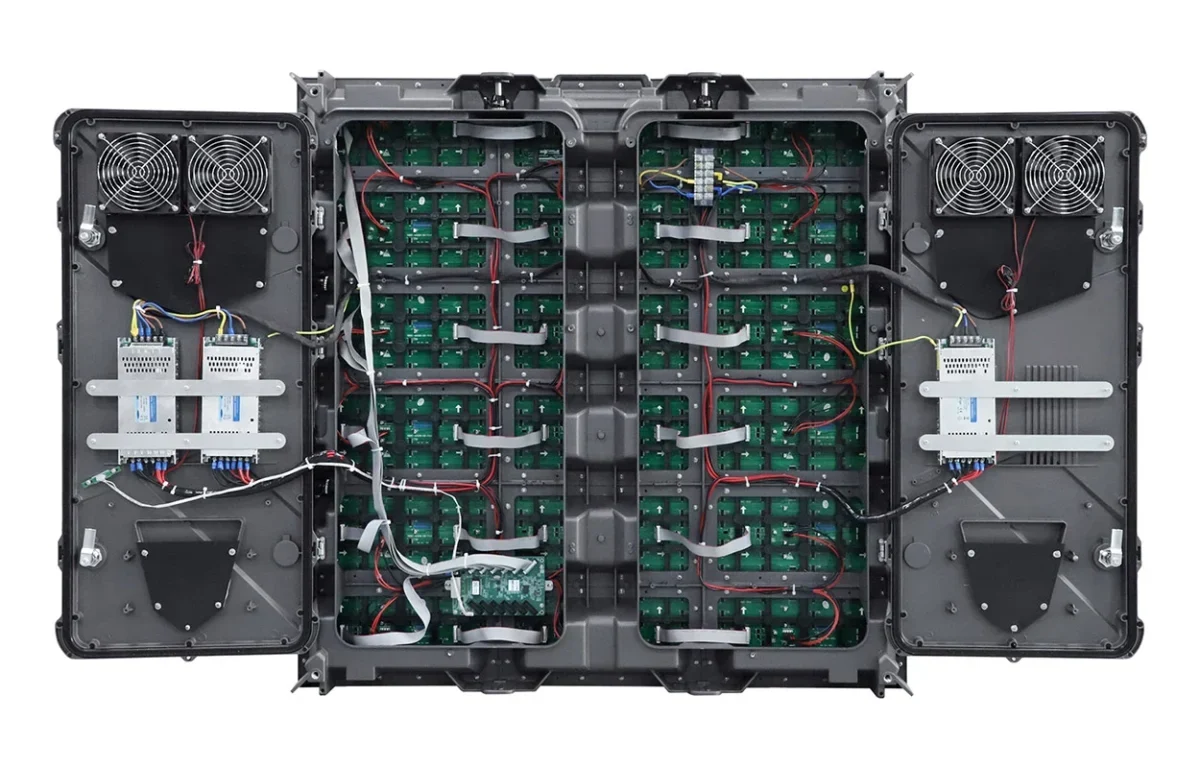
Plan cable entry and strain relief so opening a service door does not pull against connectors. Antenna and accessory wiring should preserve the enclosure design. A neat-looking route is only useful when it also permits inspection and component replacement.
Document the access method before choosing front or rear service. Front access can help where rear space is restricted, while rear access requires door-opening and component-removal clearance. Both still need a safe working position at the installed height.
Local advertising approval, road visibility, permitted content, and operating hours may also affect the location. Requirements differ, so coordinate the proposal with the owner and relevant authorities. Include any access restrictions in the maintenance scope before the equipment is ordered.
6. Benefits and Limitations of Street Pole LED Displays
01. Where Digital Messaging Earns Its Place
A street pole LED display offers practical value when messages change regularly or a network needs location-specific schedules. An operator can prepare content centrally and assign it to selected screens. This can avoid some visits required to replace printed material.
The benefit is strongest when the client has a real publishing routine: campaigns to schedule, notices to expire, and someone responsible for approval. Software groups and reusable layouts make that routine manageable. A screen without a content owner can become an expensive way to show an outdated message.
02. When Another Position or Format Makes More Sense
A street pole LED display is less convincing when the pole hides it behind trees, leaves little reading time, or creates difficult service access. Higher brightness or finer pitch cannot remove those constraints. Moving the display may improve the result more than upgrading its electronics.
A static message may also need less operational effort if it rarely changes. Compare the value of flexible publishing against continuing electricity, connectivity, software administration, and elevated maintenance. Avoid building the business case around unverified advertising revenue or energy-saving percentages.
7. Applications: Advertising, Public Information and Smart Cities
01. Match the Message to the Location
A street pole LED display on a commercial street can carry a concise promotion; a campus entrance can show event directions or local notices. The common requirement is immediate relevance. Group screens by audience so a network does not publish every message everywhere.
EagerLED's Botswana customer video spectacles EA960R3 billboards used for street-pole advertising. It provides application context; it does not specify the dimensions, pixel pitch, or structural design suitable for another project.
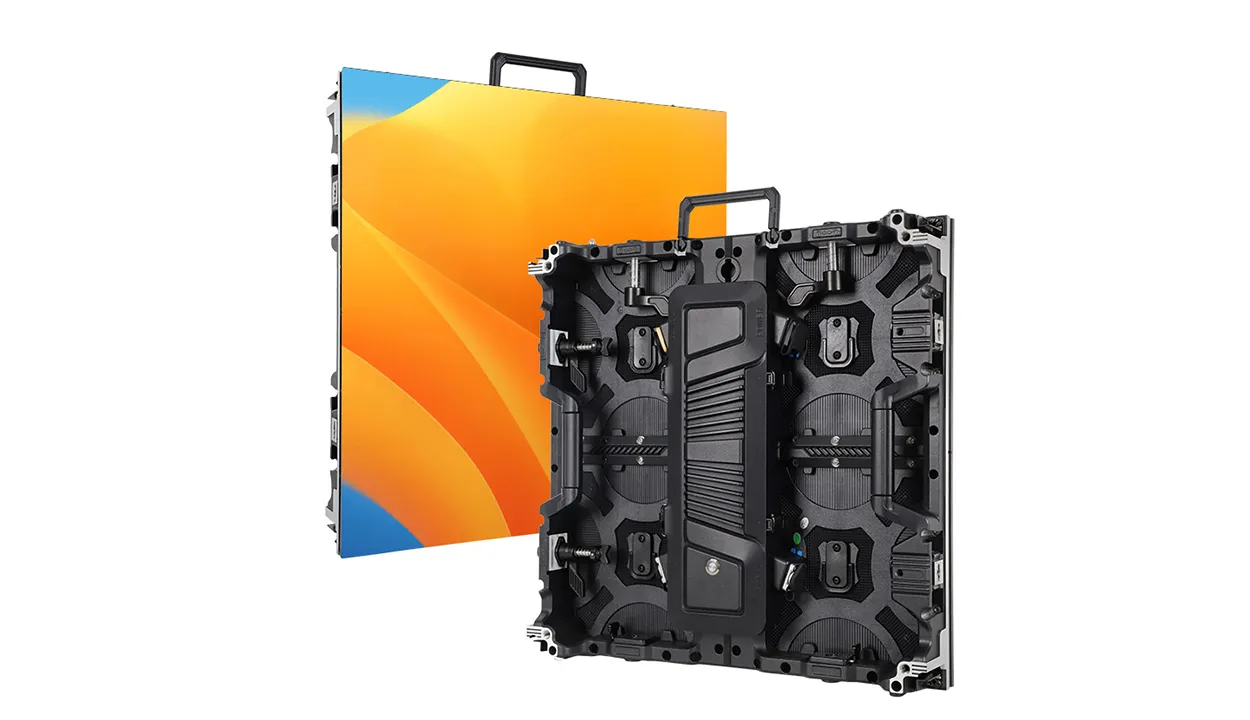
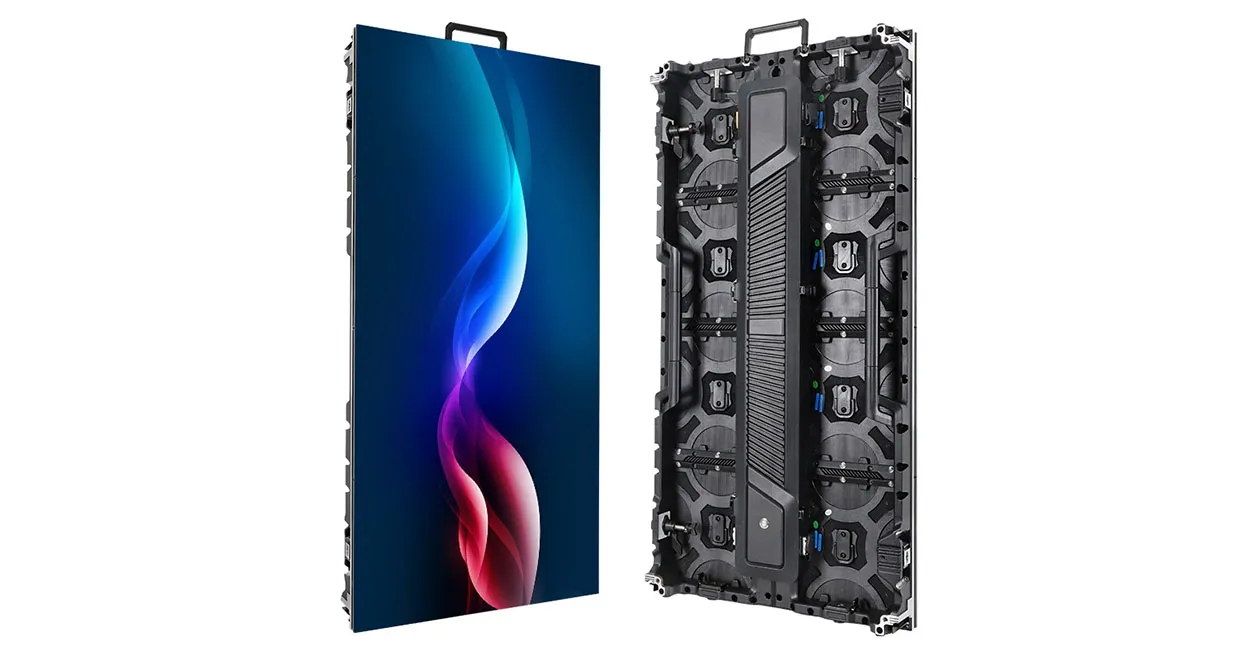
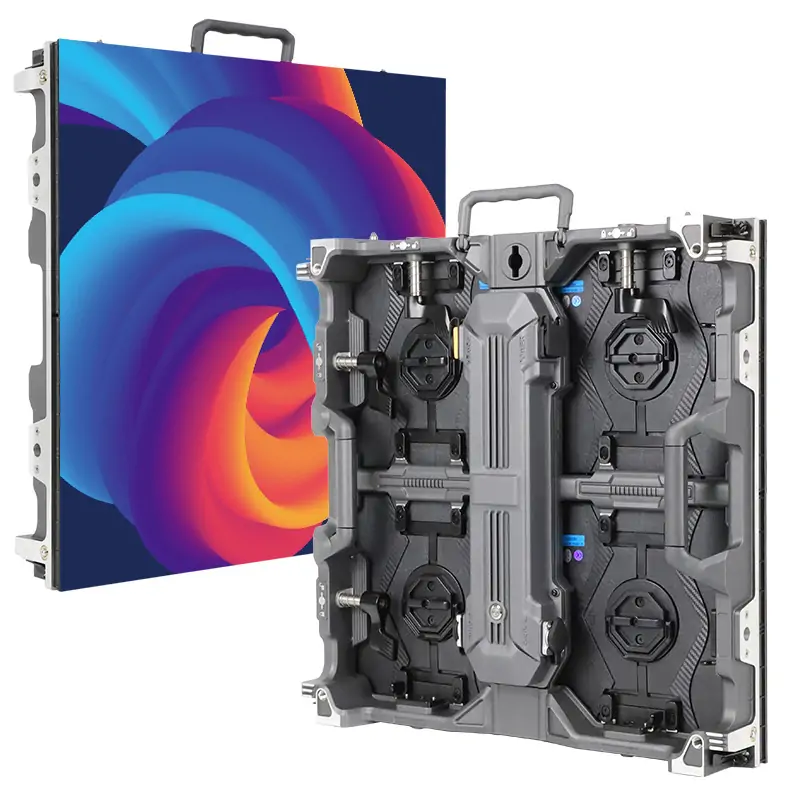
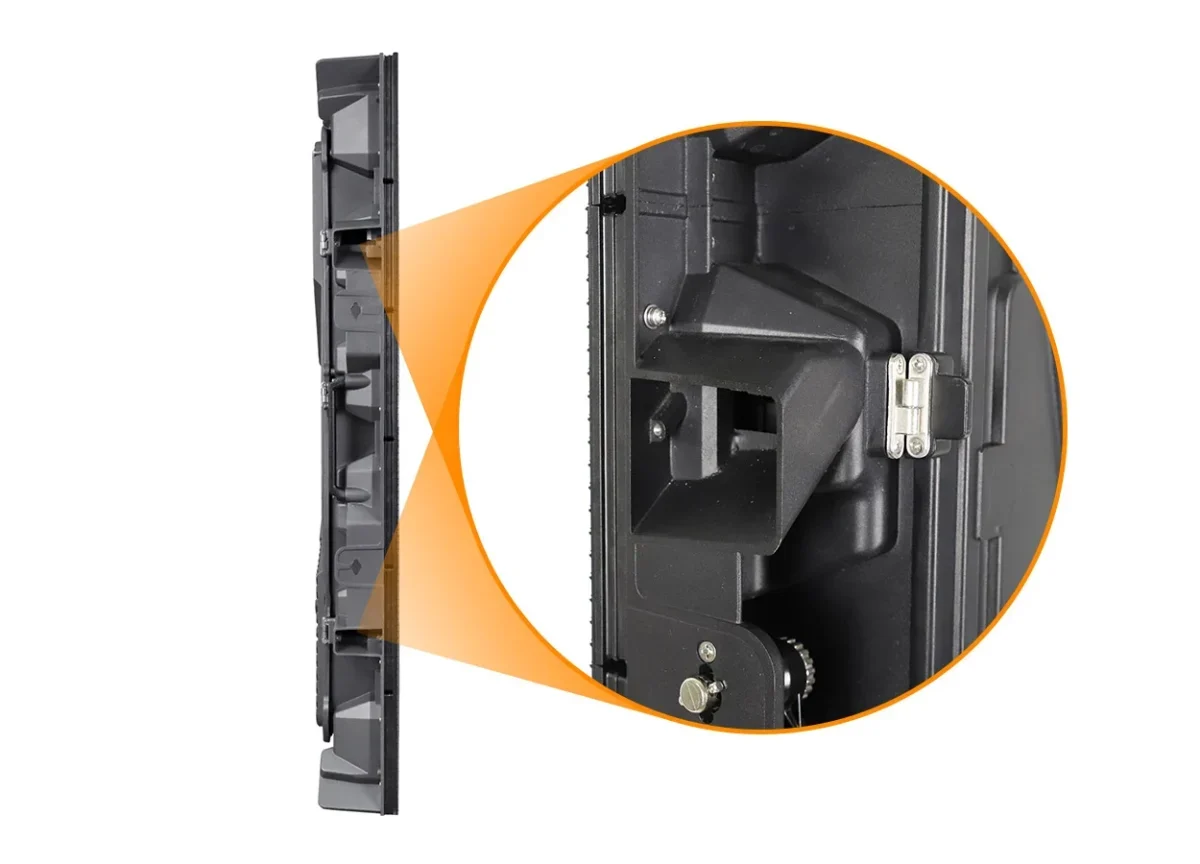
The cabinet detail photographs in this guide show EA960R5 construction examples. They illustrate features such as cable routing, cooling, and rear access. Keep those examples separate from the EA960R3 case and from approval of the equipment proposed for your own pole.
02. Add Smart-City Functions as Defined Integrations
A smart-city street pole LED display may present information from another system, but the source and interface need to be defined. A weather graphic does not establish that a sensor is supplied. An alert template does not establish an emergency-management integration.
For each information feed, decide who owns it, how often it updates, and what replaces it when unavailable. Temporary notices need an expiry or withdrawal rule. Retaining the last message is suitable for some information and misleading for other information.
Shared pole space also needs coordination. Lighting, antennas, sensors, and service doors can compete for clearance and power. Reviewing the combined arrangement helps avoid separate suppliers delivering individually suitable components that obstruct one another once installed.
8. Street Pole LED Display Price and Total Project Cost
01. Compare the Same Delivered System
A street pole LED display price is meaningful only alongside its configuration and delivery scope. Active dimensions, pitch, face count, cabinet design, controller, and accessories all affect the equipment offered. Installation responsibilities can change the comparison just as substantially.
A screen-only quote cannot be compared directly with an installed two-face system. Separate the equipment, mounting, electrical work, commissioning, and support lines first. This reveals whether a lower figure reflects a genuine saving or simply excludes part of the required project.
| Ligne budgétaire | Inclure | Common scope difference |
|---|---|---|
| Emballage d'affichage | Selected faces, modules, cabinets, and electronics | Different active resolution or omitted spare parts |
| Travaux de montage et sur site | Assessment, brackets, and any pole or foundation work | Existing-structure suitability left to the buyer |
| installation électrique | Supply, protection, isolation, and cabling | Daytime power connection excluded |
| Control and network | Player, connectivity hardware, and required platform access | Modem, data plan, or subscription omitted |
| Remise et service | Commissioning, training, documentation, and support scope | Labor, travel, or lifting access excluded |
02. Account for the Costs After Installation
Street pole LED display operating costs include energy, connectivity, administration, and physical servicing. Maximum power supports electrical design; average consumption depends on content, output, operating hours, and the included equipment. Ask for the assumptions behind any typical-use figure.
As a hypothetical example, an assembly averaging 0.30 kW over 12 operating hours uses 3.6 kWh daily. This is arithmetic, not an EagerLED product rating. Add auxiliary loads if they were excluded, then apply the relevant energy tariff to estimate the electricity cost.
Solar operation needs a separate energy and storage design. Seasonal sunlight, battery autonomy, temperature, and the additional panel loads all matter. The feasibility of a grid-powered proposal should not be transferred to a solar proposal without that assessment.
For a comparable street pole LED display quotation, send site photographs, quantity, viewing directions, nearest viewing distance, content samples, pole information, and available power. EagerLED's gamme d'affichage publicitaire provides a starting point for discussing suitable formats.
9. How to Evaluate a Street Pole LED Display Supplier
01. Judge the Proposed Configuration, Not a Generic Brochure
A street pole LED display supplier should be able to explain why the proposed cabinet and control system suit the brief. Useful evidence includes model-specific drawings, active resolution, electrical requirements, operating limits, service clearances, and the included accessories.
Production testing and site acceptance answer different questions. EagerLED's processus de contrôle de la qualité describes manufacturing checks; site acceptance still needs to establish the installed mapping, visibility, playback, brightness control, and restart behavior.
Ask the supplier to demonstrate the intended workflow using representative content. An operator should be able to identify the correct location, publish an approved message, and confirm the result. This makes software usability and training needs visible before the network expands.
02. Make Support Practical for the Next Technician
A street pole LED display service package needs compatible replacement parts and usable records. Keep module and electronics revisions, receiving-card files, screen mapping, and an accepted content archive. Matching dimensions alone does not prove replacement compatibility.
Warranty terms should explain who diagnoses a fault, supplies parts, and performs the onsite work. Travel, labor, and elevated access may have separate terms. A promise to replace a component is less useful when nobody has agreed how a technician reaches it.
Finally, hand over account ownership, location labels, backup files, and support contacts to the authorized operator. Another technician should be able to understand the installation without relying on the original installer’s memory. That continuity becomes valuable when one network covers many poles.
10. FAQ
11. Conclusion
The right street pole LED display is the one the audience can read and the operator can maintain. Start with the useful viewing directions and content, then compare image detail, brightness control, mounting, power, and service access as one project.
Envoyer EagerLED your site photographs, intended messages, quantity, pole information, and available power. Discuss your street pole LED display project to review a configuration and quotation scope that reflect the actual installation.
 Guide d'étalonnage NovaLCT : Correspondance de la luminosité et de la couleur de l'armoire LED
Articles similaires


Remplissez vos besoins en détail
Renseignez la scène d'utilisation et la taille d'écran souhaitées dans la section « Contenu ». Vous recevrez un devis.