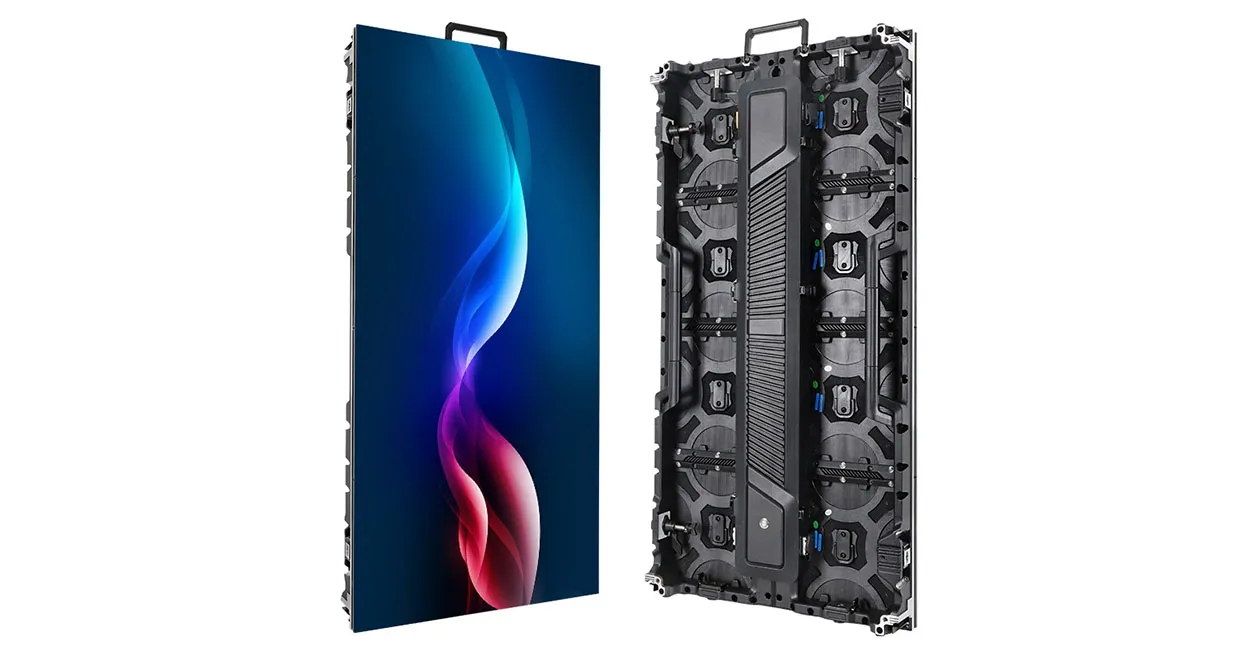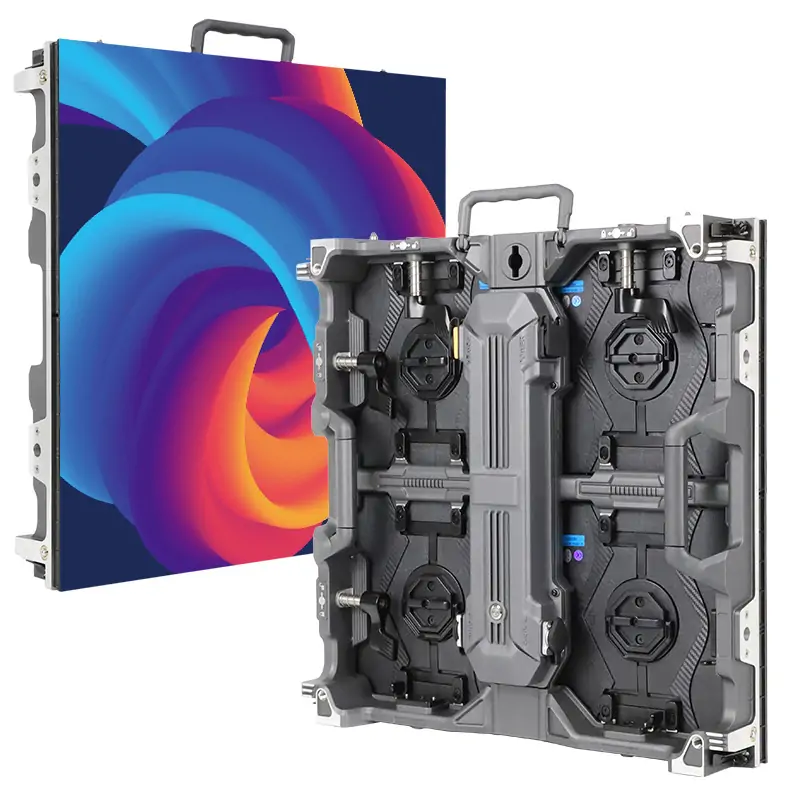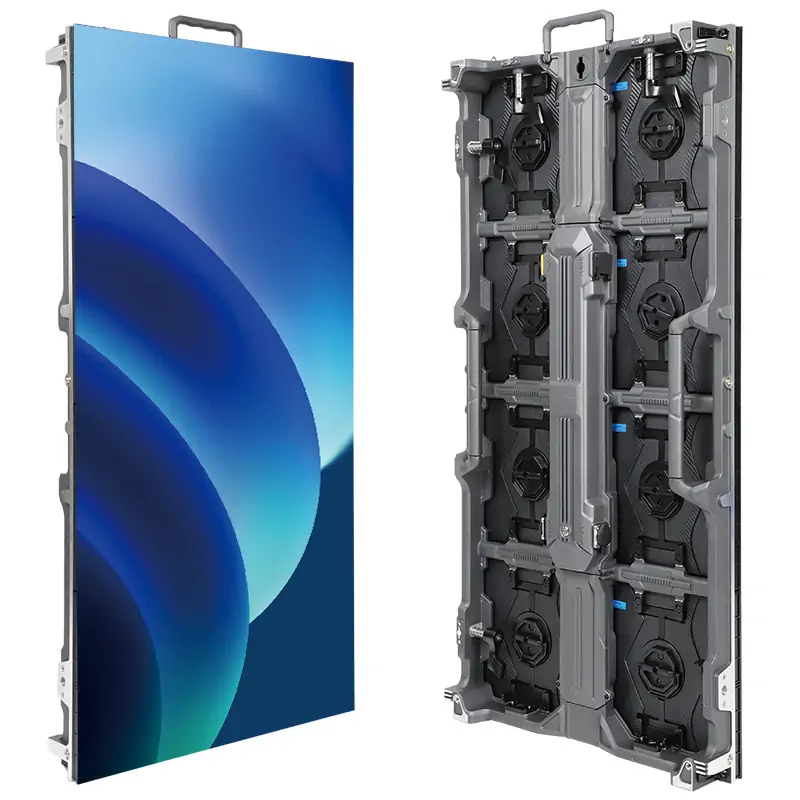
LED refresh rate describes how frequently a direct-view LED display repeats its light-output driving cycle, expressed in hertz (Hz). Specifications such as 1920Hz, 3840Hz and 7680Hz usually describe panel driving performance, rather than the number of different video frames shown each second. For purchasing, the useful question is whether the proposed screen delivers stable images at the brightness, grayscale and camera settings your project requires.
A conference backdrop can look steady to the audience yet show dark bands in a recording. Conversely, specifying the highest available number can add expense without fixing a slow video source, poor synchronization or inadequate shadow detail. LED refresh rate belongs in a complete display specification, alongside input frame rate, pixel pitch, processing and operating conditions.
This guide helps AV integrators compare supplier proposals and plan acceptance tests. It explains what the familiar refresh figures mean, where higher rates can help, and how to obtain evidence for the exact configuration being ordered.
1. Что такое частота обновления светодиодов?
In a modular LED video wall, driver electronics control when the red, green and blue emitters produce light. They repeat a sequence of light pulses rapidly enough to reproduce the requested brightness levels. LED refresh rate summarizes an aspect of that repeated driving sequence; manufacturers should identify the measurement and configuration behind the figure.
One hertz means one repetition per second. A nominal 3840Hz cycle corresponds to about 0.260 milliseconds, calculated as 1000 divided by 3840. That interval does not mean a new scene arrives every 0.260 milliseconds, nor that every pixel stays illuminated throughout it. Row multiplexing and grayscale pulse patterns determine the actual light output.
01. Read the specification in context
Ask whether a stated LED refresh rate applies to the exact pixel pitch, driver IC, scan arrangement and receiving-card configuration in your quotation. A maximum figure achieved in one operating mode may not describe every brightness or grayscale setting. Obtain the approved configuration file and its associated performance conditions.
This guide concerns direct-view LED cabinets used for commercial screens and video walls. The 60Hz or 120Hz refresh specification of an LED-backlit LCD television describes a different display context. Comparing those numbers directly with a modular wall’s kilohertz driving specification can lead to the wrong purchasing conclusion.
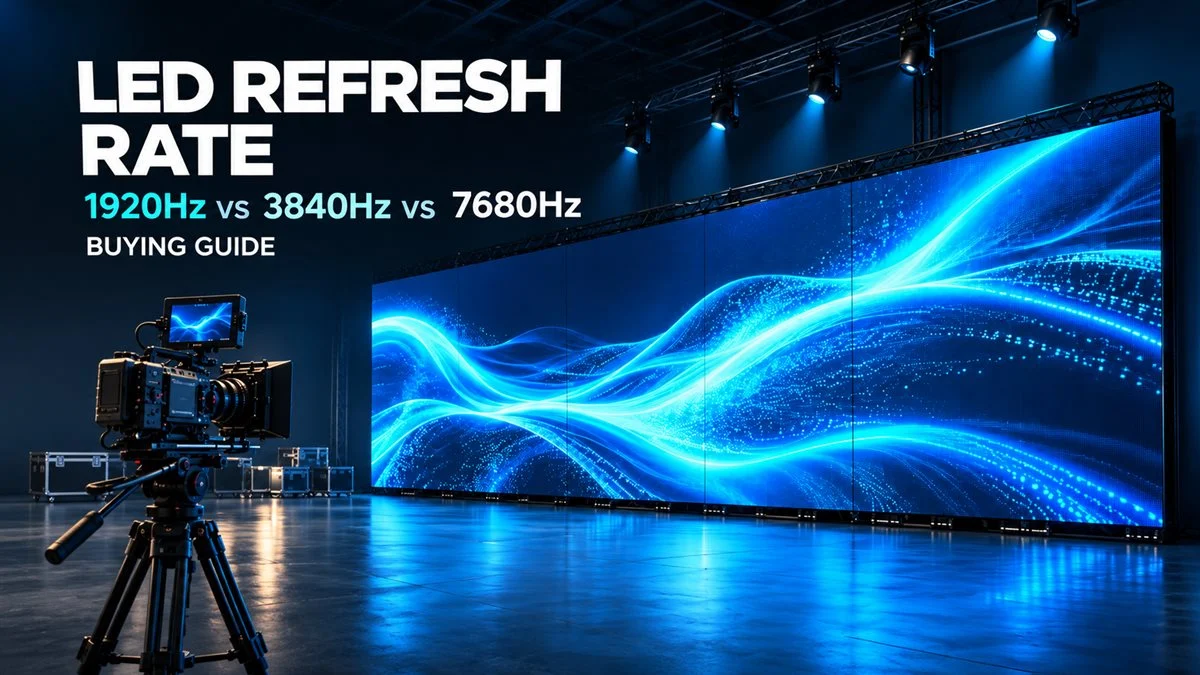
Illustrative cover: LED refresh rate options for professional display buyers.
2. LED Refresh Rate vs Frame Rate and Scan Ratio
LED refresh rate, video frame rate and scan ratio describe different parts of the system. Keeping them separate prevents a supplier’s panel specification from being mistaken for an end-to-end motion or latency guarantee.
| Срок | Что это описывает | Что подтвердить |
|---|---|---|
| Panel refresh rate, Hz | Repeated LED driving activity | Definition, operating mode and test conditions |
| Content frame rate, fps | Distinct frames supplied by the content | Source file and playback output cadence |
| Input/output frame rate, Hz or fps | Video timing accepted or delivered by equipment | Resolution and supported signal format |
| Scan ratio, such as 1/16 | Multiplexing of LED row groups | Module design and compatible receiving configuration |
| Latency, milliseconds or frames | Delay from input to visible output | Complete signal path and processing settings |
01. Why 3840Hz does not mean 3840fps
Consider a hypothetical 60fps video feeding a wall specified at 3840Hz. Each source frame lasts approximately 16.67 milliseconds. Dividing 3840 by 60 gives 64 driving repetitions within that interval, under a simplified timing model. Those repetitions reproduce the same frame’s light levels; they do not create 64 new motion samples.
A high LED refresh rate therefore cannot restore motion detail missing from a low-frame-rate recording. Judder from an unsuitable playback cadence needs investigation at the content, player and processor stages. Similarly, a fast-driving panel does not establish low latency: scaling, buffering and other processing can introduce delay.
02. Scan ratio is a separate design choice
A 1/16 scan arrangement multiplexes groups of rows rather than driving the entire array continuously. The notation is not a refresh frequency. Different module designs can achieve the same quoted LED refresh rate with different pulse patterns, optical behavior and brightness characteristics.
Do not select a scan ratio by treating its denominator as a universal quality ranking. Compare the complete module and approved settings. Changing a receiving-card file to an incompatible scan arrangement can produce an incorrect image; it is not a routine method of increasing refresh performance.
3. How PWM, Driver ICs and Grayscale Affect Refresh
The achievable LED refresh rate depends on the panel electronics and their configuration. The driver IC, multiplexing method, data timing and grayscale algorithm work together. A controller’s advertised capability alone cannot establish the performance of the connected cabinets.
01. PWM controls light over time
Pulse-width modulation, or PWM, controls brightness by arranging LED on-time within repeated intervals. Different driver implementations distribute those pulses differently. Two panels with the same headline frequency can therefore present different light patterns to a camera, especially at low brightness.
The driver IC and receiving card must support the intended operating mode, and the module wiring must match it. Software may expose supported tradeoffs, but it cannot add capabilities absent from the electronics. Request manufacturer-approved settings rather than increasing clock values by trial and error.
02. Evaluate refresh and grayscale together
Grayscale concerns how the display reproduces brightness steps. A nominal bit-depth figure describes a signal or processing capability; it does not, by itself, prove smooth visible gradients. Inspect dark gray ramps, neutral colors and dim scenes at the intended screen brightness.
Some driving modes trade timing resources among refresh, grayscale and brightness. The direction and size of the tradeoff depend on the hardware and algorithm. Require a demonstration rather than assuming that a higher LED refresh rate always reduces grayscale, or that the two are always independent.
For a meeting room operating well below maximum output, shadow detail may be more useful than extra peak brightness. For a camera-facing wall, both pulse timing and low-level color stability matter. Compare candidate внутренние светодиодные экраны at matched output levels, using identical test material.
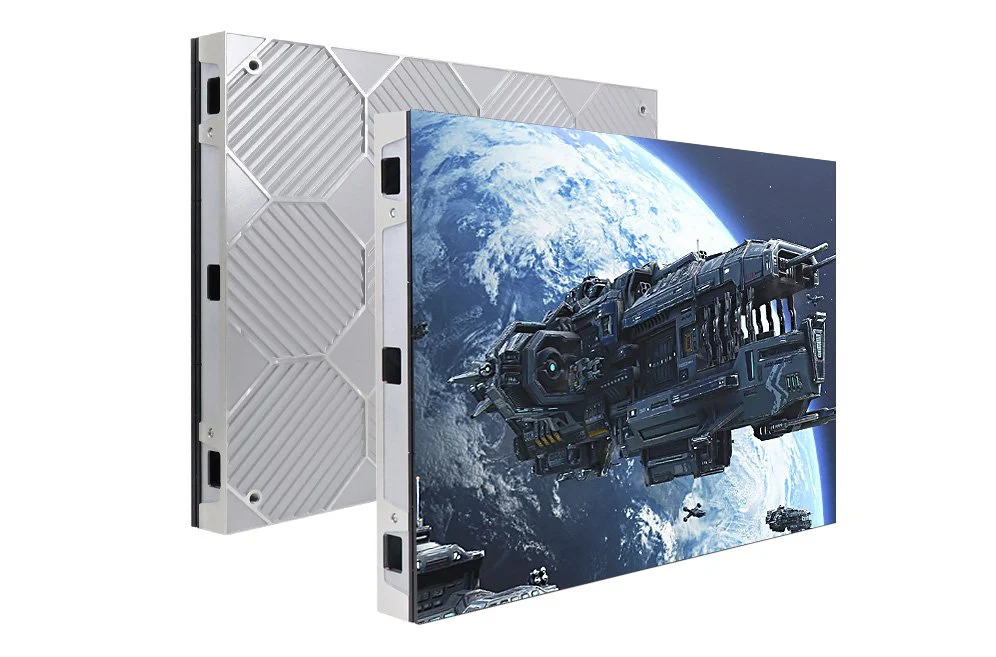
Modular cabinet construction. Verify the driver IC and receiving-card configuration in the quotation.
4. 1920Hz vs 3840Hz vs 7680Hz: What Changes?
These LED refresh rate figures are useful shortlist categories, not universal application approvals. Higher driving frequencies can provide more opportunities to integrate light within a camera exposure. Actual results still depend on pulse distribution, scan behavior, shutter settings and synchronization.
| Цитируемая цифра | Причины для рассмотрения этого | Limit requiring verification |
|---|---|---|
| 1920Hz | A candidate for direct-view signage where recording demands are limited | Do not assume clean results for visitors’ phones or production cameras |
| 3840Hz | A useful comparison point for events, presentations and filmed installations | Camera bands can remain with unsuitable exposure or driving settings |
| 7680Hz | Worth evaluating for demanding filming and shorter exposures | Does not independently certify slow-motion, broadcast or virtual-production suitability |
Moving from 1920Hz to 3840Hz doubles the nominal driving repetition frequency; moving from 3840Hz to 7680Hz doubles it again. Neither change doubles video resolution, source frame rate, brightness or overall image quality. Avoid proposals that present these separate properties as interchangeable benefits.
01. Compare the same operating conditions
A fair LED refresh rate comparison uses equivalent brightness, color temperature, content and camera settings. Ask suppliers to disclose whether the demonstration uses the quoted production driver, receiving card and firmware. A visually impressive sample running a different configuration is weak evidence for the order.
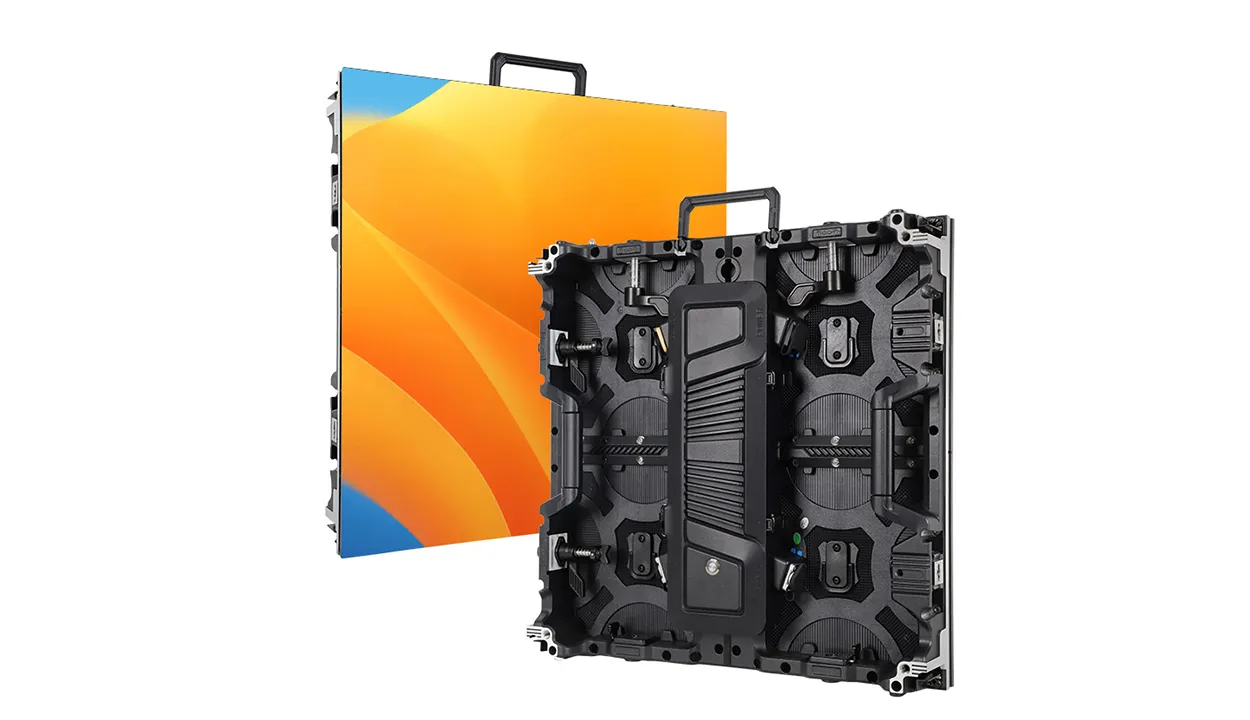
EagerLEDАвтора EA500C6 Аренда светодиодный дисплей page lists a refresh rate of at least 3840Hz. Treat that published figure as a starting specification and confirm the ordered pitch, indoor or outdoor version, control package and acceptance settings. A product graphic is not a camera test report.
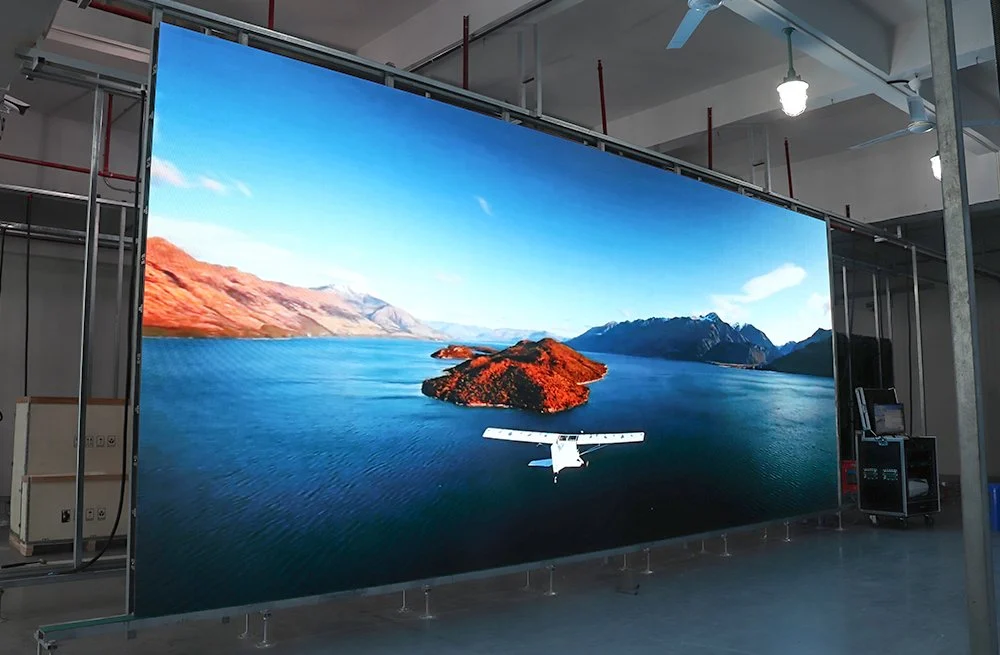
Indoor LED wall pictured on the EagerLED website; a photograph does not establish camera compatibility.
02. Weigh benefits against project priorities
Higher-frequency electronics or specialized processing can change the quotation, but there is no reliable universal price premium. Compare itemized proposals. Spending on a higher LED refresh rate has limited value if the installation also needs finer text resolution, more appropriate brightness control, service access or a dependable spare-parts plan.
5. Why LED Walls Show Flicker or Camera Banding
Camera banding occurs when the sensor samples the wall’s time-varying light output unevenly. A rolling-shutter sensor exposes different rows at different times. Its interaction with LED pulses and multiplexing can produce bright or dark bands even when the wall appears steady to people in the room.
01. Exposure timing changes the result
A shorter exposure captures a smaller portion of the emission sequence, making timing differences more significant. Shutter angle also matters: exposure time equals shutter angle divided by 360, then divided by camera frame rate. For example, a 180-degree shutter at 50fps gives 1/100 second. This is an illustrative calculation, not a guaranteed band-free setting.
Changing LED refresh rate may improve the recording, but the preferred camera exposure must also preserve the production’s motion blur and lighting requirements. Record the whole approved combination. An unspecified claim of “flicker-free” does not tell a buyer which camera, frame rate, brightness or shutter was tested.
02. Separate synchronization from other artifacts
Genlock aligns supported equipment to a timing reference. Phase adjustment determines the relative timing of operations within that cycle. They can help manage frame transitions and exposure alignment, but genlock alone does not guarantee that every PWM or scan artifact disappears. Specialist systems may offer additional shutter-related controls; compatibility must be confirmed.
Moiré is a different problem: the camera’s sampling pattern interacts with the LED pixel grid. Pixel pitch, shooting distance, focus, lens and framing affect it. Raising LED refresh rate does not directly remove that spatial interference. Diagnose the artifact before changing the display specification.
Also separate screen behavior from room lighting. Record a controlled scene with the wall isolated where practical, then add the production lighting. Automatic phone exposure can conceal or create apparent differences, so repeat important tests with the intended camera in a documented manual mode.
6. Choose a Refresh Rate for Your Application
Choose LED refresh rate around the most demanding credible use of the installed wall. A screen described as “retail signage” may also become a social-media filming backdrop. A corporate installation may later host livestreamed presentations. Identify those uses before agreeing to a configuration.
| Области применения | Operating questions | Доказательства для запроса |
|---|---|---|
| Advertising and public signage | Will phones or fixed cameras record it? How does it dim at night? | Representative direct viewing and phone recordings at day/night settings |
| Conference and rental events | Which cameras, playback formats and livestream outputs are used? | Rehearsal footage using the event signal chain |
| Corporate and education spaces | Does the wall share a room with video conferencing cameras? | Recorded meeting view with normal lighting and brightness |
| Теле- и виртуальное производство | What frame rates, shutter angles, synchronization and color workflow apply? | Camera tests covering the approved production operating range |
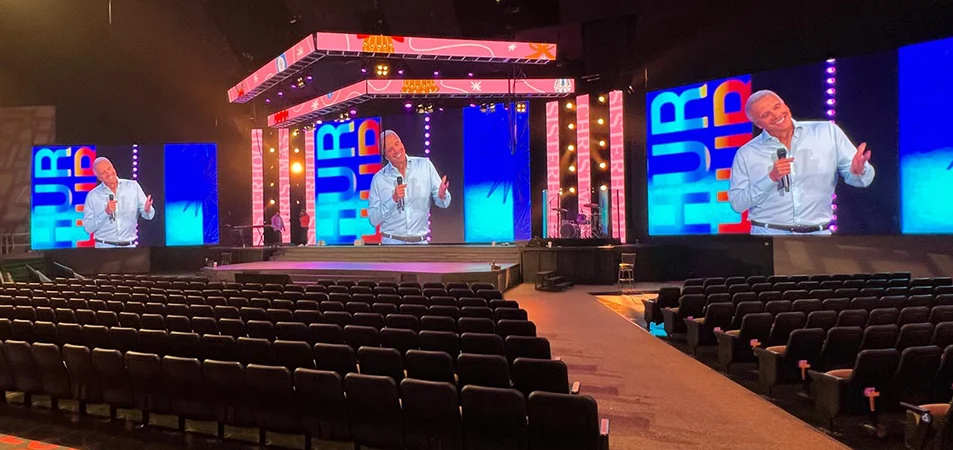
Live-event screens should be evaluated for both audience viewing and camera capture.
01. Rental systems need repeatable configurations
До аренда светодиодных дисплеев, record which cabinets and spare modules can operate together. A mixed inventory needs compatible electronics, calibration and configuration files. Identical cabinet dimensions do not establish identical temporal performance.
Keep a known configuration for recurring event formats, and document deviations during rehearsal. A high LED refresh rate helps only if technicians can reproduce the approved result after transport, reassembly and component replacement. Include the operator’s file-management and recovery procedure in the handover.
02. Camera-led projects require a wider assessment
Для виртуальная производственная светодиодная стена, evaluate color reproduction, low-brightness gradients, latency, synchronization and lens interaction together. Do not convert a 7680Hz line on a quotation into a claim that the system is suitable for every production workflow.
If high-speed capture is required, provide the actual capture frame rate and exposure range. “Slow motion” is too broad to specify an LED refresh rate. Arrange a practical test with the exact proposed panels before committing to volume procurement.
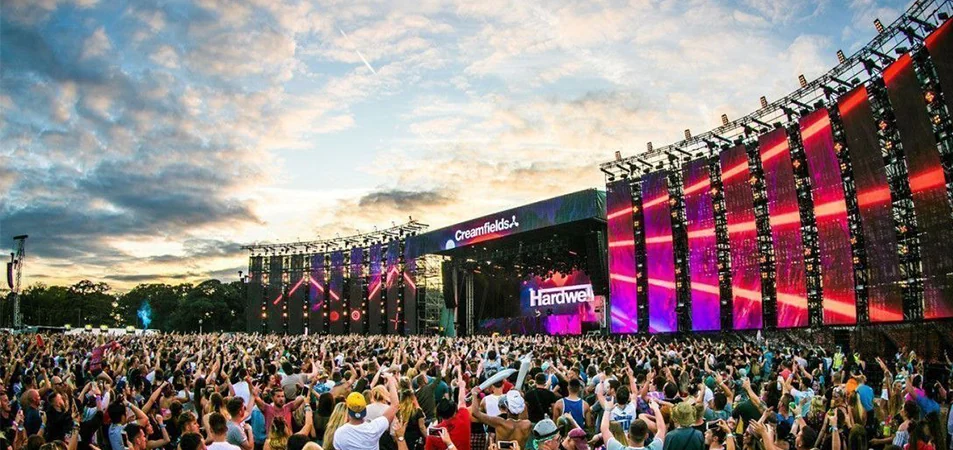
Outdoor events combine direct-view requirements with changing recording conditions.
7. How to Test LED Refresh Rate Before Acceptance
Acceptance should verify the required image behavior and the declared configuration. A control-software readout is useful documentation, but it is not an independent optical measurement. For contractual LED refresh rate verification, agree on a suitable measurement method and competent test provider before the order is placed.
01. Build a reproducible test setup
Record panel identity, driver IC, receiving card, firmware, configuration file, brightness, input timing, camera body, sensor mode and exposure. Use the proposed production processor and cabling arrangement. Test representative cabinets and relevant spares rather than one specially prepared module.
Show neutral fields, smooth dark gradients, saturated colors, moving content and the client’s real material. Test the lowest intended brightness as well as normal operation. Pan and tilt the camera if those moves form part of the intended workflow; a stationary shot may not expose every scan-related artifact.
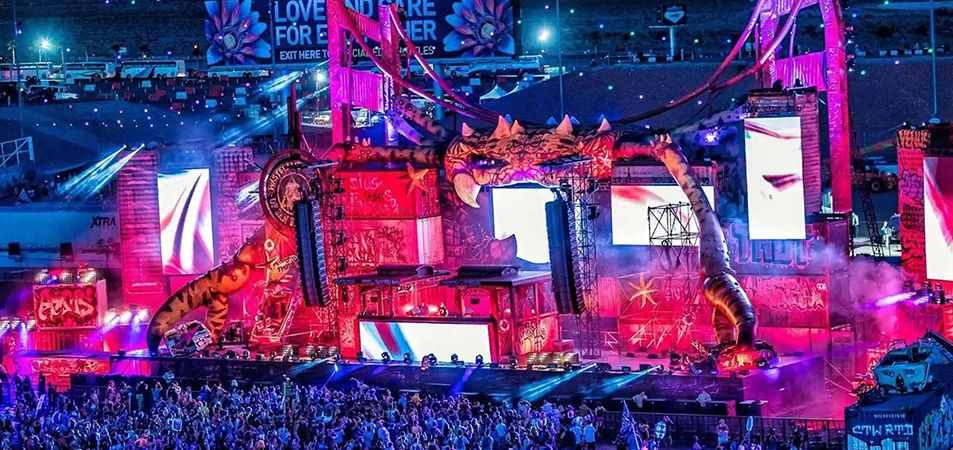
A production with several LED surfaces needs repeatable tests with the intended camera settings.
| Тест | Запись | Подтверждение приемки |
|---|---|---|
| Идентификатор конфигурации | Panel, driver, receiving card, firmware and file revision | Delivered hardware matches the approved configuration |
| Темные градиенты | Brightness, gray ramps and color settings | Approved reference footage and agreed limits for visible steps or color shifts |
| Camera timing | Frame rate, shutter, sensor mode, sync and phase | Recordings for each required combination |
| Motion and transitions | Playback cadence and camera moves | No unacceptable judder, tearing or frame blending in the agreed tests |
| Повторяемость | Restart and representative replacement-module procedure | Approved appearance returns with the saved configuration |
Agree how failures will be handled before shipping. For example, define who supplies the camera, who approves a revised configuration and whether a changed setting triggers another grayscale check. These responsibilities prevent a technically plausible adjustment from becoming an undocumented compromise at the installation site.
Test acceptance at the final image size and with the intended framing. A full-screen white field is useful for checking uniformity, but it cannot represent a dim background behind a presenter or a moving virtual scene. Include several representative content states, and record which observations belong to each state rather than issuing one blanket pass statement.
02. Separate screening from measurement
A phone recording can screen for visible problems, but it cannot reliably certify a numerical LED refresh rate. Rolling shutter, exposure automation, video processing and compression affect the result. High-speed recording also needs a suitable method; counting apparent bands without understanding the emission waveform can be misleading.
Where the contract requires optical measurement, the technician may use a photodetector and suitable recording instrumentation. The measurement must distinguish pulse repetition, grayscale sequencing and scan behavior. Agree which property is being reported, the measurement location, equipment bandwidth and operating settings; do not accept an unexplained frequency trace.
Keep original recordings and configuration backups with the acceptance record. A cropped promotional clip without settings provides little help if LED refresh rate behavior changes later. Retest after approved firmware or parameter changes that could affect the driving sequence.
8. Buying a High Refresh Rate LED Display
Write LED refresh rate requirements as part of an operating envelope and evidence package. State the expected input formats, camera conditions and brightness range, then request a matched proposal. This allows suppliers to recommend hardware against a measurable task.
01. Обеспечьте сопоставимость предложений поставщиков.
Request the exact pixel pitch, module version, driver IC, scan ratio, receiving card and processor. Ask which settings achieve the proposed LED refresh rate, whether alternatives change grayscale or brightness, and how configuration files are supplied. Identify software licenses, commissioning, freight, spares and support separately.
An example RFQ requirement is: “Demonstrate the offered cabinet configuration at our supplied video formats, brightness levels and camera settings. Identify the declared panel-driving refresh figure and provide the corresponding configuration and test record.” Add numerical thresholds only when your technical team has established why they are needed.
Require approval before substitutions affecting temporal performance. A replacement driver or module may fit mechanically while behaving differently on camera. For distributors, include this information in the bill of materials so repeat orders can be assessed against the same specification.
Plan for service as part of procurement. Ask how the supplier identifies compatible spare modules and which files a technician needs after a receiving-card replacement. Store those files with clear cabinet labels and version information. A maintenance handover should explain the approved recovery process without inviting operators to experiment with undocumented timing parameters.
For competing offers, distinguish an unavailable fact from an unfavorable result. If one bidder has not supplied low-brightness footage, mark that evidence as outstanding and request it. Do not assume that an absent report proves poor performance, or that an attractive specification proves the missing test would pass.
02. Verify the product page, then verify the order
Официальные EagerLED page below provides a traceable starting point for product discussion. It includes breadcrumb navigation identifying the product category. Published specifications help form a shortlist; the signed quotation and acceptance record should establish what your particular order includes.
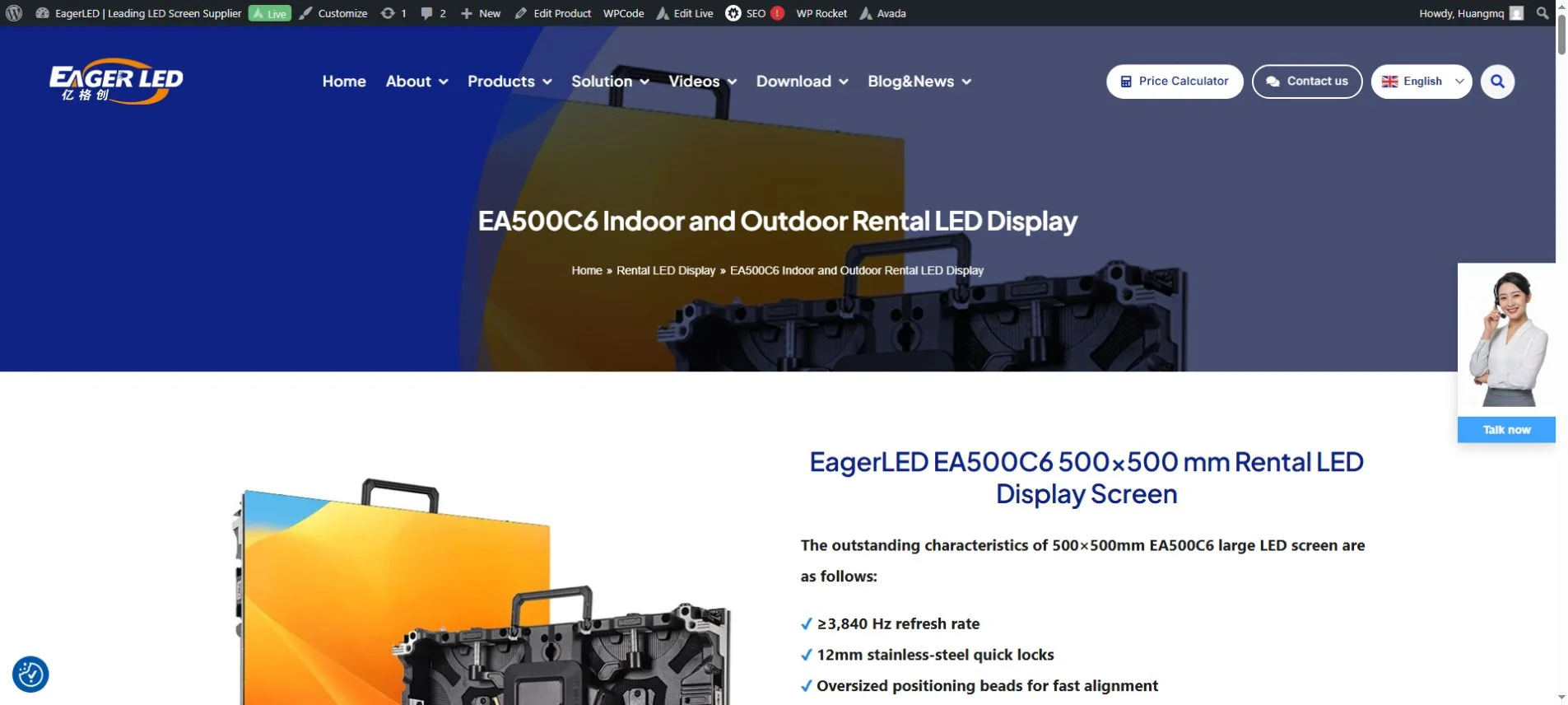
Скриншот официального EagerLED product page, including its breadcrumb navigation.
A useful supplier discussion connects LED refresh rate with the required result: clean conference recordings, consistent low-light imagery or a defined production capture range. Ask for a demonstration of that result. Avoid accepting unqualified “camera-ready” language as a substitute for test conditions.
9. Вопросы-Ответы
10. Заключение
A useful LED refresh rate specification identifies the hardware, operating mode and conditions behind the number. Compare 1920Hz, 3840Hz and 7680Hz as shortlist options, then evaluate grayscale, camera timing, synchronization and the actual video workflow together.
Before ordering, agree on a reproducible acceptance test and keep the configuration files with the results. For an EagerLED предложение, send your LED display requirements, including screen dimensions, pixel pitch, installation environment, brightness needs, input formats and intended camera settings. Those details help turn a refresh-rate claim into a configuration that can be assessed for your project.
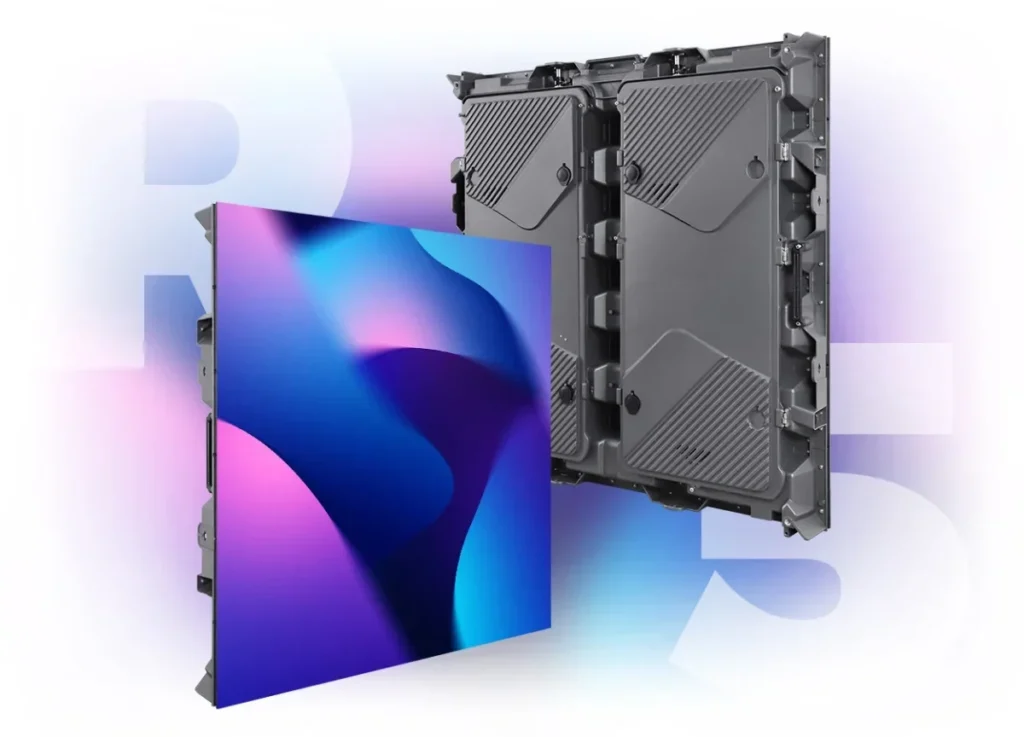 Руководство по установке светодиодных дисплеев на уличных столбах: технические характеристики, стоимость и монтаж.
Похожие статьи
Подробно заполните свои потребности
В поле «Контент» укажите необходимое количество экранов и их размер . Вы получите расчет стоимости.