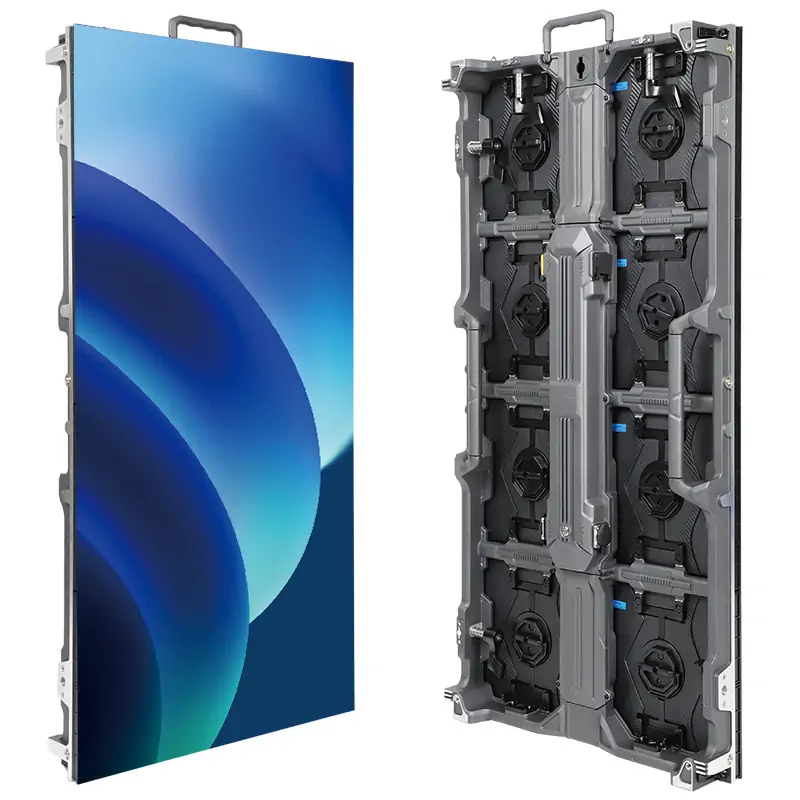
A reliable COB LED display supplier in China is one that can tell you where its COB boards are encapsulated, state whether each pixel pitch uses flip-chip or face-up chips, show aging records for your modules and your finished screen, and ship spare modules from the same production batch. Price only means something once those four points are answered. EagerLED, a Shenzhen LED display manufacturer founded in 2009, supplies COB screens such as the EA600COB3 (P0.62 to P1.87 in a 600 × 337.5 mm 16:9 cabinet), ages modules for 24 hours and complete screens for 72 hours before shipment, and includes a 2-year warranty and 2% spare parts as standard.
This guide is for AV integrators, distributors and corporate buyers sourcing fine-pitch COB walls for boardrooms, control rooms, broadcast studios and showrooms. It explains who actually makes a COB screen, which technical questions decide quality, how to compare quotes on resolution rather than square meters, what drives COB prices, and which evidence to request from any supplier before you order.
We are a supplier ourselves, so every statement about EagerLED below links to a page where you can check it, and every check in this guide applies to us as much as to anyone else.
1. What Does a COB LED Display Supplier Actually Control?
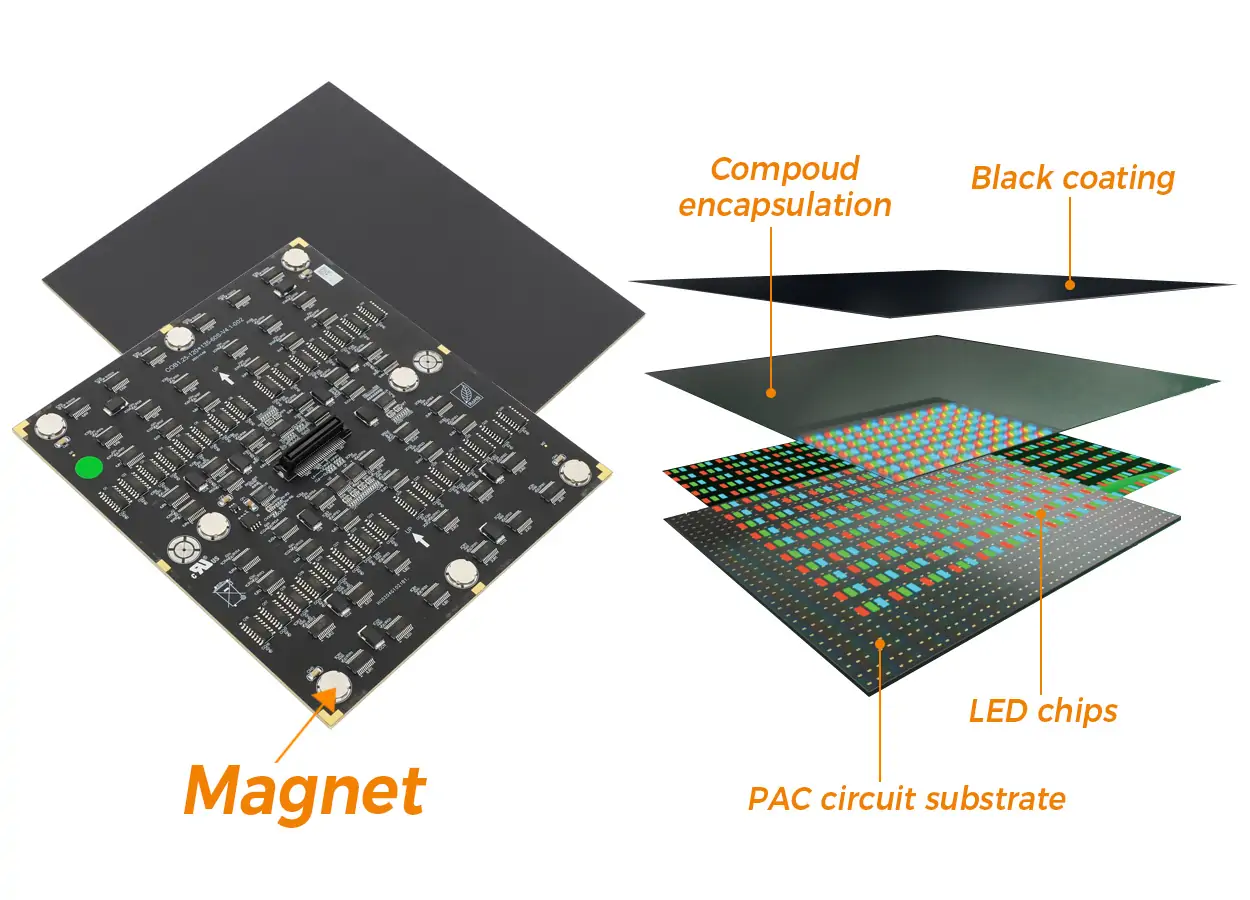
A COB screen passes through three stages before it reaches you: COB packaging, where LED chips are bonded to the printed circuit board and covered with encapsulant and a black coating; screen manufacturing, where those boards become modules and cabinets that are calibrated and aged; and supply, which covers the quote, shipping, spares, warranty and support. One company may handle one stage, two stages or all three, and the label “factory” on a website does not tell you which.
01. Three kinds of COB LED display supplier you will meet
When you search for a COB LED display supplier in China, the results mix three different business types. Each can be a sensible choice, as long as you know which one you are dealing with.
| نوع تأمینکننده | چه چیزی را کنترل میکند | چه بپرسیم؟ | تناسب معمول |
|---|---|---|---|
| COB packaging plant | Chip bonding, encapsulation, coating and board-level testing | Do you sell complete screens with calibration, warranty and export support, or only boards and modules? | Large integrators that assemble their own cabinets |
| سازنده نمایشگر | Module and cabinet assembly, calibration, aging, packing, warranty and spares | Which plant encapsulates the boards, and can the source and batch codes appear on the order? | Project buyers, distributors and AV integrators |
| شرکت تجاری | Sourcing, quotation and logistics | Which factory builds the screen, and who handles warranty claims if a module fails? | Buyers who want one contact for many product types |
02. Why the encapsulation source matters more for COB
On an SMD screen, a failed LED lamp can be replaced on its own. On a COB module, the chips sit under a single layer of encapsulant, so the board is effectively the pixel. That has two consequences for buyers. First, the consistency of the encapsulation and black coating between batches decides whether replacement modules will match the rest of the wall. Second, repairs are done by module replacement or specialized rework, not by swapping a single lamp. A COB LED display supplier that can name its encapsulation source and record batch codes on your modules gives you a way to manage both risks.
A display manufacturer that buys boards from a packaging plant is common in China and is not a weakness in itself. What matters is whether it controls everything after encapsulation, documents it, and stands behind the finished screen. The diagram below summarizes the questions for each stage.

2. Which COB Technology Questions Should You Settle First?
Two COB quotes at the same pixel pitch can describe quite different products. Before you compare one COB LED display supplier with another, settle these three points.
01. Flip-chip or face-up (front-mounted) COB
In face-up COB, each chip is connected to the board with fine bonding wires. In flip-chip COB, the chip is mounted upside down and soldered directly to the board, so there are no wires. EagerLED" COB LED module page describes both structures and notes that flip-chip COB differs in appearance, size and heat dissipation. Flip-chip is generally used for the finest pitches, while face-up COB can be a cost-effective choice at larger fine pitches. Ask which structure is quoted for each pitch, in writing, because the answer affects both price and long-term behavior.
02. Surface ink and black consistency
COB’s dark, uniform surface is one of its main selling points, and also its most visible risk. If boards from different batches have slightly different coating tones, the wall shows a patchwork when switched off or showing dark content. Ask the supplier for a photo or video of an assembled wall in the off state under normal room lighting, not only marketing images of a bright picture.
03. Calibration and low-gray performance
Boardrooms and control rooms often run screens at low brightness, where uneven gray levels and color shifts are easiest to see. Ask whether module-level brightness and chroma calibration is done, whether the calibration data is supplied with the screen, and how it is reloaded after a module is replaced. A demonstration at 10% to 20% gray on a dark background reveals more than a full-brightness demo video.

For a deeper comparison of packaging methods, see our guides on نمایشگرهای SMD در مقابل COB LED و MIP در مقابل SMD در مقابل COB.
3. How Do Pitch, Cabinet Size and Viewing Distance Fit Together?
Fine-pitch COB walls are usually built to a target resolution, such as Full HD or 4K, so the useful question is how many cabinets a given pitch needs to reach that resolution. The table uses the 600 × 337.5 mm 16:9 cabinet of the EA600COB3 and the nominal pitch values commonly used for these sizes. Confirm the exact pixel count per cabinet on each COB LED display supplier’s parameter sheet before you finalize a layout.
| قیر | پیکسل در هر کابینت | پیکسل در هر متر مربع | Full HD (1920 1080 XNUMX) | 4K UHD (3840 × 2160) |
|---|---|---|---|---|
| P0.62 (0.625 میلیمتر) | 960 × 540 | 2,560,000 | 2 × 2 cabinets, 1.2 × 0.68 m | 4 × 4 cabinets, 2.4 × 1.35 m (about 108 in) |
| P0.78 (0.78125 میلیمتر) | 768 × 432 | 1,638,400 | No exact fit (2.5 cabinets wide) | 5 × 5 cabinets, 3.0 × 1.69 m (about 136 in) |
| P0.93 (0.9375 میلیمتر) | 640 × 360 | 1,137,778 | 3 × 3 cabinets, 1.8 × 1.01 m | 6 × 6 cabinets, 3.6 × 2.03 m (about 163 in) |
| P1.25 (1.25 میلیمتر) | 480 × 270 | 640,000 | 4 × 4 cabinets, 2.4 × 1.35 m | 8 × 8 cabinets, 4.8 × 2.7 m (about 217 in) |
| P1.56 (1.5625 میلیمتر) | 384 × 216 | 409,600 | 5 × 5 cabinets, 3.0 × 1.69 m | 10 × 10 cabinets, 6.0 × 3.38 m (about 271 in) |
| P1.87 (1.875 میلیمتر) | 320 × 180 | 284,444 | 6 × 6 cabinets, 3.6 × 2.03 m | 12 × 12 cabinets, 7.2 × 4.05 m (about 325 in) |
01. Compare quotes on the canvas, not the square meter
Because pixel density rises with the square of the pitch, a P0.62 wall carries four times as many pixels per square meter as a P1.25 wall. Price per square meter therefore says little on its own. If two suppliers quote different pitches for a 4K boardroom wall, compare the total cost of the complete 4K canvas, including the processor, rather than the rate per square meter.
02. Match the pitch to the room
A common rule of thumb puts the closest comfortable viewing distance, in meters, at roughly the pixel pitch in millimeters, with two to three times that distance for an image where individual pixels disappear. A P1.25 wall therefore suits viewers from about 1.25 m, and comfortably from 2.5 m to 4 m. If the nearest seat in your room is 3 m away, paying for P0.78 may buy resolution nobody will see; a larger wall at P1.25 or P1.56 could serve the room better. Our boardroom fine-pitch LED supplier tests show how to check this with a buyer-owned demonstration.
4. What Drives the Price of a COB LED Display?
COB screens usually cost more per square meter than SMD screens at similar pitches, and the spread between COB quotes is wide. Most of that spread comes from a handful of choices that a short quote can hide. The table lists them and what to write into your request for quotation so offers can be compared.
| محرک هزینه | چرا قیمت را تغییر میدهد | What to state in your request |
|---|---|---|
| گام پیکسل | Pixel count per m² rises with the square of the pitch | Target resolution and nearest viewing distance |
| Chip structure | Flip-chip and face-up COB differ in process cost and yield | Ask for the structure per pitch in writing |
| Driver ICs, refresh and grayscale | Better driving improves low-gray uniformity and camera performance | Refresh rate and grayscale at the working brightness |
| درجه بندی | Module-level calibration takes equipment and time | Calibration method and whether data files are supplied |
| طراحی کابینت | Front service, HUB connections and slim profiles add parts and machining | Service access from the front or rear, depth limits |
| سیستم کنترل | A 4K or 8K canvas needs suitable sending and processing hardware | Input sources and the processor you expect |
| قطعات یدکی و گارانتی | Batch-matched spares and longer warranties are real costs | Spare percentage, batch matching and warranty term |
01. Items commonly missing from COB quotes
Before deciding which COB LED display supplier offers the lower price, check whether each quote includes the video processor or sending device, mounting frames or brackets, power and data cables between cabinets, spare modules and power supplies, calibration files, export packing and shipping terms. Add any missing item at a realistic price, then compare totals. Our article on how a تولیدکننده نمایشگر LED مقرون به صرفه در چین balances price and quality walks through this method in more detail.
02. When a low price deserves a closer look
A COB quote far below the others is not automatically a bad offer, but it should prompt questions. Ask whether the pitch is the same, whether the chip structure is the same, whether calibration and spares are included, and whether the warranty covers the COB modules themselves. A COB LED display supplier with nothing to hide will answer each point directly.
5. What Evidence Should a COB LED Display Supplier Provide?
Documents and records separate a supplier that has built COB screens before from one that is quoting from a catalog. Request the same items from every shortlisted COB LED display supplier, including EagerLED, and compare the answers side by side.
| مدرک | A good answer | A reason to ask more |
|---|---|---|
| Encapsulation source and chip structure | Named source or in-house line; flip-chip or face-up stated per pitch | “All COB is the same” |
| Parameter table for the exact model | Brightness, refresh, grayscale, power, weight and size per pitch | A brochure range with no per-pitch figures |
| درجه بندی | Module-level calibration, data files supplied, reload method explained | “Calibrated at the factory” with no detail |
| Aging records | Photos or video of your modules and your screen during aging | Only general factory photos |
| Off-state appearance | Photo or video of an assembled wall switched off under room light | Only bright marketing images |
| قطعات یدکی | Quantity stated, from the same production batch, labeled | Spares to be bought later |
| گارانتی و تعمیر | Term in writing; who repairs a failed COB module and how | Vague promises of lifetime support |
| منابع | Comparable fine-pitch orders, a factory visit or a live video call | No comparable projects to show |
01. Use a live video call to check the factory
A short video call with the production floor answers several questions at once: whether the company assembles screens, what the aging area looks like, and whether the COB cabinets on the line match the model quoted. Ask to see a cabinet from your pixel pitch switched off and then showing a dark gray image.
02. Agree on repairs before you need them
Because a damaged COB module is rarely repaired on site, agree in advance on how a failed module is replaced, whether it is returned for rework, and how calibration data is applied to the replacement. EagerLED’s sister site explains the options in its guide to COB LED display repair, and LED Screen Board covers production risks in COB LED display manufacturing and QA.
6. چگونه EagerLED Work as a COB LED Display Supplier?
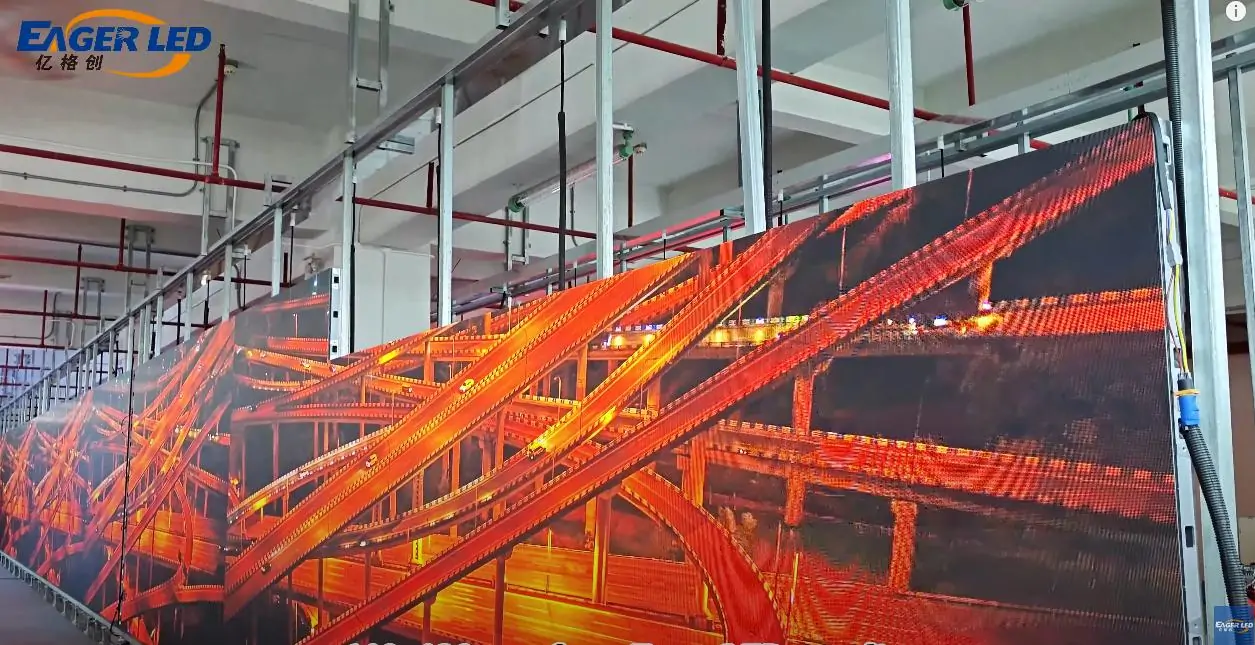
EagerLED is an LED display manufacturer in Shenzhen, China, founded in 2009. It builds indoor, outdoor, rental and fine-pitch screens in a 5,000+ m² workshop with more than 100 staff, has a production capacity of more than 6,000 m² per month, and sells to customers in more than 120 countries and regions. Our pricing is moderate and factory-direct, aimed at project buyers and distributors who want strict quality control without paying for a premium brand.
01. The COB range
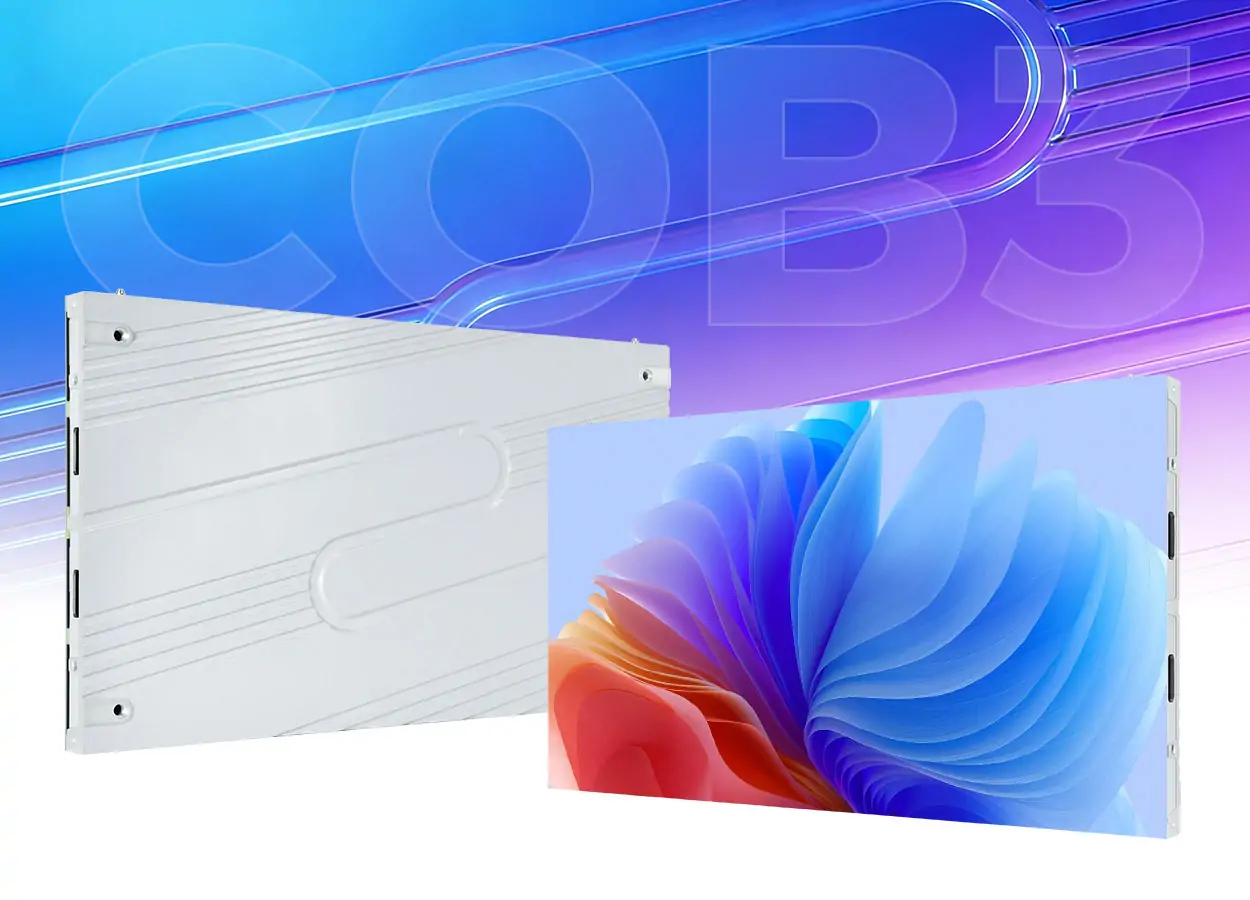
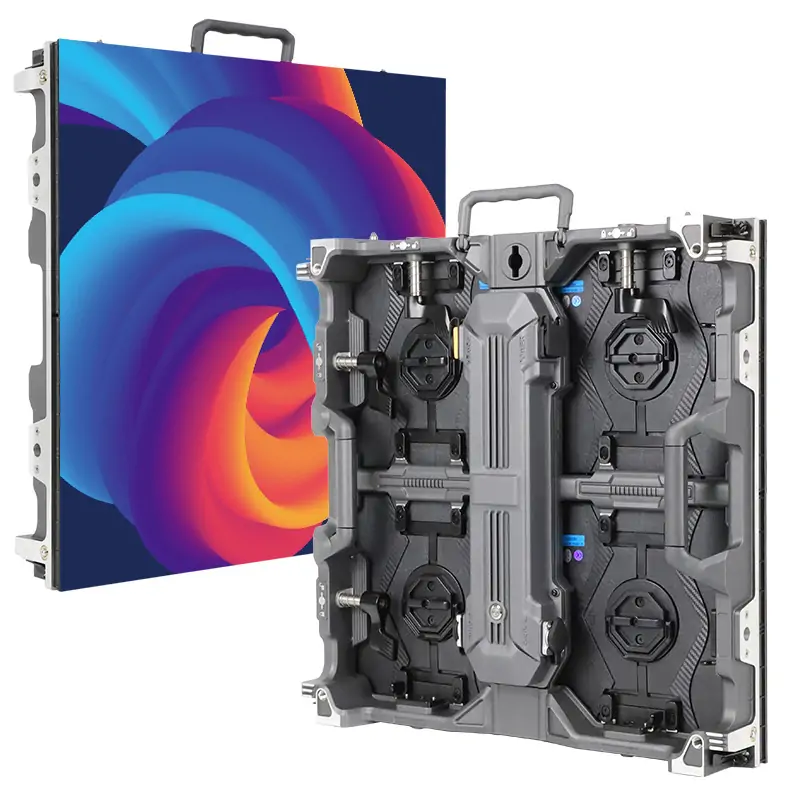
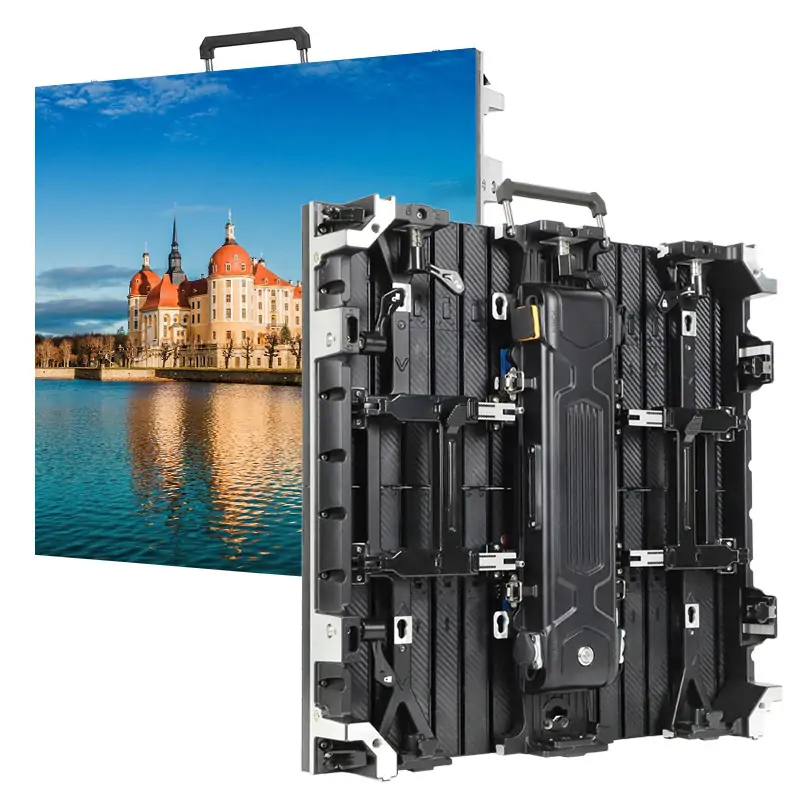
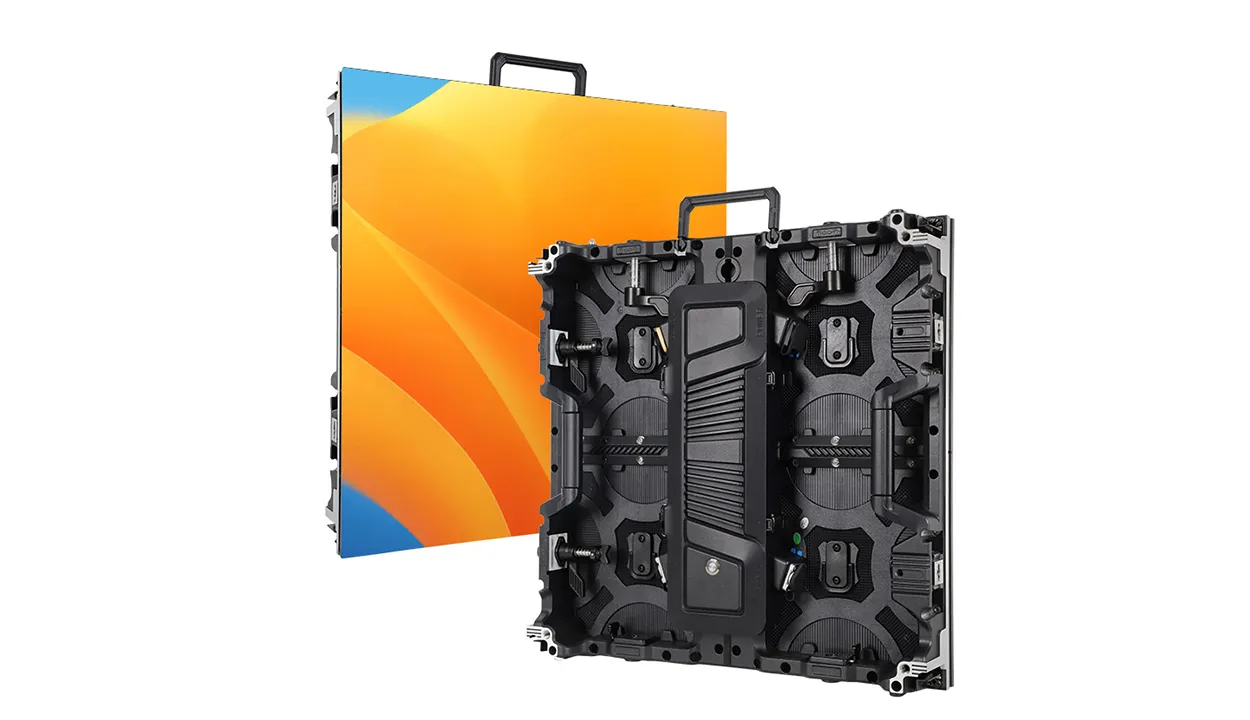
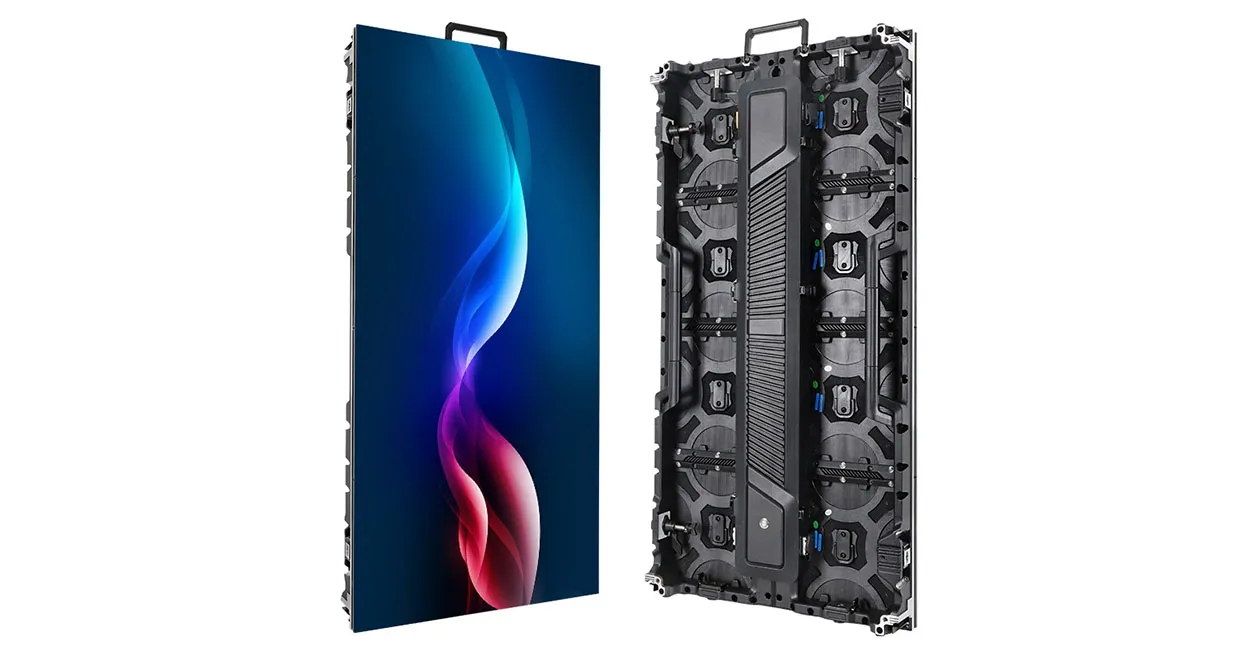
Our COB cabinet range includes the EA600COB3 16:9 indoor COB screen. Its published specifications are:
- 600 × 337.5 mm cabinet in a 16:9 ratio for 2K, 4K and 8K layouts
- Pixel pitches of P0.62, P0.78, P0.93, P1.25, P1.56 and P1.87
- 30 mm cabinet depth and 4.1 kg weight
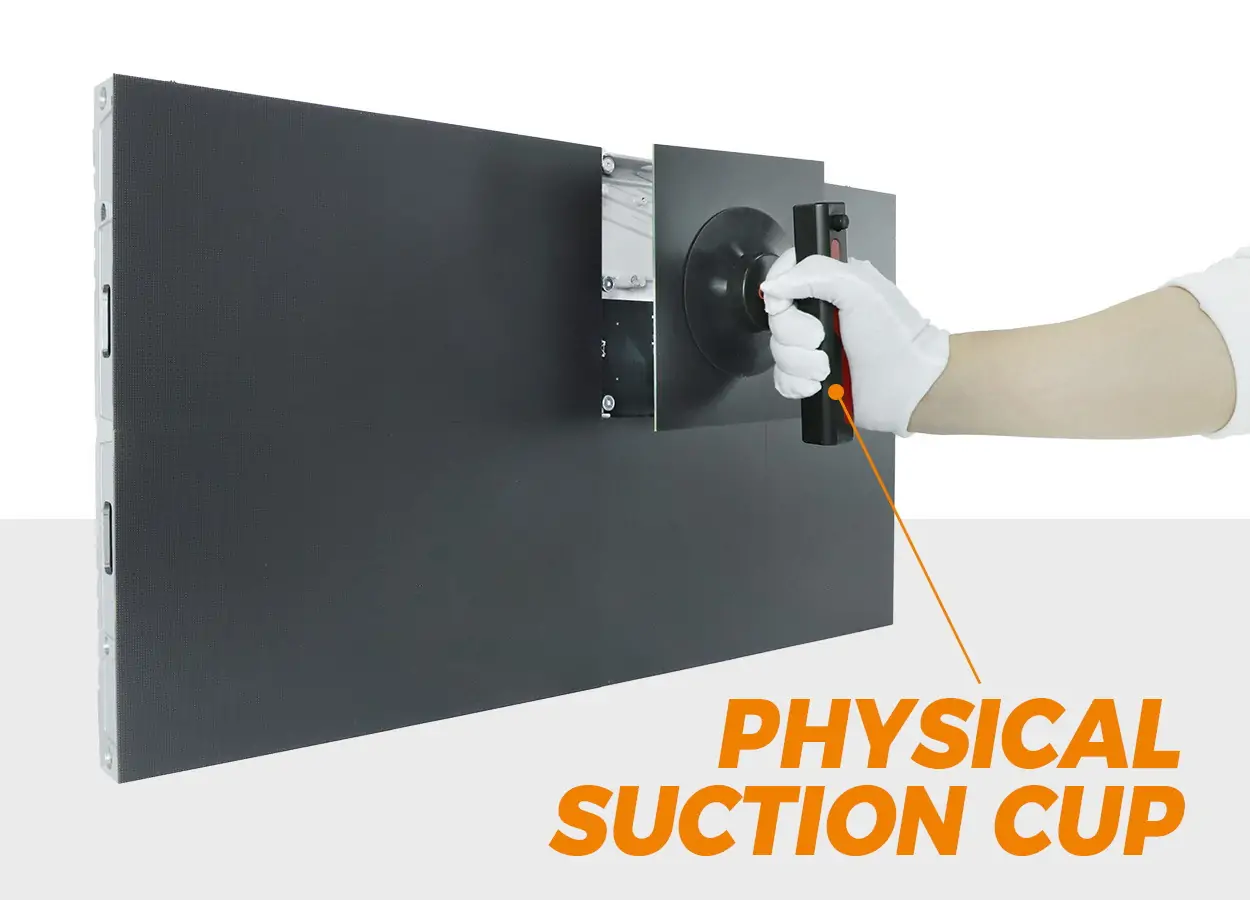
- Full front service, with modules removed by suction cup
- HUB connection that carries both data and power, so no external cables run between modules
We also supply COB modules on their own, in 320 × 160 mm and 150 × 168.75 mm series, for buyers who build or repair their own cabinets. The module page lists a 140° wide viewing angle and the fine pitches available.
02. Quality control and aging
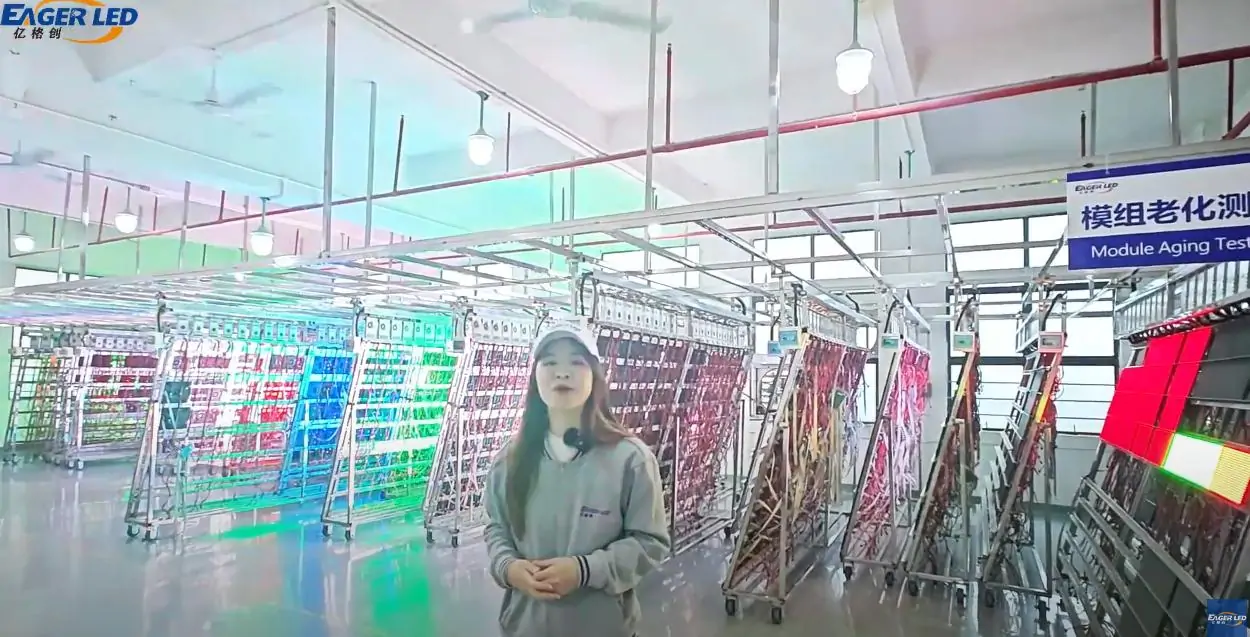
فرآیند کنترل کیفیت covers raw material selection, confirmation of the technical solution with the customer, production detail checks, module assembly checks and lighting and aging tests. LED modules are aged for 24 hours, and every finished screen is aged for 72 hours before shipment. When you order, you can ask for photos or video of your own modules and screen in the aging area.
03. Warranty, spares and service
Complete screens carry a 2-year standard warranty and ship with 2% spare parts as standard. An extended warranty is available for a modest increase in price. Front service and magnetic modules mean a technician can replace a COB module from the front of the wall without removing cabinets.
You can check these claims yourself: our LED factory page shows each production step from LED lamp baking to screen aging, and our application guides, such as the COB control wall supplier checks, explain how we approach specific projects.
7. What Should You Check When the COB Screen Arrives?
Acceptance testing on site confirms that what arrived matches what was approved. Agree on these checks with your COB LED display supplier before shipment, so both sides use the same criteria.
01. Off-state and low-gray inspection
After assembly, view the wall switched off under the room’s normal lighting, from the main viewing positions. Look for cabinets or modules with a visibly different surface tone. Then show full-screen gray at about 10%, 20% and 50% and look for patches, lines or color tints.
02. Seams, flatness and camera test
Check gaps and steps between cabinets with light at a shallow angle across the surface, which shows unevenness clearly. If the wall will be filmed, record it with the cameras that will actually be used and look for scan lines or moiré.
03. Spares and documents
Count the spare modules and power supplies against the order, check their batch labels against the installed modules, and confirm that calibration files, the controller configuration and wiring diagrams were delivered. Store the spares in their original packing in a dry place. If anything is missing, report it to the COB LED display supplier in writing before you sign the acceptance form.
پرسش و پاسخهای متداول
Is COB better than SMD for every fine-pitch project?
No. COB offers a flat, protected surface and suits close viewing and the finest pitches, but at larger pitches a good SMD screen can cost less and meet the same need. Choose by viewing distance, handling risk and budget, and compare complete systems at matched settings.
Can a damaged COB module be repaired on site?
Usually not. The practical fix is to replace the module from your spares and send the damaged one for rework if the supplier offers it. That is why batch-matched spares and calibration data matter more for COB than for SMD screens.
Which pixel pitch should I choose for a boardroom?
Start from the nearest viewing distance and the resolution you need. For many boardrooms with viewers 2.5 m to 4 m away, P1.25 to P1.56 is a practical range; closer viewing or very detailed content may justify P0.93 or below.
Can COB LED displays be used outdoors?
COB is mainly used for indoor fine-pitch screens. EagerLED’s COB products, including the EA600COB3, are indoor displays. For outdoor projects, standard outdoor SMD cabinets with IP65 protection are the usual choice.
How many spare modules should come with a COB wall?
EagerLED includes 2% spare parts with complete screens as standard. For a small wall, ask for at least one complete spare module of each type, and keep all spares from the same production batch as the installed screen.
گارانتی چه می کند EagerLED offer on COB screens?
Complete screens carry a 2-year standard warranty, and an extended warranty is available for a modest increase in price. Ask any COB LED display supplier to state in writing whether its warranty covers the COB modules themselves and how replacements are supplied.
Getting a COB Quote You Can Compare
To get a quote you can compare line by line, send us the room or application, the target resolution or wall size, the nearest viewing distance, whether the wall will be filmed, your preferred service access and the input sources. EagerLED will recommend a pitch, state the chip structure and full parameter table, list the processor, spares and warranty in the quote, and share aging photos for your order. Use the same request with every COB LED display supplier on your shortlist, then compare the answers. Send your COB project details برای شروع.
 تامین کننده نمایشگر LED ورزشی در چین: قبل از خرید نمایشگرهای استادیومی چه مواردی را باید بررسی کنید
پستهای مرتبط
نیازهای خود را با جزئیات پر کنید
میزان استفاده از صفحه نمایش و اندازه مورد نیاز خود را در «محتوا» وارد کنید . یک پیشفاکتور دریافت خواهید کرد.